

A Mezuzah and a Tree: How a Former IDF Base in Gush Etzion Became a Jewish Community
How the New Community of Yatziv in Gush Etzion Was Inaugurated With a Mezuzah Affixing and Tree Planting
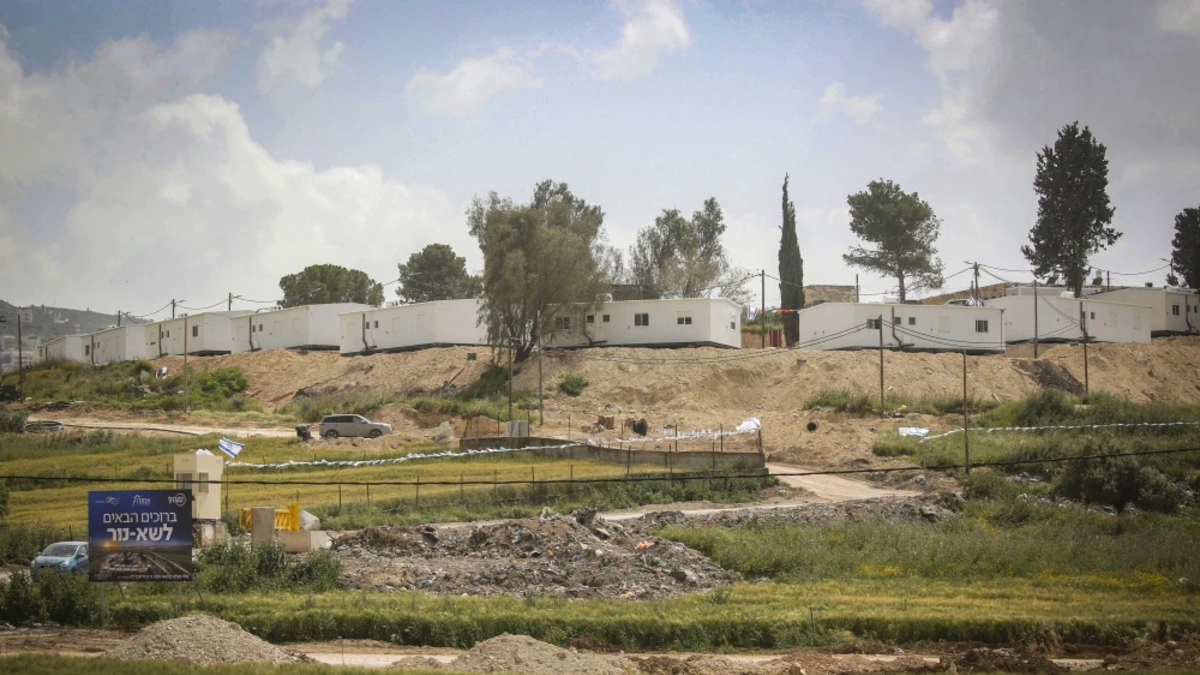
The cornerstone-laying ceremony was attended by government ministers, public figures, council heads, and representatives of settlement movements. Previously known as Shdema, the settlement is situated at a strategic location near Bethlehem, forming a key connection between eastern Gush Etzion and Jerusalem.
The site's history shapes the meaning of the moment. The site had formerly been an IDF base, which was subsequently closed. The new settlement initiative is part of the implementation of a Security Cabinet decision aimed at formalizing new communities in Judea and Samaria. What was once a military outpost is now, with a mezuzah on the doorpost and a sapling in the ground, the beginning of a lived civilian community. For a related question, see After 21 Years, a Mezuzah Goes Back on the Doorpost in Sa-Nur, Samaria. See also Chabad Luzern Welcomes a New Jewish Doctor to the Community With a Mezuzah Affix.
The name Yatziv — meaning "stable" in Hebrew — was not chosen casually. A community that names itself after rootedness, and begins its existence with a mezuzah affixing and a tree planting, is making a deliberate statement: this is not temporary. This is a home.
Gush Etzion carries one of the most layered histories in the modern Jewish story. The original bloc was established before 1948, destroyed in Israel's War of Independence, and later rebuilt after 1967. Each generation that has come to build there has understood itself as part of something longer than any single community's founding. A mezuzah on a new doorpost in eastern Gush Etzion is one more point in that arc.
What a Mezuzah Declares at the Start of a New Community
A mezuzah contains the words of the Shema — the declaration of Hashem's unity and the commandment to inscribe His words on the doorposts of your home and your gates. Placing one at the entrance of a new building in a nascent community is an act of dedication: this space is now a Jewish one, and those who enter and leave do so with that acknowledgment.
The pairing with a tree planting deepens the symbolism. One act marks the doorpost; the other roots something living in the land for the future. Together they express what a new Jewish community is: a threshold and a tree, a home that begins now and grows beyond it. Related reading: New Home Mezuzah Guide.
The Scroll That Sanctifies Every New Doorpost
Whether a mezuzah is affixed in a Boro Park apartment or at the entrance to the first building of a new community in Judea, the halachic requirement is the same. The scroll inside must be written by a vetted sofer (scribe) on proper klaf (parchment), carefully checked for errors, and affixed correctly. The ceremony and the brachos mark the occasion — the parchment within completes the mitzvah. For a related question, see A Kvias Mezuzah Opens a New Home for Boro Park Families Facing Illness.
Kosher Mezuzah offers scrolls written by vetted sofrim, double-checked by expert magihim (examiners), and backed by OU endorsement — with every scroll fully traceable through a unique QR code.
A Doorpost in the Hills of Gush Etzion
Yatziv begins with a cornerstone, a tree, and a mezuzah. The former IDF base is now a Jewish home, marked at its threshold with the same words that Jews have placed on their doorposts for thousands of years — in the same hills where Jewish communities were built, lost, and rebuilt before.
The neshama of a place, like the neshama of a people, does not forget.
Every new Jewish home — wherever it stands — deserves a mezuzah from the first day. Kosher Mezuzah offers scrolls from our OU Endorsed process written and checked by expert examiners. Find your kosher mezuzah scroll here and mark your doorpost with intention.


.svg)
Bring a true Kosher Mezuzah into your home
Fulfill the mitzvah with confidence, beauty, and meaning.
Buy a Mezuzah