
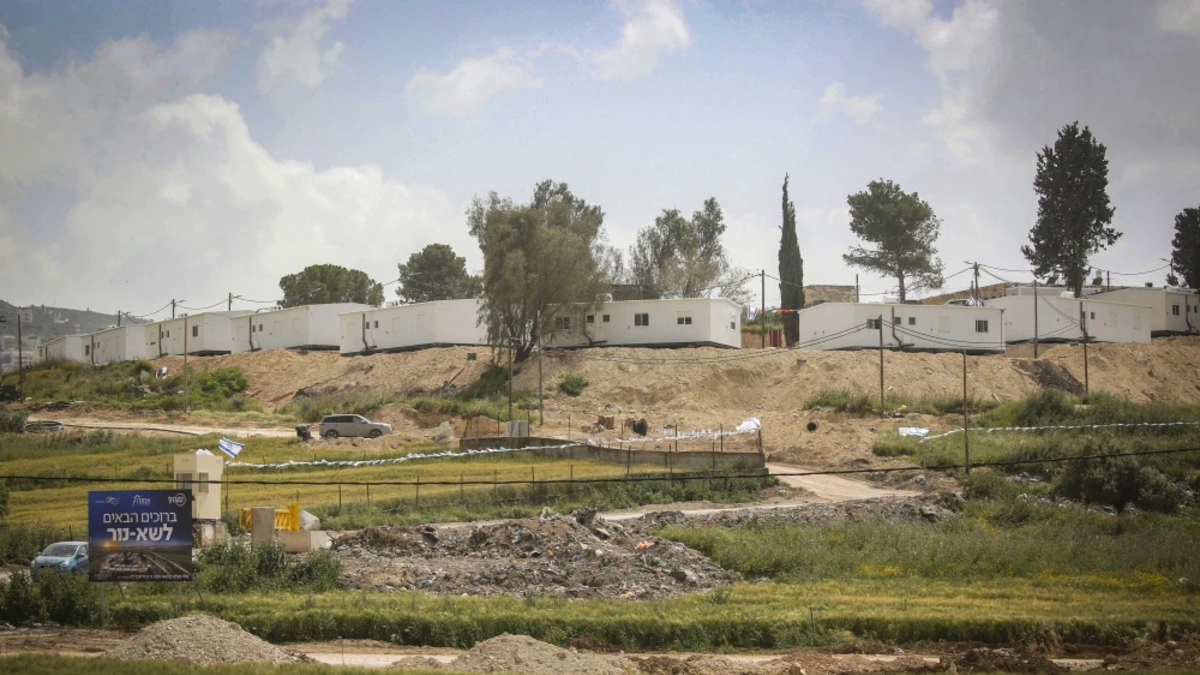
After 21 Years, a Mezuzah Goes Back on the Doorpost in Sa-Nur, Samaria
On April 20, 2026, Yossi Dagan returned to Sa-Nur in northern Samaria — the community from which he and his family were expelled in 2005 during the Disengagement. He arrived with his wife Oriah and their four children, unloaded their belongings, and affixed a mezuzah to the doorpost of their caravan home. Then he recited the blessing that Jews say when returning to a place in the Land of Israel that was once inhabited and uprooted: Baruch Matziv Gvul Almanah. We cover this in more depth in Teaching Children About Mezuzah. For a related question, see Jersey City's Jewish Community Presents Mayor James Solomon With a Mezuzah Bless.
The ceremony was attended by Defense Minister Israel Katz, Justice Minister Yariv Levin, Settlement Minister Orit Strook, Tourism Minister Haim Katz, and Knesset members. Sixteen families moved in that day. More are expected to follow.
Wide coverage of the return appeared across Israeli and Jewish media. The Jerusalem Post and JNS both covered the event in full.
How Yossi Dagan Returned to Sa-Nur After Two Decades and Put a Mezuzah Back on the Door
חזרנו הביתה לשא-נור! 🧡🇮🇱 pic.twitter.com/cu2yojbcrG
— בצלאל סמוטריץ' (@bezalelsm) April 20, 2026
Dagan, whose family had been evicted from Sa-Nur during the disengagement, arrived on Sunday morning with his wife, Oriah, and their children, unloaded their belongings at their new–old home, and then cut the ribbon at the entrance to the community. He recited with emotion the blessing: "Baruch Matziv Gvul Almanah."
"We were expelled from here as a young couple twenty years ago, and we are returning now with our four children, happy," Oriaa Dagan was quoted as saying. Her husband added: "Last night I couldn't fall asleep. Since we were expelled from here, since they lifted us by force and dragged us out of the fortress, we have never stopped dreaming, praying, struggling, and working to return here together with the wonderful families who are coming back to the community. Thank God, the people of Israel are winning today."
Speaking to the large audience that attended the resettlement, Dagan vowed: "We have returned forever. The eternity of Israel does not lie, and the eternity of Sa-Nur will not lie. We are here to stay. We will turn Sa-Nur into a city and make the northern Samaria region one of the most flourishing areas in the State of Israel."
Sa-Nur sits in northern Samaria, in the broader biblical heartland of Eretz Yisrael, near the region associated with Yosef’s search for his brothers in Shechem and Dotan. The community was emptied in 2005 along with other northern Samaria towns as part of the Disengagement Plan. For two decades, the site sat largely abandoned. The return of 16 families — with more to come this summer — marks its first resettlement as an officially recognized community under government authorization.
What a Mezuzah Means When You Return After 21 Years
A mezuzah contains the words of the Shema — the foundational declaration of Hashem's unity — and the commandment to affix His words to the doorposts of your home. For a family returning to a home they were forced to leave, that act is weighted with everything the intervening years carried: the loss, the hope, the struggle, and now the return.
Chazal instituted the blessing Baruch Matziv Gevul Almanah (“Blessed is He who restores the widow’s boundary”) upon seeing Jewish homes settled and inhabited, and the Shulchan Aruch’s example—“as in the resettlement of the Second Temple era”—shows that it is especially associated with renewed Jewish settlement after destruction or exile. Dagan recited it at the doorpost of a caravan in Sa-Nur, with his children beside him, and cabinet ministers standing as witnesses. For the full discussion, read Ukraine's Deputy Minister Affixes Mezuzah at the Cabinet of Ministers in Kyiv.
The Parchment That Makes the Return Complete
A mezuzah affixed at a doorpost like this one carries the same halachic requirements as any other. The scroll inside must be written by a vetted sofer on proper klaf, checked for errors, and valid according to Jewish law. The ceremony and the blessing honor the moment — the parchment fulfills the mitzvah.
Kosher Mezuzah offers scrolls written by vetted sofrim, double-checked by expert magihim, and backed by OU endorsement — with every scroll fully traceable through a unique QR code.
A Doorpost After Twenty-One Years of Dreaming
Yossi Dagan spent two decades working toward this day. When it came, the first ritual act was to hang a mezuzah. Not a flag, not a banner — a mezuzah. A small scroll on a caravan doorpost in northern Samaria, recited over with ancient words of return.
Every Jewish home — wherever it stands and however long its road to get there — deserves a kosher mezuzah on the door. Kosher Mezuzah offers scrolls from our OU Endorsed process written and checked by expert examiners. Find your kosher mezuzah scroll here.



.svg)
Bring a true Kosher Mezuzah into your home
Fulfill the mitzvah with confidence, beauty, and meaning.
Buy a Mezuzah