
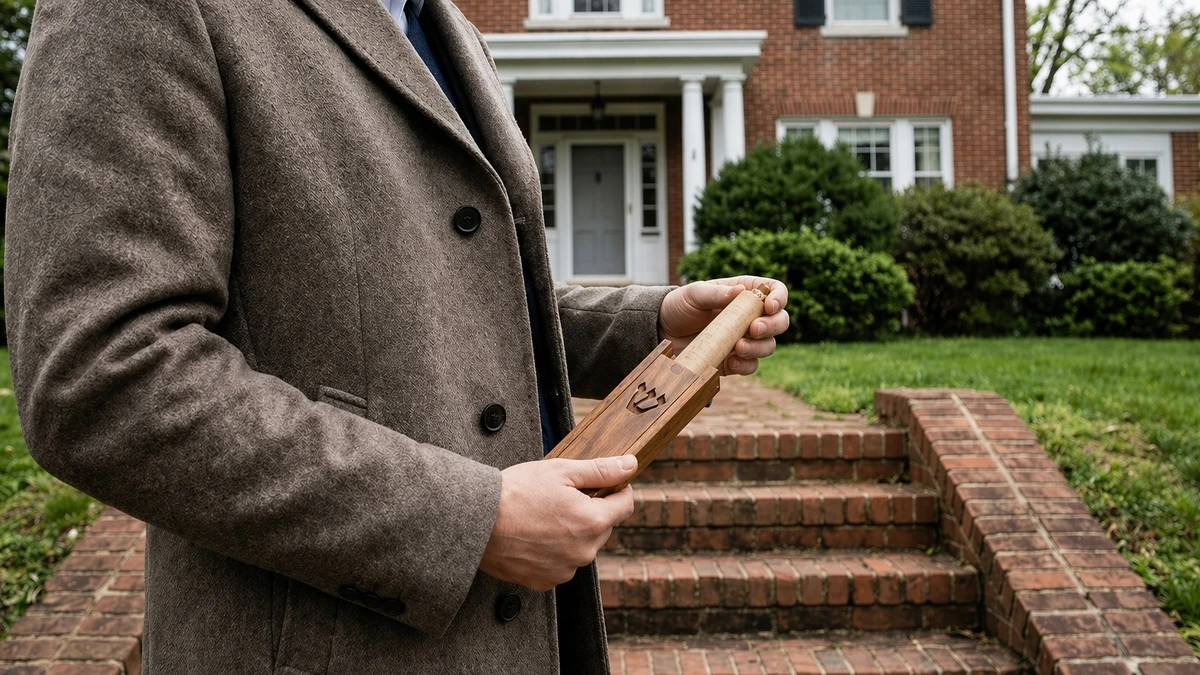
Buying a Mezuzah in Baltimore: A Guide to Finding Authentic Kosher Scrolls and Cases
When you buy a mezuzah in Baltimore, you are accepting responsibility for fulfilling a precious mitzvah, one that requires your parchment scroll to meet precise halachic standards to be valid. Many families assume that simply purchasing from a local Judaica store or a trusted vendor guarantees that the mezuzah is kosher, but today's market for Torah scrolls, tefillin, and mezuzahs often lacks end-to-end oversight. For a related question, see Buy a Mezuzah in Philadelphia.
Guidance from the Orthodox Union clarifies that without proper documentation and verification, even well-intentioned sellers may not always provide full visibility into who wrote your scroll, who checked it, and whether every requirement has been met.
This article will help you understand what to look for when purchasing a mezuzah, how the retail market works in Baltimore and beyond, and why certification and transparency are central to fulfilling the mitzvah with confidence. At Kosher Mezuzah, we are dedicated to ensuring the proper fulfillment of the mitzvah of mezuzah by offering scrolls from our OU Endorsed process with complete traceability from the sofer's quill to your doorpost.
What to Look for When You Buy a Mezuzah
Before you purchase any mezuzah, it is essential to understand that the kashrus of the scroll cannot be determined by appearance alone. The ink may look dark, the parchment may appear smooth, and the letters may seem well-formed, but many invalidating issues are invisible to the untrained eye. A kosher mezuzah must be written on properly processed klaf (parchment) using dio (ink) formulated according to halacha, by a sofer who is God-fearing and trained in the intricate laws of STaM. Each letter must be formed correctly with proper crowns on the relevant letters, the writing must proceed in order without interruption, and the scroll must be checked by at least one trained magiah after completion. Even a single letter that touches another or improper spacing can render the entire mezuzah pasul, and the mitzvah unfulfilled.
Verifying the Kosher Status of Your Scroll
When you are considering a particular mezuzah, you should ask who wrote it and who checked it. A reputable source will be able to provide the name of the sofer and the magiah, along with documentation of when the scroll was written and inspected. You should also inquire about the materials used, including the source of the klaf and the composition of the ink, both of which must meet halachic standards. If the seller cannot answer these questions or provide any supporting documentation, you are left to rely on trust alone, which may not be sufficient when fulfilling a Torah obligation. Many buyers are unaware that the halachos governing mezuzah writing form an interdependent system, where issues such as letter formation, kesidran (proper sequence), and intent during writing all interact to determine validity.
Understanding Quality Levels: Kosher, Mehudar, and Beyond
Mezuzahs are often sold in different quality tiers, commonly labeled as kosher, mehudar, or mehudar min ha'mehudar. These terms reflect differences in the sofer's skill, the care taken during writing, and sometimes the level of checking performed after completion. A basic kosher mezuzah meets the minimum halachic requirements, while a mehudar scroll is written with extra care and attention to detail, often by a more experienced sofer. It is important to understand that these categories are not formal halachic designations but rather trade terms used to indicate relative standards. Regardless of the tier you choose, the scroll must still meet all fundamental requirements, including proper materials, correct letter formation, and thorough checking. Consulting with your rav can help you understand which standard is appropriate for your family and your home.
Mezuzah Store Options in Baltimore, MD
Baltimore has one of the largest Orthodox communities in the country, centered in Park Heights and extending north through Pikesville, Greenspring, and Owings Mills. The Park Heights corridor along Reisterstown Road has the highest density of shuls, yeshivos, kosher shopping, and seforim stores of any city on this list outside New York.
Baltimore is home to a vibrant and diverse Jewish community, and several local Judaica stores serve families throughout the area. These stores provide a valuable service by offering religious articles, books, and ritual items, and they remain a trusted resource for many members of the community. The stores listed below are provided for informational purposes only, and their inclusion does not imply endorsement or evaluation of the mezuzahs they carry.
| Store | Area | What they carry |
|---|---|---|
| Shabsi's Judaica Center | Reisterstown Station | Judaica, mezuzos, cases |
| Ner Tamid Congregation Judaica Shop | Northwest Baltimore | Mezuzos, cases, Judaica |
| Beth Tfiloh Sisterhood Gift Shop | Pikesville | Mezuzos, cases, Judaica |
These stores are listed for informational purposes only. Inclusion does not imply endorsement or evaluation of the kashrus of any mezuzos they carry. Ask each store who wrote the scroll, who checked it, and what documentation is available.
At the same time, most retail shops are not the actual sofrim or magi’im behind the scrolls they carry, which means they may not always be able to provide complete details about a mezuzah’s origin, who wrote it, who checked it, or when it should next be inspected. That is not necessarily a reflection on the store itself, but simply part of how many Judaica products move through the supply chain. For that reason, when buying from any retail source, it is wise to ask for as much documentation as possible about the scroll’s provenance and checking history.
Ordering Mezuzahs Online for Baltimore Families
In recent years, the option exists for individuals to order mezuzahs from documented online sources rather than purchasing locally. This decision is not about convenience, price, or a preference for online shopping over supporting local businesses. Instead, it reflects a recognition that in an unregulated market, certification and documentation provide halachic confidence that may not always be available through traditional retail channels. When you order from a trusted, OU Endorsed online source, you receive a mezuzah that comes with complete traceability, including the name of the sofer who wrote it, when it was written, and the standard of writing. This level of transparency allows you to fulfill the mitzvah with the assurance that every halachic requirement has been met.
At Kosher Mezuzah, we provide this documentation with every scroll we send, along with tamper-evident packaging and QR-based verification, so that you can know exactly what is going on your doorpost. Even for families who value supporting local Jewish resources, ordering online from a documented source can be the wiser hishtadlus when halachic responsibility and verification are your primary concerns.
The Advantage of Transparency and Traceability
The mezuzah market today operates largely without standardized oversight. Unlike food products, which often carry recognized hechsherim and clear labeling, mezuzahs are sold through many channels with varying levels of documentation and accountability. This has created a situation where buyers often cannot independently verify the kashrus of a scroll beyond its surface appearance. Certification exists to address this uncertainty by providing a verifiable system of oversight from the moment the parchment is prepared through the final checking and packaging of the scroll.
QR Verification and Documentation
Kosher Mezuzah uses QR-based technology to provide instant access to your scroll's documentation. When you receive your mezuzah, you can scan the QR code on the tamper-evident packaging and view the complete record of its writing, checking, and materials. This system extends the traditional rabbinic model of trust and verification into the modern marketplace, where distance and distribution can otherwise create informational gaps. The QR code does not replace the authority of your rav or the established halachic process, but it does provide you with the information you need to make an well-informed choice and to fulfill the mitzvah with confidence.
How Many Mezuzahs Does Your Baltimore Home Need?
Determining how many mezuzahs your home requires involves a careful walk-through of your living space and an understanding of which doorways are obligated according to halacha. In general, a doorway requires a mezuzah if it leads into a room that is used for dwelling purposes, has a lintel and two doorposts, and meets the minimum size requirements. Your front door is certainly obligated, as are the doorways to bedrooms, living rooms, dining rooms, and finished basements. Bathrooms, closets, and small storage areas are typically exempt, though there are differences in custom and opinion. If you live in a rowhouse or townhouse typical of many Baltimore neighborhoods, you may find that your home has six to twelve doorways that require mezuzahs. Larger homes, especially those with multiple levels and extra bedrooms, may require more. It is always best to consult with your rav or a knowledgeable posek who can walk through your home with you and provide guidance based on your specific circumstances and minhag.
| Doorway | Mezuzah required? | Notes |
|---|---|---|
| Front entrance | Yes | Right side as you enter, upper third of the doorpost |
| Bedrooms | Yes | Includes children's rooms and guest rooms |
| Kitchen and dining room | Yes | If the room has a proper doorway |
| Living room and family room | Yes | Including archways without doors, ask your rav about width |
| Home office and study | Yes | Any room used for living purposes |
| Hallways and interior arches | Usually | Depends on structure, confirm with your rav |
| Garage | Depends | Based on use and connection to the house, ask your rav |
| Porch, deck, or balcony | Depends | Ask your rav |
| Bathrooms | No | Exempt |
| Small closets and pantries | Usually no | Exempt if under the minimum size, ask your rav |
Choosing the Right Mezuzah Case for Your Doorpost
Once you have obtained kosher scrolls for your home, you will need to select appropriate cases to protect them. A Mezuzah case serves both a halachic and practical function, shielding the parchment from moisture, temperature changes, and physical damage while also beautifying the mitzvah. Cases are available in a wide variety of materials, including wood, metal, ceramic, glass, and plastic, and they come in styles that range from simple and understated to ornate and decorative.
When choosing a case, consider the location where it will be placed. Exterior doorways, especially those exposed to rain or direct sunlight, require durable, weather-resistant cases, often made of metal or treated wood. Interior doorways can accommodate more delicate materials and decorative designs. The case should be sized appropriately for the scroll you are using, with enough room to roll the parchment comfortably without bending or creasing it. Many families in Baltimore choose cases that reflect their personal taste and the character of their home, and this is entirely appropriate as long as the case serves its protective function and the mitzvah itself remains the focus.
Questions to Ask Before You Purchase
Before you finalize any mezuzah purchase, whether from a local store or an online source, there are several questions you should ask to ensure that you are receiving a kosher scroll that meets halachic standards. First, ask who wrote the mezuzah and request the sofer's name and credentials. You should also inquire about who checked the scroll and whether the checking was performed by one or more trained magihim. Ask whether any documentation or certification accompanies the scroll, and whether you will have ongoing access to that information. If the seller cannot answer these questions or provide supporting documentation, you should consider whether you have sufficient confidence to proceed with the purchase.
At Kosher Mezuzah, we welcome these questions and provide complete answers along with every scroll we send. You can contact us anytime at info@kmezuzah.com for guidance on choosing the right mezuzahs for your home.
Which Mezuzah Scroll Is Right for Your Baltimore Home?
Kosher Mezuzah writes three scroll styles, and each ships to Baltimore with full documentation from an OU Endorsed writing and checking process. The Sefardi mezuzah scroll follows the ksav used in Sephardic and Mizrachi communities. The Ashkenaz Beis Yosef mezuzah scroll is the standard for most Ashkenazi homes. The Arizal mezuzah scroll follows the script favored in Chassidic communities. Each is available in 4.7 inch and 5.9 inch sizes across several quality tiers. If you are unsure which script matches your family's minhag, ask your rav, or contact us and we will help you choose.
Conclusion
When you set out to buy a mezuzah in Baltimore, you are undertaking a halachic responsibility that extends beyond the transaction itself. The mitzvah of mezuzah is precious, and it can only be fulfilled properly when the scroll meets every requirement of kashrus, from the preparation of the parchment through the final checking by a trained magiah. The mezuzah market today lacks standardized oversight, and this creates challenges for buyers who want to ensure they are placing a valid scroll on their doorposts.
OU endorsement provides a structured solution to this challenge by offering transparency, traceability, and accountability at every stage of the process. Whether you choose to purchase from a local Judaica store or from an OU Endorsed online source such as Kosher Mezuzah, the key is to ask questions, seek documentation, and make an well-informed choice based on halachic standards rather than assumptions or convenience.
If you are ready to ensure that your home is protected by kosher, mezuzahs from our OU Endorsed process written and checked with care and documented with complete transparency, we invite you to explore our mezuzah selection or reach out to us directly for guidance. May the mitzvah of mezuzah bring blessings, protection, and the kedushah of Hashem's presence into your home and the homes of all Klal Yisrael.



.svg)
Bring a true Kosher Mezuzah into your home
Fulfill the mitzvah with confidence, beauty, and meaning.
Buy a Mezuzah