

Where to Buy a Kosher Mezuzah in Atlanta: A Guide for Jewish Families Across Atlanta and Beyond
Purchasing a kosher mezuzah in Atlanta is not simply a shopping decision, it is a halachic responsibility that affects the proper fulfillment of a precious mitzvah. Many families assume that because a mezuzah is sold in a reputable Judaica store or listed online, it necessarily meets all halachic requirements. Yet the mezuzah market today is largely unregulated, and many scrolls are sold without full documentation of who wrote them, who checked them, or whether they meet the complex standards required by Torah law.
The purpose of this guide is to help buyers in Atlanta understand the landscape of mezuzah purchasing, the importance of verification, and how to ensure the mitzvah is fulfilled with confidence.
At Kosher Mezuzah, we are dedicated to ensuring the proper fulfillment of the mitzvah of mezuzah through scrolls from our OU Endorsed process that are fully documented and traceable. For guidance in choosing a kosher mezuzah that meets the highest halachic standards, we invite you to contact us at info@kmezuzah.com or explore our offerings at our online shop.
Understanding the Mezuzah Market in Atlanta
Atlanta's Orthodox community is centered in Toco Hills, the neighborhood around LaVista Road and North Druid Hills that is home to several shuls, the Atlanta Scholars Kollel, day schools, and kosher shopping. Dunwoody and Sandy Springs to the north have their own shuls and Chabad centers, and East Cobb has a growing frum presence. Judaica retail in Atlanta is limited to a few shops and shul gift stores, so many families order their scrolls online. We cover this in more depth in Buy a Mezuzah in Raleigh. For a related question, see Buy a Mezuzah in Orlando, Maitland, and Winter Springs.
Atlanta is home to a vibrant Jewish community and several Judaica retail options that serve families seeking mezuzahs, cases, and other ritual items. Many buyers naturally turn to local stores for convenience and the ability to see items in person. But, the mezuzah market in Atlanta, as in most cities, operates without uniform oversight or standardized quality assurance. This means that buyers may encounter scrolls of varying quality, often without documentation of the sofer who wrote the scroll, the magiah who checked it, or the materials used. The lack of transparency is not due to dishonesty or negligence but rather reflects the structure of the broader mezuzah market, where scrolls often pass through multiple intermediaries before reaching the consumer.
For informational purposes, we list several Judaica locations in Atlanta where mezuzahs may be available. These stores serve the community in many ways, and their inclusion here is not an endorsement or critique of any particular establishment.
In the Atlanta area, local Judaica resources include the Temple Kol Emeth Judaica Shop in East Cobb, Marietta, as well as the Congregation Or VeShalom Gift Shop in Brookhaven. These community-based locations offer a selection of ritual items such as Mezuzah cases, siddurim, candlesticks, and books, and may also carry mezuzah scrolls for those seeking them.
These locations reflect the availability of Judaica in the Atlanta area. Buyers should approach any purchase with an awareness of the halachic complexity involved in writing and checking a mezuzah.
Local Options vs. Verified Online Sources
Many families instinctively prefer to purchase a mezuzah locally, supporting a familiar store and handling the product before buying. This inclination is understandable, especially when a trusted Judaica store has served the community for years. But, the key question is not whether a store is reputable but whether the mezuzah itself can be verified to meet halachic standards. Local retail stores typically sell mezuzahs written and checked by others, and as a result, the documentation that would allow a buyer to confirm the scroll's kashrus is often not available at the point of sale. This is a structural limitation, not a reflection of the store's integrity.
In contrast, purchasing from a documented online source that specializes in mezuzahs can provide documented halachic assurance that may not be accessible through retail channels. When a mezuzah comes with OU endorsement, as those offered by Kosher Mezuzah do, the buyer receives clear identification of the sofer and magiah, verification that the materials used are kosher, documentation of when the scroll was written, and assurance that everything was done under halachic certification. This level of traceability addresses the informational gap that exists in much of the retail market. For buyers seeking confidence that the mitzvah is fulfilled properly, ordering from a trusted, documented online source can be the wiser decision, even for those who value supporting local Jewish resources. The distinction is not about convenience or price but about transparency, accountability, and halachic responsibility.
What to Look for When Buying a Mezuzah
The halachos governing mezuzah writing form a deeply interconnected system that cannot be reduced to a simple checklist. A kosher mezuzah requires exact letter formation, proper spacing, kesidran (writing in correct order), lishmah (intent) at multiple stages, kosher parchments and innk, and rigorous checking by trained magihim. Even small errors in any of these areas can render a mezuzah pasul, and many invalidating issues cannot be detected by an untrained eye. Buyers should understand that the validity of a mezuzah depends not on surface appearance but on the integrity of the entire process from writing through checking.
When evaluating a mezuzah, whether in a mezuzah store in Atlanta or online, the buyer should seek answers to several fundamental questions. Who wrote the scroll, and is that sofer qualified and known by name? Who checked the scroll, and can that magiah be identified? What materials were used, and are they certified kosher? Were all relevant laws followed? Without clear answers to these questions, the buyer is left to rely on assumptions. In an unregulated market, assumptions are not sufficient grounds for fulfilling a mitzvah that Hashem commands us to perform with precision and care.
The sofer who writes a mezuzah must possess not only technical skill but also yiras Shamayim and the proper kavanah during the writing process. The name of the sofer should be known, verifiable, and traceable. Similarly, the magiah who checks the scroll must be trained to identify subtle errors in letter formation, tagin, spacing, and other halachic requirements. A proper checking process involves multiple stages and often includes both human inspection and technological tools to catch issues that might otherwise be missed. Letters that are malformed, touching, or improperly spaced can invalidate the entire scroll.
These standards are highly technical and require expertise that most consumers do not possess. Even a scroll that looks beautiful to the eye may contain invalidating errors that only a trained magiah can detect. This is why the verification process must extend beyond the consumer's visual inspection and rely on documented checking by qualified individuals. Buyers should not assume that a mezuzah is kosher simply because it is sold in a respected store or priced at a certain level. The only reliable basis for confidence is transparency and documentation of the entire process.
At Kosher Mezuzah, every scroll we offer includes the names of the sofer and magiah, along with documentation of the checking process. This transparency allows buyers to fulfill the mitzvah with confidence, knowing exactly who was responsible for writing and verifying the scroll.
Visiting a Mezuzah Store in Atlanta

For buyers who choose to visit an Atlanta GA mezuzah store in person, the experience offers the advantage of seeing the product and speaking with staff who may have experience with mezuzahs. Many local Judaica stores carry a range of scrolls at different price points, along with a variety of cases. But, the buyer should approach the visit with a clear understanding of what questions to ask and what documentation to request. The presence of a mezuzah on a shelf does not in itself guarantee its kashrus, and the staff at a retail store may not have access to the full history of each scroll.
It is important to recognize that Judaica stores are often not the original source of the scrolls they sell. They purchase inventory from distributors or suppliers, and the trail of documentation may not follow the scroll through these intermediaries. This is a reality of the retail distribution model, not a failing of the store itself. Buyers should hence be prepared to ask specific questions and should not assume that the store can provide complete verification on demand.
What Questions to Ask at an Atlanta GA Mezuzah Store
When visiting a mezuzah store in Atlanta, begin by asking for identifying information about the scroll you are considering. Ask who checked the mezuzah and whether the checking process is documented. If the store cannot answer these questions or provide documentation, this does not necessarily mean the scroll is pasul, but it does mean the buyer lacks the information needed to verify its kashrus independently.
In such cases, buyers may prefer to purchase from a source that provides full documentation from the outset, offerring greater peace of mind and confidence in fulfilling the mitzvah properly.
The Advantage of Traceability and Transparency
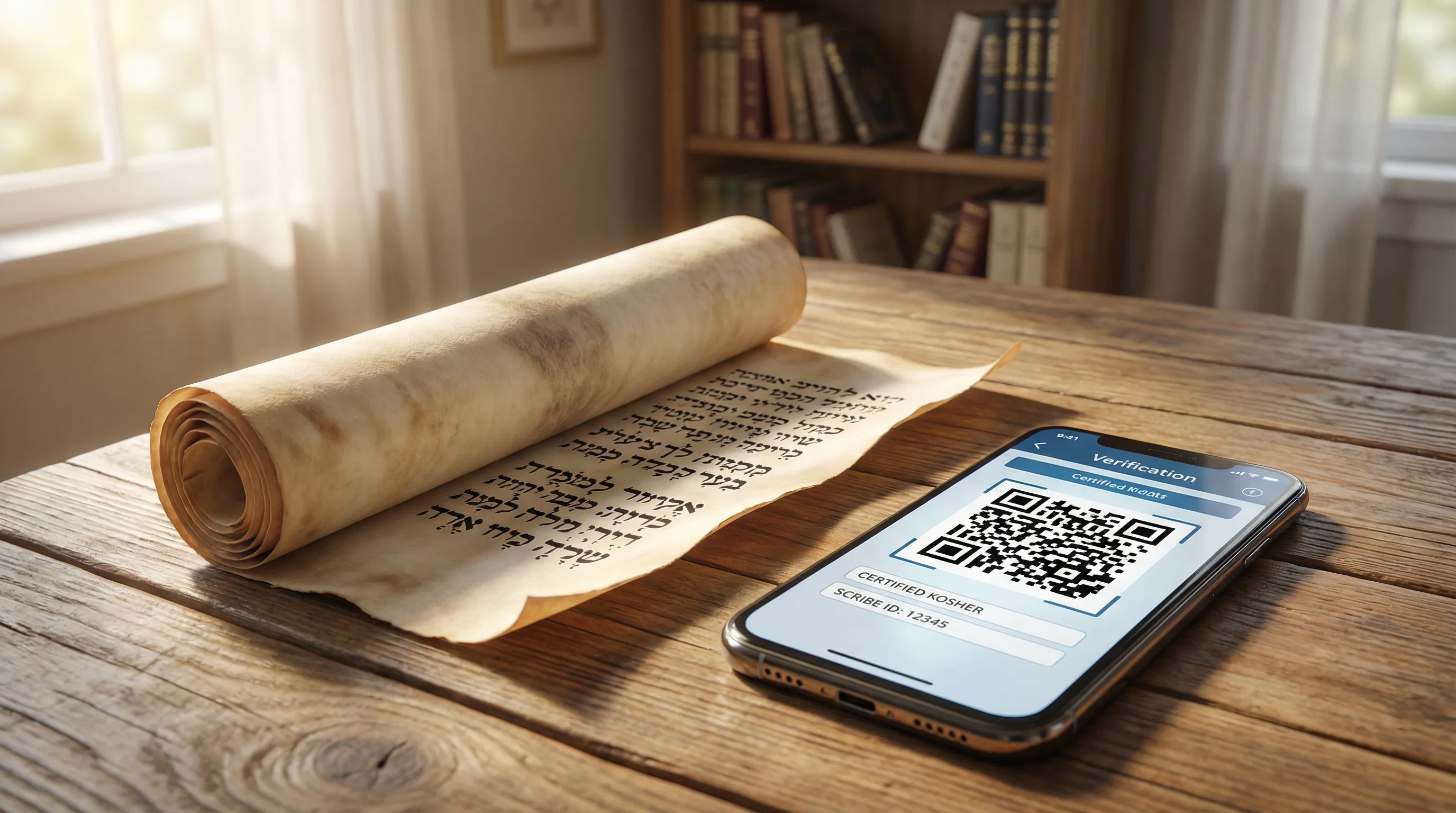
In recent years, the Orthodox Union has expanded its kosher supervision to include mezuzah certification, addressing the lack of standardization in the broader market. OU endorsement is not a branding label but a verifiable process that ensures each mezuzah meets documented halachic standards. The certification process includes vetting of sofrim, verification of materials, checking by trained magihim, and technological review with documentation.
| Consideration | Local Judaica store | Kosher Mezuzah (online) |
|---|---|---|
| Named sofer and magiah | Sometimes available on request | Included with every scroll |
| Date of writing and checking | Rarely documented | Included with every scroll |
| Image of your actual scroll | Not usually provided | Linked by QR code |
| Tamper-evident packaging | Varies by store | Standard |
| OU Endorsed process | Depends on supplier | Yes, company-wide |
| See the scroll in person before buying | Yes | No, image and documentation instead |
| Same-day pickup | Often | No, ships in 3 to 5 business days |
| Supports a local Jewish business | Yes | No |
This approach offers buyers a level of transparency that may not be available through traditional retail channels. When a buyer scans the QR code on a mezuzah from our OU Endorsed process from Kosher Mezuzah, they can see the name of the sofer, the name of the magiah, the date of writing, the materials used, and an image of the actual scroll. This traceability extends beyond the point of sale and provides ongoing accountability.
How QR Verification Complements Local Rabbinic Networks
Some buyers may wonder whether technological verification like QR codes replaces the role of local rabbinic guidance. The answer is no. QR-based traceability is a tool that enhances transparency and provides information that supports rabbinic oversight, not replaces it. A buyer who has questions about a specific mezuzah, about placement, or about other halachic matters should consult their rav. The QR system simply makes it easier for both the buyer and the rav to access the information needed to evaluate the mezuzah's kashrus.
In this way, certification and technology work alongside traditional rabbinic networks to support proper fulfillment of the mitzvah. The goal is not to bypass local authority but to provide the documentation and accountability that allow rabbanim to give informed guidance. Buyers benefit from the combination of documented standards and rabbinic consultation, ensuring that the mitzvah is fulfilled with both technical precision and spiritual intention.
Choosing the Right Mezuzah Case for Your Atlanta Home
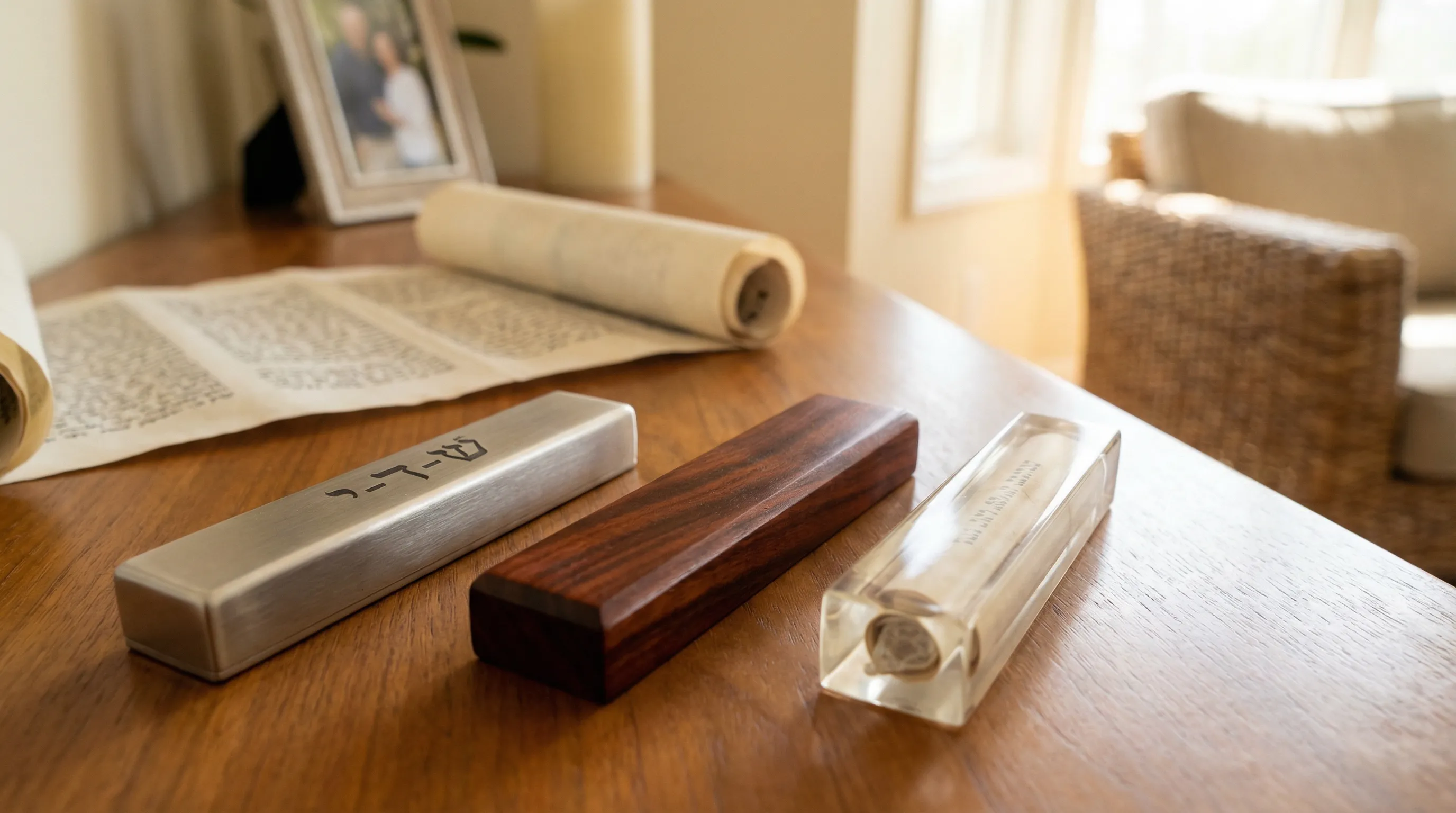
While the kashrus of the scroll is the primary halachic concern, the case that houses the mezuzah also serves an important function. The case protects the scroll from moisture, damage, and other environmental factors that can affect its longevity. In Atlanta, where humidity levels can be high, choosing a case that provides adequate protection is particularly important. Cases made from durable materials such as metal, wood, or high-quality plastic can help preserve the scroll and reduce the need for frequent checking or replacement.
A mezuzah case is visible to all who enter, and it can serve as a beautiful expression of the mitzvah's importance. But, beauty should never come at the expense of kashrus. A stunning case that contains a pasul (invalid) scroll does not fulfill the mitzvah, no matter how aesthetically pleasing it may be. The priority must always be the integrity of the scroll itself, with the case serving to protect and honor that scroll.
When selecting a case, consider both the practical and the aesthetic. Choose a size that fits the doorpost properly and a material that will withstand the elements. If you live in an area with significant moisture or temperature variation, opt for a case with a sealed design.
Estimating How Many Mezuzahs You Need
Before purchasing mezuzahs, buyers should determine how many doorways in their home require them. According to halachah, a mezuzah is required on the doorpost of every room used for living purposes, with certain exceptions. Rooms such as bathrooms, small closets, and storage areas typically do not require mezuzahs. But, bedrooms, living rooms, kitchens, dining rooms, and finished basements generally do require them. The obligation applies to doorways that have a lintel and doorposts and that lead into a space at least four amos by four amos (roughly six to seven feet by six to seven feet).
| Doorway | Mezuzah required? | Notes |
|---|---|---|
| Front entrance | Yes | Right side as you enter, upper third of the doorpost |
| Bedrooms | Yes | Includes children's rooms and guest rooms |
| Kitchen and dining room | Yes | If the room has a proper doorway |
| Living room and family room | Yes | Including archways without doors, ask your rav about width |
| Home office and study | Yes | Any room used for living purposes |
| Hallways and interior arches | Usually | Depends on structure, confirm with your rav |
| Garage | Depends | Based on use and connection to the house, ask your rav |
| Porch, deck, or balcony | Depends | Ask your rav |
| Bathrooms | No | Exempt |
| Small closets and pantries | Usually no | Exempt if under the minimum size, ask your rav |
To estimate how many mezuzahs you need, walk through your home and count each doorway that meets these criteria. Do not forget entrances to garages that are used for living purposes, doorways leading to porches or patios that are regularly used, and any rooms that serve as home offices or playrooms. If you are uncertain whether a particular doorway requires a mezuzah, consult your rav. It is better to ask than to leave a doorway without a mezuzah that should have one.
Once you have determined the number needed, consider purchasing all your mezuzahs from a single documented source. This ensures consistency in quality and simplifies future checking. At Kosher Mezuzah, we are here to help you determine your needs and provide scrolls that meet the highest halachic standards. You can reach us by phone or Whatsapp:+1848-356-9471 for guidance tailored to your needs.
Which Mezuzah Scroll Is Right for Your Atlanta Home?
Kosher Mezuzah writes three scroll styles, and each ships to Atlanta with full documentation from an OU Endorsed writing and checking process. The Sefardi mezuzah scroll follows the ksav used in Sephardic and Mizrachi communities. The Ashkenaz Beis Yosef mezuzah scroll is the standard for most Ashkenazi homes. The Arizal mezuzah scroll follows the script favored in Chassidic communities. Each is available in 4.7 inch and 5.9 inch sizes across several quality tiers. If you are unsure which script matches your family's minhag, ask your rav, or contact us and we will help you choose.
Conclusion
The mitzvah of mezuzah is a daily reminder of our connection to Hashem and the sanctity of our homes. Fulfilling this mitzvah properly requires more than simply affixing a scroll to the doorpost, it demands attention to halachic standards, transparency in sourcing, and confidence that the scroll meets all requirements. The mezuzah market today presents challenges due to the lack of standardized oversight, and buyers in Atlanta must navigate these realities with awareness and care. Whether you choose to purchase from a local Judaica store or from a documented online source, the key is to seek documentation, ask informed questions, and prioritize kashrus above all else.
OU endorsement through Kosher Mezuzah offers a structured solution that provides the traceability and accountability needed to fulfill the mitzvah with confidence. For families seeking authentic kosher mezuzah scrolls and cases, we invite you to explore our offerings and learn more about the importance of proper mezuzah fulfillment by viewing our selection of mezuzahs.
May the mitzvah of mezuzah bring blessings and protection to your home, and may you merit to fulfill this precious mitzvah with joy and devotion.



.svg)
Bring a true Kosher Mezuzah into your home
Fulfill the mitzvah with confidence, beauty, and meaning.
Buy a Mezuzah