

Buy a Mezuzah in Raleigh: A Guide for North Hills, North Raleigh, and Triangle Jewish Families
The mitzvah of mezuzah is a daily reminder of our connection to Hashem and the kedushah (holiness) that surrounds a Jewish home.
Every doorway that requires a mezuzah must contain a kosher scroll produced in full compliance with the extensive halachic laws governing its preparation and writing. From the treatment of the parchment and ink to the precise formation of each letter and layout of the text, numerous detailed requirements determine whether a mezuzah is valid.
For families in Raleigh looking to buy a mezuzah, the question is not only where to purchase one but how to ensure it meets all halachic requirements. The mezuzah market today operates without uniform oversight, which means buyers must take active steps to verify that what they purchase is truly kosher. This guide provides clarity on your options in Raleigh and offers practical guidance on how to fulfill this mitzvah with confidence.
Whether you are setting up a new home, replacing an older scroll, or ensuring your mezuzahs are checked, understanding what to look for will help you fulfill this precious mitzvah properly. Kosher Mezuzah is dedicated to ensuring the proper fulfillment of the mitzvah of mezuzah through transparent verification and our OU Endorsed writing and checking process. For a related question, see Where to Buy a Kosher Mezuzah in Atlanta.
Understanding Your Mezuzah Needs in Raleigh
Before you begin shopping for a mezuzah in Raleigh, it is important to understand what constitutes a kosher mezuzah and how many your home requires. These two factors will guide your purchasing decisions and help you fulfill the mitzvah correctly.
What Makes a Mezuzah Kosher
A kosher mezuzah is not simply a piece of parchment with Hebrew letters written on it. The scroll must be written by a sofer (scribe) who is both technically trained and committed to writing with proper intent, known as kavanah and lishmah. The parchment, called klaf, must be prepared from the hide of a kosher animal according to strict halachic standards. The ink, or dio, must be specially formulated to meet the requirements of STaM, which refers to Sifrei Torah, Tefillin, and Mezuzos. The writing itself must adhere to precise rules of letter formation, spacing, and order. Even small deviations in the shape of a letter or the spacing between words can render a mezuzah pasul, meaning it does not fulfill the mitzvah. After the sofer completes the writing, the scroll must be checked by a trained magiah (proofreader) who examines every letter and word against the halachic standards. This checking process is essential to make sure there are no errors that would invalidate the entire scroll. Many consumers are unaware of how technical and interdependent these requirements are, which is why verification and documentation matter so much.
Estimating How Many Mezuzahs Your Home Requires
Determining how many mezuzahs your home requires depends on the layout of your living space and the use of each room. In general, every doorway that leads into a room used for living purposes requires a mezuzah. This includes bedrooms, living rooms, dining rooms, and kitchens. Bathrooms, closets, and storage rooms are typically exempt, though there are halachic nuances depending on their size and use. If you are renting, the obligation to affix mezuzahs still applies in most cases, though the timing and responsibility may differ slightly from homeownership. A simple walk-through of your home, counting doorways that open into functional living spaces, will give you a reliable estimate. Most single-family homes in Raleigh require between six and twelve mezuzahs, depending on the number of bedrooms and common areas. Larger homes or those with finished basements may require more. If you are uncertain about a specific doorway, consult with a rav who can provide guidance based on the particulars of your home and your family's minhag.
| Doorway | Mezuzah required? | Notes |
|---|---|---|
| Front entrance | Yes | Right side as you enter, upper third of the doorpost |
| Bedrooms | Yes | Includes children's rooms and guest rooms |
| Kitchen and dining room | Yes | If the room has a proper doorway |
| Living room and family room | Yes | Including archways without doors, ask your rav about width |
| Home office and study | Yes | Any room used for living purposes |
| Hallways and interior arches | Usually | Depends on structure, confirm with your rav |
| Garage | Depends | Based on use and connection to the house, ask your rav |
| Porch, deck, or balcony | Depends | Ask your rav |
| Bathrooms | No | Exempt |
| Small closets and pantries | Usually no | Exempt if under the minimum size, ask your rav |
Mezuzah Store Options in Raleigh NC
Raleigh is home to a growing Jewish community, and several local resources exist for families seeking to purchase mezuzahs. Understanding the strengths and limitations of each option will help you make an well-informed choice.
Judaica Shops and Synagogue Gift Shops
Local Judaica stores and synagogue gift shops serve an important role in the Raleigh Jewish community by making ritual items more accessible and helping families feel connected to local Jewish life.
| Store | Area | What they carry |
|---|---|---|
| Temple Beth Or Judaica Shop | North Hills | Judaica, ritual items |
| Beth Meyer Synagogue Gift Shop | North Raleigh | Judaica, ritual items |
| Chabad of Raleigh Judaica | North Ridge, North Raleigh | Judaica, mezuzahs |
These stores are listed for informational purposes only. Inclusion does not imply endorsement or evaluation of the kashrus of any mezuzos they carry. Ask each store who wrote the scroll, who checked it, and what documentation is available.
These stores are generally trusted and serve their communities with integrity. At the same time, because retail Judaica stores usually sell mezuzahs that were written and checked by others, they may not always have immediate access to documentation such as the name of the sofer, the date the scroll was written, or the identity of the magiah who checked it. This is not a reflection of the store’s honesty or competence. It is a structural reality of the retail distribution process, where distance from the original writer and checker can create informational gaps. Without standardized oversight across the market, even a reputable store may be limited in what it can verify for the customer.
Ordering Through National Retailers and Online Sources
In addition to local options, many families in Raleigh choose to order mezuzahs from national retailers or documented online sources. Unlike purchasing in person, ordering online means you cannot physically examine the scroll before it arrives. The mezuzah market unfortunately includes sellers who provide incomplete information, unclear provenance, or products that do not meet proper halachic standards. For this reason, the level of trust you place in the seller becomes even more critical.
However, when purchasing from a truly reputable source that operates with recognized certification and active oversight, online ordering can actually provide a higher level of verification than shopping in person. Documented providers may supply detailed documentation about the sofer who wrote the scroll, the magiah who checked it, the materials used, and the date of writing. Some also use QR-based verification systems to preserve traceability from the sofer’s desk to your doorpost. This path can offer meaningful advantages in terms of verification, documentation, and halachic accountability which is often difficult to achieve through traditional retail channels, where the store may be several steps removed from the original production process.
What to Look for When Purchasing a Mezuzah
Whether you choose to buy locally or online, there are specific criteria you should consider to ensure your mezuzah is kosher.
Verification of the Scroll
The most critical factor in purchasing a mezuzah is verifying the kashrus of the scroll itself. You should ask for the name of the sofer who wrote it and the name of the magiah who checked it. If the seller can provide this information, it is a positive sign that the scroll has been produced under supervision. If possible, request documentation or certification that verifies the scroll's kashrus. Some providers offer digital verification through QR codes that link to detailed records of the sofer, magiah, and checking process.
Additionally, ask whether the scroll been checked under recognized rabbinic oversight or kashrus organization. Certification provides an additional layer of verification and accountability that may not otherwise be present.
This type of transparency is increasingly recognized as a best practice in the mezuzah market. If the seller cannot provide any of this information, you should consider whether you have sufficient confidence to rely on that scroll for the fulfillment of such an important mitzvah. These questions are not signs of distrust but rather expressions of your commitment to fulfilling the mitzvah of mezuzah with integrity and care.
Selecting a Case
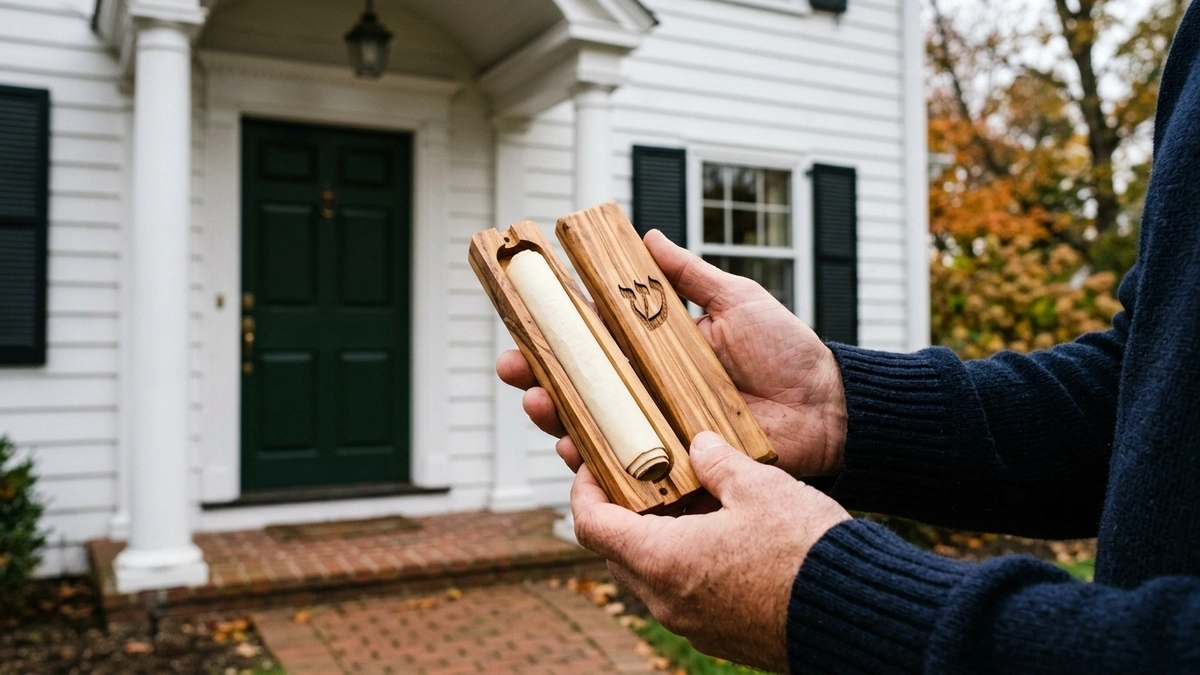
Once you have verified the scroll, you will need to select a case to protect it. The case serves a practical purpose by shielding the parchment from moisture, sunlight, and physical damage. Cases come in many materials, including wood, metal, ceramic, and plastic, and they range widely in price and design. While the case does not affect the kashrus of the scroll, it does play a role in preserving the scroll's integrity over time. Choose a case that fits securely and is appropriate for the location where the mezuzah will be affixed. For outdoor doorways, a weather-resistant case is essential. For indoor doorways, you have more flexibility in terms of aesthetic and material. The beauty of the case is secondary to the kashrus of what is inside, but a well-chosen case reflects the honor we give to this mitzvah and the care we take in maintaining it.
Which Mezuzah Scroll Is Right for Your Raleigh Home?
Kosher Mezuzah writes three scroll styles, and each ships to Raleigh with full documentation from an OU Endorsed writing and checking process. The Sefardi mezuzah scroll follows the ksav used in Sephardic and Mizrachi communities. The Ashkenaz Beis Yosef mezuzah scroll is the standard for most Ashkenazi homes. The Arizal mezuzah scroll follows the script favored in Chassidic communities. Each is available in 4.7 inch and 5.9 inch sizes across several quality tiers. If you are unsure which script matches your family's minhag, ask your rav, or contact us and we will help you choose.
Why Transparency and Traceability Matter
The mezuzah market today lacks the kind of standardized oversight that exists in other areas of kashrus. Unlike food products, which require a reliable hechsher and are subject to regular inspection, mezuzahs are frequently sold without clear documentation or third-party verification. This creates a challenge for consumers who want to fulfill the mitzvah properly but who lack the expertise to evaluate a scroll on their own. Transparency and traceability address this challenge by providing buyers with access to the information they need to make informed decisions. When you know who wrote your mezuzah, who checked it, and when it was produced, you have confidence that the scroll meets halachic standards. When you have access to oversight from a recognized authority such as the Orthodox Union, you benefit from a system of oversight that extends beyond any individual seller or retailer. This is not about prestige or marketing. It is about creating a reliable process that ensures every mezuzah sold under certification is truly kosher and that buyers can trust what they are purchasing. For families in Raleigh who want to fulfill the mitzvah of mezuzah with full confidence, choosing a source that offers transparency and traceability is an act of halachic responsibility. It reflects the seriousness with which we approach this mitzvah and the care we take to honor Hashem in every detail of our homes. Related reading: Buying a Mezuzah in Washington DC.
At Kosher Mezuzah, we are dedicated to ensuring the proper fulfillment of the mitzvah of mezuzah through a process rooted in transparency and halachic integrity. Every scroll we offer is handwritten in Israel by a vetted sofer, checked by trained magihim, and accompanied by documentation that includes the names of the sofer and magiah and the date of writing. Each mezuzah is packaged in a tamper-proof sleeve and includes QR-based verification so you can access its full history at any time. Our process is endorsed by the OU level, ensuring that every step from klaf preparation to final inspection meets the highest standards. We believe that fulfilling the mitzvah of mezuzah should never require guesswork or reliance on assumptions. Whether you are setting up your first home or replacing older scrolls, Kosher Mezuzah ensures each mezuzah scroll meets the highest halachic standards and provides the confidence you need to fulfill this precious mitzvah properly.



.svg)
Bring a true Kosher Mezuzah into your home
Fulfill the mitzvah with confidence, beauty, and meaning.
Buy a Mezuzah