

Buying a Mezuzah in Cincinnati: How to Choose an Authentic Kosher Scroll and Case
When you buy a mezuzah in Cincinnati, you are fulfilling a mitzvah that sanctifies your home and binds every doorway to the One Above. The mitzvah of mezuzah connects us to Hashem, reminds us of the kedushah (holiness) that permeates our daily lives, and serves as a tangible expression of our commitment to Torah and mitzvos. For a related question, see Buy a Mezuzah in Columbus.
Yet not every mezuzah offered for sale meets the exacting halachic requirements necessary to fulfill this sacred obligation. Many buyers assume that availability equals kashrus, especially in a city with established Judaica stores and vibrant kehillos. In practice, the mezuzah market operates without uniform oversight, and assumptions alone cannot guarantee that a given scroll is kosher.
At Kosher Mezuzah, we are dedicated to ensuring the proper fulfillment of the mitzvah of mezuzah through transparency, rigorous checking, and OU-level certification. This guide will help you understand what to look for when you buy a mezuzah in Cincinnati, the complexity of halachic standards, and why OU endorsement provides a structured solution to the challenges that buyers often face.
Why Authentic Kosher Mezuzahs Matter
A mezuzah that does not meet halachic standards does not fulfill the mitzvah, regardless of its appearance, its price, or the reputation of the store where it was purchased. The Torah commands us to write the words of Shema on the doorposts of our homes, and Chazal have taught us precisely how this must be done. The parchment must be genuine klaf prepared according to halacha. The ink must be kosher dio formulated without forbidden ingredients. The letters must be formed with exact precision, and every stroke must reflect the sofer's intent to fulfill the mitzvah of writing lishmah. Even a single letter that is malformed, faded, cracked, or touching another letter can render the entire mezuzah pasul.
Beyond the technical requirements, the mitzvah of mezuzah carries profound spiritual meaning. A kosher mezuzah transforms the doorway from a simple entrance into a portal of kedushah. It is a reminder that our homes are not merely private spaces, but mikdash me'at, a miniature sanctuary dedicated to the service of the Ribbono Shel Olam. When we enter and exit, we are reminded of Hashem's presence, of our responsibilities as Jews, and of the covenant between HaKadosh Baruch Hu and Klal Yisrael. This is why every detail matters, and why a mezuzah that appears beautiful but is halachically invalid cannot serve its purpose.
Many buyers are unaware of the complexity involved in producing a kosher mezuzah. They may not realize that the halachos of STaM form an interdependent system, where spacing, letter formation, tagin, and the materials themselves must all align with centuries of mesorah. The untrained eye cannot detect subtle flaws such as incorrect letter shapes, faded ink, or missing crowns. This is not a matter of personal preference or stringency: it is a question of whether the mitzvah has been fulfilled at all. When you buy a mezuzah in Cincinnati or anywhere else, you are placing your trust in a process that must extend from the sofer's quill to your doorpost, and that trust must be grounded in verifiable standards.
What to Look for When You Buy a Mezuzah
The Scroll: Halachic Standards and Verification
The scroll inside the case is the essence of the mitzvah, and it must meet rigorous halachic requirements to be kosher. The parchment must be made from the hide of a kosher animal and prepared according to the specifications set forth in Shulchan Aruch. The ink must be permanent, black, and formulated from kosher ingredients without admixtures that might invalidate it. The sofer who writes the mezuzah must be a G-d-fearing Jew with specialized training in the laws of STaM, and he must write each letter with the intention of fulfilling the mitzvah. The letters themselves must conform to precise shapes, known as tzurat ha'ot, and the spacing between words and lines must follow halachic standards to ensure that the text is written kesidran, in proper order.
Once the mezuzah has been written, it must be inspected by a trained magiah who knows how to identify errors that may not be visible to the untrained eye. Even small issues such as a cracked letter, a missing tag, or letters that touch one another can render the mezuzah pasul. In some cases, a letter may appear correct at first glance but fail to meet the halachic definition of the required shape. The magiah must examine each letter carefully, often using magnification, to confirm that the scroll is kosher. This checking process is not a formality: it is an essential step in ensuring that the mezuzah fulfills its purpose. Without documentation of who wrote the mezuzah, who checked it, and when it was inspected, a buyer has no way to verify that these steps were completed properly.
When you evaluate a mezuzah, you should ask whether the seller can provide the name of the sofer who wrote it, the name of the magiah who checked it, and the date of the writing. You should also ask whether the materials used, parchment and ink, are confirmed kosher. If the seller cannot answer these questions, you are being asked to rely on assumptions rather than verification. At Kosher Mezuzah, we ensure each mezuzah scroll meets the highest halachic standards, and we provide transparent documentation so that every buyer can fulfill the mitzvah with confidence. If you have questions about what makes a mezuzah kosher, we are here to help you understand the standards and make an informed choice.
The Case: Durability, Placement, and Aesthetic Considerations
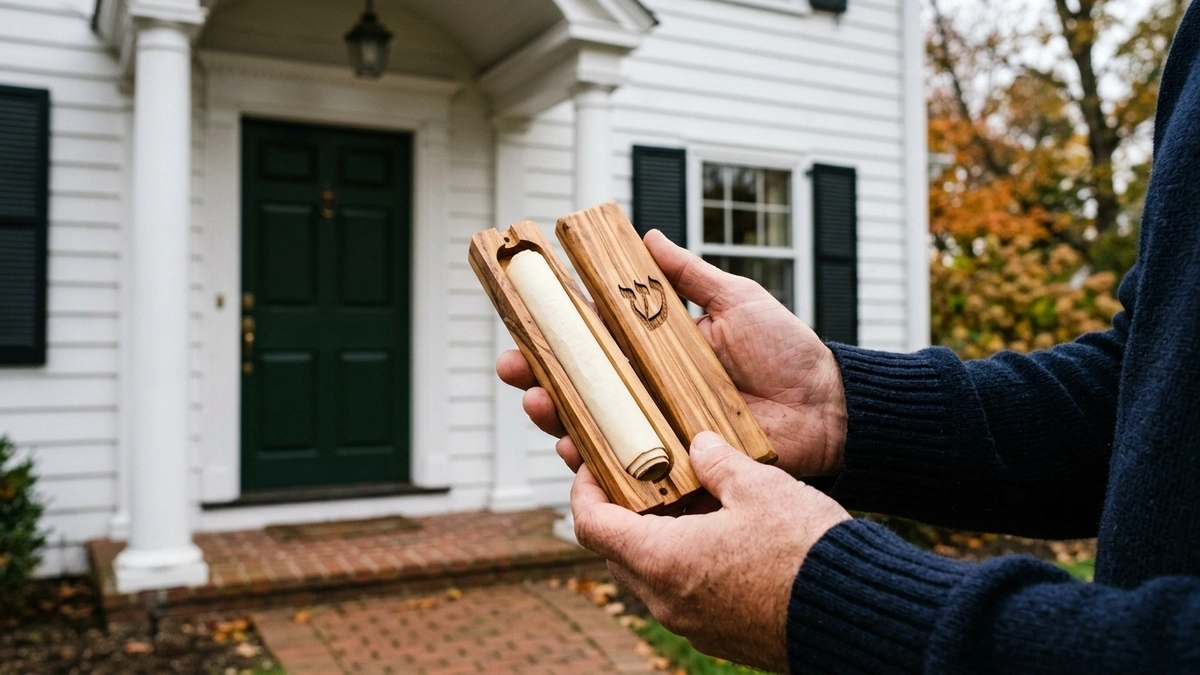
The Mezuzah case serves a practical function: it protects the scroll from moisture, light, and physical damage. While the case itself does not bear the same halachic weight as the scroll, it must be chosen with care to ensure that the parchment inside remains intact and legible. A case that allows moisture to seep in can cause the ink to fade or the parchment to warp, rendering the mezuzah pasul over time. Similarly, a case that is too small or poorly constructed may not provide adequate protection, especially in outdoor placements where the scroll is exposed to the elements.
When selecting a case, consider where the mezuzah will be affixed. Exterior doorways require cases that are weatherproof and durable, often made from materials such as metal, acrylic, or treated wood. Interior doorways offer more flexibility, and many families choose cases that reflect the aesthetic of their home or the character of a particular room. Regardless of the design, the case must be functional first and decorative second. A beautiful case that fails to protect the scroll is of no value, while a simple case that preserves the integrity of the parchment serves the mitzvah well.
It is also worth noting that over time, parchment can fade, crack, or become damaged, and halacha requires that mezuzahs be checked at regular intervals to ensure they remain kosher. A well-designed case facilitates this process and helps preserve the scroll for years to come. When you buy a mezuzah, consider both the scroll and the case as part of a unified system that protects and honors the mitzvah.
Mezuzah Store Options in Cincinnati OH
Cincinnati's Orthodox community is concentrated in Amberley Village, Golf Manor, and Roselawn, the adjacent neighborhoods north of the city that are home to the main Orthodox shuls, the Cincinnati Community Kollel, and the day schools. Blue Ash and Montgomery to the northeast have growing frum populations and Chabad centers. Most Judaica retail in Cincinnati runs through shul gift shops.
Local Judaica Shops and Synagogue Resources
Cincinnati is home to several established Judaica stores and synagogue gift shops that serve the local Jewish community. These shops often carry religious items such as mezuzah cases, Jewish books, ritual objects, and other Judaica used in Jewish homes and life-cycle observance. For many families, shopping locally is valuable because it allows them to see items in person, ask practical questions, and support Jewish institutions and businesses in the area.
| Store | Area | What they carry |
|---|---|---|
| Wise Temple Gift Shop | Pleasant Ridge | Judaica, mezuzah cases |
| Plum Street Temple Gift Shop | Downtown Cincinnati | Judaica, gifts |
| Adath Israel Coleman Judaica Shop | West Kemper Road area | Judaica, mezuzah cases |
These stores are listed for informational purposes only. Inclusion does not imply endorsement or evaluation of the kashrus of any mezuzos they carry. Ask each store who wrote the scroll, who checked it, and what documentation is available.
These shops play an important role in the community, but buyers should understand how the retail Judaica model usually works. A store may sell mezuzahs, cases, and related items without being the original source of the scroll itself. In many cases, the mezuzah was written by a sofer, checked by a magiah, distributed through another supplier, and only later offered for sale in a local shop. Because of this chain, details such as who wrote the scroll, who checked it, what materials were used, and how the inspection process was documented may not always be immediately available.
This does not reflect negatively on the honesty or professionalism of the store. It is simply a structural reality of how many Judaica products reach the consumer. When several parties are involved between the original writing of the scroll and the final purchase, informational gaps can naturally appear.
For buyers, the concern is that a mezuzah scroll must meet specific halachic requirements in order to be valid. Without clear documentation or standardized oversight, it can be difficult to verify the full history and status of a particular scroll. Even a sincere seller may not have complete visibility into every stage of the process. Certification helps address this uncertainty by giving buyers greater confidence that the mezuzah has been written, checked, and prepared according to reliable standards.
Advantages of Ordering from a Specialized Online Provider
In an unregulated market, online purchasing introduces an additional layer of complexity. Because you cannot physically examine the scroll before it arrives, there is inherently more uncertainty regarding what you are receiving. The mezuzah market does not have uniform oversight, and some online listings may provide minimal information about the sofer, the checking process, or the materials used. Without reliable verification, a buyer is forced to rely largely on trust, which can increase the risk of receiving a mezuzah that does not meet proper halachic standards.
However, ordering a mezuzah from a specialized, documented online provider can offer meaningful advantages in terms of halachic assurance and transparency. When you purchase from a source that maintains Our OU Endorsed writing and checking process and direct relationships with vetted sofrim, you gain access to consistent halachic standards regardless of your geographic location. The result is a process that offers clear accountability and documented traceability from the moment the parchment is prepared to the moment it arrives at your door.
At Kosher Mezuzah, each mezuzah is handwritten in Israel by a vetted sofer whose credentials have been verified and whose work is subject to ongoing oversight. Independent magihim trained in the laws of STaM inspect every scroll, and technological review tools provide an additional layer of verification.
Each scroll is packaged in a tamper-evident sleeve and accompanied by documentation that includes the name of the sofer, the name of the magiah, and the date of writing. This level of transparency is difficult to replicate in a retail environment where mezuzahs pass through multiple hands before reaching the consumer. In contrast, a mezuzah store in Cincinnati may not be able to provide the same level of accountability.
This is not a matter of convenience, price, or lifestyle preference. It is a matter of verification, responsibility, and confidence in fulfilling the mitzvah properly. Many families who value supporting local Jewish resources still choose to order their mezuzahs from a documented online source because they recognize that the stakes are halachic rather than transactional. The mitzvah of mezuzah is too precious to leave to assumptions, and certification provides a structured solution to the uncertainties that pervade the market. If you are considering where to buy a mezuzah in Cincinnati, we encourage you to weigh the importance of documentation, oversight, and rabbinic accountability in your decision. See also Buy a Mezuzah in Cleveland.
How Many Mezuzahs Does Your Cincinnati Home Need?
The mitzvah of mezuzah applies to every doorway in your home that meets certain halachic criteria, and many homeowners are surprised to discover how many mezuzahs are required. The general rule is that any room used for dwelling purposes and that has a proper doorframe must have a mezuzah. This includes bedrooms, living rooms, dining rooms, kitchens, and finished basements. Bathrooms, closets smaller than a certain size, and storage areas are typically exempt, though there are nuances and differences of opinion that should be discussed with a rav.
| Doorway | Mezuzah required? | Notes |
|---|---|---|
| Front entrance | Yes | Right side as you enter, upper third of the doorpost |
| Bedrooms | Yes | Includes children's rooms and guest rooms |
| Kitchen and dining room | Yes | If the room has a proper doorway |
| Living room and family room | Yes | Including archways without doors, ask your rav about width |
| Home office and study | Yes | Any room used for living purposes |
| Hallways and interior arches | Usually | Depends on structure, confirm with your rav |
| Garage | Depends | Based on use and connection to the house, ask your rav |
| Porch, deck, or balcony | Depends | Ask your rav |
| Bathrooms | No | Exempt |
| Small closets and pantries | Usually no | Exempt if under the minimum size, ask your rav |
To estimate how many mezuzahs you need, walk through your home and count the doorways that lead into rooms where people live, eat, or spend significant time. Include both exterior and interior doors, but remember that not every doorway requires a mezuzah. Arched openings without a doorframe, doorways that are unusually wide or narrow, and entrances to rooms used exclusively for storage may not meet the halachic criteria. If you are uncertain about a particular doorway, it is always best to consult with a local rav who can provide guidance based on your specific situation and the minhag of your community.
Once you have determined how many mezuzahs you need, you can plan your purchase accordingly. The mitzvah of mezuzah is meant to be a source of blessing and protection for your home, and fulfilling it properly brings both spiritual and practical peace of mind. If you need assistance determining how many mezuzahs your Cincinnati home requires, we are available to answer your questions and provide personalized guidance.
Ensuring Traceability and Rabbinic Oversight
Traceability is the foundation of trust in the mezuzah market. When you buy a mezuzah, you are entrusting the fulfillment of a mitzvah to a system that begins with the sofer who writes the scroll and extends through the magiah who checks it, the distributor who packages it, and the seller who places it in your hands. At each step, there is an opportunity for verification or for gaps in oversight. Without a standardized process that documents each stage, buyers are left to rely on assumptions, and assumptions are not sufficient when the stakes are halachic.
OU endorsement exists to address this gap by providing a documented, end-to-end process that ensures every mezuzah meets rigorous standards. The certification process includes vetting of sofrim to confirm their training and yiras Shamayim, verification of materials to ensure that the parchment and ink are kosher, checking by trained magihim who inspect every letter, and technological review using advanced tools that can detect flaws invisible to the naked eye. Once a mezuzah has been certified, it is packaged in a tamper-evident sleeve that protects the scroll and provides assurance that it has not been altered or replaced. Each verified mezuzah is accompanied by documentation that allows the buyer to verify its history and confirm that it meets the standards promised.
This level of traceability provides confidence that the mitzvah is being fulfilled properly. It also creates accountability, because the documented provider can be held responsible if a problem is later discovered. In a market where many mezuzahs are sold with little or no documentation, certification offers a structured alternative that prioritizes transparency and halachic integrity.
At Kosher Mezuzah, we are committed to this standard because we believe that every family deserves to fulfill the mitzvah of mezuzah with confidence and peace of mind. When you order from us, you are not simply purchasing a product: you are joining a process that reflects the care and precision that this sacred mitzvah demands.
Which Mezuzah Scroll Is Right for Your Cincinnati Home?
Kosher Mezuzah writes three scroll styles, and each ships to Cincinnati with full documentation from an OU Endorsed writing and checking process. The Sefardi mezuzah scroll follows the ksav used in Sephardic and Mizrachi communities. The Ashkenaz Beis Yosef mezuzah scroll is the standard for most Ashkenazi homes. The Arizal mezuzah scroll follows the script favored in Chassidic communities. Each is available in 4.7 inch and 5.9 inch sizes across several quality tiers. If you are unsure which script matches your family's minhag, ask your rav, or contact us and we will help you choose.
Conclusion
The mitzvah of mezuzah is a daily reminder of our connection to Hashem and the sanctity of the Jewish home. When you buy a mezuzah in Cincinnati, you are making a choice that extends beyond aesthetics or convenience. You are choosing how to fulfill a mitzvah that requires precision, care, and halachic integrity. The mezuzah market presents challenges due to the lack of uniform oversight, and these challenges make it difficult for buyers to verify that a given scroll meets all the requirements set forth in halacha. Certification provides a structured solution by offering transparency, traceability, and rabbinic accountability at every stage of the process.
Whether you choose to shop locally or to order from a documented online provider, the key is to prioritize documentation and oversight. Ask questions about who wrote the mezuzah, who checked it, and what materials were used. Seek out sellers who can provide clear answers and who stand behind their products with verifiable standards.
At Kosher Mezuzah, we ensure each mezuzah scroll meets the highest halachic standards, and we are dedicated to helping families fulfill this precious mitzvah with confidence. If you are ready to take the next step, contact us to learn more about our mezuzahs, written and checked through our OU Endorsed process, and how we can assist you in bringing kedushah into your home.



.svg)
Bring a true Kosher Mezuzah into your home
Fulfill the mitzvah with confidence, beauty, and meaning.
Buy a Mezuzah