

Buying a Mezuzah in Chicago: A Guide for Jewish Homes in Skokie, West Rogers Park & Beyond
Looking to buy a mezuzah in Chicago? This guide explains how to verify that a mezuzah is truly kosher, what documentation to ask for, and the difference between retail and documented sources. Learn how to choose a mezuzah that fulfills the mitzvah according to proper halachic standards.
When you set out to buy a mezuzah in Chicago, you're not simply shopping for a decorative item or a token of tradition. You're taking responsibility for a mitzvah that defines the kedushah of your home and your family's connection to Hashem. The mezuzah is a daily reminder of the Torah's presence, a declaration of faith written by hand on kosher parchment, enclosed in a case, and affixed to the doorposts where we live.
Yet the market for mezuzos presents challenges that many buyers never anticipate. Not every mezuzah sold in a retail setting has been written or checked to halachic standards, and without clear documentation or third-party oversight, even well-meaning buyers can find themselves fulfilling the mitzvah improperly.
At Kosher Mezuzah, we're dedicated to ensuring the proper fulfillment of the mitzvah of mezuzah through transparency, certification, and education. This guide will help you understand what to look for, where to find it, and why certain choices offer greater confidence that you're meeting your halachic responsibility.
Understanding Your Mezuzah Options in Chicago
What Makes a Mezuzah Kosher and Authentic
A kosher mezuzah must meet precise halachic requirements that extend far beyond surface appearance. The klaf must be prepared from the skin of a kosher animal, processed according to specific guidelines. The ink must be formulated correctly and applied by hand. Every letter of the Torah passages written in the mezuzah must be formed with exact dimensions, proper spacing, and the correct letter formation. At every stage of the process, the sofer must write with conscious intention to fulfill the mitzvah. After the writing is complete, a trained magiah must inspect the scroll letter by letter, checking for defects in tzurat ha'ot, spacing errors, and any invalidating flaws.
Because the halachos of STaM form an interdependent system, it's not sufficient to verify one or two elements. Even small deviations can render a mezuzah pasul, yet these issues are often invisible to the untrained eye. A scroll might look beautiful and still be invalid due to issues with the order the letters were written, improperly formed letters, or lack of proper intention during the writing.
Many buyers assume that purchasing from any Jewish retailer guarantees kashrus, but the reality is more nuanced. Without documentation of the sofer's identity, the magiah's credentials, the date of writing, and the materials used, there is limited assurance that the scroll meets all requirements. This is why understanding the verification process matters as much as the purchase itself.
Chicago IL Mezuzah Store Landscape: Local Resources
Judaica Shops and Community Hubs
Chicago is home to several established Judaica retailers that serve the city's diverse Jewish communities. These stores offer a range of religious items, including mezuzos, Mezuzah cases, tefillin, and other ritual objects. Below is a reference table of local Judaica stores in the Chicago area. This list is provided for informational purposes only and does not constitute endorsement or evaluation of any store.
| Store | Area | What they carry |
|---|---|---|
| Rosenblum's World of Judaica | Skokie | Judaica, mezuzos, cases |
| KesherStam Judaica | Chicago | STaM: Mezuzos, tefillin |
These stores are listed for informational purposes only. Inclusion does not imply endorsement or evaluation of the kashrus of any mezuzos they carry. Ask each store who wrote the scroll, who checked it, and what documentation is available.
These retailers are part of Chicago's Jewish infrastructure and have built relationships within their respective communities. Many families appreciate the ability to walk into a store, speak with staff, and leave with a mezuzah the same day. These are real advantages, especially for those who prefer face-to-face interactions or who need a mezuzah urgently.
Mezuzah Stores in Chicago: What to Look For
Verifying the Sofer and Magiah
When you consider purchasing from any mezuzah store in Chicago, one of the first questions to ask is about the sofer. Who wrote this scroll? What are their credentials, and how can you verify their yiras Shamayim and expertise in hilchos STaM? Similarly, you should inquire about the magiah who checked the scroll. Was the scroll checked once or twice? Are the checkers named individuals with verifiable credentials, or is the checking process undocumented? These are not theoretical concerns but practical questions that directly affect whether the mezuzah fulfills the mitzvah.
Many retail environments cannot provide this level of detail on demand because the scrolls have passed through multiple hands before reaching the sales floor. This informational distance is a structural reality of the retail supply chain. It does not imply negligence or deception, but it does mean that buyers who seek full documentation may face limitations when purchasing through traditional retail channels. The mezuzah market lacks standardized oversight, and without a system that requires traceability at every step, gaps in documentation are common.
Even if you're able to inspect a mezuzah in person, visual examination has significant limits. The klaf should be smooth, properly prepared, and free from visible defects, but many invalidating issues are not visible to the naked eye. The ink should be black, even, and properly adhered, yet the chemical composition and application method cannot be assessed by looking alone. Letter formation requires knowledge of hilchos tzurat ha'ot, and spacing issues such as chisura d'ochrita or yeseira d'ochrita demand trained scrutiny. A consumer without STaM training cannot reliably determine whether a scroll is kosher simply by examining it.
This is why the verification process matters more than the appearance. A scroll that looks flawless may have been written out of order, invalidating it entirely. A scroll that appears slightly worn may still be perfectly kosher if no letters have been compromised. The only way to know with certainty is through rigorous checking by qualified magihim and clear documentation of the results. Certification systems are designed to fill this gap, offering buyers third-party assurance that the scroll has been properly vetted and that the results are documented for future reference.
Asking About Rabbinic Certification for Mezuzahs
When evaluating any mezuzah, ask whether it carries rabbinic certification or third-party oversight. Certification is not a marketing label but a structured process that provides transparency and accountability. Mezuzos from our OU Endorsed process, for example, undergo a multi-step verification process that includes vetting of the sofer, verification of materials, checking by named magihim, technological review, and tamper-proof packaging. The certification is documented and traceable, and it provides a consistent standard across all verified scrolls. This system addresses the lack of uniform oversight in the broader market and offers buyers a clear framework for assessing kashrus.
Not all mezuzos sold in Chicago carry such certification, and that does not automatically render them pasul. But, it does mean that buyers must rely on other forms of assurance, such as personal relationships with the retailer or recommendations from a trusted rav. When those relationships or recommendations are not available, certification becomes an important tool for ensuring that the mitzvah is properly fulfilled. At Kosher Mezuzah, every scroll we offer is OU Endorsed, with full documentation available to the buyer, ensuring transparency and halachic responsibility.
Local vs. Online: Where to Buy Your Mezuzah
The choice between purchasing a mezuzah locally in Chicago or ordering from a documented online source is not primarily about convenience or price. It's about verification, transparency, and halachic accountability. Local Judaica stores serve important roles in Chicago's Jewish community, offering immediate access to ritual items and face-to-face customer service. Many of these stores are trusted establishments with years of communal relationships. But, retail Judaica shops are typically not the original writers or checkers of the mezuzos they sell. They source scrolls from wholesalers, sofrim, or distributors, and the documentation that accompanies each scroll may be limited or absent entirely. This reflects the structure of retail distribution, not the integrity of any individual store. For a related question, see Buy a Mezuzah in Detroit.
Recently, there are online sources that have begun selling verified mezuzos that provide a high level of accountability. When a mezuzah comes from a seller endorsed by a recognized authority such as the Orthodox Union, buyers receive documented verification of the sofer, the magiah, the materials, the date of writing, and future checking schedules. Each scroll is packaged in tamper-evident sleeves, and QR-based systems allow buyers to trace the entire history of their mezuzah from the sofer's quill to their doorpost. This level of traceability is not typically available through retail channels, even when the retailer acts in good faith. Ordering from a trusted, documented online source may be the wiser decision when halachic confidence is the priority.
When you order from Kosher Mezuzah, you receive a scroll that has been written in Eretz Yisrael by a vetted sofer, checked by trained magihim, and overseen according to OU standards. The documentation travels with the mezuzah, and our responsibility continues beyond the point of sale. If you have questions about placement, if you need guidance on checking schedules, or if you discover an issue years later, we're here to help. For many families in Chicago and beyond, this combination of transparency and ongoing support offers the halachic confidence they seek
The Case for Ordering Your Mezuzah Online
Transparency and Traceability in the Digital Age
Ordering a mezuzah online from a documented source can offer halachic advantages that are difficult to replicate through traditional retail channels. When you purchase a mezuzah from our OU Endorsed process from Kosher Mezuzah, you gain access to documented verification that includes the sofer's name, the magiah's credentials, the date of writing, the materials used, and the future checking schedule. This information is recorded in a tamper-proof system and made available to you through QR-based verification. You can trace the entire life cycle of your mezuzah, from when it was written to the day it arrives at your home. This level of transparency addresses the informational gaps that exist in the broader market and provides confidence that the mitzvah is being fulfilled according to halachic standards. For buyers who prioritize halachic accountability and peace of mind, ordering online from a trusted source can be the wiser choice, even when local options are available.
Delivery, Installation, and Ongoing Support
Beyond the initial purchase, Kosher Mezuzah provides support that extends throughout the life of the mezuzah. When your order arrives, it includes clear instructions for proper placement and affixing. If you have questions about which doorways require a mezuzah, whether a bracha is needed, or how to handle specific situations such as rentals or shared spaces, you can contact us directly. We're available by phone or Whatsapp at tel:+1848-356-9471, or by email at info@kmezuzah.com. Our goal is to ensure that every buyer not only receives a kosher mezuzah but understands how to care for it and when to have it checked again.
This ongoing relationship reflects our broader mission. At Kosher Mezuzah, we're dedicated to ensuring the proper fulfillment of the mitzvah of mezuzah through transparency, certification, and education. We believe that every family deserves access to scrolls that meet the highest halachic standards and that the process of acquiring and maintaining a mezuzah should be clear, documented, and supported by knowledgeable guidance. Whether you're affixing your first mezuzah or replacing scrolls in a home you've lived in for years, we're here to help you fulfill the mitzvah with confidence and clarity. Learn more about the mitzvah of mezuzah and explore our full range of verified scrolls and cases.
How Many Mezuzahs Will You Need?
Before you begin shopping, it's helpful to determine how many mezuzos your home requires. According to halacha, a mezuzah is required on every doorway that leads to a living space, with certain exceptions. The front door always requires a mezuzah. Interior rooms such as bedrooms, dining rooms, living rooms, and studies typically require mezuzos as well. Bathrooms, closets smaller than a certain size, and rooms used exclusively for storage generally do not require mezuzos, though there are nuances based on size, use, and minhag. Consult your rav for guidance on borderline cases.
| Doorway | Mezuzah required? | Notes |
|---|---|---|
| Front entrance | Yes | Right side as you enter, upper third of the doorpost |
| Bedrooms | Yes | Includes children's rooms and guest rooms |
| Kitchen and dining room | Yes | If the room has a proper doorway |
| Living room and family room | Yes | Including archways without doors, ask your rav about width |
| Home office and study | Yes | Any room used for living purposes |
| Hallways and interior arches | Usually | Depends on structure, confirm with your rav |
| Garage | Depends | Based on use and connection to the house, ask your rav |
| Porch, deck, or balcony | Depends | Ask your rav |
| Bathrooms | No | Exempt |
| Small closets and pantries | Usually no | Exempt if under the minimum size, ask your rav |
To estimate your needs, start at your front door and walk through your home, noting each doorway. Count the main entrance, then move through each room. A typical single-family home might need six to twelve mezuzos, though larger homes or multi-level residences may require more. If you're renting, you still have a halachic obligation to affix mezuzos, though the process for reclaiming them when you move out may differ depending on whether the next occupant is Jewish. Your rav can provide specific guidance for your situation.
Once you know how many mezuzos you need, you can plan your purchase accordingly. Kosher Mezuzah offers mezuzos in various sizes to suit different doorways, and each scroll is certified to the same rigorous standard. Whether you need one mezuzah or a dozen, the process is straightforward, and the documentation you receive will give you confidence that each scroll meets halachic requirements. Contact us if you'd like help estimating your needs or if you have questions about placement and sizing.
Choosing Mezuzah Cases That Suit Your Chicago Home
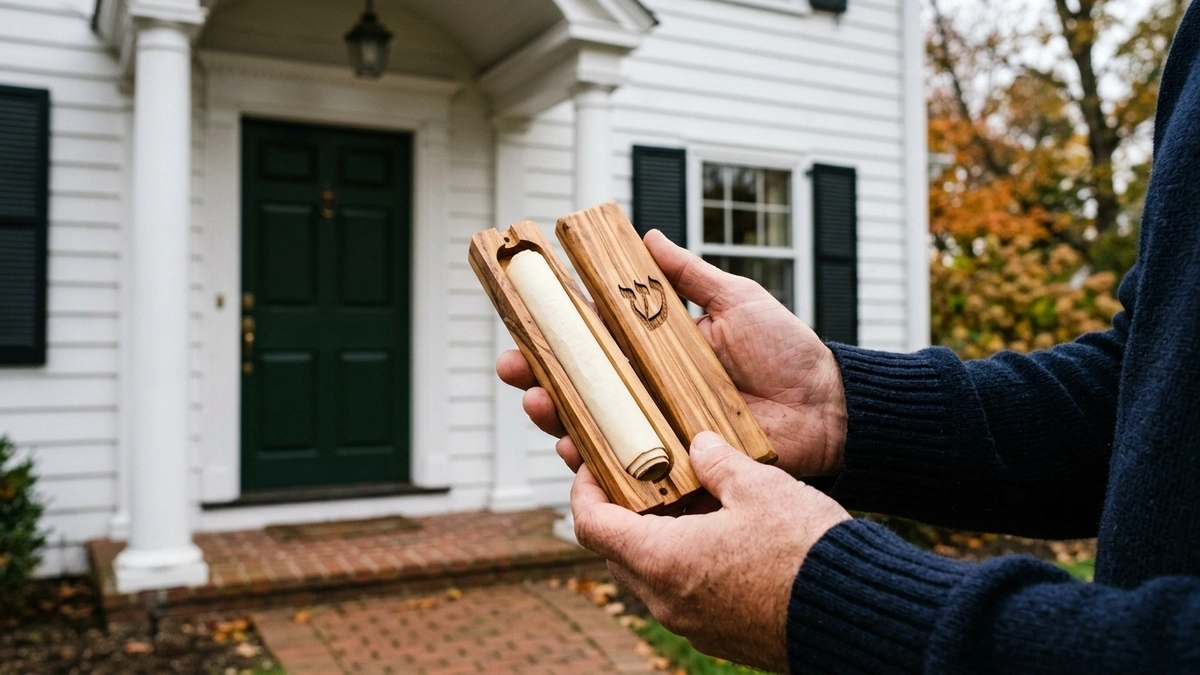
The mezuzah case serves an important function, protecting the scroll from weather, moisture, and physical damage. While the case itself does not need to meet the same halachic standards as the scroll, it should be durable, properly sealed, and appropriate for its location. Exterior doorways require weatherproof cases, often made from metal or hard plastic, that can withstand Chicago's seasonal extremes. Interior doorways can accommodate a wider variety of materials, including wood, ceramic, and decorative designs that complement your home's aesthetic. The case should fit the scroll snugly without bending or compressing it, and it should be easy to open if the scroll needs to be checked or replaced.
Many families choose cases that reflect their personal taste or heritage, and there's room for beauty and creativity within the bounds of halacha. A mezuzah case can be simple and understated or ornate and artistic, as long as it fulfills its protective role. At Kosher Mezuzah, we offer a range of cases designed to suit different doorways, climates, and styles. Each case is selected with both function and kedushah in mind. When you order from us, you can choose cases that match your home's character while ensuring that the scroll inside is protected and honored.
Remember that the case is secondary to the scroll. A beautiful case cannot compensate for a pasul mezuzah, but a kosher scroll in a modest case fulfills the mitzvah completely. Prioritize the integrity of the scroll first, then select cases that enhance and protect it. If you're unsure which case is right for a particular doorway, reach out to us for guidance. We're here to help you make choices that honor both the mitzvah and the space it sanctifies.
Winter, Storm Doors, and When to Check Your Mezuzos in Chicago
Chicago winters test everything attached to the outside of a house, and mezuzos are no exception. Freeze-thaw cycles, wind-driven snow, and months of temperature swings reach exterior doorposts throughout West Rogers Park, Skokie, and Lincolnwood. Many Chicago homes also use storm doors, which raise a placement question families should settle with their rav: which doorpost carries the obligation when an outer door and inner door frame the same entrance.
The cold itself does not invalidate a scroll, but repeated moisture and temperature cycling can affect ink and klaf over the years. A sealed case suited to exterior use is the first line of protection. The second is the halachic checking schedule of twice in seven years, applied with extra attentiveness to any mezuzah that has spent several winters on an exposed door. If a case shows cracking or condensation inside, have the scroll examined without waiting for the next scheduled check. Our overview of signs your mezuzah needs checking covers what to watch for.
Which Mezuzah Scroll Is Right for Your Chicago Home?
Kosher Mezuzah writes three scroll styles, and each ships to Chicago with full documentation from an OU Endorsed writing and checking process. The Sefardi mezuzah scroll follows the ksav used in Sephardic and Mizrachi communities. The Ashkenaz Beis Yosef mezuzah scroll is the standard for most Ashkenazi homes. The Arizal mezuzah scroll follows the script favored in Chassidic communities. Each is available in 4.7 inch and 5.9 inch sizes across several quality tiers. If you are unsure which script matches your family's minhag, ask your rav, or contact us and we will help you choose.
Conclusion
When you buy a mezuzah in Chicago, you're taking on a responsibility that extends beyond the transaction itself. The mitzvah of mezuzah is a declaration of faith, a reminder of Hashem's presence, and a source of kedushah for your home and family. Because the halachic requirements are precise and the market lacks uniform oversight, it's essential to approach the purchase with care, seeking sources that offer transparency, documentation, and rabbinic certification. Whether you choose to visit a local Judaica store or to order from a documented online source, the key is to prioritize verification and accountability over convenience or appearance.
Kosher Mezuzah ensures each mezuzah scroll meets the highest halachic standards through a rigorous process of writing, checking, and certification. Every scroll is written by a vetted sofer in Eretz Yisrael, inspected by trained magihim, and overseen according to OU standards. The documentation you receive provides peace of mind and enables you to fulfill the mitzvah with confidence. We're here to answer your questions, guide you through the process, and support you at every stage, from initial purchase to future checking. Visit our shop to explore our full range of verified mezuzos and cases.
May the mitzvah of mezuzah bring blessings and protection to your home. May your doorposts bear witness to your commitment to Torah, and may the kedushah of the mezuzah accompany you and your family in all your comings and goings. If you have questions or need assistance, please don't hesitate to reach out. We're honored to serve you in this sacred mitzvah.



.svg)
Bring a true Kosher Mezuzah into your home
Fulfill the mitzvah with confidence, beauty, and meaning.
Buy a Mezuzah