
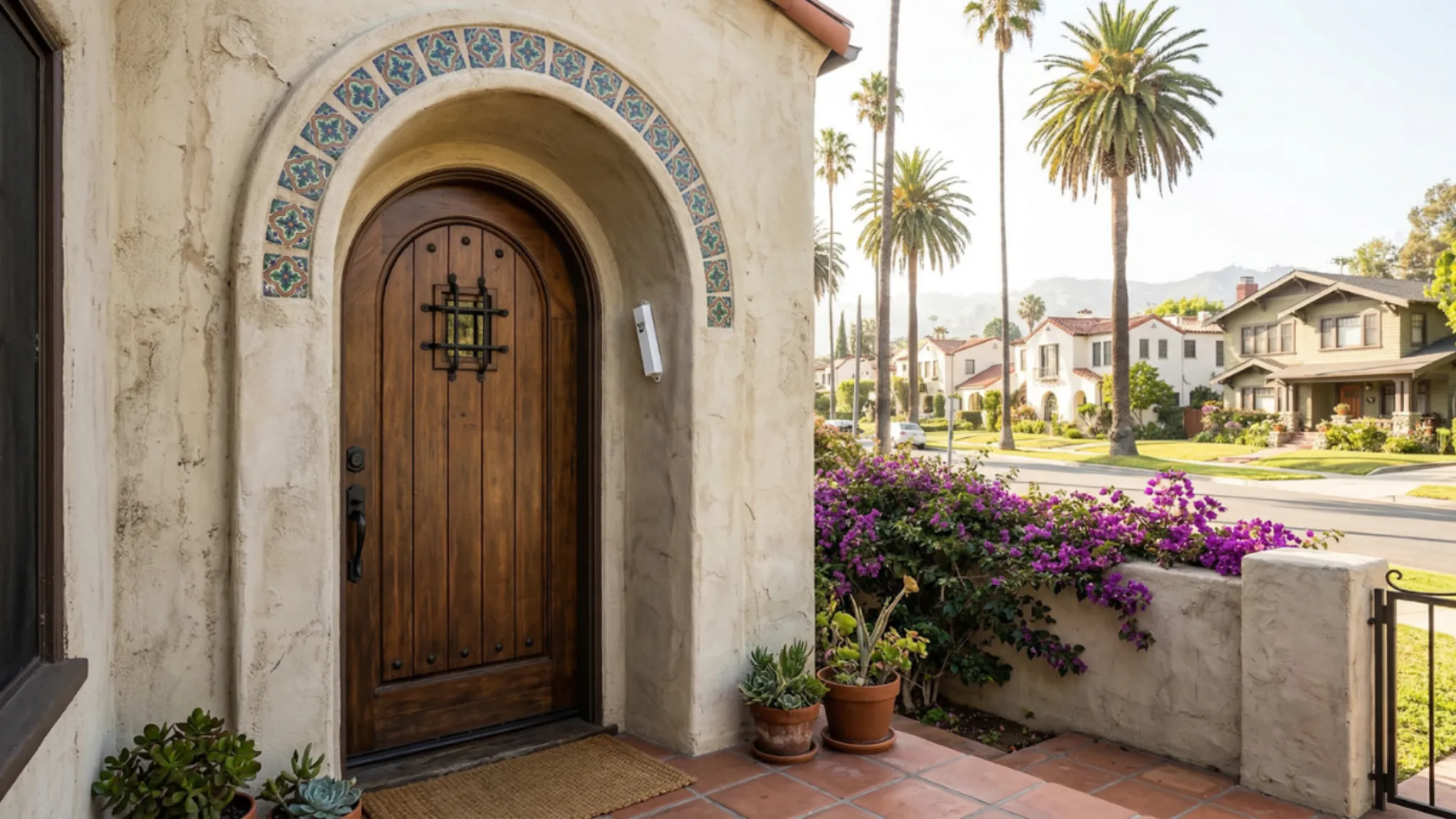
Where To Buy A Mezuzah In Los Angeles: A Practical Guide To Kosher Scrolls And Trusted Stores
Buying a mezuzah in Los Angeles requires more than choosing a case. Learn how to verify a kosher scroll, understand halachic standards, and buy with confidence.
Buy mezuzah in Los Angeles sounds simple until you remember what you are really doing: placing a sacred, handwritten parshah on your doorpost as a daily reminder of Hashem and the kedushah (holiness) of a Jewish home. A mezuzah is not a decoration, and it is not a "Jewish good-luck charm." It is a mitzvah with real halachic requirements, and those requirements begin with the scroll itself. We cover this in more depth in Where to Buy a Mezuzah in San Diego.
In Los Angeles, Baruch Hashem, there are beautiful Jewish neighborhoods and many ways to find Judaica. At the same time, the mezuzah market has one unique challenge: you often cannot tell by looking whether the scroll is kosher, who wrote it, or whether it was checked properly. That is why a responsible choice here is not about convenience or price, but about verification, standards, and accountability.
At Kosher Mezuzah, we are dedicated to ensuring the proper fulfillment of the mitzvah of mezuzah. If you want a clear path forward, start by learning what must be kosher, what to ask any seller, and how to keep your mezuzos kosher over time. You can also learn how to ensure your mezuzah is kosher through our educational resources at Kosher Mezuzah.
Start With The Halachah: What You’re Actually Buying
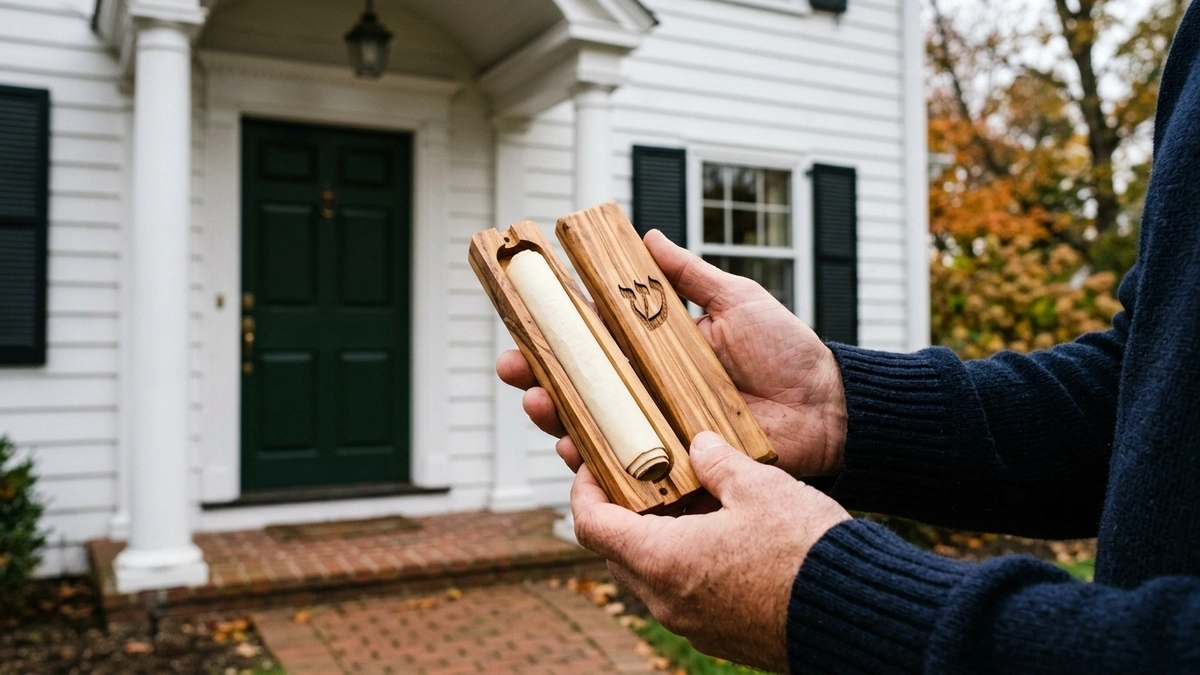
The first step to buy mezuzah in Los Angeles is defining what a mezuzah is. In practical terms, people use the word "mezuzah" to mean the case on the doorpost, but in halachah the mezuzah is the handwritten scroll inside. The case is important for protection and placement, but the mitzvah is fulfilled with a kosher scroll written correctly on parchment with ink by a qualified sofer (scribe). Start by deciding that the scroll will be your main focus, and let the case serve the scroll.
Foundational Halachic Requirements: What Makes a Mezuzah Scroll Truly Kosher
A kosher mezuzah is not simply handwritten text on parchment. It is a halachically structured document governed by the intricate laws of STaM (Sifrei Torah, Tefillin, and Mezuzos), where precision, order, and intent determine validity.
The scroll must be written on kosher klaf prepared from the hide of a kosher animal and processed lishmah — for the specific sanctified purpose of a mezuzah. The ink (dio) must meet traditional halachic standards, formulated to endure without cracking, fading, or flaking over time.
Beyond materials, the act of writing itself is governed by exacting requirements:
- Lishmah (Proper Intent): The sofer must write each letter with conscious intent that it is being written for the sake of the mitzvah of mezuzah. Without proper intent, even perfectly formed letters are invalid.
- Kesidran (Proper Order): The mezuzah must be written in sequential order. If even one letter is written out of order and later corrected, the scroll may become pasul.
- Tzuras HaOsiyos (Proper Letter Formation): Every one of the 713 letters must conform precisely to halachic specifications. A cracked stroke, an improperly shaped corner, or a letter that resembles another can invalidate the entire scroll.
- Tagin (Crowns): Certain letters require decorative crowns drawn according to tradition. Missing or malformed tagin can affect validity.
- Spacing and Separation: Letters may not touch one another (negiyos), and proper spacing between words and lines must be maintained.
- Sirtut (Scoring Lines): The parchment is scored with guiding lines to ensure straight, properly aligned writing, which is itself a halachic requirement.
A single malformed letter, an unintended break in a stroke, or a violation of writing order can render a mezuzah pasul.
What Is the OU Mezuzah Certification Program?
The OU Mezuzah Certification Program was created to solve a growing problem in today’s mezuzah market: many mezuzahs are being sold without proper halachic oversight. Because the laws of mezuzah are intricate and highly detailed, even small mistakes in writing, materials, or checking can render a mezuzahpasul (invalid).
Until now, there was no standardized regulatory process to ensure quality and transparency. With high demand, limited supply, and non-transparent supply chains, consumers often had no way to verify whether their mezuzah was written and checked according to halacha.
The OU program introduces a first-of-its-kind oversight system that ensures every step meets strict standards.
How OU endorsement Protects You
An OU-approved mezuzah goes through a rigorous approval process:
- Certified Sofrim – Each mezuzah is written by a regularly vetted sofer.
- Verified Materials – The klaf and ink are confirmed to meet halachic standards.
- Professional Checking – Every mezuzah is examined by qualified magihim and reviewed with advanced computer scanning technology.
At Kosher Mezuzah, our mezuzah, written and checked through our OU Endorsed process, meets the highest standards of halachic compliance through the OU's rigorous oversight process. Every mezuzah is written by a regularly vetted sofer, produced using verified kosher materials, and carefully examined by qualified magihim, supplemented by advanced computer scanning technology. With full transparency and documented verification, this OU endorsement ensures that your mezuzah is not only beautiful — but unquestionably kosher according to halacha.
What To Look For In A Mezuzah Store In Los Angeles
A mezuzah store in Los Angeles can be a meaningful resource, especially when the staff understands the mitzvah and can guide you respectfully. Many local stores also have relationships with sofrim or checking services, and that community network can be a real benefit. The key is to make sure that what you are receiving is not just a nice shopping experience, but a kosher mezuzah with verifiable standards behind it.
Before the table, one important note: we respect local Jewish resources and we encourage supporting them when possible. The question here is not "local versus online" as an identity choice, but whether a seller can provide reliable verification.
Here are a few local options for buying a mezuzah in Los Angeles CA:
| Store | Area | What they carry |
|---|---|---|
| Shalom House Fine Judaica | Woodland Hills | Judaica, mezuzah cases |
| Atara's Judaica (Chabad on Fairfax) | Fairfax | Judaica, mezuzos, cases |
These stores are listed for informational purposes only. Inclusion does not imply endorsement or evaluation of the kashrus of any mezuzos they carry. Ask each store who wrote the scroll, who checked it, and what documentation is available.
Demand Clear Accountability: Names, Dates, and Verification
The most reliable indicator of a kosher mezuzah is accountability. A responsible seller should be able to clearly identify who wrote the scroll, who checked it, and when those steps took place. Kashrus is not based on assumptions or reputation alone — it depends on traceable halachic responsibility.
A mezuzah should never be a mystery product with unknown sourcing. When names, dates, and checking procedures are documented, questions can be addressed later with clarity. When that information is unavailable, long-term confidence is weakened.
Before purchasing, request written confirmation of the sofer’s identity, the magiah’s inspection, and the date of writing or checking. Proper documentation protects the mitzvah and the buyer.
Avoid Unverifiable or Incomplete Products
Not every item sold as a “mezuzah” meets halachic standards. Some are printed rather than handwritten. Others may be handwritten but never properly checked. Still others are marketed with reassuring language that lacks concrete verification.
Terms like “high quality” or “from Israel” are not substitutes for proof of ksivah (writing) and bedikah (inspection). What matters is whether the scroll was written lishmah, inspected carefully, and documented responsibly.
If a seller cannot clearly explain the writing and checking process — and cannot identify who was responsible — that is a signal to pause. A mezuzah is a mitzvah d’Oraysa, and it deserves verification, not vague assurances.
Buying a Mezuzah in Los Angeles: Local Store or Online?
When purchasing a mezuzah in Los Angeles, the real question is not where you buy it, but whether the scroll is genuinely kosher and properly verified. Both local stores and online providers can be appropriate — if they offer clear halachic standards, reliable checking, and documented accountability. Related reading: Buy a Mezuzah in Las Vegas.
When a Local Store Makes Sense
An in-person visit can be helpful if you want to see Mezuzah cases up close, compare sizes, and ensure a proper fit for your doorway. Local shops may also offer general guidance on placement and mounting. If you need a mezuzah immediately — for example, after moving into a new home — same-day pickup can be practical.
The key question remains: can the store clearly identify who wrote the scroll, who checked it, and what standards were followed?
When Online May Be the Stronger Option
Ordering online can offer greater consistency and traceability — if the provider maintains uniform halachic standards. A responsible online purchase should include:
- The name and credentials of the sofer
- Confirmation of professional checking (bedikah)
- Clear documentation and certification
- Ongoing accountability if a question arises later
Online purchasing is often the wiser choice when local verification is unclear or documentation is limited. Known sofer credentials, independent certification, and transparent oversight are not luxuries — they are essential safeguards for a Torah commandment.
At Kosher Mezuzah, our role is to make that accountability concrete. Kosher Mezuzah ensures each mezuzah scroll meets the highest halachic standards, under our OU Endorsed writing and checking process, and scrolls handwritten in Israel by a vetted sofer. We also emphasize ongoing accountability beyond the point of sale, because a mezuzah is meant to serve your home for years.
How Many Mezuzahs Does Your Los Angeles Home Need?
Every doorway with two doorposts and a lintel that leads into a room used for living purposes requires a mezuzah, provided the room is at least four amos by four amos, roughly six to seven feet square. Bedrooms, living and dining rooms, kitchens, and home offices are obligated. Bathrooms and small closets are exempt. A typical single-family home needs six to twelve mezuzahs and an apartment three to eight. Walk through your home and count each qualifying doorway, and ask your rav about any you are unsure of.
| Doorway | Mezuzah required? | Notes |
|---|---|---|
| Front entrance | Yes | Right side as you enter, upper third of the doorpost |
| Bedrooms | Yes | Includes children's rooms and guest rooms |
| Kitchen and dining room | Yes | If the room has a proper doorway |
| Living room and family room | Yes | Including archways without doors, ask your rav about width |
| Home office and study | Yes | Any room used for living purposes |
| Hallways and interior arches | Usually | Depends on structure, confirm with your rav |
| Garage | Depends | Based on use and connection to the house, ask your rav |
| Porch, deck, or balcony | Depends | Ask your rav |
| Bathrooms | No | Exempt |
| Small closets and pantries | Usually no | Exempt if under the minimum size, ask your rav |
Which Mezuzah Scroll Is Right for Your Los Angeles Home?
Kosher Mezuzah writes three scroll styles, and each ships to Los Angeles with full documentation from an OU Endorsed writing and checking process. The Sefardi mezuzah scroll follows the ksav used in Sephardic and Mizrachi communities. The Ashkenaz Beis Yosef mezuzah scroll is the standard for most Ashkenazi homes. The Arizal mezuzah scroll follows the script favored in Chassidic communities. Each is available in 4.7 inch and 5.9 inch sizes across several quality tiers. If you are unsure which script matches your family's minhag, ask your rav, or contact us and we will help you choose.
Conclusion
When buying a mezuzah in Los Angeles, keep your focus on the essentials: the scroll must be kosher, written lishmah by a qualified sofer, properly checked by a trained magiah, and backed by clear accountability. Halachic integrity is what determines whether the mitzvah is truly fulfilled.
Local stores can serve the community well when they provide transparent sourcing and reliable documentation. When that clarity is unavailable, purchasing from a trusted, documented source with consistent standards and verifiable oversight may be the more responsible choice.
At Kosher Mezuzah, every scroll is produced under rigorous halachic standards with documented writing and checking. Our process is built on transparency, certification, and long-term accountability so that you can fulfill this mitzvah with certainty.
By ensuring your mezuzah is properly written, verified, and affixed, you uphold the Torah’s command and bring kedushah (holiness) into your home. May the mitzvah of mezuzah bring blessing, protection, and shalom (peace) to your home.



.svg)
Bring a true Kosher Mezuzah into your home
Fulfill the mitzvah with confidence, beauty, and meaning.
Buy a Mezuzah