

Buy a Mezuzah in Minneapolis: Your Guide to Kosher Scrolls
When you buy a mezuzah in Minneapolis, you are not simply purchasing an item to hang on your doorpost. You are taking responsibility for a mitzvah that must meet precise halachic requirements to be properly fulfilled. Many families assume that if a mezuzah is available for sale at a respected store or online retailer, it must be kosher. But the reality of today's mezuzah market is far more complex.
The Torah commands us to place specific words, written in a specific way, on our doorposts. That scroll must be written by hand, on kosher parchment, with kosher ink, and checked by trained experts. Without a system of verification and accountability, it becomes difficult to know whether the mezuzah you purchase truly fulfills the mitzvah. This guide will help you understand your options in Minneapolis, what to look for when choosing a mezuzah, and how certification and transparency can support your fulfillment of this precious mitzvah with confidence.
Why Authenticity Matters When You Buy a Mezuzah
What Makes a Mezuzah Scroll Kosher
A kosher mezuzah scroll must be written by a trained sofer who understands the intricate halachos of STaM. The parchment, called klaf, must come from a kosher animal and be processed according to halachic standards. The ink must also be prepared following halacha. The sofer writes each letter by hand with the proper kavanah, meaning intention, and must have yiras Shamayim throughout the process. After the writing is complete, the scroll must be checked by a trained magiah (proofreader), a person trained to inspect every letter, word, and space for compliance with the detailed requirements of halachic writing. Even a single misshapen letter or a small spacing error can render the entire mezuzah pasul (invalid). These requirements form an interdependent halachic system that requires deep knowledge and precision at every stage.
The Risk of Unchecked or Printed Scrolls
The mezuzah market today lacks uniform oversight or standardized quality assurance. Scrolls are sold through many channels, including retail Judaica stores, online marketplaces, and individual sellers. In some cases, scrolls that appear handwritten may contain printed letters or sections. In other cases, scrolls may have been written by someone without proper training or checked inadequately or not at all.
The problem is not dishonesty or bad intent. Most sellers operate in good faith and want to serve their communities well. But without a consistent system of documentation and verification, even well-intentioned sellers may not have full visibility into a scroll's origin, the identity of the sofer, or the checking process it underwent. For a buyer, this creates a challenge. A mezuzah may look beautiful and be sold with confidence, yet still fail to meet the halachic standards required for the mitzvah to be fulfilled. This is why verification and certification have become so important in today's market.
Local Options: Mezuzah Store in Minneapolis

Judaica Shops and Synagogue Gift Stores
Minneapolis is home to an active Jewish community with several Judaica stores and synagogue gift shops that serve families seeking religious items, including mezuzahs. These stores play an important role in providing access to Jewish ritual objects and supporting communal life. Below is a reference table of local Judaica stores in the Minneapolis area. This list is provided for informational purposes only and does not constitute endorsement or critique of any store. We cover this in more depth in Buy a Mezuzah in St. Louis.
| Store | Area | What they carry |
|---|---|---|
| Frankel's World of Judaica | St. Louis Park (Fern Hill) | Mezuzos, cases, Judaica |
| Beth El Gift Shop | St. Louis Park | General Judaica |
| Mount Zion Temple Gift Shop | St. Paul (Summit Hill) | Mezuzos, cases, Jewish essentials |
These stores are listed for informational purposes only. Inclusion does not imply endorsement or evaluation of the kashrus of any mezuzos they carry. Ask each store who wrote the scroll, who checked it, and what documentation is available.
These stores are valued resources in the local Jewish community. But, it is important to understand the structural limitations that exist in retail distribution of mezuzahs. Most Judaica stores do not employ sofrim or magihim on staff. They typically purchase scrolls from wholesalers or distributors and resell them to customers. This means that documentation about who wrote a given scroll, who checked it, when it was written, and what materials were used may not always be available at the point of sale. This is not a reflection of the store's integrity. It reflects the realities of how mezuzahs move through the market. Retail distance creates informational distance.
What to Ask Before You Purchase
When you are considering purchasing a mezuzah from a local store, it is worth asking a few key questions. Can the store provide the name of the sofer who wrote the scroll? Can they tell you when the scroll was written and when it was last checked? Can they provide documentation or oversight from a recognized halachic authority?
These are not adversarial questions. They are practical steps in your hishtadlus, your effort, to ensure that the mitzvah is fulfilled properly. Some stores may have strong relationships with trusted sofrim and be able to provide this information readily. Others may not have access to that level of detail. Understanding what information is available before you buy helps you make a more well-informed choice and protects your ability to fulfill the mitzvah with confidence.
Online Alternatives: Verified Scrolls Delivered to Minneapolis MN
In an unregulated market, purchasing from a documented online source can sometimes offer greater halachic assurance than buying locally without documentation. This is not a matter of convenience or preference. It is a matter of verification, accountability, and transparency. When you order a mezuzah from a trusted, documented online provider, you gain access to a consistent standard of oversight that may not be available through traditional retail channels. You benefit from a system designed to ensure that every scroll meets rigorous halachic requirements before it reaches your doorpost.
Transparency Through QR Verification
At Kosher Mezuzah, every scroll is handwritten in Israel by a vetted sofer under the supervision of the Orthodox Union, the most trusted kosher certification agency in the United States. Each mezuzah undergoes a rigorous checking process by trained magihim who inspect every letter and space for halachic compliance. After checking, the scroll is sealed in tamper-evident packaging and assigned a unique QR code.
When you receive your mezuzah, you can scan the QR code to access a complete record of your scroll's origin, including the name of the sofer and the date of writing. This system provides transparency that simply does not exist in most retail environments. It allows you to verify the kashrus of your mezuzah independently, without needing specialized knowledge or relying solely on trust.
Direct Shipping and Customer Support
When you order from Kosher Mezuzah, your mezuzah is shipped directly to your home in Minneapolis with careful handling, ready for affixing. We understand that many families have questions about placement, blessings, and ongoing care of their mezuzahs.
Whether you are affixing your first mezuzah or replacing scrolls throughout your home, we are here to guide you through the process with patience and respect for your questions. You can reach us at info@kmezuzah.com or call us directly at 848-356-9471. Our goal is not simply to sell you a product. It is to help you fulfill the mitzvah of mezuzah properly, with confidence and clarity, so that your home is surrounded by the kedushah (holiness) that this mitzvah brings.
Selecting the Right Mezuzah Case for Your Home
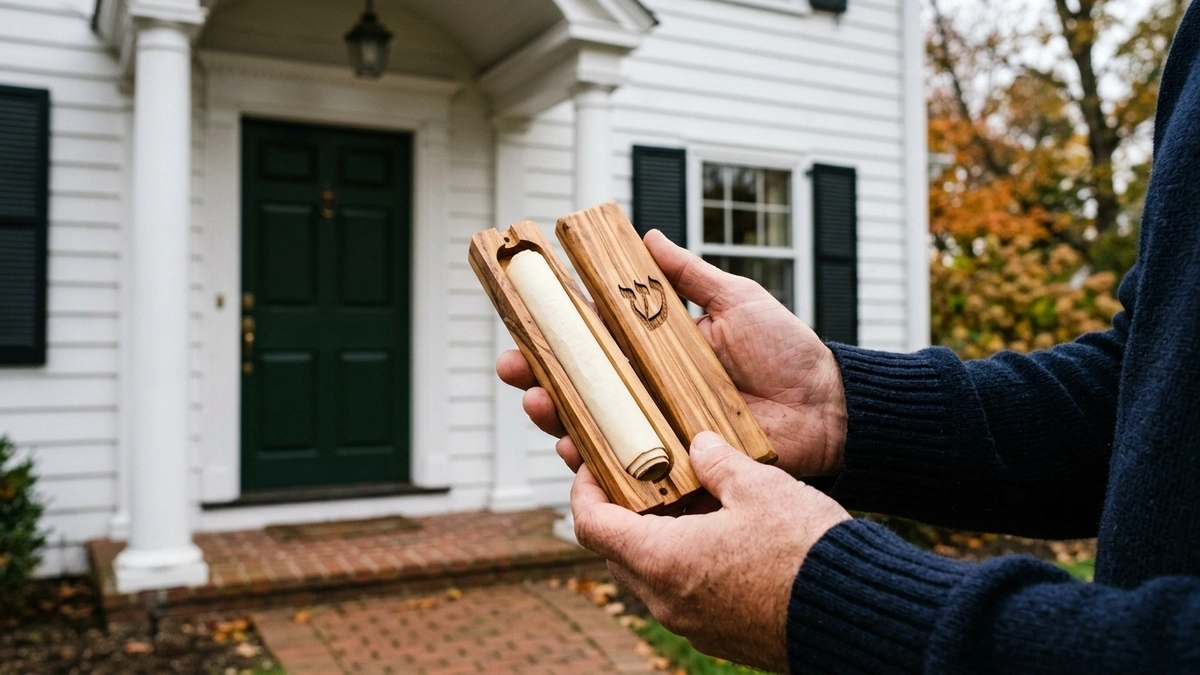
Once you have ensured that your scroll is kosher, you will need a case to protect it. Mezuzah cases come in many styles, materials, and sizes. Some are designed for outdoor doorposts and are made from weather-resistant materials like metal or sealed wood. Others are intended for interior doors and may be crafted from decorative materials such as ceramic, glass, or hand-painted wood. The case must be large enough to hold the scroll without bending or damaging it. If the doorpost is exposed to rain or snow, the case should provide a secure seal to protect the parchment from moisture. The mitzvah is in the scroll, not the case, but the case serves as a protective vessel and a visible reminder of the commandment we fulfill each time we pass through our doorways.
How Many Mezuzahs Does Your Minneapolis Home Need?
Every doorway with two doorposts and a lintel that leads into a room used for living purposes requires a mezuzah, provided the room is at least four amos by four amos, roughly six to seven feet square. Bedrooms, living and dining rooms, kitchens, and home offices are obligated. Bathrooms and small closets are exempt. A typical single-family home needs six to twelve mezuzahs and an apartment three to eight. Walk through your home and count each qualifying doorway, and ask your rav about any you are unsure of.
| Doorway | Mezuzah required? | Notes |
|---|---|---|
| Front entrance | Yes | Right side as you enter, upper third of the doorpost |
| Bedrooms | Yes | Includes children's rooms and guest rooms |
| Kitchen and dining room | Yes | If the room has a proper doorway |
| Living room and family room | Yes | Including archways without doors, ask your rav about width |
| Home office and study | Yes | Any room used for living purposes |
| Hallways and interior arches | Usually | Depends on structure, confirm with your rav |
| Garage | Depends | Based on use and connection to the house, ask your rav |
| Porch, deck, or balcony | Depends | Ask your rav |
| Bathrooms | No | Exempt |
| Small closets and pantries | Usually no | Exempt if under the minimum size, ask your rav |
Which Mezuzah Scroll Is Right for Your Minneapolis Home?
Kosher Mezuzah writes three scroll styles, and each ships to Minneapolis with full documentation from an OU Endorsed writing and checking process. The Sefardi mezuzah scroll follows the ksav used in Sephardic and Mizrachi communities. The Ashkenaz Beis Yosef mezuzah scroll is the standard for most Ashkenazi homes. The Arizal mezuzah scroll follows the script favored in Chassidic communities. Each is available in 4.7 inch and 5.9 inch sizes across several quality tiers. If you are unsure which script matches your family's minhag, ask your rav, or contact us and we will help you choose.
Conclusion
When you buy a mezuzah in Minneapolis, you are taking on a responsibility that goes beyond choosing an attractive item for your doorpost. You are ensuring that your home is marked by the words of the Shema, written according to the exact standards that halacha requires. The mezuzah market today presents real challenges. Without standardized oversight, it can be difficult to know whether a scroll was written properly, checked thoroughly, and handled with the care that this mitzvah deserves.
OU endorsement provides a structured solution to these challenges. It offers transparency, verification, and accountability at every stage of the process, from the sofer's quill to your doorpost. Whether you choose to purchase locally or online, the key is to seek out sources that can provide documentation, answer your questions, and stand behind the kashrus of the scrolls they sell.
At Kosher Mezuzah, we are dedicated to ensuring the proper fulfillment of the mitzvah of mezuzah. We provide every customer with a complete record of their scroll's origin, so that you can affix your mezuzah with confidence and peace of mind.
If you would like to learn more about our process, shop our selection of verified scrolls, or speak with a member of our team. May the mitzvah of mezuzah bring blessings, protection, and kedushah to your home and to all who enter.



.svg)
Bring a true Kosher Mezuzah into your home
Fulfill the mitzvah with confidence, beauty, and meaning.
Buy a Mezuzah