

Buy a Mezuzah in Orlando, Maitland, and Winter Springs: How to Choose an Authentic Kosher Scroll
Buying a mezuzah in Orlando is more than purchasing a ritual item. It is a halachic responsibility that requires confidence in the scroll’s kashrus, documentation, and proper certification. This guide explains what makes a mezuzah truly kosher, what to ask before buying, and how Orlando families can choose mezuzahs with greater transparency.
When a Jewish family moves into a new home in Orlando, one of the first mitzvos they think about is affixing a mezuzah to their doorposts. The mitzvah of mezuzah is a Torah commandment that sanctifies our homes and reminds us of Hashem's presence each time we enter or leave. The mezuzah scroll inside the case must be written according to precise halachic standards, or the mitzvah is not fulfilled at all.
Many families assume that any mezuzah they purchase will be kosher, especially if it comes from a Jewish store or community source. But, the reality is that the mezuzah market lacks standardized oversight, and not all scrolls are written, checked, or documented in a way that ensures halachic validity.
This article will help you understand what to look for when you buy mezuzah in Orlando, how to evaluate the kashrus of what you are purchasing, and why certification and transparency provide confidence that the mitzvah is being fulfilled properly. Whether you are buying from a local Judaica shop or considering an online source with full documentation, understanding the halachic requirements will guide you toward making an informed and responsible choice. If you have questions about ensuring your mezuzah meets halachic standards, we invite you to contact us for guidance and support. See also Buy a Mezuzah in the Tampa Bay Area. Related reading: Buy a Mezuzah in Miami.
Why Authentic Kosher Mezuzahs Matter
A mezuzah is not valid simply because it looks kosher or because it was purchased from a Jewish source. The mezuzah scroll must be written by a trained sofer who understands the complex halachos (laws) of Safrus (writing Jewish texts), checked by qualified magihim (proofreaders) who can identify subtle errors, and produced using kosher materials including properly prepared klaf (parchment) and specially formulated ink. Even small mistakes in letter formation, spacing, or intent during writing can render a mezuzah pasul (invalid), meaning it does not fulfill the mitzvah at all. Mistakes or problems—like decorative crowns on letters being written incorrectly, letters or words being out of order, or the ink fading over time—can make the scroll invalid and prevent it from fulfilling the mitzvah.
Because these problems are difficult for the untrained eye to detect, buyers cannot rely on visual inspection alone to determine whether a mezuzah is kosher.
The spiritual significance of a kosher mezuzah extends beyond the physical parchment. The mezuzah serves as a reminder of our connection to Hashem and the holiness that fills a Jewish home. When a mezuzah is invalid, the mitzvah is not fulfilled, and the spiritual protection and sanctity associated with the mitzvah are absent. This is not a matter of superstition or segulah in the sense of magical thinking, but rather a recognition that fulfilling Hashem's commandments properly brings zechus and blessing into our lives. The proper fulfillment of the mitzvah requires that we take responsibility for verifying that the mezuzah we affix to our doorposts truly meets halachic standards.
Many families purchasing a mezuzah in Orlando may assume that all scrolls sold in Jewish stores or through community resources are automatically kosher. But, the mezuzah market is largely unregulated, and there is no uniform system to ensure that every scroll has been properly written and checked. This does not mean that stores or sellers are acting dishonestly, but rather that the retail process often involves multiple middlemen, and documentation may not always accompany each scroll. Without clear information about who wrote the mezuzah, who checked it, and what materials were used, buyers are left to trust without the ability to verify. This structural challenge underscores why certification and transparency have become increasingly important for families who want to fulfill the mitzvah with confidence.
What to Look for When Buying a Mezuzah
Verifying the Scroll: Sofer, Magiah, and Documentation
When you buy a mezuzah, the most important factor is not the appearance of the case or the reputation of the store, but rather the verifiable kashrus of the scroll itself. A kosher mezuzah must be written by a sofer who is both knowledgeable in the halachos of Safrus and maintains the proper kavanah and yiras Shamayim during the writing process. The scroll must then be checked by a trained magiah who can identify errors that may not be visible to an untrained observer. These errors can include incorrect letter shapes, improper spacing between words, missing or malformed tagin (crowns on the letters), and issues related to the order in which the text was written. After the initial checking, the mezuzah should be rechecked periodically, as ink can fade or parchment can degrade over time.
Documentation is a critical component of verification. A truly trustworthy mezuzah should come with information about who wrote it, who checked it, and certification for the process that was followed. This level of transparency allows the buyer to confirm that the scroll has been produced according to halachic standards.
Understanding Klaf and Dio Standards
The materials used to write a mezuzah are as important as the skill of the sofer. Klaf, the parchment on which the mezuzah is written, must be prepared from the hide of a kosher animal and processed in a way that meets halachic requirements. The dio, or ink, must be black, durable, and prepared according to traditional formulations that ensure it will not fade or flake over time. Some inks used in less carefully produced mezuzahs may appear black initially but can fade to brown or gray within a few years, rendering the mezuzah pasul. The preparation of both klaf and dio is a specialized process, and not all materials used in the market meet the standards required by halacha.
Because these materials are not easily evaluated by consumers, buyers must rely on the integrity and oversight of the production process. Certification systems that vet the materials used and verify that each stage of production meets halachic standards provide an additional layer of assurance. Without such verification, a buyer has no way to know whether the parchment and ink used in their mezuzah are truly kosher. This is another reason why documentation and certification are valuable tools for families seeking to fulfill the mitzvah with confidence.
Mezuzah Store Options in Orlando FL
Orlando's Orthodox community is centered in the northern suburbs. Maitland and Winter Park have the main cluster of shuls, including the area's largest Orthodox congregation, along with the Jewish community campus and day school. Altamonte Springs and Longwood nearby have additional Chabad and community options, and the Dr. Phillips and Lake Nona areas in the south have growing frum populations. Judaica retail in Orlando is mostly through shul gift shops and Chabad, so many families order their scrolls online.
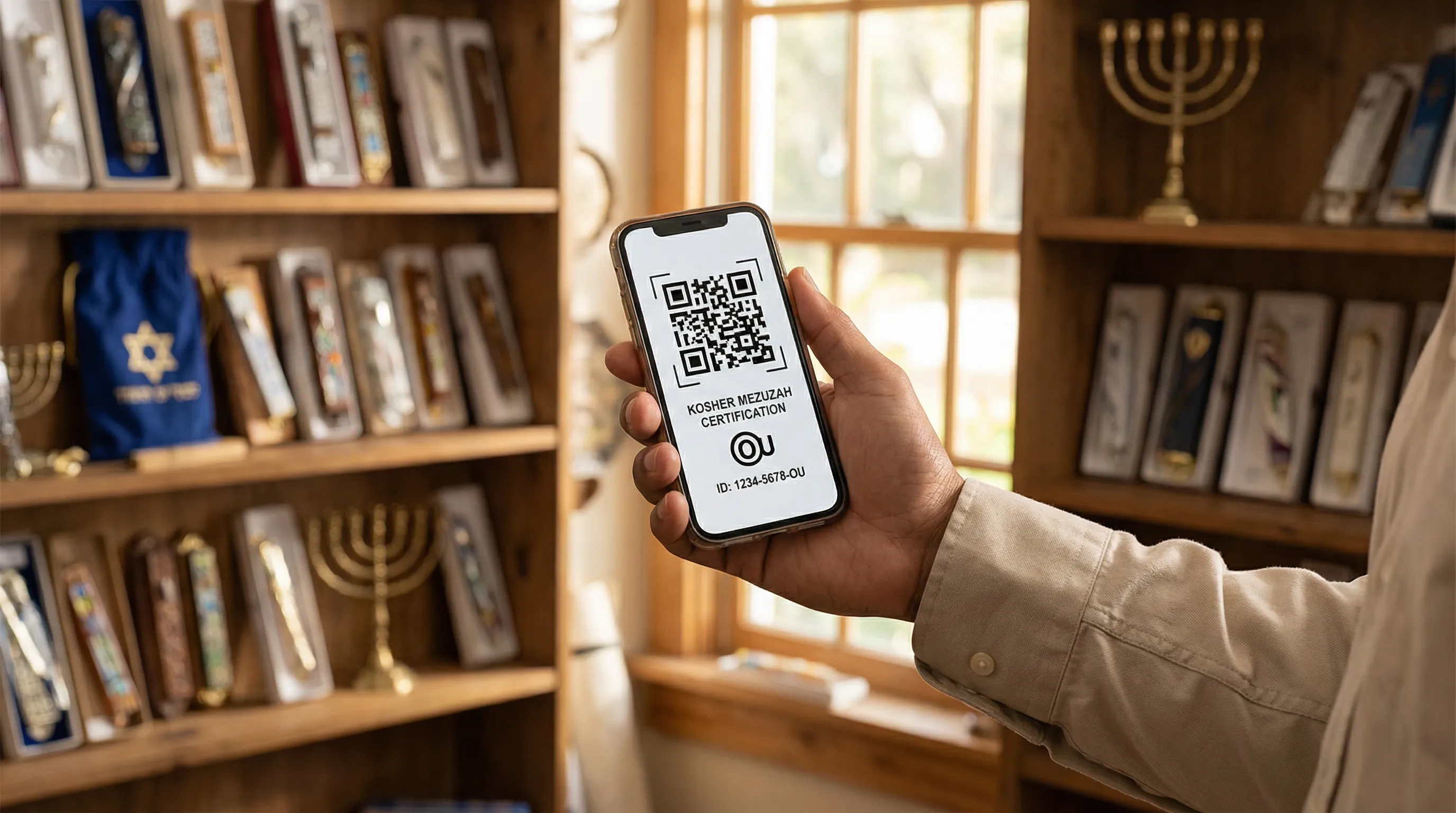
Orlando is home to several Judaica retailers and synagogue-based shops where families can purchase mezuzahs, cases, and other Jewish religious items. These stores serve an important role in the community by providing access to ritual objects and creating a space where Jewish families can connect with tradition. Many of these retailers are staffed by knowledgeable and well-intentioned individuals who care about serving the community with integrity. But, it is important to understand that most Judaica stores are not the original writers or checkers of the mezuzahs they sell. They typically purchase inventory from wholesalers or distributors, and as a result, they may not have full visibility into the history of each scroll.
The following listing of local Judaica resources in Orlando are provided for informational purposes only. Inclusion in this list does not imply endorsement or critique of any store, and buyers are encouraged to ask questions and seek documentation when making a purchase.
| Store | Area | What they carry |
|---|---|---|
| Congregation Ohev Shalom Judaica Shop | Maitland | Mezuzos, cases, Jewish items |
| Temple Israel Judaica Shop | Winter Springs (Highlands) | Mezuzahs, ritual products |
| Chabad of Greater Orlando | College Park | Mezuzah cases, Judaica |
These stores are listed for informational purposes only. Inclusion does not imply endorsement or evaluation of the kashrus of any mezuzos they carry. Ask each store who wrote the scroll, who checked it, and what documentation is available.
When purchasing from a local retailer, it is appropriate to ask who wrote the mezuzah and whether any documentation or certification accompanies the scroll. If the store cannot provide this information, it does not necessarily mean the mezuzah is not kosher, but it does mean that the buyer is relying on trust without the ability to verify. For families who want to fulfill the mitzvah of buying a mezuzah in Orlando with full confidence, there are other options worth considering.
The Advantage of Online Verification and Transparency
In an unregulated market, purchasing a mezuzah from a documented online source can provide halachic assurance that may not be available through retail channels. While buying online would ordinarily raise greater concern—since the buyer cannot examine the item in person—when a provider operates with recognized certification and rabbinic oversight, this actually becomes a significant advantage.
Choosing documented online sources that operate under rabbinic supervision and offer documented tracking of each mezuzah addresses the structural limitations of the retail process provides buyers with the information they need to verify kashrus independently. Ordering online from a trusted source is not about convenience or price, but about ensuring that the mitzvah is fulfilled according to halachic standards.
Kosher Mezuzah operates under OU kosher supervision, which is recognized as one of the most rigorous and trusted certification systems in the world. Each mezuzah sold by Kosher Mezuzah is handwritten in Israel by a vetted sofer, checked by trained magihim, and packaged in tamper-evident sleeves that include a QR code linking to the scroll's full documentation. This process ensures that buyers know exactly what they are purchasing and provides accountability that extends beyond the point of sale.
For families who value supporting local Jewish resources, the decision to purchase online may seem counterintuitive. But, when it comes to fulfilling a Torah commandment that requires precise halachic standards, the question is not where to buy but how to verify. An online source with full certification and documentation can offer the transparency and confidence that many retail environments simply cannot provide. This is not a critique of local stores, but a recognition of the limitations inherent in the retail distribution model. When halachic responsibility is the primary concern, choosing a documented source is a reasonable and wise choice.
Choosing the Right Mezuzah Case for Your Home
Once you have ensured that the scroll itself is kosher, the next step is selecting a case that protects the parchment and fits the aesthetic of your home. Mezuzah cases come in a wide variety of materials, including wood, metal, ceramic, and acrylic, and they range from simple designs to ornate and decorative styles. The case serves a practical function by shielding the scroll from moisture, dust, and physical damage, and it also contributes to the beauty and dignity of the mitzvah. While the halachic focus must always be on the kashrus of the scroll, choosing a case that you find meaningful and aesthetically pleasing can enhance your connection to the mitzvah.
When selecting a case, consider the location where the mezuzah will be affixed. Exterior doorposts in Orlando's climate are exposed to heat, humidity, and rain, so a weather-resistant case made of metal or durable acrylic is often the best choice. Interior doorposts can accommodate more delicate materials such as ceramic or painted wood. It is also important to ensure that the case is sized appropriately for the scroll, as a case that is too small can damage the parchment, and a case that is too large may allow the scroll to shift and become damaged over time. Many families choose to use matching cases throughout their home for a cohesive look, while others prefer to select different styles for different rooms.
Regardless of the aesthetic choices you make, the most important consideration is that the case provides adequate protection for the scroll and that the scroll itself meets halachic standards. A beautiful case does not compensate for a pasul mezuzah, and a simple case does not diminish the value of a kosher scroll. The mitzvah of mezuzah is fulfilled by the scroll, and the case is simply the vessel that protects and honors it. At Kosher Mezuzah, when you purchase a mezuzah we offer a selection of cases designed to protect your scroll while reflecting the sanctity of the mitzvah.
How Many Mezuzahs Does Your Orlando Home Need?
One common question families ask when they move into a new home is how many mezuzahs they need to purchase. The answer depends on the layout of your home and the specific halachos governing which doorways require a mezuzah. In general, a mezuzah is required on the doorpost of any room that is used for living purposes and has a doorway with a lintel and two doorposts that meet certain minimum dimensions. This typically includes bedrooms, living rooms, dining rooms, kitchens, and home offices. Rooms that are used for less dignified purposes, such as bathrooms, are generally exempt from the mitzvah, although there are some differences in practice depending on local custom and rabbinic guidance.
| Doorway | Mezuzah required? | Notes |
|---|---|---|
| Front entrance | Yes | Right side as you enter, upper third of the doorpost |
| Bedrooms | Yes | Includes children's rooms and guest rooms |
| Kitchen and dining room | Yes | If the room has a proper doorway |
| Living room and family room | Yes | Including archways without doors, ask your rav about width |
| Home office and study | Yes | Any room used for living purposes |
| Hallways and interior arches | Usually | Depends on structure, confirm with your rav |
| Garage | Depends | Based on use and connection to the house, ask your rav |
| Porch, deck, or balcony | Depends | Ask your rav |
| Bathrooms | No | Exempt |
| Small closets and pantries | Usually no | Exempt if under the minimum size, ask your rav |
The front door of your home always requires a mezuzah, and this mezuzah is considered the most important because it is the entry point to the entire dwelling. Interior doorways that meet the halachic criteria also require mezuzahs, and families often find that a typical single-family home in Orlando may require anywhere from six to twelve mezuzahs, depending on the number of rooms and the layout. Walk-in closets, laundry rooms, and storage areas may or may not require mezuzahs depending on their size, function, and how they are used. If you are uncertain about a particular doorway, it is always appropriate to consult with a rabbi who is familiar with the halachos of mezuzah and can provide guidance based on your specific circumstances.
To help you determine how many mezuzahs you need, walk through your home and identify each doorway that leads into a habitable room. Measure the doorway to confirm that it meets the minimum dimensions required by halacha, which are generally a height of at least ten tefachim, approximately 32 inches, and a width of at least four tefachim, approximately 13 inches. Count each doorway that meets these criteria and is used for a living purpose, and add one for your front door. This count will give you a good estimate of how many mezuzahs to purchase. If you have questions about your count or need help determining which doorways require a mezuzah, we are here to assist you.
Questions to Ask Before You Buy
Before purchasing a mezuzah, whether from a local Orlando mezuzah store or an online source, it is important to ask specific questions that will help you assess the kashrus and reliability of what you are buying. First, ask who wrote the mezuzah. A reputable seller should be able to identify the sofer by name or provide documentation that traces the scroll back to a known and vetted sofer. If the seller cannot provide this information, it is a signal that the supply chain may lack transparency. Second, ask who checked the mezuzah. A kosher mezuzah must be inspected by a trained magiah, and ideally, this checking process should be documented so that you know when it occurred and who performed it.
The klaf should be from a kosher animal and prepared according to halachic standards, and the dio should be a durable black ink that will not fade over time. Ask whether the mezuzah comes with any certification or documentation. Oversight from a recognized rabbinic authority provides an additional layer of assurance that the mezuzah has been produced according to consistent halachic standards. Finally, ask when the mezuzah should be checked again. Mezuzahs should be inspected periodically to ensure that the ink has not faded and the parchment has not degraded, and a responsible seller will provide guidance on the appropriate checking schedule.
These questions are not meant to challenge the integrity of the seller, but rather to empower you as a buyer to make an well-informed choice. In a market that lacks uniform oversight, asking for documentation and certification is a reasonable and responsible form of hishtadlus. If a seller is unable or unwilling to answer these questions, it may be an indication that the mezuzah does not come with the level of verification and transparency that you need to fulfill the mitzvah with confidence. At Kosher Mezuzah, we welcome these questions and provide full documentation for every scroll we sell, because we believe that transparency and accountability are essential to proper fulfillment of the mitzvah.
Which Mezuzah Scroll Is Right for Your Orlando Home?
Kosher Mezuzah writes three scroll styles, and each ships to Orlando with full documentation from an OU Endorsed writing and checking process. The Sefardi mezuzah scroll follows the ksav used in Sephardic and Mizrachi communities. The Ashkenaz Beis Yosef mezuzah scroll is the standard for most Ashkenazi homes. The Arizal mezuzah scroll follows the script favored in Chassidic communities. Each is available in 4.7 inch and 5.9 inch sizes across several quality tiers. If you are unsure which script matches your family's minhag, ask your rav, or contact us and we will help you choose.
Conclusion
The mitzvah of mezuzah is one of the most visible and enduring expressions of Jewish life, and it carries with it a profound responsibility to ensure that the commandment is fulfilled properly. When you buy a mezuzah in Orlando, you are not simply purchasing a ritual object, but rather taking an active role in sanctifying your home and connecting your family to Hashem's presence. The halachic requirements governing the writing, checking, and materials of a mezuzah are complex and demanding, and they cannot be reliably verified through visual inspection alone. In a market that lacks standardized oversight, certification and documentation provide the transparency needed to fulfill the mitzvah with confidence.
Whether you choose to purchase from a local Judaica shop or an online source, the key is to ask the right questions and seek out mezuzahs that come with verifiable information about who wrote them, who checked them, and what materials were used. Oversight from a recognized authority such as the OU provides a structured system of verification that addresses the limitations of the retail process and ensures that each mezuzah meets consistent halachic standards. For families in Orlando seeking to fulfill the mitzvah properly, choosing a verified mezuzah is not about convenience or cost, but about taking responsibility for the sanctity of your home and the integrity of your observance.
If you are ready to purchase mezuzahs that meet the highest halachic standards, we invite you to browse our selection of mezuzahs from our OU Endorsed process, each accompanied by full documentation and transparency. You can also reach us directly at info@kmezuzah.com or by calling +1-848-356-9471 if you have questions or need guidance. May the mitzvah of mezuzah bring kedushah, protection, and blessing to your home, and may you merit to fulfill this precious commandment with confidence and joy.



.svg)
Bring a true Kosher Mezuzah into your home
Fulfill the mitzvah with confidence, beauty, and meaning.
Buy a Mezuzah