

Everything You Need to Know About Buying a Mezuzah in Portland
Purchasing a mezuzah in Portland is more than a shopping decision. The mitzvah of mezuzah sanctifies your home and binds every doorway to the One Above, serving as a tangible expression of our commitment to Torah and mitzvos.
Yet not every mezuzah offered for sale meets the exacting halachic requirements necessary to fulfill this sacred obligation. Many buyers assume that availability equals kashrus, especially in a city with established Judaica stores and vibrant kehillos. In practice, the mezuzah market operates without uniform oversight, and assumptions alone cannot guarantee that a given scroll is kosher or properly checked.
At Kosher Mezuzah, we are dedicated to ensuring the proper fulfillment of the mitzvah of mezuzah by providing transparency, documentation, and OU Endorsed supervision at every stage. This guide will help you understand your options for buying a mezuzah in Portland, and clarify why certification and verification matter deeply in fulfilling this mitzvah with confidence. Whether you are moving into a new home, checking your current mezuzahs, or simply seeking to better understand the standards, we are here to help you fulfill this mitzvah with clarity and care.
Why Buying a Kosher Mezuzah Matters
The mitzvah of mezuzah is a daily reminder of our connection to Hashem and the kedushah that surrounds the Jewish home. Affixing a mezuzah is a Torah obligation that requires the scroll itself to be handwritten by a trained sofer (scribe) on kosher parchment, using kosher ink, with proper intent, and checked by a qualified magiah (proofreader). Even small errors in letter formation, spacing, or materials can render a mezuzah pasul, meaning it does not fulfill the mitzvah at all.
Many people believe that if a mezuzah is sold in a store or comes from a trusted source, it must be kosher. That assumption can be dangerous. The mezuzah market has no uniform system of oversight, and not every seller has access to complete documentation about who wrote the scroll, who checked it, or whether it was written with proper intent. Some scrolls sold as handwritten are actually printed. Others are written by individuals who lack the necessary training or yiras Shamayim.
Beyond these concerns, there are many other intricate halachos that must be observed to ensure a mezuzah is kosher. These include precise rules for the formation of each Hebrew letter, the spacing between words, the order of the verses, and the margins on the klaf. The parchment itself must be prepared from the hide of a kosher animal according to strict halachic guidelines, and the ink must meet specific requirements for STaM (Sifrei Torah, Tefillin, and Mezuzos). Even minor deviations in any of these areas can render a scroll pasul. Proper verification by a trained magiah, along with attention to ongoing care and maintenance, is essential to fulfill the mitzvah correctly and avoid reliance on assumptions.
When you buy a mezuzah, you are accepting responsibility for fulfilling the mitzvah correctly. That means ensuring the scroll meets every halachic requirement. A mezuzah that looks beautiful on the outside may be pasul on the inside, and without proper verification, there is no way to know. Kosher Mezuzah ensures each mezuzah scroll meets the highest halachic standards, so that you can fulfill the mitzvah with confidence and peace of mind.
For families seeking to buy a Mezuzah in Portland, where local options may be limited and documentation may not always accompany a scroll, understanding what to look for and where to turn for reliable verification becomes especially important. The mitzvah is too precious to leave to chance. Every detail matters, and proper fulfillment begins with understanding the standards and choosing a source that can demonstrate accountability from the sofer's quill to your doorpost.
Mezuzah Store Options in Portland OR
Portland's Orthodox community is concentrated in Southwest Portland, particularly around the Hillsdale and Multnomah Village area near Congregation Kesser Israel and the Mittleman Jewish Community Center campus. Beaverton and Lake Oswego to the west and south have growing frum populations and active Chabad centers, and there are additional Chabad houses across the metro area and in Vancouver, Washington. Portland has no full-time Judaica store, so most families obtain mezuzos through their shul, Chabad, or by ordering online.
Local Judaica Shops and Synagogue Gift Stores
Portland is home to several synagogue-based Judaica shops that serve the local Jewish community. These stores offer a range of items including Mezuzah cases, Shabbat supplies, and other ritual objects. For many families, these shops represent a convenient and familiar option, especially when seeking to support local Jewish institutions. The table below lists local Judaica stores in Portland for informational purposes only. Inclusion here does not imply endorsement or critique.
| Store | Area | What they carry |
|---|---|---|
| Congregation Neveh Shalom Gift Shop | Hillsdale | Mezuzah cases, Judaica gifts |
| Congregation Beth Israel Judaica Shop | Goose Hollow | Ritual objects, mezuzah cases |
| Jewish Oasis (Chabad) | Northwest District | Judaica, mezuzah cases |
These stores are listed for informational purposes only. Inclusion does not imply endorsement or evaluation of the kashrus of any mezuzos they carry. Ask each store who wrote the scroll, who checked it, and what documentation is available.
These stores serve an important role in the community and are often trusted by local families. But, it is important to understand that retail Judaica stores typically sell mezuzahs that were written and checked by others, often through multiple intermediaries. As a result, documentation about the sofer, the magiah, the materials used, and the date of writing may not always be available at the point of sale. This does not reflect negligence or dishonesty. It reflects the structure of the mezuzah market, where retail distance often creates informational distance.
When purchasing a mezuzah in Portland from a local store, it is reasonable to ask who wrote the scroll, who checked it, and whether documentation is available. If the store cannot provide that information, or if the scroll does not come with a certificate that names the sofer and magiah, it becomes difficult to verify that the mezuzah meets halachic standards. In an unregulated market, transparency is the only reliable way to ensure proper fulfillment of the mitzvah.
Online Sources Serving Portland Residents
In recent years, many families have turned to online sources for purchasing mezuzahs. However, online buying introduces an additional layer of complexity that requires careful consideration. Since you cannot inspect the scroll in person before it arrives, there is naturally more uncertainty about its authenticity and quality. In this case, buyers must rely heavily on trust, which increases the risk of receiving a mezuzah that does not fully meet halachic requirements. For a related question, see Buying a Kosher Mezuzah in San Francisco.
However, ordering mezuzahs from a trusted, documented online source can offer distinct advantages in terms of halachic assurance and accountability. When a mezuzah comes directly from a documented provider, the buyer receives clear information about who wrote the scroll, who checked it, what materials were used.
At Kosher Mezuzah, every scroll we sell is handwritten in Israel by a vetted sofer, checked by trained magihim under OU supervision, and accompanied by tamper-evident packaging and a QR code that provides access to the full documentation. This system ensures that buyers in Portland, or anywhere else, can verify the kashrus of their mezuzah without relying on assumptions or trust alone. The OU endorsement process includes verification of materials, certification standards for the sofer and magihim, and that every aspect of the preparation and writing complies with the intricate halachos governing mezuzah, from letter formation and spacing to the checking process and final verification.
For families who value supporting local resources, ordering online from a documented source may still be the wiser choice when local stores cannot provide the same level of documentation and oversight. When certification and transparency are available through an online source and not through a local store, choosing the documented option for buying a mezuzah in Portland reflects a commitment to halachic integrity, not a rejection of community values.
What to Look for When You Buy a Mezuzah
Verifying the Scroll Is Handwritten and Checked
The first and most important question to ask about any mezuzah is whether the scroll is handwritten by a qualified sofer and whether it has been checked by a trained magiah. Halachah requires that a mezuzah be written by hand, with proper intent, using kosher materials. Printed scrolls, even if they look identical to handwritten ones, do not fulfill the mitzvah at all. Unfortunately, printed scrolls are sometimes sold as handwritten, and buyers without training cannot tell the difference by looking.
A kosher mezuzah must also be checked after writing to ensure that every letter is formed correctly, that no letters are touching or broken, and that the text is written in the correct order without skipping or repeating words. This checking process requires expertise and cannot be done casually. Even a scroll written by a skilled sofer may contain errors that only a trained magiah can detect. If a mezuzah has not been checked, or if the checking was done by someone without proper training, there is no way to know whether the scroll is kosher.
When purchasing a mezuzah, ask for the name of the sofer and the name of the magiah. Ask when the scroll was written and when it was checked. If the seller cannot provide this information, or if the scroll does not come with a certificate that documents these details, it is reasonable to question whether the scroll has been properly verified. At Kosher Mezuzah, every scroll comes with full documentation and OU endorsement, so buyers can be confident that the mitzvah is being fulfilled with integrity and care.
Understanding Ksav (Script) and Hiddur (Beauty)
Mezuzahs are written in different scripts, or ksavim, and each has its own tradition and beauty. The most common scripts are Ashkenazi ksav, Sephardi ksav, and Arizal ksav. Ashkenazi ksav follows the traditions of Eastern European communities and is characterized by certain letter shapes and tagin. Sephardi ksav reflects the traditions of Sephardic communities, with slightly different letter forms. Arizal ksav is based on the kabbalistic teachings of the Arizal and is used by many Chassidic and Sephardic communities. It is customary for one to purchase a mezuzah script that matches one's minhag. A mezuzah written in any of these scripts can be kosher, as long as it is written correctly according to the halachic requirements for that script.
Hiddur mitzvah, the principle of beautifying a mitzvah, encourages us to seek mezuzahs that are not only kosher but also written with care and artistry. A mehudar mezuzah is one in which the letters are formed with extra precision, the spacing is balanced, and the writing reflects the sofer's attention to detail and kavanah. Hiddur is a worthy goal, but it does not replace the basic requirement of kashrus. A beautiful mezuzah that is pasul does not fulfill the mitzvah, while a simple but kosher mezuzah does. When choosing a mezuzah, prioritize verification and certification first, and consider hiddur as an additional layer of care.
Choosing a Case That Fits Your Doorpost
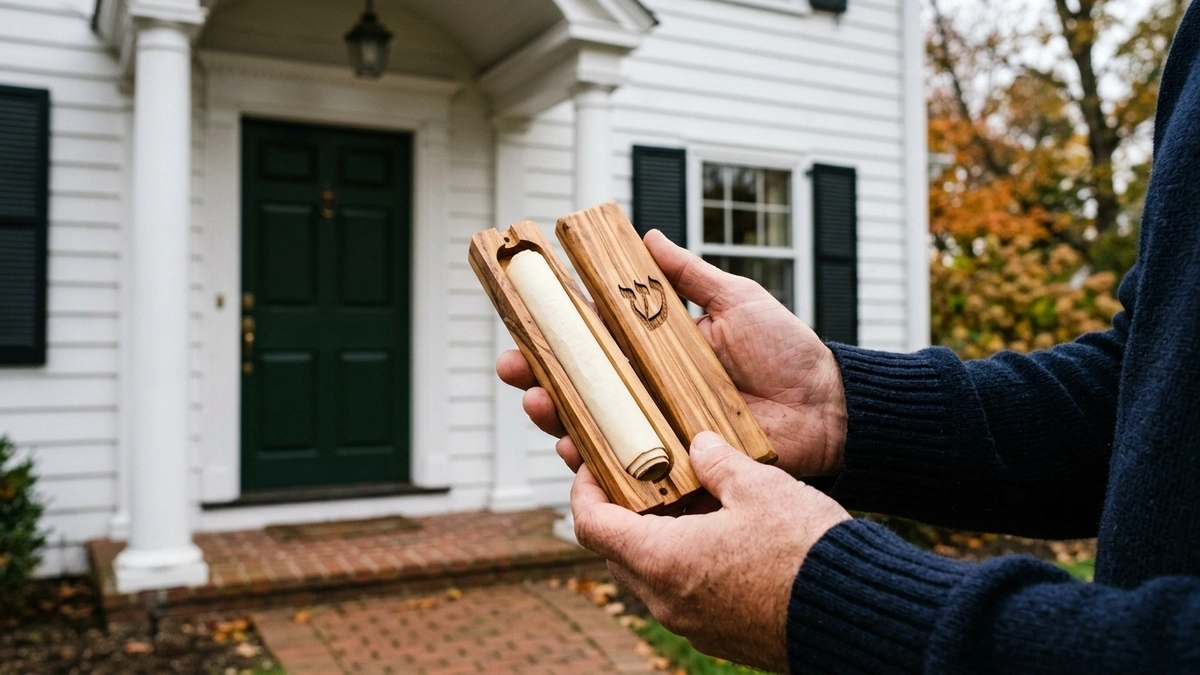
The mezuzah case serves a practical purpose: it protects the scroll from moisture, sunlight, and physical damage. The case itself does not need to meet any halachic standard, but it should be sturdy, properly sealed, and sized to fit the doorpost securely. Cases come in many materials, including wood, metal, plastic, and ceramic, and in styles ranging from simple to decorative.
When choosing a case, consider the location where it will be hung. For outdoor doorposts, a case that is weather-resistant and tightly sealed is essential, since exposure to rain or humidity can damage the scroll inside. For indoor doorposts, a lighter case may be sufficient. The case should be sized to fit the scroll comfortably without folding or compressing the parchment in a way that could cause damage over time.
Some families choose decorative cases that reflect their personal taste or the design of their home, while others prefer simple, functional cases that do not draw attention. Either choice is acceptable, as long as the case protects the scroll and allows the mezuzah to be affixed in the correct location. The focus should always remain on the kashrus of the scroll inside, not on the appearance of the case. Your mezuzah should be a reminder of holiness and protection for your home, and the case is simply the vessel that makes that reminder visible.
How Many Mezuzahs Does a Portland Home Need?
The number of mezuzahs required for a home depends on the number of doorways that meet the halachic criteria for a mezuzah obligation. Not every doorway requires a mezuzah. The basic rule is that a doorway must have two doorposts and a lintel, it must lead into a room that is at least four amos by four amos in size, and the room must be used for dwelling purposes. Bathrooms, closets, and storage areas are generally exempt, though there are differences of practice and opinion about certain spaces.
| Doorway | Mezuzah required? | Notes |
|---|---|---|
| Front entrance | Yes | Right side as you enter, upper third of the doorpost |
| Bedrooms | Yes | Includes children's rooms and guest rooms |
| Kitchen and dining room | Yes | If the room has a proper doorway |
| Living room and family room | Yes | Including archways without doors, ask your rav about width |
| Home office and study | Yes | Any room used for living purposes |
| Hallways and interior arches | Usually | Depends on structure, confirm with your rav |
| Garage | Depends | Based on use and connection to the house, ask your rav |
| Porch, deck, or balcony | Depends | Ask your rav |
| Bathrooms | No | Exempt |
| Small closets and pantries | Usually no | Exempt if under the minimum size, ask your rav |
The front door of the home always requires a mezuzah, and it is considered the most important one. After that, each bedroom, living room, dining room, kitchen, and hallway that meets the size and use requirements requires its own mezuzah. A typical home in Portland with three bedrooms, a living room, a kitchen, and a hallway might need six to eight mezuzahs, and larger homes six to twelve. Larger homes or homes with additional rooms may need more.
If you are unsure which doorways in your home require a mezuzah, it is wise to consult with a rav or a knowledgeable posek who can help you walk through your home and identify the obligated doorways. Some doorways may be subject to different customs or opinions, and having guidance tailored to your situation is the best way to ensure you are fulfilling the mitzvah completely. At Kosher Mezuzah, we are here to help families understand their obligations and provide the scrolls and support needed to fulfill the mitzvah properly. If you have questions about how many mezuzahs your home requires, you can contact us for guidance and assistance.
Once you know how many mezuzahs you need, purchasing them all at once from a documented source ensures consistency in kashrus and allows you to fulfill the mitzvah for your entire home with confidence. It also simplifies future checking, since all the scrolls will have been written and checked at the same time and will need to be re-inspected on a similar schedule.
Questions to Ask Any Portland OR Mezuzah Store
Whether you are purchasing a mezuzah from a local Judaica shop or an online source, asking the right questions is essential to ensuring that the scroll meets halachic standards. The first question is always: Who wrote this mezuzah? A reputable seller should be able to name the sofer and provide some information about his training and credentials.
The second question is: Who checked this mezuzah? Just as important as the writing is the checking process, which ensures that the scroll is free of errors. The magiah should be named, and the seller should be able to confirm that the checking was done. Some sellers may say the mezuzah was checked by the sofer himself, which is acceptable in certain cases, but a second independent check is always preferable.
The third question is: Can I see documentation? A certificate that names the sofer and magiah, and includes the date of writing. If the seller cannot provide any documentation, or if the certificate is generic and does not name specific individuals, it becomes difficult to trust that the scroll has been properly verified. At Kosher Mezuzah, every scroll comes with OU endorsement and a QR code that links to full documentation, including the names of the sofer and magihim, the date of writing, and the materials used.
Halachah requires that mezuzahs be inspected periodically to ensure the writing has not deteriorated, cracked, or faded over time. The standard practice is to have mezuzah scrolls checked twice within every seven-year period. Knowing the recommended timeline for the next inspection helps you stay aligned with this requirement and ensures your mezuzah remains kosher for years to come.
Which Mezuzah Scroll Is Right for Your Portland Home?
Kosher Mezuzah writes three scroll styles, and each ships to Portland with full documentation from an OU Endorsed writing and checking process. The Sefardi mezuzah scroll follows the ksav used in Sephardic and Mizrachi communities. The Ashkenaz Beis Yosef mezuzah scroll is the standard for most Ashkenazi homes. The Arizal mezuzah scroll follows the script favored in Chassidic communities. Each is available in 4.7 inch and 5.9 inch sizes across several quality tiers. If you are unsure which script matches your family's minhag, ask your rav, or contact us and we will help you choose.
Shipping, Timing, and Installation Support
For families ordering mezuzahs online, understanding the shipping process and timeline is important, especially if you are moving into a new home and need the mezuzahs affixed within the halachic timeframe. According to halachah, a homeowner must affix mezuzahs immediately upon moving in, while a renter has thirty days. Planning ahead ensures that you receive your mezuzahs in time and can fulfill the mitzvah without delay.
At Kosher Mezuzah, orders are processed and shipped promptly, and each scroll is packaged in a tamper-evident sleeve to ensure it arrives in the same condition it left our facility. Shipping to Portland typically takes a few business days, and tracking information is provided so you can plan for arrival. If you need expedited shipping or have a specific timeline, you can reach out to us at tel:+1-848-356-9471 or via WhatsApp to discuss your needs.
Installing a mezuzah is a straightforward process, but it does require attention to certain halachic details. The mezuzah should be affixed on the right-hand side of the doorway as you enter, in the lower part of the top third of the doorpost. According to Ashkenazic custom, the mezuzah is placed at a slight angle, with the top tilted inward toward the room. A berachah is recited before affixing the first mezuzah, and that berachah covers all the mezuzahs being affixed during that session.
If you are unsure about the correct placement or have questions about installation, we are here to help. Many families find it meaningful to have a rav or knowledgeable friend present for the installation, especially if it is their first time affixing mezuzahs. Performing this mitzvah is a moment of bringing kedushah into your home, and taking the time to do it correctly adds to the significance of the act. May the mitzvah of mezuzah bring blessings and protection to your home, and may you fulfill it with joy and confidence.



.svg)
Bring a true Kosher Mezuzah into your home
Fulfill the mitzvah with confidence, beauty, and meaning.
Buy a Mezuzah