

Where to Buy a Mezuzah in San Diego: A Guide to Kosher Scrolls
Buying a mezuzah in San Diego means more than choosing a Judaica item. It means making sure the scroll is truly kosher, properly checked, and backed by clear documentation so you can fulfill the mitzvah with confidence.
When you buy a mezuzah in San Diego, you are not simply purchasing a religious article. You are accepting the responsibility to fulfill a mitzvah that requires precision, integrity, and halachic adherence. A mezuzah reminds us each time we enter and exit our homes of Hashem's presence and our covenant with Him. Yet not every mezuzah meets the halachic standards necessary to fulfill the mitzvah properly.
Many well-meaning families assume that a scroll purchased at any Judaica store will be kosher, but the reality of today's mezuzah market is more complex. The lack of standardized oversight means that buyers must take an active role in verifying the authenticity and kashrus of their mezuzahs.
At Kosher Mezuzah, we are dedicated to ensuring the proper fulfillment of the mitzvah of mezuzah through OU Endorsed standards and transparent documentation. If you're seeking guidance on what makes a mezuzah truly kosher, we invite you to contact us or explore our resources to learn more.
What to Look for When You Buy a Mezuzah

When you are ready to buy a mezuzah, the first question to ask is not about price or appearance but about verification. The halachic requirements for a kosher mezuzah are extensive and interdependent, forming a system that cannot be reduced to a simple checklist. Each requirement supports the others, and even a single flaw in letter formation, materials, or intent can render a scroll pasul (invalid). Understanding what to look for helps ensure that your mezuzah fulfills the mitzvah as Hashem commands.
Verification of the Sofer and Magiah
A kosher mezuzah must be handwritten by a trained sofer who writes lishmah, with proper intent, at every stage of the process. The sofer must be knowledgeable in the halachos of STaM and must maintain yiras Shamayim throughout the writing. After the mezuzah is written, it must be inspected by a magiah, an expert checker trained to identify even subtle errors in letter form, spacing, and tagin.
When you purchase a mezuzah, you should be able to learn the name of the sofer who wrote it and the magiah who checked it. Without this information, there is no way to verify that the scroll meets the standards required by halacha.
Mezuzah Materials: Klaf, Dio, and Halachic Standards
The parchment on which a mezuzah is written must be klaf prepared from the skin of a kosher animal and processed according to halachic guidelines. The ink, known as dio, must be black, durable, and applied in a manner that ensures permanence. These materials are not standardized across the market, and inferior substitutes do exist.
A kosher mezuzah uses only materials that meet the specifications outlined in Shulchan Aruch and verified by those with expertise in STaM. Many issues with materials are invisible to the untrained eye, which is why documentation and certification become essential. If the seller cannot provide details about the klaf and dio used, the buyer has no basis for confidence that the materials are halachically sound.
Traceability and Transparency
Traceability means that every step in the process of creating a mezuzah is documented and accessible to the buyer. This includes knowing when the scroll was written and what level of supervision was involved. Transparency is not merely a feature of customer service but a halachic necessity in a market where oversight is not uniform. When a mezuzah comes with a certificate of authenticity that includes the sofer's name, the magiah's name, the date of writing, and other details about the mezuzah, the buyer can proceed with confidence. When these details are absent, the buyer must rely on trust alone, which is not always sufficient given the complexity of the halachos involved.
Mezuzah Store Options in San Diego, CA
San Diego is home to a vibrant Jewish community with several synagogues and Judaica resources. Families seeking to purchase mezuzahs locally have access to a few established locations, and these stores play an important role in serving the community's religious needs. The following table lists local Judaica stores in San Diego for informational purposes only. Inclusion in this list does not imply endorsement or critique of any particular store.
| Store | Area | What they carry |
|---|---|---|
| Congregation Beth Israel Gift Shop | University City | General Judaica, mezuzahs |
| Chabad of San Diego | Scripps Ranch | Mezuzah cases, ritual items |
| Temple Adat Shalom Gift Shop | Poway | Judaica, mezuzah cases |
These stores are listed for informational purposes only. Inclusion does not imply endorsement or evaluation of the kashrus of any mezuzos they carry. Ask each store who wrote the scroll, who checked it, and what documentation is available.
These locations are well-known within the San Diego Jewish community and are often the first stop for families seeking religious items. It is important to recognize that these stores operate in good faith and serve a valuable communal function. But, buyers should understand that retail Judaica stores are usually not the original source of the mezuzahs they sell.
Local Judaica Shops and Synagogue Resources
Local Judaica shops and synagogue gift shops typically purchase mezuzahs from wholesalers or middlemen who source scrolls from sofrim and checking services. This structure is standard across the retail industry, and it does not reflect poorly on the integrity or professionalism of the store. Because the store is not directly involved in the writing or checking process, it may not have access to detailed documentation about each scroll's history. The seller may know that the mezuzah was checked, but may not be able to provide the name of the sofer, the date the scroll was written, or the materials used. This is a structural reality of retail distribution, not a failure of the store itself.
Questions to Ask Before You Purchase
Before you buy a mezuzah at any store, there are several questions you should ask to ensure that you are fulfilling the mitzvah properly. First, ask who wrote the mezuzah and who checked it. If the seller cannot provide names, ask if documentation is available upon request. Many stores will do their best to answer, but if the information is not available, that tells you something about the limits of the retail supply chain. We cover this in more depth in Where To Buy A Mezuzah In Los Angeles.
Why Online Mezuzah Retailers Offer Broader Selection and Verification
In recent years, families across the country have increasingly turned to online sources when they buy a mezuzah, and this shift is not driven primarily by convenience or price. The key advantage of purchasing from a trusted, documented online retailer is the level of verification and documentation that accompanies each scroll. When a mezuzah is sold by an online retailer that maintains direct relationships with sofrim and oversees the checking process, the buyer gains access to a level of transparency that is often unavailable through retail channels. This is particularly important in a market that lacks uniform oversight and where many buyers cannot independently assess kashrus.
Online retailers that specialize in mezuzahs often provide detailed documentation for each scroll, including the name of the sofer, the name of the magiah, the date the mezuzah was written, and the materials used. Some offer QR-code verification systems that allow buyers to view an image of their actual scroll and confirm its authenticity before the package is opened. These systems are designed to address the informational gaps that exist in traditional retail distribution, where the seller may be several steps removed from the original source.
For families who value halachic accountability and want confidence that their mezuzah meets the highest standards, ordering from a documented online source can be the wiser hishtadlus, even when local options are available.
Access to Named Sofrim and Inspection Records
When you buy a mezuzah from a documented online retailer, you receive documentation that identifies the sofer by name and provides details about the inspection process. This level of traceability is essential because it allows you to verify that the mezuzah was written and checked by individuals with known credentials and training.
At Kosher Mezuzah, every scroll is handwritten in Israel by a vetted sofer and checked by trained magihim under the supervision of the Orthodox Union, the most trusted kosher certification agency in the United States. This process ensures that each mezuzah meets rigorous halachic standards and that the buyer has access to complete documentation.
Detailed Images and QR-Code Verification Systems
One of the most significant innovations in the mezuzah market is the use of QR-code verification systems that allow buyers to view an image of their specific scroll before it is installed. This technology provides a level of transparency that was previously unavailable and gives buyers confidence that they are receiving the exact mezuzah described in the documentation.
When you scan the QR code, you can see the actual parchment, confirm the quality of the writing, and verify that the scroll matches the certificate provided. This system also helps prevent substitution or tampering, as each scroll is packaged in a tamper-evident sleeve that remains sealed until installation. For families who take the mitzvah of mezuzah seriously and want assurance that every detail is correct, this kind of verification offers peace of mind that a visual inspection at a retail counter cannot provide.
Choosing the Right Case for Your San Diego Home
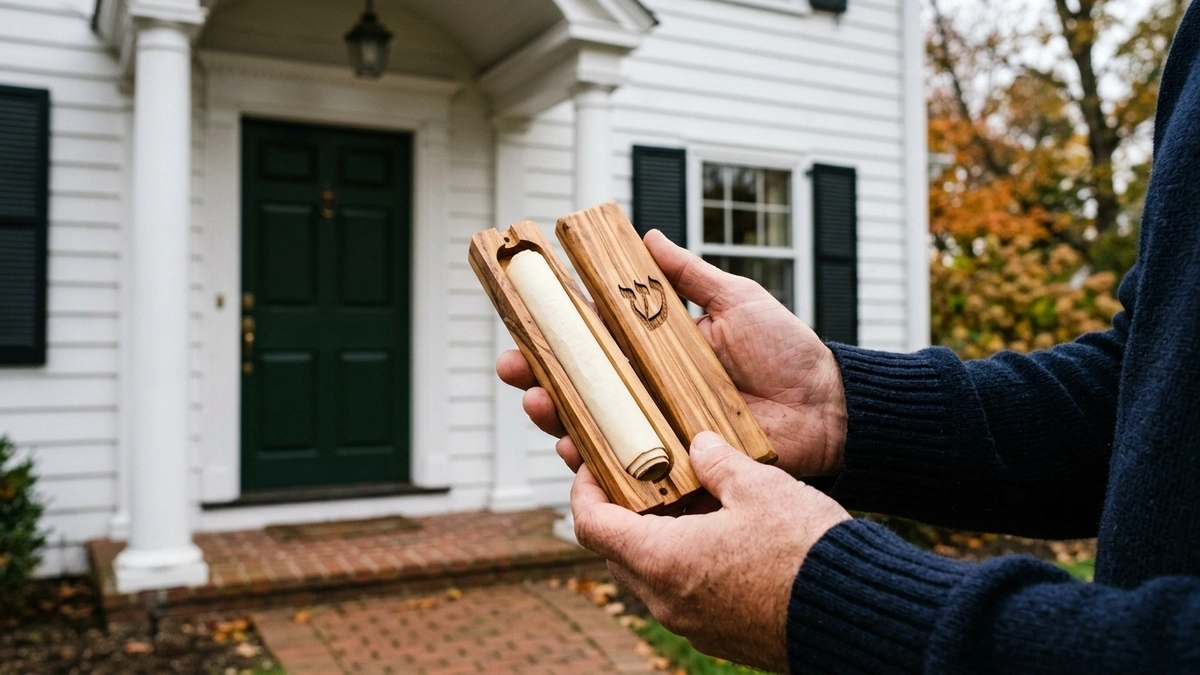
Once you have purchased a kosher mezuzah scroll, the next step is selecting an appropriate case to protect it. The case serves both a functional and aesthetic purpose, safeguarding the parchment from the elements while reflecting the kedushah of the mitzvah. In San Diego, where the climate is generally mild but coastal areas experience humidity and occasional rain, choosing a case that offers adequate protection is important. The case should fit the scroll securely, keep moisture out, and be suitable for the location where it will be affixed.
Climate Considerations and Weatherproofing
San Diego's climate is known for its moderate temperatures and coastal breezes, but homes near the ocean may be exposed to salt air and higher humidity levels. These conditions can affect the longevity of a mezuzah scroll if the case does not provide adequate sealing. For exterior doorways, especially those facing the ocean or areas with direct sun exposure, a weatherproof case made of metal, acrylic, or treated wood is advisable. Interior doorways typically do not require the same level of protection, but the case should still fit snugly to prevent the scroll from shifting or becoming exposed to dust. When selecting a case, consider both the location of the doorway and the environmental factors that may affect the parchment over time.
Design, Material, and Aesthetic Fit
Mezuzah cases are available in a wide range of designs, from simple and understated to ornate and decorative. While personal preference plays a role in this choice, the primary consideration should be the protection and honor of the scroll. A case that is too small or poorly constructed may damage the parchment or fail to keep it secure. A case that is too large may not fit properly on the doorpost, making installation difficult. Many families choose cases that reflect the style of their home or the character of the room where the mezuzah will be affixed. There is no single correct choice but the case should be chosen with reverence for the mitzvah and practical attention to how it will function in its intended location.
How Many Mezuzahs Does Your Home Need?
Determining how many mezuzahs your home requires involves understanding the halachic rules for which doorways are obligated and which are exempt. According to halacha, a doorway is obligated in a mezuzah if it meets certain criteria related to size, permanence, and function. Most interior rooms, including bedrooms, living rooms, and dining rooms, require mezuzahs. Bathrooms, closets smaller than a certain size, and temporary structures are generally exempt, though there are exceptions and differences in minhag. The best way to determine the exact number needed for your home is to walk through each room with a checklist and consult your rabbi if you have questions about specific doorways.
| Doorway | Mezuzah required? | Notes |
|---|---|---|
| Front entrance | Yes | Right side as you enter, upper third of the doorpost |
| Bedrooms | Yes | Includes children's rooms and guest rooms |
| Kitchen and dining room | Yes | If the room has a proper doorway |
| Living room and family room | Yes | Including archways without doors, ask your rav about width |
| Home office and study | Yes | Any room used for living purposes |
| Hallways and interior arches | Usually | Depends on structure, confirm with your rav |
| Garage | Depends | Based on use and connection to the house, ask your rav |
| Porch, deck, or balcony | Depends | Ask your rav |
| Bathrooms | No | Exempt |
| Small closets and pantries | Usually no | Exempt if under the minimum size, ask your rav |
A typical single-family home in San Diego might require anywhere from six to twelve mezuzahs, depending on the number of rooms and the layout of the house. Larger homes with multiple living areas, studies, or guest rooms will require more. Apartments and condos usually require fewer, but the same halachic principles apply. When planning your purchase, it is better to count carefully and order all the mezuzahs you need at once, ensuring that each scroll comes from the same verified source and meets the same standards. This approach simplifies the process and ensures consistency across your home.
Consulting Your Rabbi: Placement, Customs, and Community Minhag
While the basic halachos of mezuzah are well established, there are areas where minhag and local custom play an important role. Questions about the exact height of placement, the angle at which the mezuzah should be affixed, and whether certain borderline doorways require a mezuzah are best addressed by consulting your rabbi. Different communities have different traditions, and your rabbi can guide you in following the minhag of your family and kehillah. This consultation is not a sign of uncertainty but a recognition that the mitzvah of mezuzah is nuanced and that proper fulfillment requires both knowledge and humility.
If you are new to the San Diego area or are purchasing mezuzahs for the first time, reaching out to your rabbi before installation is a wise step. Your rabbi can walk through your home with you, identify which doorways are obligated, and answer any questions about placement or materials. This guidance ensures that you fulfill the mitzvah correctly from the start and that your home is properly protected by the kedushah of the mezuzah. At Kosher Mezuzah, we encourage every family to work closely with their rabbi and reach out to us if additional support or documentation is needed.
Which Mezuzah Scroll Is Right for Your San Diego Home?
Kosher Mezuzah writes three scroll styles, and each ships to San Diego with full documentation from an OU Endorsed writing and checking process. The Sefardi mezuzah scroll follows the ksav used in Sephardic and Mizrachi communities. The Ashkenaz Beis Yosef mezuzah scroll is the standard for most Ashkenazi homes. The Arizal mezuzah scroll follows the script favored in Chassidic communities. Each is available in 4.7 inch and 5.9 inch sizes across several quality tiers. If you are unsure which script matches your family's minhag, ask your rav, or contact us and we will help you choose.
Conclusion
When you buy a mezuzah in San Diego, you are taking on the responsibility to fulfill a mitzvah that requires both careful attention and halachic integrity. The mezuzah market today is not uniformly regulated, and buyers must take an active role in verifying that the scrolls they purchase meet the standards set forth in halacha. Whether you choose to purchase locally or from a documented online retailer, the key factors are traceability, transparency, and documentation. A kosher mezuzah is not simply a beautiful object but a halachic requirement, and every detail matters.
At Kosher Mezuzah, we are dedicated to ensuring the proper fulfillment of the mitzvah of mezuzah through our OU Endorsed writing and checking process, transparent checking processes, and complete documentation for every scroll. Each mezuzah is handwritten in Israel by a vetted sofer, checked by trained magihim, and accompanied by verification that gives buyers confidence in their purchase. We believe that every Jewish home deserves the peace of mind that comes from knowing their mezuzahs are authentic, kosher, and properly maintained.
If you are ready to take the next step in properly fulfilling the mitzvah of mezuzah, we invite you to explore our selection or contact us for personalized guidance. May the mitzvah of mezuzah bring blessings and protection to your home, and may your fulfillment of this precious mitzvah be a source of kedushah and connection to HaKadosh Baruch Hu for generations to come.



.svg)
Bring a true Kosher Mezuzah into your home
Fulfill the mitzvah with confidence, beauty, and meaning.
Buy a Mezuzah