

Mehudar Mezuzah: What Higher Quality Really Means in Halacha
A mehudar mezuzah is not simply an expensive scroll — the concept of hidur mitzvah, beautifying the mitzvah, has a precise halachic meaning that reaches back to the Gemara and is codified clearly in the Rishonim and Acharonim.
Understanding what "higher quality" actually involves, and what it does not change, protects you from spending money on the wrong things while neglecting the ones that truly matter. Kosher Mezuzah is dedicated to ensuring the proper fulfillment of the mitzvah of mezuzah. If you have questions about selecting a scroll that meets this standard, we welcome you to reach out to us directly for guidance. Related reading: Should You Upgrade Your Mezuzah? What Halacha Actually Requires.
Key Takeaways
- A mehudar mezuzah is a kosher mezuzah whose ksav (letter forms, spacing, and overall look) is on a noticeably higher level of precision and beauty (why clear writing matters), built on top of a solid halachic baseline.
- A responsible provider treats the basics—proper klaf from a kosher animal, reliable black ink, qualified G-d fearing scribes, and real human + computer checking—as non‑negotiable for every scroll, not as an “upgrade tier.”
- When those basics are in place for all mezuzot, mehudar does not mean “more kosher”; it mainly means a more refined, calm, and orderly ksav that reads as higher quality to the eye.
- From the consumer side, the main conscious choice in hidur mezuzah is how far to upgrade the writing: how even, beautiful, and carefully balanced the ksav should be, and whether to invest in sofrim known for especially fine writing.
- If budget is limited, the first priority is making sure every obligated doorway has a truly kosher mezuzah; additional levels of hiddur in the ksav come after that.
- Choosing a mehudar mezuzah wisely means first confirming the baseline process (who writes, who checks, how klaf and ink are sourced), and only then comparing the beauty and consistency of the writing itself.
- Kosher Mezuzah structures its offerings around this model: all scrolls share a high, transparent halachic standard, and the higher “mehudar” levels reflect extra time, balance, and refinement in the ksav from sofrim known for their beautiful writing, plus clear documentation and OU backing so you can know exactly what you are buying.
Looking for a mehudar mezuzah? Our scrolls are available in Sefardi, Ashkenaz (Beis Yosef) and Arizal scripts, each handwritten by a vetted sofer, double-checked, and OU Endorsed (OU STaM). See mehudar scrolls.
What Mehudar Mezuzah Actually Means
A mehudar mezuzah is one that fulfills the mitzvah with added beauty and care, beyond what is strictly required for basic kashrut (validity). The word mehudar comes from the root hadar, meaning beauty or adornment. This concept applies to many mitzvot, and for mezuzah specifically, it governs the quality of the writing, the parchment, and the overall care with which the scroll was produced. Hidur does not change the underlying halachic requirements for kashrut. A genuinely mehudar mezuzah that contains even one pasul (invalid) letter fulfills nothing. he pursuit of hiddur mezuzah is an upgrade to the basic mitzvah, and it must always begin with verified kashrut. We cover this in more depth in Mezuzah Anxiety and Trust in Mitzvot.
The source for beautifying mitzvot is the verse in Shemos (15:2): "Zeh Keli v’anvehu" — "This is my Hashem and I will beautify Him." The principle of writing STaM—Sefer Torah, tefillin, and mezuzah—with added beauty and care is rooted in this verse and the discussions in Shabbat (133b) about beautifying mitzvot, and is emphasized by many later poskim. The aspiration toward mehudar is a recognized halachic aspiration woven into the fabric of the mitzvah itself.
The Shulchan Aruch and its major commentators do not define a single fixed threshold for what makes a mezuzah mehudar, because the standard involves several distinct dimensions. Each dimension must be understood on its own terms. A scroll can be mehudar in one area and deficient in another, so the question must be asked carefully.
What Is a Mehudar Mezuzah?
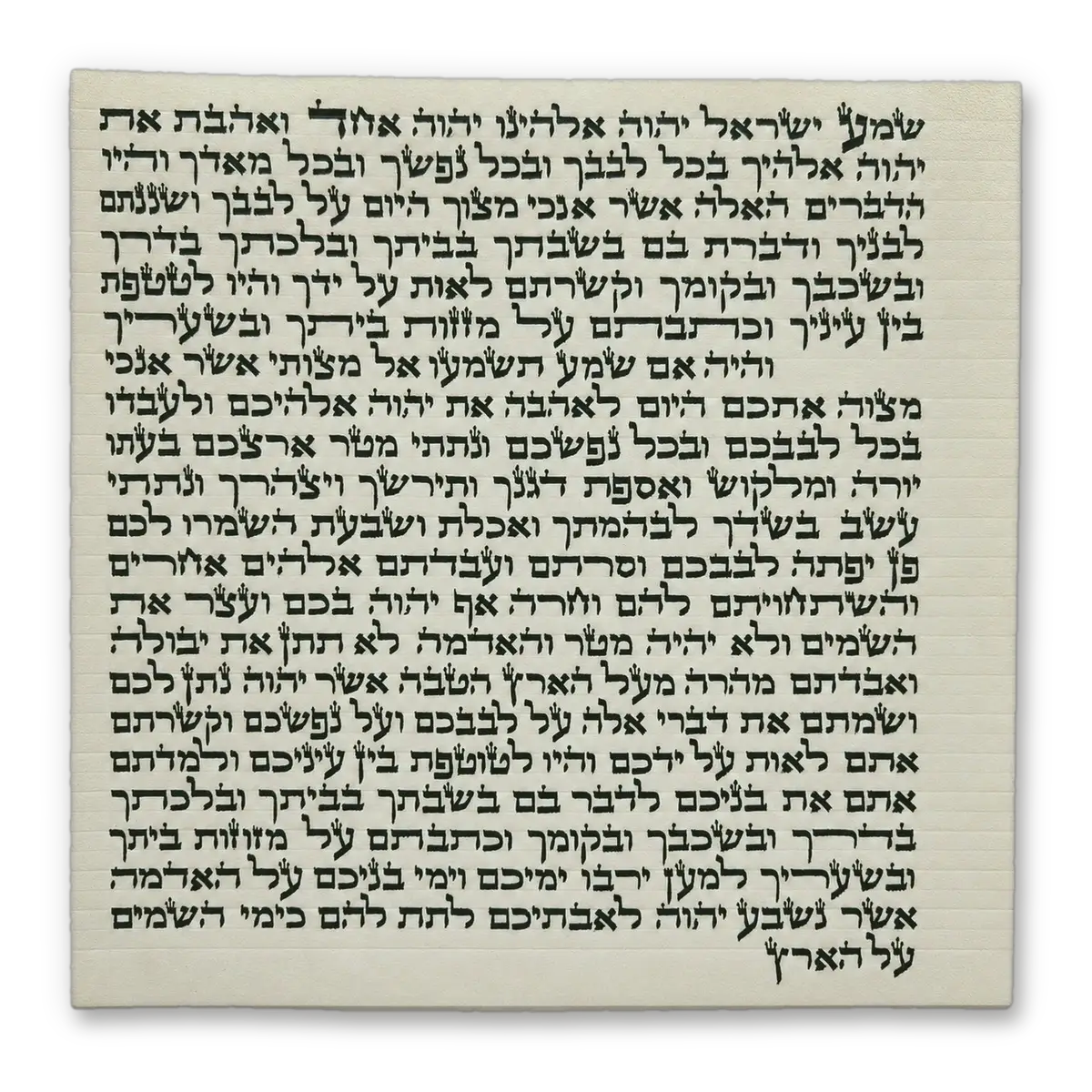
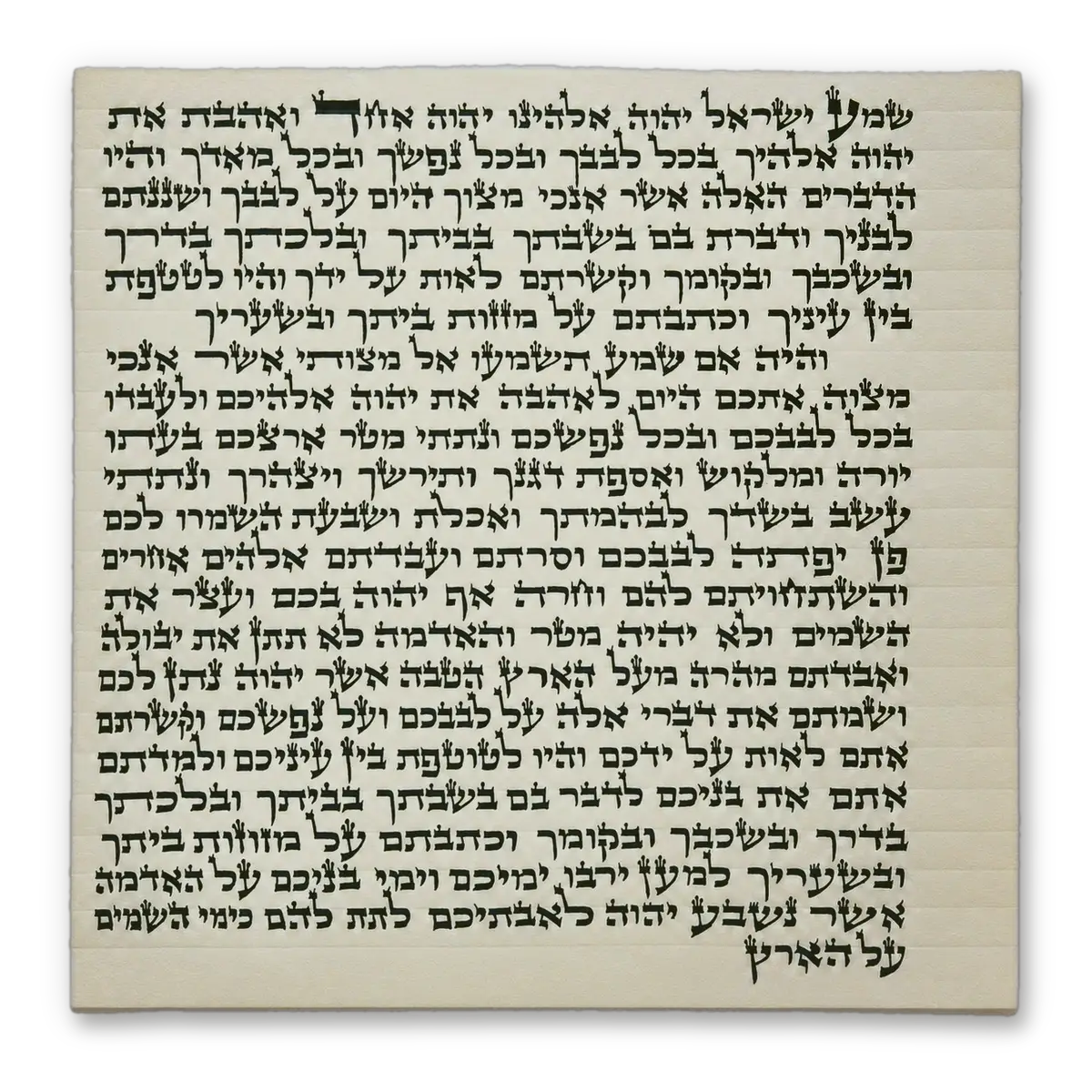
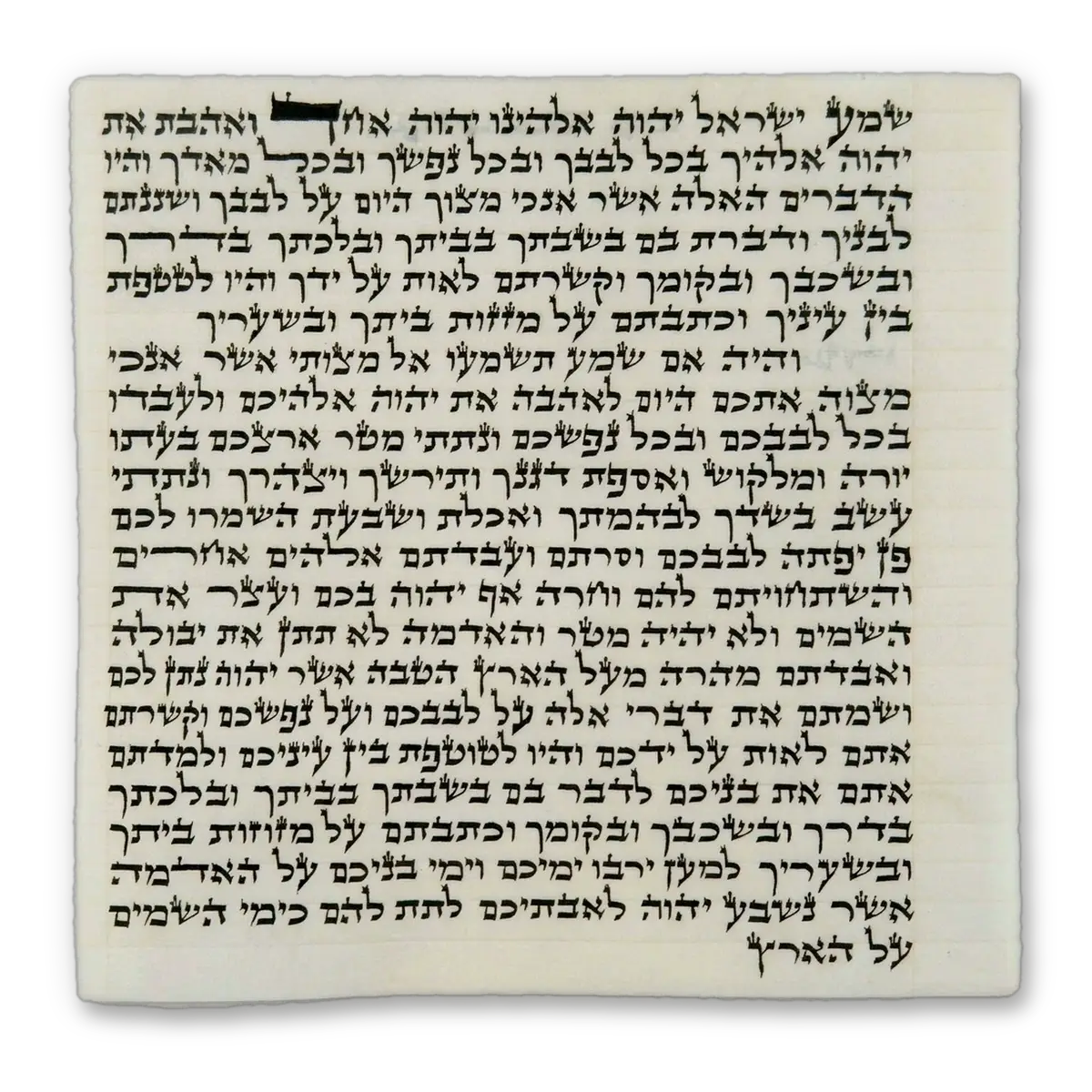
A mehudar mezuzah is a kosher mezuzah whose writing has been done with exceptional beauty, balance, and care on top of a solid halachic foundation. Every mezuzah must meet strict Torah requirements to be valid. A responsible merchant who sells high‑quality mezuzos quietly builds those requirements into every scroll: proper klaf, reliable ink, worthy sofrim, and real checking. Once those hidden pieces are in place, what people usually mean by a mehudar mezuzah is that the ksav itself – the letter forms, spacing, and flow of the lines – is on a noticeably higher level of precision and beauty than a basic kosher scroll.
In other words, a simple kosher mezuzah fulfills the basic obligation. A mehudar mezuzah fulfills the same mitzvah, but the visible writing expresses a higher level of hiddur because all the underlying ingredients and the ksav itself are handled with extra care. At Kosher Mezuzah, that underlying halachic process is treated as the non‑negotiable baseline for every scroll; mehudar then describes how far the ksav has been developed above that shared standard.
Choose Your Mezuzah Scroll
Each scroll is handwritten by a sofer on kosher parchment, following your minhag.
Mehudar Mezuzah Meaning: The Idea of Hiddur Mitzvah
The phrase mehudar mezuzah grows out of the broader concept of hiddur mitzvah – beautifying a mitzvah beyond the bare minimum. The classic source is “Zeh Keli v’anveihu” in Shemos: beautifying mitzvos through finer objects and more careful performance. In the case of mezuzah, that ideal lands most obviously on the appearance of the writing.
From a homeowner’s point of view, that is where hiddur is most visible. You see the way the letters sit on the scored sirtut lines, how even and consistent they are, how calm and orderly the parshiyos look from top to bottom. Behind that, a good mezuzah provider has already taken care of the other dimensions – parchment, ink, sofer, and checking – so that when you choose “mehudar,” you are really choosing a higher level of ksav built on a strong halachic process.
Kosher Mezuzah is set up around exactly this idea: the kashrus, materials, and checking are built into every scroll we sell. When you upgrade to a mehudar option, you are not buying “more kashrus,” but rather a more refined level of writing and presentation on top of an already dependable halachic core.
What a Good Provider Builds In by Default
Before we ever talk about mehudar as an upgrade in the writing, there are non‑negotiable standards that any reputable seller must treat as baseline, not as optional features.
First is the klaf. Halacha requires parchment from a kosher animal, processed lishmah for STaM. A serious mezuzah merchant will only work with klaf suppliers who meet that standard and will reject pieces that are weak, patchy, or prone to cracking. That is not a deluxe add‑on; if the klaf is not suitable, the mezuzah is simply not acceptable to sell.
Second is the ink and tools. STaM ink must be black, durable, and made for sacred writing. A merchant who cares about quality insists that his sofrim use reliable ink that holds up under normal conditions and quills that produce clean, stable strokes. Again, this is not a “mehudar tier” – it is what it means to sell mezuzos responsibly.
Third is the sofer himself and the checking chain. Genuine mehudar writing presupposes a sofer with training, yirat Shamayim, and a good name in communities that care about STaM. A good provider does not reserve that kind of sofer for the top shelf while letting weaker hands write the “basic” scrolls. All mezuzos should be written by sofrim who meet strong standards and then checked by a qualified magiah, with computer checking as an additional layer where used. That is built into the entire product line; the consumer is not buying “more kashrus” when moving up a level, only more refinement in the ksav.
At Kosher Mezuzah, every scroll – from entry level to the most mehudar options – is written by vetted sofrim, double‑checked by expert magi’im, and backed by OU endorsement. The shared floor is high; the differences between price tiers are about how elevated the writing is above that floor.
Seen this way, hiddur is not that some scrolls are written on proper klaf with real ink and real sofrim and others are not. Those basics must already be in place whenever a mezuzah is described as kosher. The choice between ordinary and mehudar is mostly about how far the beauty of the writing itself has been developed on top of that foundation.
Higher Quality Mezuzah vs. Basic Kosher Mezuzah
A basic kosher mezuzah and a mehudar mezuzah share the same halachic core. Both must:
- Be written by hand on proper klaf from a kosher animal.
- Use halachically acceptable black ink.
- Be written lishmah by an observant sofer.
- Contain the exact two parshiyos of Shema and Vehaya im Shamoa, with every letter formed correctly.
- Be checked by a qualified magiah before being sold.
When those conditions are met, the mezuzah is kosher and fulfills the mitzvah.
The difference with a mehudar mezuzah is where the visible quality of the writing lands. In a mehudar scroll, the letters are not only kosher but also:
- More even and balanced from top to bottom.
- Spaced with a calmer, more consistent rhythm between words and lines.
- Written in a ksav that looks settled, clear, and confident, without rushed or sloppy strokes.
The effect is that when you open two scrolls side by side, both kosher, the mehudar scroll immediately reads as more beautiful and orderly to the eye. That extra beauty in the ksav is what most people intuitively mean by a “higher quality mezuzah.”
From Kosher Mezuzah’s point of view, that is exactly what our mehudar lines are designed to provide: scrolls that are halachically identical in their core requirements to our standard verified mezuzos, but whose ksav reflects more time, balance, and refinement from sofrim known specifically for their beautiful writing.
Hidur Mezuzah in Practice: How Much of This Is on the Consumer?
When it comes to hidur mezuzah, the consumer’s main conscious choice is usually how far to upgrade the ksav, not whether the mezuzah will be fundamentally kosher. A reputable merchant has already done the quiet work of sourcing reliable klaf and ink, choosing sofrim with proper credentials, and putting a real checking process in place across the board.
If a family’s budget is limited, the first priority is to make sure every obligated doorway has a truly kosher mezuzah at all. Within that, many people will still opt for a modest level of hiddur in the writing – something readable, calm, and respectable – without reaching for the most artistic ksav.
When someone wants to invest more in the mitzvah, what they are mainly choosing is a higher tier of writing: more even, more beautiful, often written by a sofer known specifically for his refined ksav and extra time per scroll. The underlying halachic process should not change between tiers; the upgrade is in the visible ksav and the time and focus it reflects.
Kosher Mezuzah structures its offerings around that same hierarchy. All scrolls meet a transparent, documented halachic standard, and the higher levels of mehudar reflect soffrim who devote more time per mezuzah, more emphasis on balance and aesthetics, and often more select pieces of klaf – so the extra investment is actually going into the mitzvah object itself.
How to Choose a Mehudar Mezuzah
Choosing a mehudar mezuzah wisely means asking two different kinds of questions.
First, confirm the baseline:
- Who are the sofrim and magiim, and are they consistently used for all scrolls, not only for a special “mehudar” line?
- How is the klaf sourced and supervised?
- What checking process is standard before a mezuzah is sold?
These answers tell you whether the merchant’s entire mezuzah offering rests on proper halachic foundations.
Then, once you are comfortable with the baseline, look at the writing itself:
- When you open a few scrolls, do the letters look clear and relaxed, or cramped and jumpy?
- Are the lines straight and the margins clean, or do they wander and crowd the edge?
- Does the ksav reflect the kind of beauty and order you have in mind when you say you want something “mehudar” for your home?
When those two layers come together – a trustworthy process in the background and genuinely beautiful writing in the foreground – you have a mehudar mezuzah in the everyday sense of the word: a scroll whose visible ksav is on a higher level, resting on a solid, responsible chain of kashrus that the merchant has already built in.
Kosher Mezuzah makes this evaluation easier by publishing clear documentation with each scroll: who wrote it, who checked it, what standards it meets, and when it should next be inspected. That traceability turns abstract questions about “who wrote my mezuzah?” into concrete, verifiable answers.
Common Mistakes When Pursuing a Higher Quality Mezuzah
One common mistake is assuming that the price of the scroll alone determines its mehudar status. A more expensive scroll is not automatically better. Price reflects many variables: the sofer's hourly rate, the quality of materials, the region of writing, and market demand. A moderately-priced scroll from a skilled, yerei Shamayim sofer with proper certification may be more mehudar than a high-priced scroll from an unverifiable source. The standard to ask about is not cost. It is the credentials of the sofer, the quality of the klaf and ink, and the clarity of the writing.
A second mistake is neglecting the magiah (inspector), even a sofer who writes beautifully may make an occasional error. A mehudar scroll should be checked by a qualified magiah after writing and before sale. When a scroll is sold with documentation of both the sofer and the magiah who reviewed it, the full chain of sofer integrity has been held to its standard, at the highest level of care. Each scroll we carry comes with this accountability built in, reflecting our dedication to ensuring the proper fulfillment of this mitzvah of mezuzah. You can browse our verified mehudar scrolls to review available options with full documentation.
A third mistake is overlooking the tzurat ha'ot in pursuit of visual elegance. Some scribes produce visually striking scrolls that, upon closer inspection, contain letter forms that are ambiguous or halachically uncertain. A letter that looks beautiful at a distance but whose halachic form is ambiguous is not mehudar. It may not even be kosher. The clarity of mezuzah script is the foundation upon which all beauty must rest. Hidur that is built on ambiguous letter forms is not hidur at all.
Why Choosing the Right Vendor Matters
From a halachic standpoint, the mitzvah is fulfilled by the scroll on your doorpost, not by the store where you bought it. But in practice, most of what you know about that scroll comes from the vendor’s standards. A merchant who quietly blends together different levels of kashrus, does not distinguish reliably between basic and mehudar, or cannot explain who writes and checks the scrolls, makes it hard to know what you are actually putting on your home.
A vendor who treats the entire chain – from klaf and ink to writing, checking, and documentation – as a halachic responsibility rather than a marketing detail allows you to focus your choice where it belongs: on how much hiddur in the ksav you want to invest in, knowing the kashrus is solid underneath.
Choosing Kosher Mezuzah as Your Vendor of Choice
Kosher Mezuzah was built specifically to serve that role. Every scroll we sell, whether labeled standard or mehudar, is written by a certified, G‑d‑fearing sofer who has passed rigorous halachic examinations. Each mezuzah is double‑checked by expert magi’im, with computer checking as an additional safeguard, and endorsed under the Orthodox Union’s mezuzah program so there is external rabbinic accountability at every stage.
Each scroll comes with a unique QR code or documented record that tells you exactly who wrote it, who checked it, which materials were used, and when the scroll is next due for inspection. We do not sell returned or secondhand scrolls; every mezuzah that leaves our warehouse is new, certified, and ready to fulfill the mitzvah properly.
When you choose a mehudar mezuzah from Kosher Mezuzah, you are not only choosing a more beautiful ksav. You are choosing a scroll whose halachic foundations, writing, and checking have all been treated with the same seriousness that you want to bring into your home. That combination – dependable kashrus as a baseline, plus genuine hiddur in the writing – is what makes Kosher Mezuzah a reliable vendor of choice for families who want their mezuzos to be both kosher and truly mehudar.
To take the responsible next step in fulfilling this mitzvah with the attention it warrants, we invite you to contact us with your questions or to request guidance on selecting a mehudar scroll for your home.
May the mitzvah of mezuzah bring blessings and protection to your home, and may every scroll you affix reflect both the kashrut and the beauty this sacred mitzvah deserves.


.svg)
Bring a true Kosher Mezuzah into your home
Fulfill the mitzvah with confidence, beauty, and meaning.
Buy a Mezuzah