

Mezuzah Anxiety and Trust in Mitzvot: Being Careful Without Becoming Afraid
It’s natural to want to check mezuzos when difficulties arise, and that can be healthy when it leads to reviewing one’s deeds, strengthening mitzvos, and ensuring the mezuzos are halachically valid. But constant panic about mezuzos after every painful event becomes unproductive “mezuzah anxiety.”
The Torah approach is to check mezuzos calmly when appropriate, following halachah with guidance from a rav and a qualified sofer/magiah, and then to rely on Hashem, trusting that proper mitzvah observance means we have done our part.
The goal of this article is to help a Torah Jew relate to mezuzah in a way that is:
- Careful and serious about the mitzvah
- Grounded in halacha and yiras Shamayim
- Steeped in bitachon and trust in mitzvot—the trust that when a person follows the Torah’s guidelines, he has done what he is supposed to do.
Kosher Mezuzah is dedicated to ensuring the proper fulfillment of the mitzvah of mezuzah, and we invite you to reach out through our contact form with any questions about fulfilling this mitzvah properly.
Key Takeaways
- A healthy concern to fulfill mezuzah properly comes from yiras Shamayim; mezuzah anxiety begins when that concern turns into ongoing dread or mezuzah protection anxiety.
- Classic halachic sources present mezuzah as both a precious mitzvah and a form of protection, but the protection is a byproduct of proper fulfillment, not the main focus.
- The more a person learns the halachos—where mezuzos are required, how they must be written, checked, and placed—the more his observance is guided by halacha rather than by fear-based mitzvah observance.
- After a person has followed the Torah’s guidelines—buying a kosher scroll, affixing it correctly, and checking at proper intervals—he should rest in bitachon and trust in mitzvot, knowing he has done his part to ensure proper observance of the mitzvah.
How Chazal Tell Us to Relate to This Mitzvah
The Rambam in Hilchos Tefillin, Mezuzah v’Sefer Torah (6:13) writes (paraphrased) that a person is obligated to be very careful with the mitzvah of mezuzah because it is a constant obligation. Every time one enters and exits, he encounters the declaration of Hashem’s Oneness, remembers His love, and is awakened from the vanities of this world to walk in straight paths. The mezuzah, in the Rambam’s description, is first and foremost a reminder and encounter with Hashem.
The Tur in Yoreh De’ah 285 describes mezuzah as a precious mitzvah that brings great reward and protection to the home. At the same time, the primary kavanah is to fulfill the command of the Creator. The protection that Chazal associate with mezuzah flows from that proper fulfillment, not from fear based mitzvah observance. Related reading: Can You Fulfill the Mitzvah of Mezuzah Without Knowing It?.
Put simply:
- We are meant to care deeply that the mitzvah is done correctly—this is genuine yiras Shamayim.
- Once we have done what halacha requires, we are meant to live with bitachon, not with constant mezuzah anxiety.
What the Sources Say About Mezuzah and Divine Protection
The Torah and Chazal emphasize that mitzvos, including the mezuzah, serve not only as commandments to fulfill but also as tangible reminders of Hashem’s presence and care. The sources speak of protection, both spiritual and practical, that accompanies careful observance.
Tehillim expresses this assurance: “Hashem yishmor tzeisecha u’vo’echa” (Tehillim 121:8). The Gemara in Menachos (33b) relates that Onkelos, as he was being taken from his home by the emperor’s soldiers, placed his hand on the mezuzah and explained that unlike human kings, who sit inside while their servants guard them from without, HaKadosh Baruch Hu lets His servants dwell inside while He guards them from without.
Rabbi Elazar ben Azariah teaches in Menachos (43b) that one who wears tefillin, tzitzis, and has a mezuzah on the doorway is surrounded by mitzvos that remind him of Hashem and help prevent sin. The Gemara in Shabbos (32b) links careful mezuzah observance with special protection for the home, citing the verse “V’yadata ki shalom ohalecha” (Iyov 5:24). Later sefarim, such as Sefer Chareidim, describe placing one’s hand on the mezuzah and reflecting that Hashem is the true Master of the house, and that one and one’s family dwell under His care. We cover this in more depth in Mezuzah in Times of Crisis.
When Difficulties Arise: A Normal Instinct, Guided by Halacha
There is a growing pattern among Torah-observant families: if a child becomes ill, the first instinct is to ask whether the mezuzos were checked. A business suffers, and people wonder whether perhaps a mezuzah was overlooked or has become invalid.
On one level, this reaction reflects something very positive. When difficulty or misfortune falls upon families, a common first response is to check the mezuzos because we know that a byproduct of proper fulfillment of the mitzvah is protection. If challenges arise, people worry that perhaps the mezuzah is not providing its usual protection due to becoming invalid. That concern comes from yiras Shamayim (fear of G-d) and from wanting to fulfill the mitzvah properly.
At the same time, this can slip into mezuzah protection anxiety or more general fear based mitzvah observance—a feeling that one is never quite sure if the mitzvah was done correctly, and that any difficulty must mean something is wrong with the mezuzos. If every painful event automatically produces panic about mezuzos, this can turn into unproductive mezuzah anxiety.
The Torah path is different:
- Yes, check mezuzos when appropriate. Especially when they have not been checked for a long time, or when they may have been exposed to moisture, heat, or damage.
- Do so calmly, guided by halacha. Ask a rav if and when it is appropriate to re-check, and use a qualified sofer and magiah.
- Once proper checking has been done, rely on Hashem. Trust in mitzvot means believing that when a mitzvah is fulfilled according to halacha, a person has done his part.
This approach preserves the positive instinct to care, while avoiding an unhealthy cycle of fear based mitzvah observance.
Grounding Mezuzah Observance in Halacha
Proper mezuzah observance begins with calm and confidence—knowing that the scroll you purchase was written correctly, and that ongoing maintenance can be handled clearly and responsibly. The antidote to mezuzah anxiety is not indifference, but understanding: the more one knows the halachos and the processes behind the mitzvah, the more one can replace vague worry with confidence.
Certification: The First Step to Fulfilling the Mitzvah
Performing the mitzvah of mezuzah correctly begins with using a scroll that is reliable and kosher. Certification is critical because the halachos of mezuzah are intricate and complex, and visual inspection alone cannot ensure a scroll was written properly.
Several factors make certification essential:
The Sofer – Is the scribe a God-fearing Jew with full mastery of the nuanced halachos required for writing a kosher mezuzah?
The Materials – Were proper kosher klaf (parchment) and ink used?
The Checking – Has the completed mezuzah been reviewed by a qualified magiah (checker) to ensure every letter and word meets halachic standards?
Until recently, there was no standardized process to guarantee these factors. In today’s market, high demand, opaque supply chains, and lack of oversight mean many mezuzos are available that were not written or checked K’Halacha. Certification from a trusted authority—such as the Orthodox Union—provides the assurance that the scroll meets all halachic requirements, giving homeowners confidence from the very first purchase.
Starting with a properly verified mezuzah lays a solid foundation for ongoing observance. Only after ensuring the scroll is reliable does the discussion of regular checking and maintenance become relevant.
Ongoing Checking and Maintenance
The Shulchan Aruch (Yoreh De’ah 291) and its commentaries provide detailed guidance for checking mezuzos:
- Homeowners should have their mezuzos checked approximately twice every seven years under normal circumstances.
- Mezuzos in more vulnerable locations—such as outer doors exposed to weather or rented properties—may require more frequent checking.
- In times of particular difficulty, poskim suggest including a review of mezuzos as part of a broader cheshbon hanefesh—not out of panic, but as part of responsible spiritual accounting.
From a halachic perspective, a mezuzah that has gone many years without checking may have become passul due to age or conditions. Correcting that is a matter of normal responsibility, not misfortune. The healthy response is simple: ensure the mezuzos are kosher, properly placed, and maintained.
A wide range of OU-endorsed kosher mezuzah scrolls are available to help homeowners meet these standards, making it easy to fulfill the mitzvah carefully, fully, and with confidence.
You can browse a wide range of OU-endorsed kosher mezuzah scrolls that meet these standards, so that your fulfillment of the mitzvah is both careful and confident.
Practical Steps: From Anxiety to Calm Hishtadlus
To move from mezuzah anxiety to calm and trust in mitzvot, consider the following steps:
- Learn the basics. Visit our mezuzah learning center to understand what it takes to maintain a kosher mezuzah over time—when mezuzos should be checked, how to protect them from weather or damage, what signs of wear to look out for, and how to ensure they remain properly affixed and in good condition.
- Consider certification when purchasing. When buying a mezuzah, choose a verified scroll that provides clear standards and guidelines for proper writing, materials, and checking. Certification gives you confidence that the scroll fulfills the mitzvah correctly from the start.
- Ensure every required doorway has a kosher mezuzah. The scroll should be written by a vetted sofer and checked by a qualified magiah.
- Establish a normal checking schedule. Follow the guidance of Shulchan Aruch and your rav about how often to check. Avoid turning every difficulty into a trigger for immediate, repeated checking.
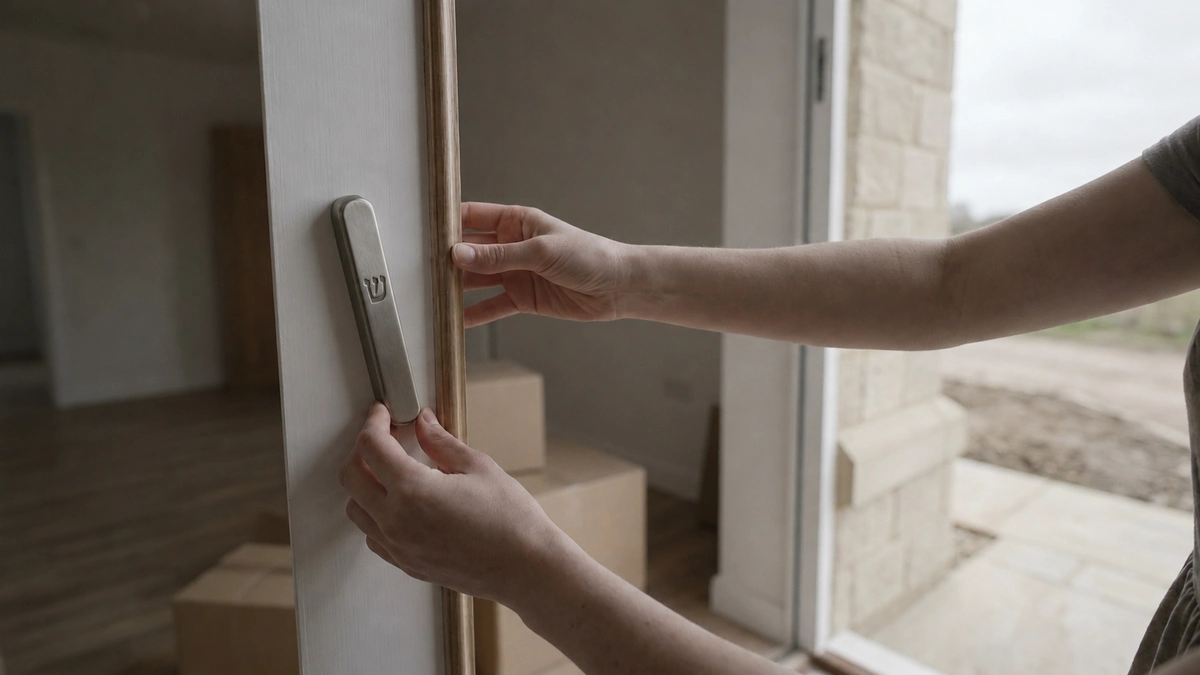
- Affix and touch the mezuzah with kavanah. When you pass the mezuzah and place your hand upon it, remember—as described in later sefarim—that Hashem is the true Master of the house, and that your family lives under His care.
- Ask a rav when in doubt. For questions about your specific minhag or about borderline cases (offices, porches, archways), consult your rav. For questions about the halachic status of your scrolls, our team at Kosher Mezuzah is available to help.
For specific guidance about your mezuzos, you can call us at +1-848-356-9471 or reach out via our contact form.
Deeper Meaning: Yiras Shamayim, Bitachon, and Trust in Mitzvot
The ways of the Torah are meant to be life-giving and uplifting, not a source of worry or anxiety. Chazal describe the path of mitzvot as “pleasant” and “sweet,” guiding us toward holiness with clarity and purpose. True yiras Shamayim (fear of Heaven) is expressed through careful, conscientious observance, balanced with bitachon—trust in Hashem that He oversees and sustains all aspects of our lives.
Applied to the mitzvah of mezuzah, this means that one does not need to live in constant anxiety about every potential concern. By learning the halachos, acquiring verified scrolls, placing them properly, and following a regular checking schedule, a homeowner fulfills the mitzvah completely and correctly. There is no need to obsess over every detail beyond what halacha requires; doing what the Torah instructs in a calm, measured way is sufficient.
The mezuzah then becomes a tangible expression of a home under Hashem’s care—an anchor of spiritual mindfulness, not a source of worry. Observing the mitzvah properly, with intention and trust, transforms it into a source of peace, clarity, and connection rather than stress.
For further inspiration, you can explore our mezuzah inspiration and meaning resources, which draw on the rich tradition of stories and teachings surrounding this mitzvah.
A Clear Takeaway: Careful Mitzvah, Calm Heart
Mezuzah anxiety is not resolved by caring less about the mitzvah; it is resolved by caring correctly. Observing the mitzvah properly begins with understanding the halachos and starting with a verified mezuzah—one written by a trained sofer, made with kosher materials, and carefully checked. This ensures that from the moment it is affixed, the mitzvah is fulfilled with clarity and confidence.
Homeowners should follow a normal halachic schedule for checking, taking care to protect mezuzos from damage, and consult a rav when questions arise. By focusing on correct practice rather than excessive worry, one can fulfill the mitzvah fully while living with bitachon—trust in Hashem—and calm confidence.
Kosher Mezuzah is dedicated to helping you fulfill this mitzvah from the sofer’s quill to your doorpost, with full certification and clarity. We invite you to browse our verified mezuzah scrolls and to reach out with any halachic or practical questions.
May the mitzvah of mezuzah bring brachah, protection, and menuchas hanefesh to your home.


.svg)
Bring a true Kosher Mezuzah into your home
Fulfill the mitzvah with confidence, beauty, and meaning.
Buy a Mezuzah