
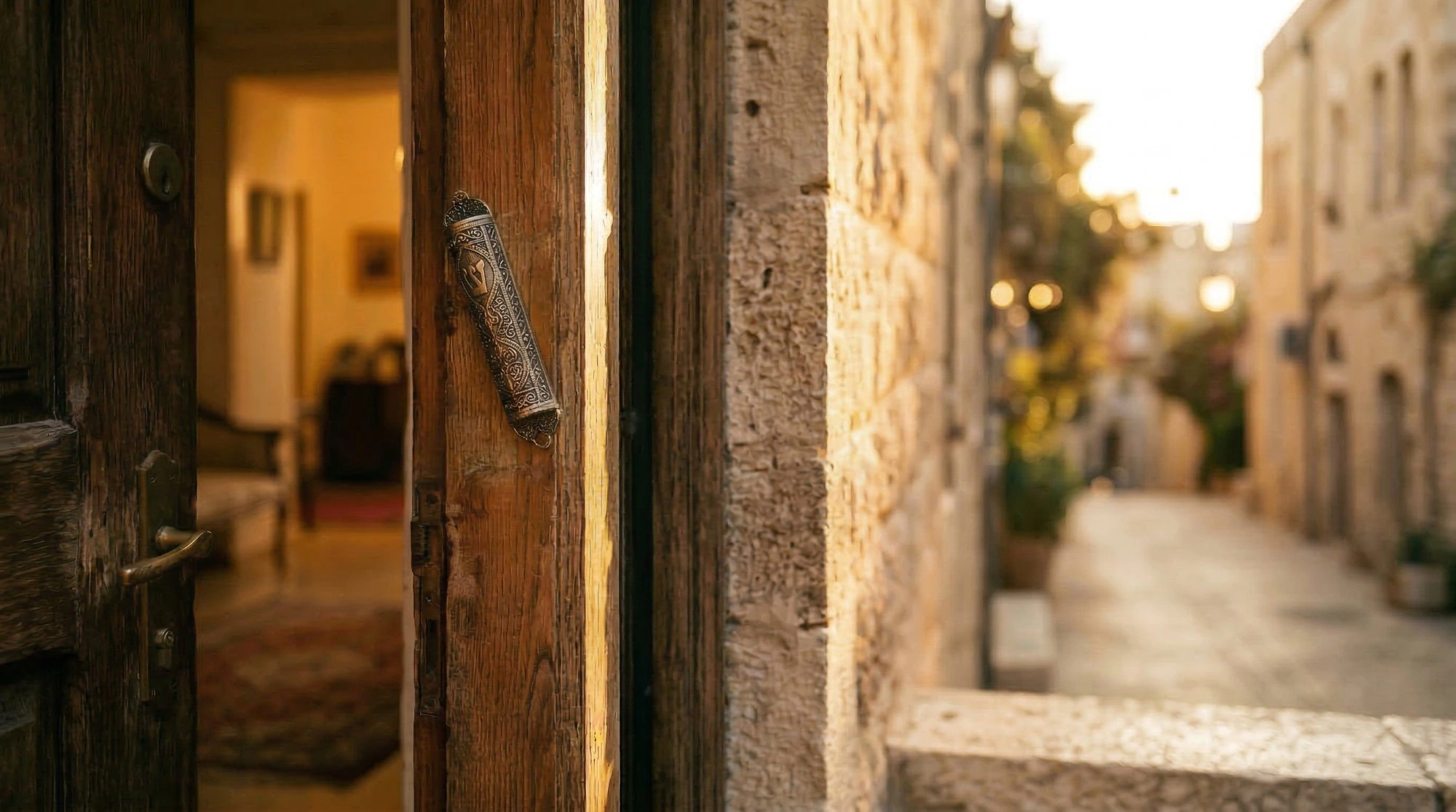
Mezuzah and Jewish Identity: A Mitzvah, a Sign of Hashem’s Presence on Every Doorpost
The mezuzah is one of the most visible mitzvos in the Jewish home — and it carries far more spiritual weight than most people realize.
When people think of something that marks a Jewish home, they often picture the mezuzah. The case on the doorpost carries a universal and instantly recognizable association with Jewish life— observant or not, Ashkenaz or Sefard, in Eretz Yisrael or the diaspora.
But to describe the mezuzah mainly as a “symbol” misses its essence. A mezuzah is, first and foremost, a Torah mitzvah — one of the 613 commandments, a continuous halachic obligation, and a declaration that the home it guards ultimately belongs to Hashem (G-d).
Seen this way, “symbol” and “mitzvah” are not two separate ideas. The only reason the mezuzah can carry genuine Jewish identity is because it is a Divine command. Its power as a sign of identity flows from our loyalty to Hashem’s word.
What the Mezuzah Says About a Jewish Home
When a Jewish family affixes a mezuzah to their doorpost according to halachah, they are doing more than announcing that “a Jewish family lives here.” They are accepting upon themselves the words written inside:
“U’chsavtam al mezuzos beisecha u’visharecha” — “And you shall write them upon the doorposts of your house and on your gates” (Devarim 6:9).
They are saying, in action:
- The Torah is the guiding force in this home.
- The words of Shema belong at the entrance.
- Hashem’s Name is present at the threshold of our daily lives.
Our Sages teach that where a mezuzah is properly affixed, it brings a special awareness of the Shechinah to the home. The entryway itself is transformed: what passes through that doorway passes under the written reminder of Hashem’s unity and kingship.
Even in a home that is at the beginning of its journey back to observance, a properly placed mezuzah is no small matter. Perhaps the family is still learning, still growing in Shabbos and kashrus. The mezuzah on the doorpost testifies that the words of Torah belong here, that Hashem’s Name is welcome here, and that the family cares enough to fulfill this mitzvah in the way the Torah prescribes. For the full discussion, read Why Doesn't the Mezuzah Use Hashem's Name Explicitly?.
That is already a profound expression of who they want to be.
A "Symbol" That Fulfills a Mitzvah Every Moment
Here is what sets the mezuzah apart from other items that people associate with Jewish identity. A decorative Magen David on the wall is a symbol. A mezuzah with a kosher scroll inside is an actual mitzvah, being fulfilled at every moment it is properly in place.
Chazal describe mezuzah as a continuous mitzvah. Most mitzvos are performed and then completed — you shake lulav, you light candles, you say Kiddush. Mezuzah is different: as long as the kosher scroll is fixed correctly on the doorpost of a Jewish home, the mitzvah is ongoing.
The Rambam writes that when a person enters and exits his home and notices the mezuzah, he is reminded of the unity of Hashem’s Name and of his obligation to love and fear Him — not only on Yom Tov or at elevated moments, but during the regular comings and goings of daily life. The mezuzah quietly weaves that awareness into the routine of the home.
For families living in a secular environment, that constancy is especially precious. The world outside pulls in many directions. The mezuzah remains at the doorpost, steady and unchanged, anchoring the home to Torah and to the presence of Hashem.
Doing It Right: What a Kosher Mezuzah Says About Our Commitment
There is a real difference between hanging a decorative case and actually fulfilling the mitzvah of mezuzah. That difference lies in the scroll.
A kosher mezuzah requires a scroll written by a qualified sofer on proper klaf (parchment), with exact text and letter formation according to halachah, and the correct nusach (scribal tradition) and layout of the two parshiyos (Torah passages). The laws governing the writing itself are remarkably intricate — the sofer must write with the specific intention of fulfilling the mitzvah, the ink must be formulated according to halachic standards, each letter must meet precise requirements of form and spacing, and even a single malformed or missing letter can render the entire scroll invalid. Compliance with these laws makes the difference between a scroll that fulfills the mitzvah and one that does not, which is precisely why sourcing a mezuzah from a certified, qualified sofer is not optional — it is the foundation of the mitzvah itself.
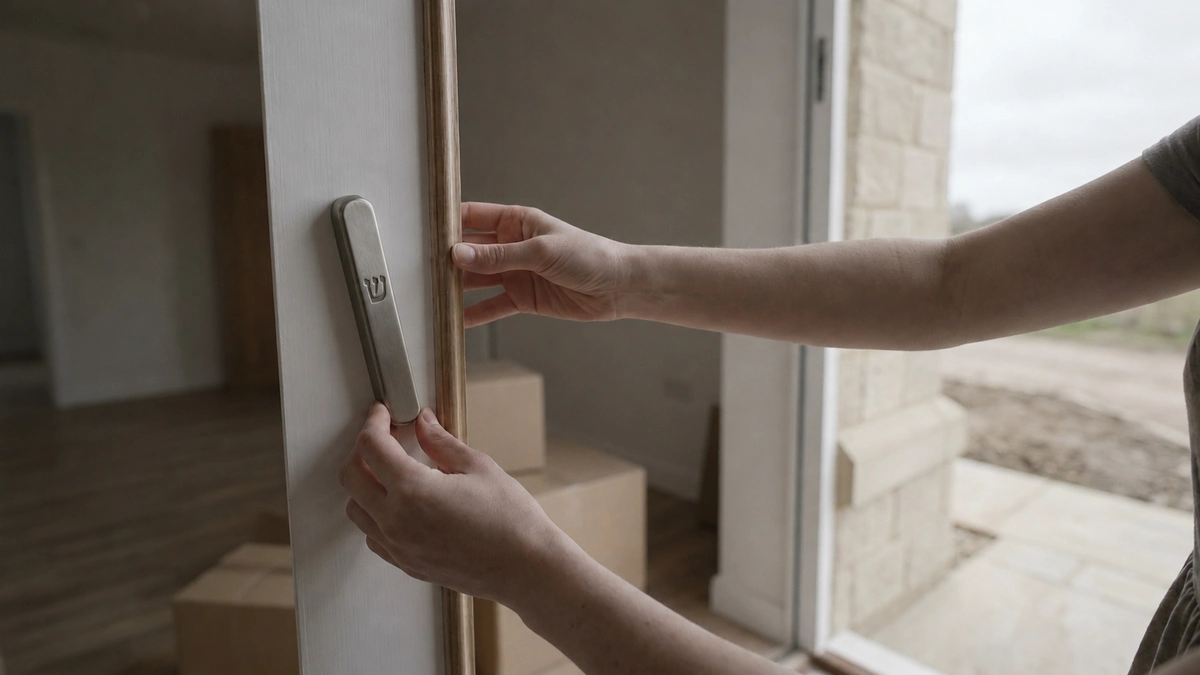
Placement also follows specific halachic rules:
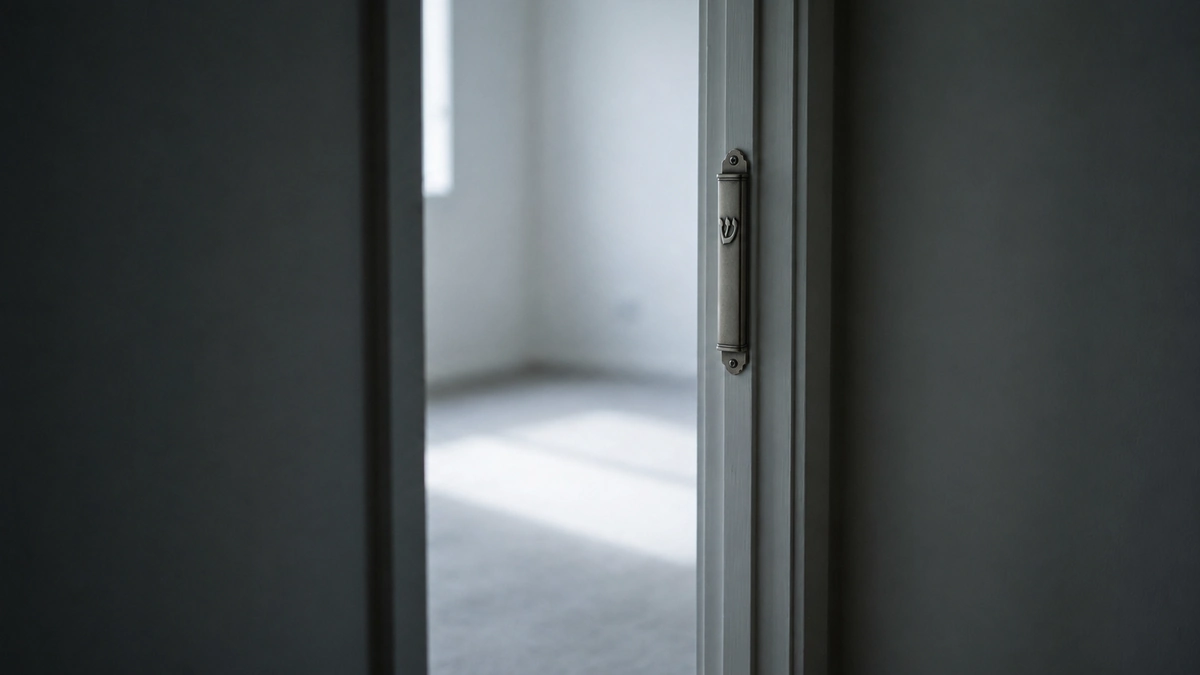
- On the right side as one enters the room.
- Within the halachically defined area at the upper third of the doorway’s height.
- Angled according to Ashkenazic custom (following the Rama) or placed vertically according to Sephardic custom (following the Beis Yosef), each according to their mesorah.
The berachah (blessing) “l’kboa mezuzah” is recited at the time of affixing, when appropriate. In addition, the Shulchan Aruch in Yoreh De’ah discusses the obligation to have mezuzos checked regularly by a qualified magi’ah, with common practice being to inspect them at set intervals (and more frequently in climates where heat or humidity can damage the letters).
Every one of these details is an expression of yiras Shamayim (fear of G)and kavod ha-mitzvah (respect for the mitzvah). A family that takes the time to buy verified scrolls, to learn the halachos (laws) of placement, to say the berachah, and to bring their mezuzos for checking is not doing something for appearance. They are showing that this mitzvah matters to them — that they want their home to be not only Jewish in name, but aligned with halachah in practice.
This is the heart of “mezuzah and identity”: not the image on the outside, but the faithfulness inside.
More Than a Marker — A Doorway of Kabbalas Ol Malchus Shamayim
Sefer HaChinuch, in his discussion of the mitzvah of mezuzah, emphasizes that having Hashem’s words on the doorway constantly reminds a person, whenever he goes in and out, to remember Hashem and His unity. Building on this idea, the mezuzah can be seen as marking the entrance of the home as a place of kabbalas ol malchus Shamayim – a written echo of what we express verbally in Krias Shema.
Every person who walks through that doorway passes beneath those words. Every child who grows up in that house sees it, morning and night. Every guest who enters senses, without any speech, that this is a home that wants the Shechinah.
The mezuzah may be one of the most familiar sights of a Jewish home, but its deepest meaning is not cultural or ethnic. It is the sign of a family that wants to live as ovdei Hashem, that desires a home built according to Torah, with Hashem’s Name written at the entrance.
Fulfill the Mitzvah With Confidence — Kosher Mezuzah
Kosher Mezuzah has spent over forty years helping families fulfill this mitzvah properly in homes around the world. Every scroll is written by a vetted sofer, double-checked by expert examiners, and endorsed by the OU.
Each mezuzah scroll comes with a unique QR code providing full transparency: who wrote it, who reviewed it, which materials were used, and when it is next due for recommended inspection. No secondhand scrolls. No shortcuts. Every mezuzah that leaves the warehouse is new, certified, and ready to genuinely fulfill the mitzvah in your home.
To explore OU-endorsed mezuzah scrolls, visit kmezuzah.com/mezuzah-scrolls. To ask about placement, checking, or certification, visit kmezuzah.com/contact.
May every doorpost in your home stand as a true and living declaration of Hashem’s presence and kingship within it.

.svg)
Bring a true Kosher Mezuzah into your home
Fulfill the mitzvah with confidence, beauty, and meaning.
Buy a Mezuzah