
OU Mezuzah Certification: What It Checks and What It Doesn't
Understanding what the OU's endorsement actually covers, and where the buyer's own due diligence begins, is essential for anyone who wants to fulfill the mitzvah of mezuzah with genuine care and confidence.
The Orthodox Union's endorsement signals that a recognized halachic authority has reviewed the production process behind a mezuzah scroll and confirmed that it meets the standards halacha requires. But an endorsement is not a single, uniform guarantee. It does not mean every scroll is identical, nor does it mean no further responsibility rests with the buyer or the household.
One distinction is worth stating plainly at the outset: the OU endorses the company and the STaM process behind a scroll — how it is written, checked, and handled. Its program for scrolls works differently from the way it certifies a food product. Understanding that difference is the starting point for everything below.
Kosher Mezuzah is dedicated to ensuring the proper fulfillment of this mitzvah, and if you have questions about a specific scroll or want guidance on fulfilling this mitzvah properly, you are welcome to reach out to our team for personal assistance.
Key Takeaways
- The OU's endorsement confirms that a scroll was produced through a verified, halachically supervised process — covering the sofer who wrote it, the klaf (parchment) it was written on, and the magiah (inspector) who checked it
- An endorsement is a starting point, not an endpoint; Jewish households are still halachically obligated to have their mezuzos periodically checked (at least twice in seven years) by a qualified magiah
- Many commercially sold scrolls are printed or computer-generated without proper supervision, making verified halachic oversight one of the most important things to look for before purchasing
- Traceability matters: a scroll produced under a supervised process should be traceable to a named sofer (scribe) and a named magiah who checked it, ensuring personal halachic accountability
What the OU's Endorsement Actually Covers
The endorsement means that the Orthodox Union, the most widely recognized kosher certification agency in North America, has reviewed and endorsed the process by which a mezuzah scroll is produced. These standards cover the sourcing and quality of the klaf (parchment), the materials used, and the training and ongoing supervision of the sofer (scribe) who writes the scroll. The standards also address the requirement that the magiah who checks each scroll meets strict halachic requirements. This is not a rubber stamp—it reflects an ongoing relationship of supervision, guidance, and quality control between the OU and the vendor to ensure scrolls are produced to recognized halachic standards. For the full discussion, read After a House Fire in Los Angeles, a Shul's Group Chat Produced 15 Mezuzahs in H.
What the endorsement covers is significant and meaningful. It confirms that the scrolls are not printed, not computer-generated, and not produced through any method that would render them pasul (halachically invalid) from the outset. It confirms that the mezuzah scrolls were produced under qualified halachic oversight, following established procedures to prevent the most fundamental disqualifications that plague the mezuzah market: mass-produced scrolls sold as handwritten, or scrolls sourced without any verified chain of halachic accountability.
The OU's oversight addresses the system and the process, the integrity of the sofer, the quality of the klaf, the training of the magiah (checker). It does not replace the periodic checking of mezuzos that halacha requires of every Jewish household.
The Halachic Standard Behind the Process
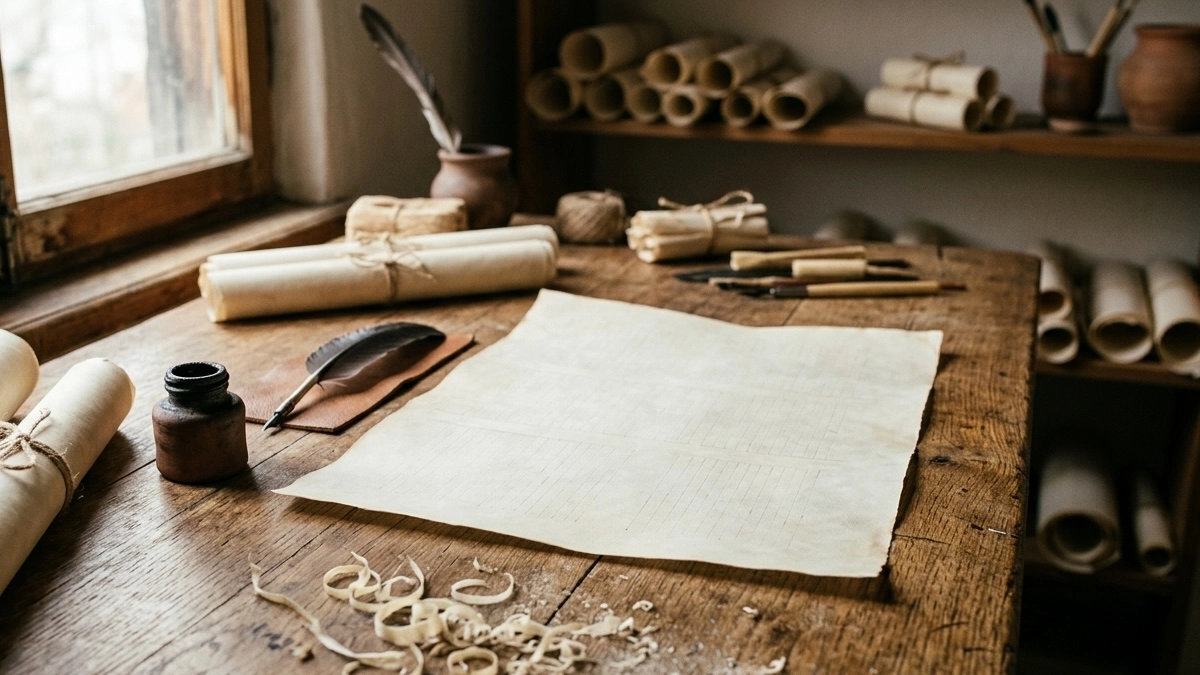
The Shulchan Aruch (Yoreh De’ah 285–291) establishes detailed requirements for a kosher mezuzah. The scroll must be written for the sake of the mitzvah (lishmah), it must be prepared on kosher klaf specifically for the sake of the mitzvah, the sofer must write with proper kavvanah (intent) and with ink that is halachically valid. Each of the letters of the text, comprising the first two sections of Shema (Devarim 6:4-9 and Devarim 11:13-21), must be formed with precision and correct letter formation. The rules of tzurat ha’ot (the proper shape of each letter) are carefully specified. The scoring of lines into the parchment (sirtut) to guide straight writing is a formal halachic requirement for a mezuzah; a scroll written without proper sirtut can be rendered pasul (see Shulchan Aruch Yoreh De’ah 288).
Poskim stress that the validity of a mezuzah depends on the cumulative fulfillment of all of these requirements: a defect in any one of them – an improperly formed letter, ink that has faded until the letter is unclear, or missing sirtut – can render the entire scroll pasul (see Shulchan Aruch Yoreh De’ah 288–289). This is why the role of the magiah is so significant. The magiah examines the scroll after the sofer completes it and verifies it before it is sold. The two-step process, sofer and magiah, is the foundation on which any serious system of oversight must rest.
The OU's endorsement, as applied to Kosher Mezuzah, builds on this framework by requiring named, identified individuals for both roles. The process is not anonymous. Each scroll is traceable through documentation to the sofer who wrote it and to the magiah who checked it. This traceability reflects the halachic principle that responsibility for the integrity of a mezuzah scroll must be personally assumed and personally accountable.
The Gemara in Yoma (11a) establishes that mezuzos must be checked periodically, twice in a seven-year cycle for a private home, and twice in a fifty-year Jubilee period for a public building. The Shulchan Aruch (Yoreh De'ah 291) rules that mezuzahs must be checked. Halacha recognizes that even a properly written scroll can deteriorate over time, which is why Shulchan Aruch (Yoreh De’ah 291) requires mezuzos to be checked at set intervals.
Halacha makes clear that the mitzvah of mezuzah is fulfilled through a proper act of affixing a kosher scroll, and that fulfillment continues only as long as the scroll remains valid. If a scroll was invalid from the outset, the mitzvah was never fulfilled; if it becomes pasul through damage after affixing, the mitzvah is no longer being fulfilled (see, for example, Rambam, Hilchos Mezuzah chs. 5–6). This is why both careful production and ongoing checking matter to whether the mitzvah is actually being performed.
Applying These Standards in Practice
For a homeowner or renter purchasing a mezuzah scroll, the OU's endorsement speaks to the most urgent question: can this scroll be relied upon? A scroll produced under a supervised, halachically overseen process rests on a verifiable foundation. It was written on proper klaf by a qualified sofer, checked by a qualified magiah, and brought to market through a supervised chain of custody. That is a meaningful assurance, one that most mezuzah buyers cannot independently verify on their own.
Practical application also involves the minhag (custom) of the household. Mezuzah scrolls are written in different scripts: Ashkenaz (Beit Yosef), Sefardi, and Arizal, each reflecting distinct mesorah (transmission). Kosher scrolls are available in all three scripts, and the OU's endorsement of the process applies equally across these variations. The choice of script is a matter of family custom and should follow the guidance of one's rav. What does not vary is the requirement that the scroll be kosher, verified, and properly affixed.
Practical Steps for Proper Fulfillment:
- Identify all doorways in your home that require a mezuzah by walking through each room and consulting your rav for any doubtful cases.
- Select a scroll that matches your family's minhag — Ashkenaz Beit Yosef, Sefardi, or Arizal — and confirm it comes from a source whose process carries OU endorsement. Verify that the scroll can be traced to a named sofer and a named magiah, and that an image or documented record of the scroll is available.
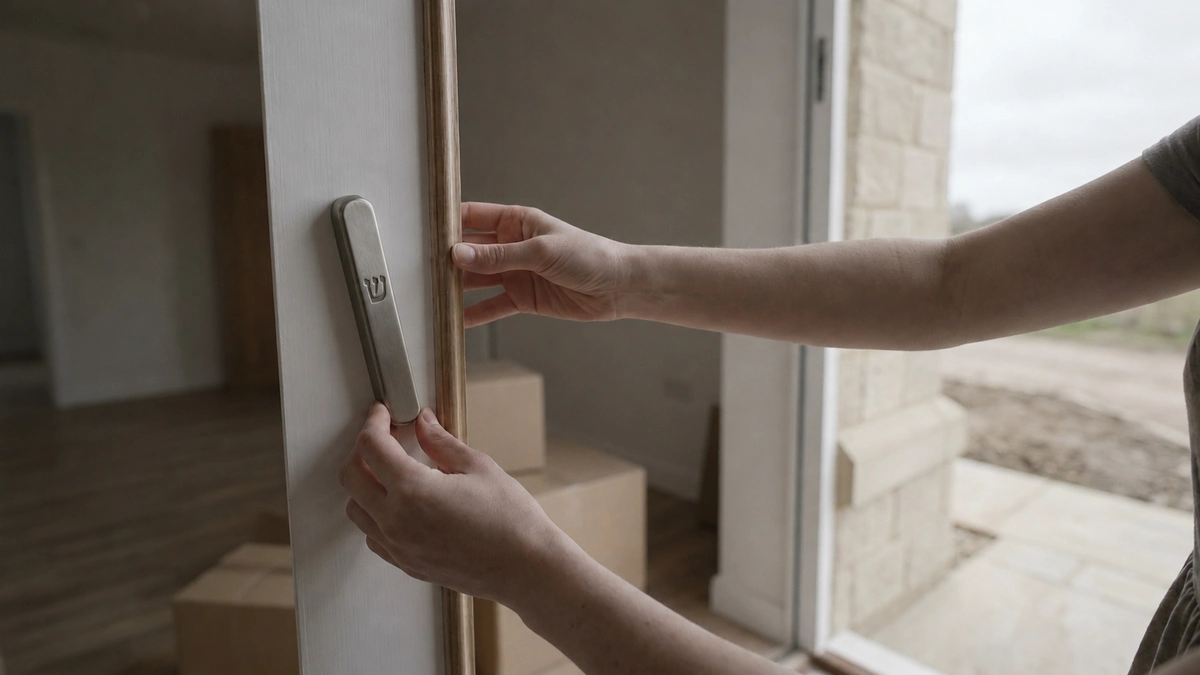
- Affix the mezuzah according to halachic requirements, in the correct position, at the correct height, on the correct side of the doorpost, following your rav's guidance.
- Schedule periodic checking of all your mezuzahs, at minimum twice within a seven-year period, with a qualified magiah.
For assistance in selecting a scroll and fulfilling these steps, if you have questions about oversight and checking, Kosher Mezuzah is available to help you through each step of this process.
The Kedushah This Oversight Is Meant to Protect
Our halachic authorities teach that through the mitzvah of mezuzah, a person fulfills multiple positive commandments and is constantly reminded of the love and Oneness of Hashem. It is not merely symbolic; it is a written declaration permanently affixed to the entrance of a Jewish home. The Tur (Yoreh De’ah 285) and the Zohar (Parshas Va’eschanan) describe the unique protection associated with a kosher mezuzah—emphasizing that this protection is inseparable from a scroll that is truly valid according to halacha. If a mezuzah is pasul, the mitzvah is not fulfilled at all.
This is precisely where verified oversight becomes so critical.
Why Verified Oversight Matters
Today’s mezuzah market presents real challenges. Demand is high, supply chains are often opaque, and consistent oversight has not always been easy for a buyer to verify. As a result, some mezuzahs on the market may have halachic issues, even if they appear outwardly acceptable.
The laws of mezuzah (hilchos mezuzah) are intricate and exacting. A problem at any stage can invalidate the entire scroll:
- The Sofer (scribe): Writing a mezuzah requires not only technical skill but deep yiras Shamayim and mastery of detailed halachos. Without proper qualification, even small deviations can render a mezuzah pasul.
- The Materials: The klaf (parchment) and ink must meet strict halachic standards. Substandard or improperly prepared materials invalidate the scroll.
- The Checking Process: Every mezuzah must be carefully reviewed by a qualified magiah. Many errors are not visible to the untrained eye and can easily go unnoticed without expert inspection.
Because so many of these issues are hidden, a consumer cannot realistically verify a mezuzah’s validity on their own just by visual inspection.
The Role of the OU's Endorsement
The OU's mezuzah program was created to address this exact gap.
Through a rigorous, end-to-end process, the Orthodox Union provides a level of oversight and accountability that was previously difficult for buyers to find in the mezuzah market:
- Vetted Sofrim: Every mezuzah is written by a vetted sofer who is regularly evaluated for both halachic knowledge and standards of practice.
- Verified Materials: The klaf and ink are sourced and approved to meet halachic requirements.
- Comprehensive Checking: Each mezuzah is examined by qualified magihim and enhanced with advanced computer scanning to detect even subtle flaws.
This process introduces something that has long been missing: traceability, transparency, and trust.
Protecting the Mitzvah — and the Home
This oversight is not about adding a label; it is about safeguarding the integrity of the mitzvah itself. Without reliable oversight, there is a real risk of affixing a mezuzah that does not fulfill the mitzvah at all.
With verified oversight, a family can affix their mezuzah with confidence—knowing that it is not an approximation or assumption, but a genuine fulfillment of halacha. In doing so, they preserve the kedushah of their home and ensure that the declaration placed upon their doorpost is real, valid, and complete.
May the mitzvah of mezuzah bring abundant blessings and protection to your home. To learn more about why the OU endorses Kosher Mezuzah and what that means for your family's mitzvah, we invite you to explore our resources. When you are ready to take the next step in fulfilling this mitzvah properly, you are welcome to browse our full selection of mezuzah scrolls and place your order with confidence.


.svg)
Bring a true Kosher Mezuzah into your home
Fulfill the mitzvah with confidence, beauty, and meaning.
Buy a Mezuzah