Learn
Learn

What a QR Code on Your Mezuzah Tells You — And Why It Matters

A QR code on a mezuzah provides full transparency about the scroll inside—who wrote it, who checked it, when it was made, and that it has been properly certified. This level of traceability is still uncommon in the mezuzah market, and it gives buyers confidence that they are fulfilling the mitzvah with a scroll they can verify and trust.

Full Transparency at Your Fingertips

When you purchase a mezuzah from a trusted source, you are placing your confidence in people you never met—the sofer who wrote it, the magiah who checked it, the organization that certified it. Traditionally, this trust has been built through reputation, rabbinic relationships, and word of mouth.

A QR code adds something new: instant, verifiable transparency.

With a single scan from your phone, you can access detailed information about your specific mezuzah. This is not a generic product page or a batch number—it is a window into the story of your scroll. For buyers who want to know exactly what they are putting on their doorpost, this kind of access is genuinely valuable.

What the QR Code Reveals

The QR code on a Kosher Mezuzah scroll provides access to information that would otherwise be invisible to the buyer. When you scan it, you can typically see:

  • The sofer's identity: The name of the scribe who wrote your mezuzah, and often background information about his training and certification.
  • The magiah's identity: The name of the examiner (or examiners) who checked the scroll for halachic accuracy.
  • Date of writing: When the mezuzah was written, so you know how recently it was produced.
  • Materials used: Confirmation that the klaf (parchment) and dio (ink) meet halachic standards.
  • Certification status: Verification that the scroll has been approved through the OU-endorsed process.
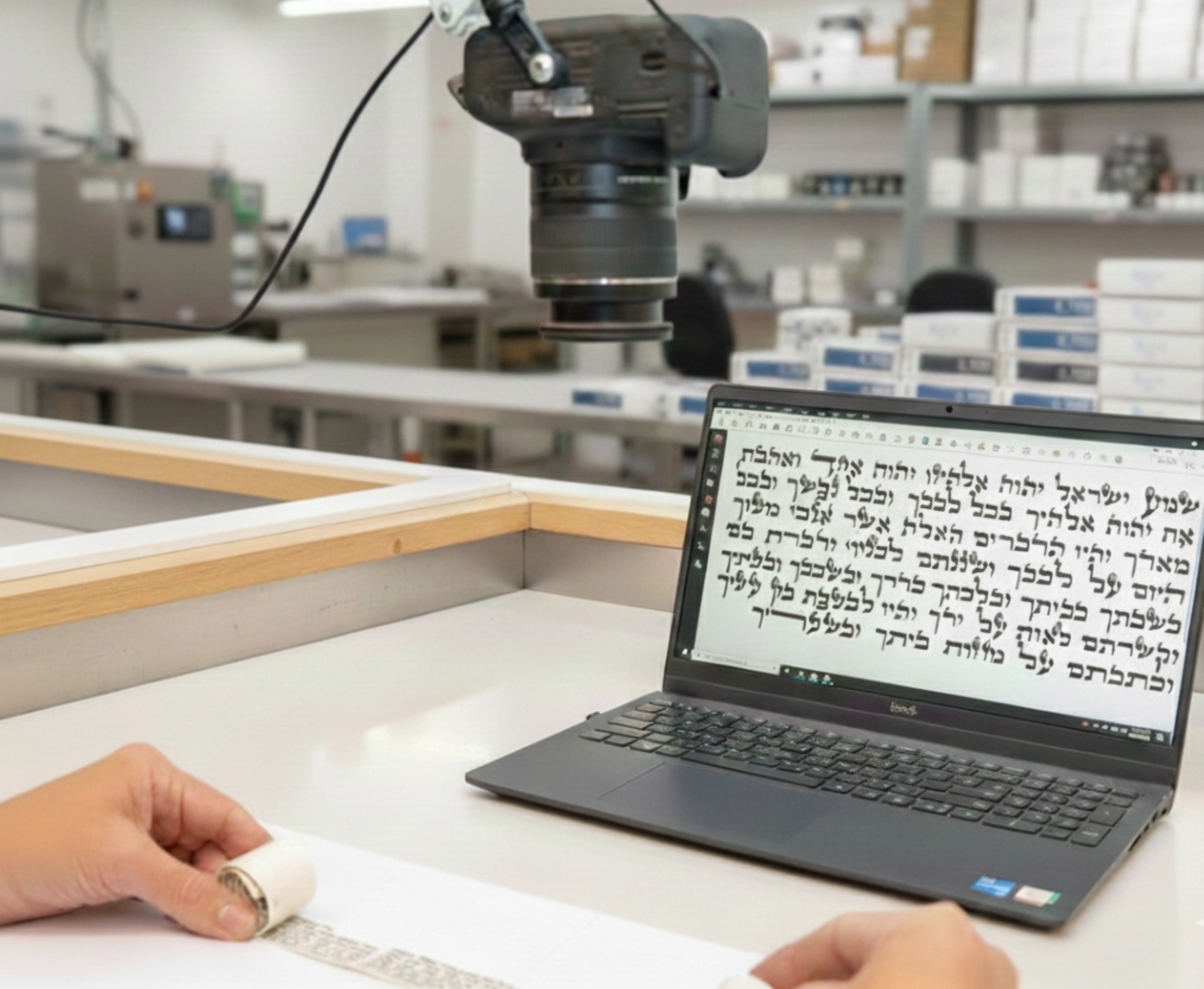
  • An image of your scroll: A high-resolution photograph of the actual mezuzah you purchased—not a sample or stock image.
  • Checking reminder: When the mezuzah should next be inspected, based on halachic guidelines.

This level of detail transforms the mezuzah from an anonymous product into something you can know and verify.
Why Traceability Matters

In many areas of Jewish life, we have come to expect transparency. We look for hechsherim on food. We ask about the source of an esrog. We want to know that our tefillin were written properly.

Mezuzahs have historically been harder to verify. A scroll arrives rolled up, and unless you are trained, you cannot easily assess its quality. Even if you unroll it, you may not know who wrote it, and other information about its quality.

This opacity has allowed problems to persist in the mezuzah market. Printed scrolls have been sold as handwritten. Unchecked scrolls have reached consumers. Buyers have had no way to verify what they were actually receiving.

At the same time, mezuzahs have been written and relied upon for generations through trusted sofrim and rabbinic networks, even without digital tools. The QR code does not replace that trust—it extends it in a form that works for buyers who may not have direct access to those networks.

A QR code system addresses this directly. It creates accountability at every stage—from the sofer's quill to your doorpost. When a seller knows that every scroll can be traced back to its source, there is strong incentive to maintain high standards throughout the process.

The Confidence of Knowing

There is a certain peace of mind that comes from knowing the details of your mezuzah. You are not simply trusting a website or a label—you can see the name of the person who wrote the sacred words, confirm that qualified examiners reviewed the scroll, and verify that the certification is real.

This confidence extends beyond the moment of purchase. Years from now, when you have your mezuzahs checked, you will have a record of their origin. If you move and want to pass a mezuzah to a family member, you can show them exactly what it is. The QR code creates a lasting connection between you and the story of your scroll.

For many buyers, this transforms a transaction into something more meaningful. You are not just buying a product—you are receiving a mezuzah with a known history, written by a real sofer, verified by real examiners, and certified through a rigorous process.

A Note on Placement

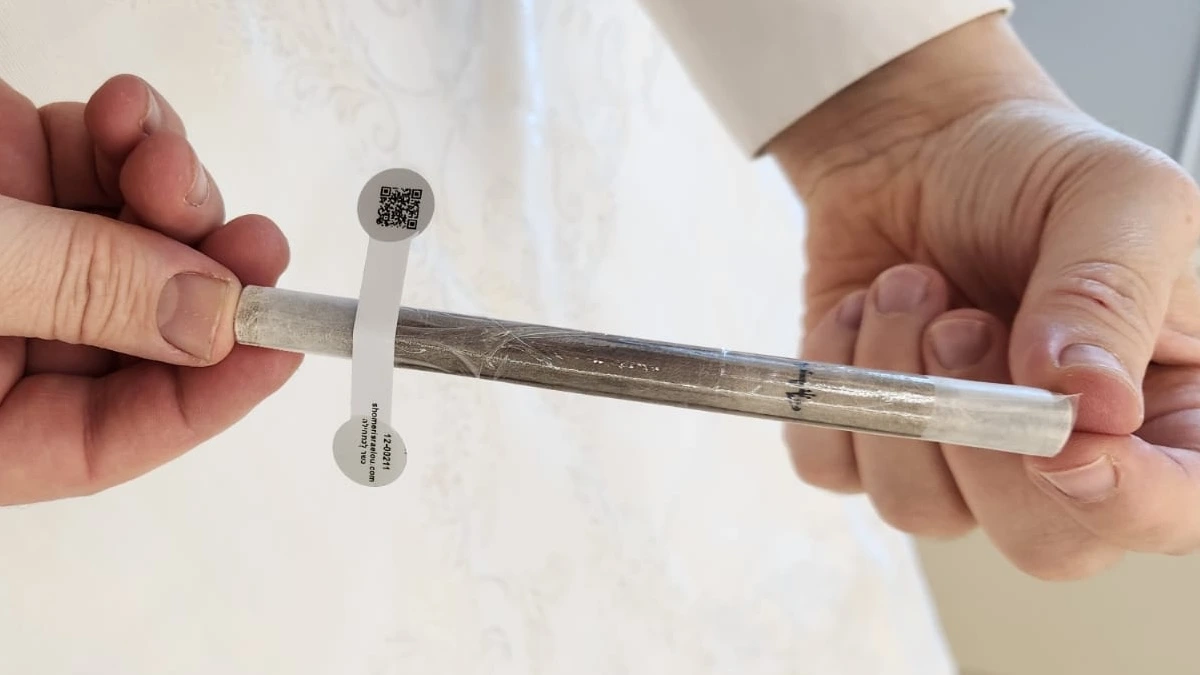
The QR code is printed on a label attached to the protective sleeve or packaging—never on the klaf (parchment) itself. The scroll inside remains exactly as it has been for generations: handwritten by a sofer on kosher parchment with kosher ink.

The QR code is a verification tool that accompanies the mezuzah. It does not change anything about the mezuzah itself. What you are affixing to your doorpost is a traditional, halachically valid scroll. The QR code simply gives you a way to confirm that this is true.

What to Look for in a QR System

For those who choose to use QR-based verification, certain features help ensure the system is meaningful rather than superficial. Not all QR codes on mezuzahs are equal—some may link only to generic product information or marketing pages. A meaningful QR verification system should provide:

  • Specific information about your individual scroll, not just the product category
  • Named individuals (sofer and magiah), not anonymous references
  • Certification details from a recognized halachic authority
  • An actual image of your mezuzah, so you can see the script quality
  • Traceability that connects your scroll to its origin

When these elements are present, the QR code becomes a genuine tool for confidence—not just a technological add-on.

Frequently Asked Questions

What information can I see when I scan the QR code?

You can typically see the sofer's name, the magiah's name, the date of writing, certification status, materials used, an image of your actual scroll, and when it should next be checked. This gives you complete transparency about your mezuzah's origin and verification.

Is the QR code on the mezuzah scroll itself?

No. The QR code is on a label attached to the protective sleeve or packaging. The scroll itself is traditional in every way—handwritten on parchment by a sofer. The QR code is simply a verification tool that accompanies it.

Can I verify my mezuzah without the QR code?

Yes. You can always have a mezuzah examined by a qualified sofer or magiah. The QR code provides convenient access to verification information, but it does not replace traditional methods of checking. It adds a layer of transparency, not a new requirement.

Why don't all mezuzahs have QR codes?

QR verification requires infrastructure—a system for documenting each scroll, photographing it, recording the sofer and checking process, and maintaining accessible records. Not all sellers have invested in this level of traceability. Those who have are demonstrating a commitment to transparency that goes beyond the minimum.

What if I lose the packaging with the QR code?

The information remains in the system. If you registered your mezuzah or kept a record of the code, you can still access the verification details. Some systems also allow you to look up your mezuzah by other identifiers.

Fulfilling the Mitzvah with Confidence

The mitzvah of mezuzah is precious. It connects your home to the sacred every time you pass through the door. Knowing that your mezuzah is kosher—and being able to verify it—is part of fulfilling that mitzvah with the care it deserves.

At Kosher Mezuzah, every scroll includes a unique QR code that lets you verify its certification, view information about the sofer, see an image of your actual mezuzah, and confirm it has been properly checked. This transparency is part of our commitment to helping you fulfill the mitzvah with complete confidence. If you have questions about our verification process, we're here to help.

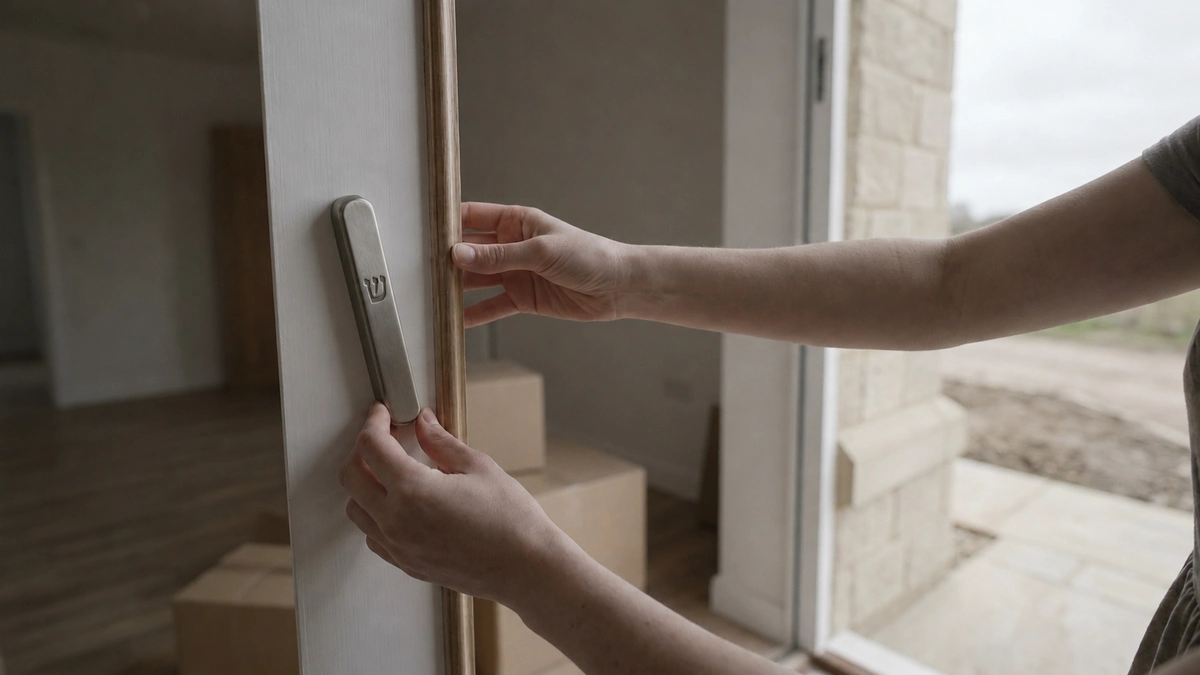
When you purchase a mezuzah from a trusted source, you are placing your confidence in people you never met—the sofer who wrote it, the magiah who checked it, the organization that certified it. Traditionally, this trust has been built through reputation, rabbinic relationships, and word of mouth.

A QR code adds something new: instant, verifiable transparency.

With a single scan from your phone, you can access detailed information about your specific mezuzah. This is not a generic product page or a batch number—it is a window into the story of your scroll. For buyers who want to know exactly what they are putting on their doorpost, this kind of access is genuinely valuable.

What the QR Code Reveals

The QR code on a Kosher Mezuzah scroll provides access to information that would otherwise be invisible to the buyer. When you scan it, you can typically see:

  • The sofer's identity: The name of the scribe who wrote your mezuzah, and often background information about his training and certification.
  • The magiah's identity: The name of the examiner (or examiners) who checked the scroll for halachic accuracy.
  • Date of writing: When the mezuzah was written, so you know how recently it was produced.
  • Materials used: Confirmation that the klaf (parchment) and dio (ink) meet halachic standards.
  • Certification status: Verification that the scroll has been approved through the OU-endorsed process.
  • An image of your scroll: A high-resolution photograph of the actual mezuzah you purchased—not a sample or stock image.
  • Checking reminder: When the mezuzah should next be inspected, based on halachic guidelines.

This level of detail transforms the mezuzah from an anonymous product into something you can know and verify.

Why Traceability Matters

In many areas of Jewish life, we have come to expect transparency. We look for hechsherim on food. We ask about the source of an esrog. We want to know that our tefillin were written properly.

Mezuzahs have historically been harder to verify. A scroll arrives rolled up, and unless you are trained, you cannot easily assess its quality. Even if you unroll it, you may not know who wrote it, and other information about its quality.

This opacity has allowed problems to persist in the mezuzah market. Printed scrolls have been sold as handwritten. Unchecked scrolls have reached consumers. Buyers have had no way to verify what they were actually receiving.

At the same time, mezuzahs have been written and relied upon for generations through trusted sofrim and rabbinic networks, even without digital tools. The QR code does not replace that trust—it extends it in a form that works for buyers who may not have direct access to those networks.

A QR code system addresses this directly. It creates accountability at every stage—from the sofer's quill to your doorpost. When a seller knows that every scroll can be traced back to its source, there is strong incentive to maintain high standards throughout the process.

The Confidence of Knowing

There is a certain peace of mind that comes from knowing the details of your mezuzah. You are not simply trusting a website or a label—you can see the name of the person who wrote the sacred words, confirm that qualified examiners reviewed the scroll, and verify that the certification is real.

This confidence extends beyond the moment of purchase. Years from now, when you have your mezuzahs checked, you will have a record of their origin. If you move and want to pass a mezuzah to a family member, you can show them exactly what it is. The QR code creates a lasting connection between you and the story of your scroll.

For many buyers, this transforms a transaction into something more meaningful. You are not just buying a product—you are receiving a mezuzah with a known history, written by a real sofer, verified by real examiners, and certified through a rigorous process.

A Note on Placement

The QR code is printed on a label attached to the protective sleeve or packaging—never on the klaf (parchment) itself. The scroll inside remains exactly as it has been for generations: handwritten by a sofer on kosher parchment with kosher ink.

The QR code is a verification tool that accompanies the mezuzah. It does not change anything about the mezuzah itself. What you are affixing to your doorpost is a traditional, halachically valid scroll. The QR code simply gives you a way to confirm that this is true.

What to Look for in a QR System

For those who choose to use QR-based verification, certain features help ensure the system is meaningful rather than superficial. Not all QR codes on mezuzahs are equal—some may link only to generic product information or marketing pages. A meaningful QR verification system should provide:

  • Specific information about your individual scroll, not just the product category
  • Named individuals (sofer and magiah), not anonymous references
  • Certification details from a recognized halachic authority
  • An actual image of your mezuzah, so you can see the script quality
  • Traceability that connects your scroll to its origin

When these elements are present, the QR code becomes a genuine tool for confidence—not just a technological add-on.

Frequently Asked Questions

What information can I see when I scan the QR code?

You can typically see the sofer's name, the magiah's name, the date of writing, certification status, materials used, an image of your actual scroll, and when it should next be checked. This gives you complete transparency about your mezuzah's origin and verification.

Is the QR code on the mezuzah scroll itself?

No. The QR code is on a label attached to the protective sleeve or packaging. The scroll itself is traditional in every way—handwritten on parchment by a sofer. The QR code is simply a verification tool that accompanies it.

Can I verify my mezuzah without the QR code?

Yes. You can always have a mezuzah examined by a qualified sofer or magiah. The QR code provides convenient access to verification information, but it does not replace traditional methods of checking. It adds a layer of transparency, not a new requirement.

Why don't all mezuzahs have QR codes?

QR verification requires infrastructure—a system for documenting each scroll, photographing it, recording the sofer and checking process, and maintaining accessible records. Not all sellers have invested in this level of traceability. Those who have are demonstrating a commitment to transparency that goes beyond the minimum.

What if I lose the packaging with the QR code?

The information remains in the system. If you registered your mezuzah or kept a record of the code, you can still access the verification details. Some systems also allow you to look up your mezuzah by other identifiers.

Fulfilling the Mitzvah with Confidence

The mitzvah of mezuzah is precious. It connects your home to the sacred every time you pass through the door. Knowing that your mezuzah is kosher—and being able to verify it—is part of fulfilling that mitzvah with the care it deserves.

At Kosher Mezuzah, every scroll includes a unique QR code that lets you verify its certification, view information about the sofer, see an image of your actual mezuzah, and confirm it has been properly checked. This transparency is part of our commitment to helping you fulfill the mitzvah with complete confidence. If you have questions about our verification process, we're here to help.

When you purchase a mezuzah from a trusted source, you are placing your confidence in people you never met—the sofer who wrote it, the magiah who checked it, the organization that certified it. Traditionally, this trust has been built through reputation, rabbinic relationships, and word of mouth.

A QR code adds something new: instant, verifiable transparency.

With a single scan from your phone, you can access detailed information about your specific mezuzah. This is not a generic product page or a batch number—it is a window into the story of your scroll. For buyers who want to know exactly what they are putting on their doorpost, this kind of access is genuinely valuable.

What the QR Code Reveals

The QR code on a Kosher Mezuzah scroll provides access to information that would otherwise be invisible to the buyer. When you scan it, you can typically see:

  • The sofer's identity: The name of the scribe who wrote your mezuzah, and often background information about his training and certification.
  • The magiah's identity: The name of the examiner (or examiners) who checked the scroll for halachic accuracy.
  • Date of writing: When the mezuzah was written, so you know how recently it was produced.
  • Materials used: Confirmation that the klaf (parchment) and dio (ink) meet halachic standards.
  • Certification status: Verification that the scroll has been approved through the OU-endorsed process.
  • An image of your scroll: A high-resolution photograph of the actual mezuzah you purchased—not a sample or stock image.
  • Checking reminder: When the mezuzah should next be inspected, based on halachic guidelines.

This level of detail transforms the mezuzah from an anonymous product into something you can know and verify.

Why Traceability Matters

In many areas of Jewish life, we have come to expect transparency. We look for hechsherim on food. We ask about the source of an esrog. We want to know that our tefillin were written properly.

Mezuzahs have historically been harder to verify. A scroll arrives rolled up, and unless you are trained, you cannot easily assess its quality. Even if you unroll it, you may not know who wrote it, and other information about its quality.

This opacity has allowed problems to persist in the mezuzah market. Printed scrolls have been sold as handwritten. Unchecked scrolls have reached consumers. Buyers have had no way to verify what they were actually receiving.

At the same time, mezuzahs have been written and relied upon for generations through trusted sofrim and rabbinic networks, even without digital tools. The QR code does not replace that trust—it extends it in a form that works for buyers who may not have direct access to those networks.

A QR code system addresses this directly. It creates accountability at every stage—from the sofer's quill to your doorpost. When a seller knows that every scroll can be traced back to its source, there is strong incentive to maintain high standards throughout the process.

The Confidence of Knowing

There is a certain peace of mind that comes from knowing the details of your mezuzah. You are not simply trusting a website or a label—you can see the name of the person who wrote the sacred words, confirm that qualified examiners reviewed the scroll, and verify that the certification is real.

This confidence extends beyond the moment of purchase. Years from now, when you have your mezuzahs checked, you will have a record of their origin. If you move and want to pass a mezuzah to a family member, you can show them exactly what it is. The QR code creates a lasting connection between you and the story of your scroll.

For many buyers, this transforms a transaction into something more meaningful. You are not just buying a product—you are receiving a mezuzah with a known history, written by a real sofer, verified by real examiners, and certified through a rigorous process.

A Note on Placement

The QR code is printed on a label attached to the protective sleeve or packaging—never on the klaf (parchment) itself. The scroll inside remains exactly as it has been for generations: handwritten by a sofer on kosher parchment with kosher ink.

The QR code is a verification tool that accompanies the mezuzah. It does not change anything about the mezuzah itself. What you are affixing to your doorpost is a traditional, halachically valid scroll. The QR code simply gives you a way to confirm that this is true.

What to Look for in a QR System

For those who choose to use QR-based verification, certain features help ensure the system is meaningful rather than superficial. Not all QR codes on mezuzahs are equal—some may link only to generic product information or marketing pages. A meaningful QR verification system should provide:

  • Specific information about your individual scroll, not just the product category
  • Named individuals (sofer and magiah), not anonymous references
  • Certification details from a recognized halachic authority
  • An actual image of your mezuzah, so you can see the script quality
  • Traceability that connects your scroll to its origin

When these elements are present, the QR code becomes a genuine tool for confidence—not just a technological add-on.

Every kosher mezuzah contains the same sacred text—the Shema and Vehaya paragraphs from the Torah. The words are identical in every valid mezuzah, regardless of which script is used. What differs is the way the letters are formed by the sofer (scribe) who writes them.

These differences in letter formation developed over generations of soferim (scribes) in different Jewish communities. Each tradition carries its own halachic foundation and mesorah (transmission of tradition). A sofer writing in the Ashkenaz style follows one set of established customs, while a sofer writing Sefardi or Arizal follows another.

The script differences are about minhag and mesorah—not about one being "better" or "more kosher" than another. Just as Jewish communities have different customs for prayer and holiday observance, they also have different traditions for how the sacred letters of stam (scrolls for mezuzah, tefillin, and Torah) are written.

What Is an Ashkenaz Mezuzah?

An Ashkenaz mezuzah is written according to the script tradition used by Ashkenazi Jewish communities—those with roots in Germany, France, Eastern Europe, and surrounding regions. This script is often called "Beit Yosef" after the great halachic work by Rabbi Yosef Karo, which codified many of its letter formations.

The Ashkenaz script is commonly used among Lithuanian (Litvish) communities, Yekke (German Jewish) communities, and many other Ashkenazi kehillos. The letter shapes follow precise halachic guidelines that have been passed down through generations of Ashkenazi soferim.

If your family comes from an Ashkenazi background and you are not sure which script to choose, Ashkenaz/Beit Yosef is typically the appropriate choice. This is also one of the most widely available scripts and is accepted across the Orthodox world as fully kosher.

What Is a Sefardi Mezuzah?

A Sefardi mezuzah is written according to the script tradition used by Sefardi and Edot HaMizrach (Eastern) Jewish communities—those with roots in Spain, Portugal, North Africa, the Middle East, and surrounding regions. This script follows the halachic rulings established by Maran Rabbi Yosef Karo for Sefardi communities.

The Sefardi script has distinct letter formations that differ from the Ashkenaz tradition. Certain letters—such as the tzadi, shin, and ayin—have particular shapes that are specific to this mesorah. These differences are visible to a trained eye, though the sacred text remains the same.

Jews from Morocco, Iraq, Syria, Yemen, Egypt, Iran, Turkey, Greece, and other Sefardi or Mizrachi communities traditionally use the Sefardi script for their mezuzahs. If your family has roots in these communities, this is generally the appropriate script to follow.

What Is the Arizal Mezuzah Script?

The Arizal mezuzah script is based on the teachings of Rabbi Yitzchak Luria, known as the Arizal, the great kabbalist of 16th-century Tzfat. The Arizal established specific letter formations based on kabbalistic understanding of the sacred letters.

This script is most commonly used by Chabad and many Chassidic communities. It combines elements that draw from both Ashkenazi and Sefardi traditions while following the Arizal's particular specifications. The letter formations are meant to reflect deeper spiritual meanings according to kabbalistic thought.

It is important to understand that the Arizal script is simply another valid mesorah—it is not "more spiritual" or "higher level" than other scripts. Each tradition carries its own depth and meaning. Jews who follow Chabad or certain Chassidic customs typically use this script, while others follow their own community's tradition.

If you come from a Chassidic background or follow Chabad minhagim, the Arizal script would generally be appropriate for your mezuzahs.

Which Mezuzah Script Should I Choose for My Home?

Choosing the right mezuzah script is usually straightforward: follow your family's tradition. If you know that your family is Ashkenazi, Sefardi, or follows Chassidic/Chabad customs, that is your guide.

Many people are unsure of their family's exact background, and this is very common. If you find yourself uncertain, consulting a rabbi who knows your family's history or your community's practice is always helpful. A knowledgeable rabbi can guide you toward the appropriate tradition.

For baalei teshuva (those returning to observance) or converts who may not have a clear family mesorah, guidance from a rabbi is especially valuable. In many cases, the minhag of the community where you daven or learn becomes your guide. There is no single "default" answer—but there is always an appropriate path forward.

We're happy to help clarify if you have questions. The goal is always to fulfill the mitzvah with confidence, following authentic Jewish practice.

Are All Three Mezuzahs Kosher?

Yes—all three scripts are fully kosher when the mezuzah is written properly. The kashrut of a mezuzah depends on several factors: the sofer must be qualified and G-d-fearing, the parchment (klaf) must be prepared according to halacha, the ink must be kosher, and the writing must be done with proper intention and precision.

The script itself does not determine whether a mezuzah is kosher or pasul (invalid). A beautifully written Ashkenaz mezuzah and a beautifully written Arizal mezuzah are equally kosher. What matters is the quality of the writing, the integrity of the sofer, and proper halachic checking.

This is why certification and verification matter so much. When you purchase a mezuzah with proper supervision—where the sofer is verified and each scroll is carefully checked—you can trust that your mezuzah is kosher regardless of which script tradition it follows.

A Note on the Word "Nusach"

You may sometimes hear people refer to mezuzah "nusach" when discussing script differences. In this context, "nusach" typically means the script tradition—Ashkenaz, Sefardi, or Arizal.

This can be a bit confusing because "nusach" also refers to different prayer liturgies (Nusach Ashkenaz, Nusach Sefard, Nusach Ari). The terms overlap but refer to different things. When purchasing a mezuzah, you don't need to worry about this terminology—just focus on which script tradition matches your family background.