
What's the Difference Between Ashkenaz, Sefardi, and Arizal Mezuzahs?
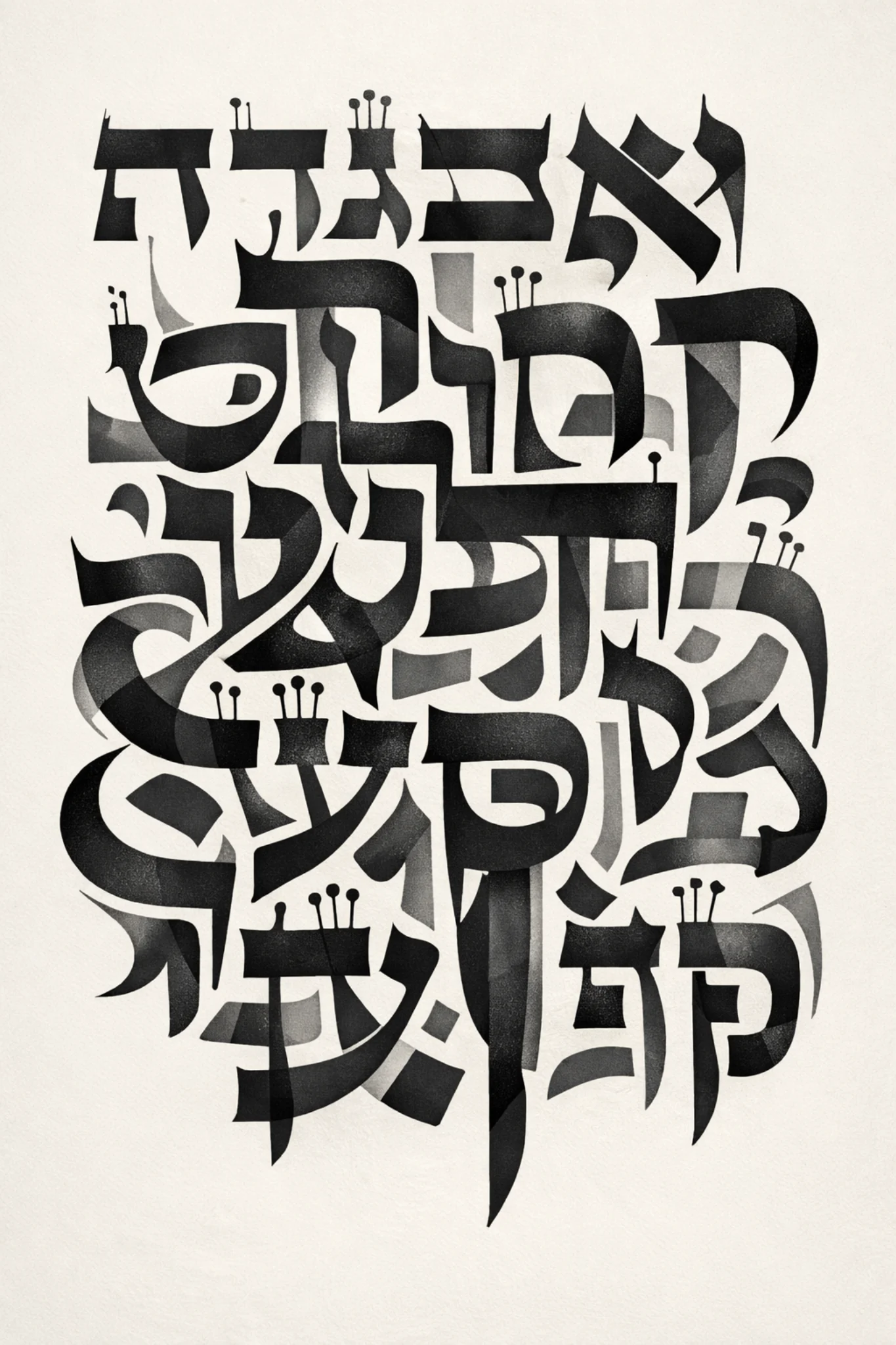
The difference between Ashkenaz, Sefardi, and Arizal mezuzahs is the traditional script used by the sofer when writing the mezuzah scroll. Each script follows a well-established halachic tradition connected to community practice (minhag). All three are fully kosher when written properly and checked, but Jewish custom is to use the script associated with one's family or community tradition.
Why Are There Different Mezuzah Scripts at All?
Every kosher mezuzah contains the same sacred text—the Shema and Vehaya paragraphs from the Torah. The words are identical in every valid mezuzah, regardless of which script is used. What differs is the way the letters are formed by the sofer (scribe) who writes them.
These differences in letter formation developed over generations of soferim (scribes) in different Jewish communities. Each tradition carries its own halachic foundation and mesorah (transmission of tradition). A sofer writing in the Ashkenaz style follows one set of established customs, while a sofer writing Sefardi or Arizal follows another.
The script differences are about minhag and mesorah—not about one being "better" or "more kosher" than another. Just as Jewish communities have different customs for prayer and holiday observance, they also have different traditions for how the sacred letters of stam (scrolls for mezuzah, tefillin, and Torah) are written.
What Is an Ashkenaz Mezuzah?
An Ashkenaz mezuzah is written according to the script tradition used by Ashkenazi Jewish communities—those with roots in Germany, France, Eastern Europe, and surrounding regions. This script is often called "Beit Yosef" after the great halachic work by Rabbi Yosef Karo, which codified many of its letter formations. Related reading: How Mezuzah Scrolls Are Written.
The Ashkenaz script is commonly used among Lithuanian (Litvish) communities, Yekke (German Jewish) communities, and many other Ashkenazi kehillos. The letter shapes follow precise halachic guidelines that have been passed down through generations of Ashkenazi soferim.
If your family comes from an Ashkenazi background and you are not sure which script to choose, Ashkenaz/Beit Yosef is typically the appropriate choice. This is also one of the most widely available scripts and is accepted across the Orthodox world as fully kosher.
What Is a Sefardi Mezuzah?
A Sefardi mezuzah is written according to the script tradition used by Sefardi and Edot HaMizrach (Eastern) Jewish communities—those with roots in Spain, Portugal, North Africa, the Middle East, and surrounding regions. The Sefardi script is a long-standing mesorah used by many communities with roots in North Africa, the Middle East, and surrounding regions. Its letter forms are distinct from Ashkenaz writing, and to a trained eye, nearly everything looks different — even though the parshiyos and the holy text are the same.
In Sefardi writing, the shapes and flow of the letters are noticeably different from Ashkenaz writing. Jews from Morocco, Iraq, Syria, Yemen, Egypt, Iran, Turkey, Greece, and other Sefardi or Mizrachi communities traditionally use the Sefardi script for their mezuzahs. If your family has roots in these communities, this is generally the appropriate script to follow.
What Is the Arizal Mezuzah Script?
The Arizal mezuzah script is based on the teachings of Rabbi Yitzchak Luria, known as the Arizal, the great kabbalist of 16th-century Tzfat. The Arizal established specific letter formations based on kabbalistic understanding of the sacred letters.
This script is most commonly used by Chabad and many Chassidic communities. It combines elements that draw from both Ashkenazi and Sefardi traditions while following the Arizal's particular specifications. The letter formations are meant to reflect deeper spiritual meanings according to kabbalistic thought.
It is important to understand that the Arizal script is simply another valid mesorah—it is not "more spiritual" or "higher level" than other scripts. Each tradition carries its own depth and meaning. Jews who follow Chabad or certain Chassidic customs typically use this script, while others follow their own community's tradition.
If you come from a Chassidic background or follow Chabad minhagim, the Arizal script would generally be appropriate for your mezuzahs.
Which Mezuzah Script Should I Choose for My Home?
Choosing the right mezuzah script is usually straightforward: follow your family's tradition. If you know that your family is Ashkenazi, Sefardi, or follows Chassidic/Chabad customs, that is your guide.
Many people are unsure of their family's exact background, and this is very common. If you find yourself uncertain, consulting a rabbi who knows your family's history or your community's practice is always helpful. A knowledgeable rabbi can guide you toward the appropriate tradition.
For baalei teshuva (those returning to observance) or converts who may not have a clear family mesorah, guidance from a rabbi is especially valuable. In many cases, the minhag of the community where you daven or learn becomes your guide. There is no single "default" answer—but there is always an appropriate path forward.
We're happy to help clarify if you have questions. The goal is always to fulfill the mitzvah with confidence, following authentic Jewish practice.
Are All Three Mezuzahs Kosher?
Yes—all three scripts are fully kosher when the mezuzah is written properly. The kashrut of a mezuzah depends on several factors: the sofer must be qualified and G-d-fearing, the parchment (klaf) must be prepared according to halacha, the ink must be kosher, and the writing must be done with proper intention and precision.
What determines kashrus is:
- the writing quality (every letter and spacing)
- that the sofer is halachically fit to write - and is a person of integrity and yiras Shamayim
- proper halachic checking
- and the halachos that govern the act of writing itself - above all writing lishmah, and kesidran (in order): a mezuzah written out of order is pasul with no remedy (Shulchan Aruch YD 288:3)
Important: There are many halachos connected to how and when the mezuzah is written. If a sofer does not know these halachos, or does not keep them properly, then even a scroll that looks beautiful can be pasul — and may never have been kosher in the first place.
This is why knowing your sofer, and having the scroll checked, matter so much - certification is simply how a reputable seller makes that verifiable for you. When you purchase a mezuzah with proper supervision—where the sofer is verified and each scroll is carefully checked—you can trust that your mezuzah is kosher regardless of which script tradition it follows.
A Note on the Word "Nusach"
You may sometimes hear people refer to mezuzah "nusach" when discussing script differences. In this context, "nusach" typically means the script tradition—Ashkenaz, Sefardi, or Arizal.
This can be a bit confusing because "nusach" also refers to different prayer liturgies (Nusach Ashkenaz, Nusach Sefard, Nusach Ari). The terms overlap but refer to different things. When purchasing a mezuzah, you don't need to worry about this terminology—just focus on which script tradition matches your family background.
Quick Comparison: Ashkenaz vs Sefardi vs Arizal Mezuzah
The following table provides a simple overview of the three mezuzah script traditions:
| Script | Commonly Used By |
|---|---|
| Ashkenaz | Ashkenazi communities (Lithuanian, Yekke, etc.) |
| Sefardi | Sefardi and Edot HaMizrach communities |
| Arizal | Chabad, Chassidic communities |
Frequently Asked Questions
Can an Ashkenazi use a Sefardi mezuzah?
Yes - a properly written Sefardi mezuzah is kosher, and most poskim hold one fulfills the mitzvah with it. Still, the accepted practice when choosing a new mezuzah is to follow your own community's script, so an Ashkenazi would normally choose Ashkenaz and a Sefardi would choose Sefardi. If you already have a scroll from another tradition, ask your rav rather than assuming it must be replaced. Following your mesorah is an important part of fulfilling the mitzvah properly.
Which mezuzah does Chabad use?
Chabad uses the Arizal script, following the tradition of the Baal HaTanya and subsequent Chabad Rebbeim. This script is based on the letter formations specified by the Arizal according to kabbalistic teachings.
Is Arizal considered mehudar (enhanced)?
"Mehudar" (enhanced quality) refers to the beauty and precision of the writing, not to the script style. A mezuzah of any script can be mehudar if it is written with exceptional care, on high-quality klaf, by a skilled sofer. The script you choose should match your tradition; the hiddur (beautification) is a separate consideration.
Does the mezuzah script affect the bracha?
No. The bracha for affixing a mezuzah is the same regardless of which script tradition is used. As long as the mezuzah is kosher and properly written, the bracha applies equally to Ashkenaz, Sefardi, and Arizal mezuzahs.
Choosing a Mezuzah with Confidence
Fulfilling the mitzvah of mezuzah is a beautiful way to bring holiness into your home. Whether you choose Ashkenaz, Sefardi, or Arizal, what matters most is that your mezuzah is kosher, properly written, and placed according to halacha.
At Kosher Mezuzah, every scroll is written by a vetted sofer in Eretz Yisrael, verified through our OU-endorsed process, and available in all three script traditions. If you're unsure which script is right for your family, we're happy to help you choose with confidence.



.svg)
Bring a true Kosher Mezuzah into your home
Fulfill the mitzvah with confidence, beauty, and meaning.
Buy a Mezuzah