
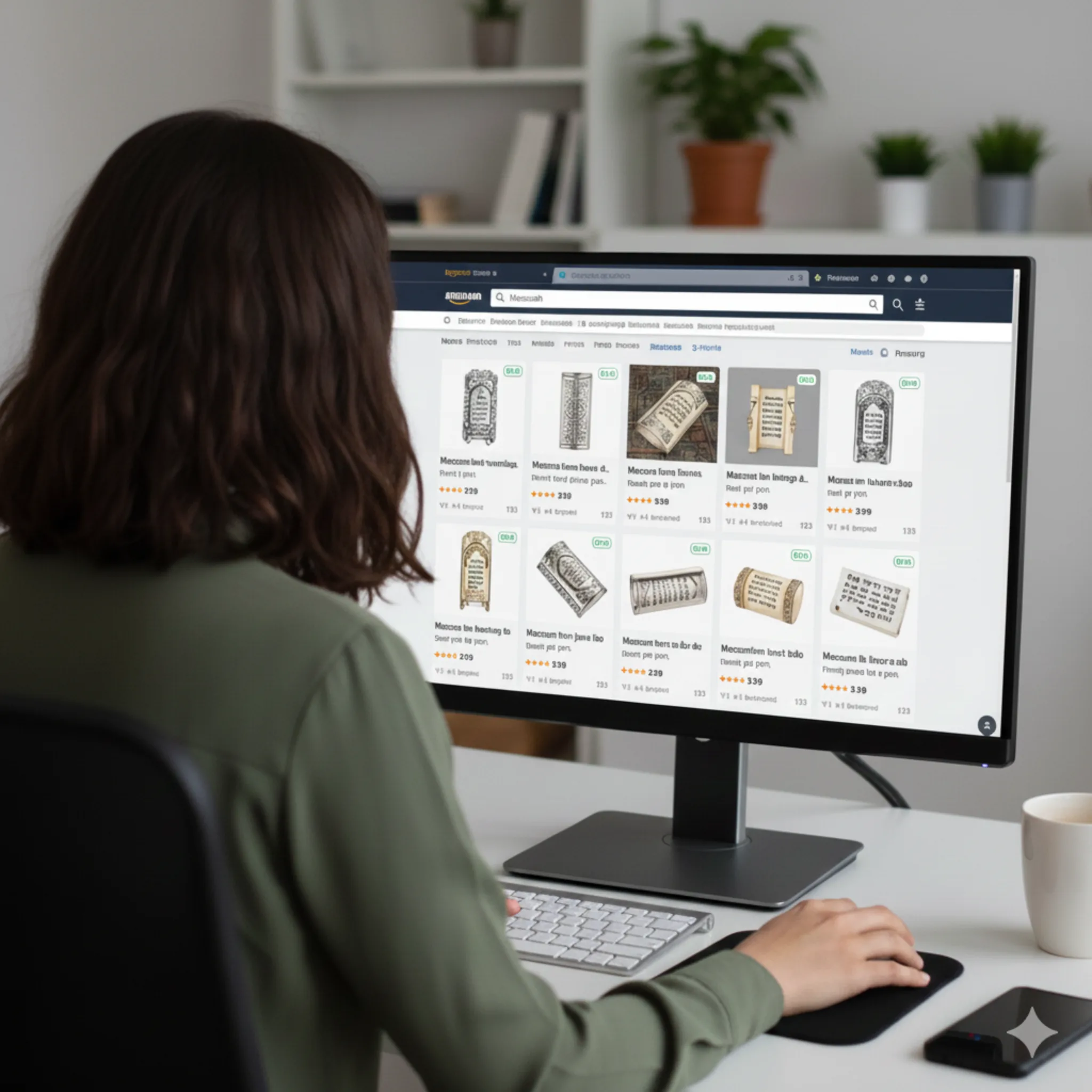
Why Buying a Mezuzah on Amazon Can Be Risky
Mezuzahs sold on large online marketplaces like Amazon can be difficult to verify. While some listings may offer kosher mezuzahs, many provide little information about who wrote the scroll, whether it was properly checked, or whether it is handwritten at all. Because mezuzahs are sacred, handwritten items that require halachic oversight, buying from sources without clear verification carries real risk—even if the price is lower.
Buying a mezuzah on Amazon feels convenient, fast shipping, reasonable prices, and hundreds of listings to choose from. But for a mitzvah that requires a kosher scroll written by hand on parchment, convenience alone is not enough. The question "is it safe to buy a mezuzah on Amazon?" comes up more often than you might expect, and the honest answer is: it depends entirely on what you're actually receiving. This article will help you understand the real risks, the halachic standards a kosher mezuzah must meet, and how to make sure you're fulfilling the mitzvah properly, not just checking a box. We cover this in more depth in Buying Mezuzahs in Bulk.
Shopping for a mezuzah on Amazon? The 30-second version
- A kosher mezuzah must be handwritten by a trained sofer - printed, stamped, or photocopied scrolls do not fulfill the mitzvah, no matter how authentic they look (here is why a printed scroll can never be kosher).
- A genuinely kosher, handwritten scroll from a vetted sofer starts at about $140. A $25 "kosher scroll" is essentially always printed or written so quickly that its kashrus is doubtful.
- Wherever you buy - Amazon included - use the 4-point checklist at the end of this article. If a listing can't answer all four, keep looking.
Key Takeaways
- Buying a mezuzah on Amazon carries significant risks because the platform lacks halachic oversight, allowing unreliable sellers to mix legitimate kosher scrolls with printed imitations and unchecked products.
- A kosher mezuzah must be handwritten on parchment by a qualified, Torah-observant sofer and examined by a trained magiah—printed scrolls are entirely invalid and fulfill no mitzvah regardless of their appearance.
- Verify seller credentials before purchasing by asking for documentation of the sofer's qualifications, the magiah's certification, and endorsement by a recognized halachic authority.
- Unusually low prices on mezuzah scrolls are a warning sign, as genuine handwritten kashrus requires significant labor and expertise that come with real costs.
- The protective spiritual power of a mezuzah depends entirely on strict halachic compliance, making it essential to purchase from a verified, transparent seller you can trust.
Is It Safe to Buy a Mezuzah on Amazon? What to Watch For
Buying a mezuzah on Amazon is not inherently forbidden, but it carries significant risks that can result in a pasul (invalid) scroll, meaning the mitzvah is not being fulfilled at all. The central problem is that Amazon is an open marketplace. Anyone can list a product as a "kosher mezuzah scroll," and there is no uniform halachic oversight ensuring those listings are accurate. We've seen printed scrolls, mass-produced imitations, and scrolls written without proper intent (kavanah) sold alongside legitimately kosher ones, with no way for the average buyer to tell the difference from a product photo. If you are considering purchasing a mezuzah scroll online, the single most important step you can take is to verify the seller's credentials before you buy. You can contact Kosher Mezuzah with questions about what to look for, we're here to help you fulfill the mitzvah with confidence. See also Should You Buy a Mezuzah Online or In Store? A Practical Halachic Guide.
The Core Halachic Problem With Amazon Listings
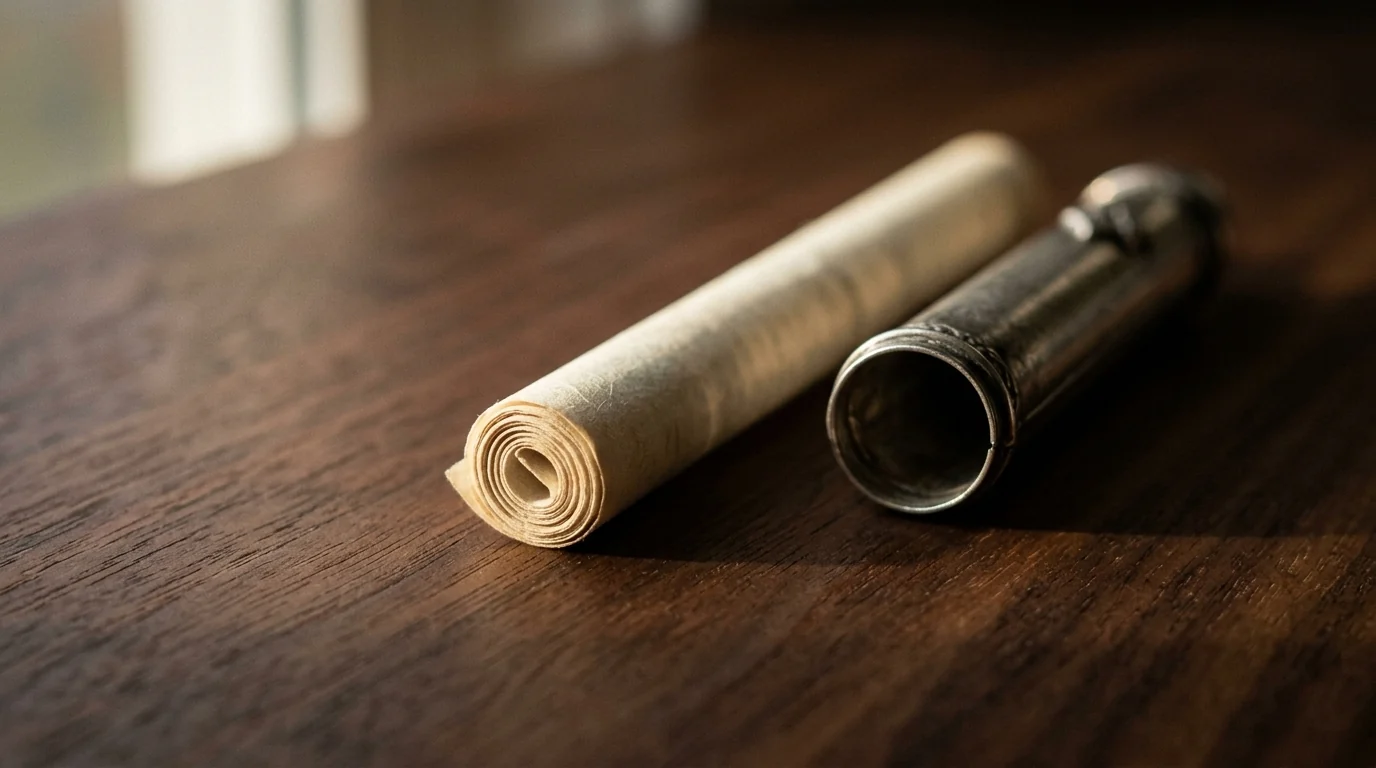
A kosher mezuzah scroll must meet a precise set of requirements. It must be handwritten by a qualified sofer (ritual scribe) who is a G-d-fearing, Torah-observant Jew writing with proper kavanah (intent). It must be written on klaf (parchment) prepared specifically for the purpose of a mezuzah, using dio (ink) made according to halachic specifications. Every letter must be formed correctly, what we call tzurat ha'ot, the proper shape of each letter, and the lines must be scored into the parchment beforehand, a requirement known as sirtut. If any of these conditions is missing or compromised, the scroll is pasul, and the mitzvah of mezuzah is not being fulfilled, regardless of how beautiful the case looks on the doorpost.
The Rambam wrote in the Laws of Mezuzah (Chapter 6, Law 13): "A person must show great care in the mitzvah of mezuzah, because it is an obligation which is constantly incumbent upon everyone." This is not a detail to leave to chance or to the accuracy of an anonymous seller on a third-party platform.
What Makes a Printed Mezuzah Scroll Different, and Why It Matters
A printed mezuzah, one produced by a machine or printed on paper rather than handwritten on parchment, is entirely pasul and has no halachic validity whatsoever. It is not a mezuzah. Placing it on a doorpost fulfills nothing and provides none of the spiritual protection the Torah associates with this mitzvah. Unfortunately, printed scrolls are sold regularly on Amazon, sometimes labeled as "kosher" or "handwritten" without any truthful basis for that claim. This is not a minor difference of opinion among poskim (halachic authorities). Every major halachic authority agrees: a printed mezuzah scroll cannot fulfill the mitzvah under any circumstances.
The Jerusalem Talmud (Peah, Chapter 1) records how Rabbi Judah the Prince sent Artaban a mezuzah as a gift, explaining: "You sent me something I must guard, but I sent you something that guards you while you sleep." That protection is bound entirely to a genuine, kosher scroll, not a reproduction. A printed page placed in a decorative case is not a mezuzah in any meaningful halachic sense.
How to Identify a Trustworthy Seller Online
Not every online purchase of a mezuzah is problematic. There are reputable sellers who operate with transparency, provide full documentation of the sofer and magiah (trained Sta"m proofreader) who produced and checked the scroll, and stand behind the kashrus of what they sell. The challenge on Amazon is that these sellers are mixed in with unreliable ones, and the platform offers no mechanism for halachic verification. When evaluating any online mezuzah seller, whether on Amazon or elsewhere, there are specific questions you should ask before purchasing.
First, is the seller able to name the sofer who wrote the scroll and confirm that he is a Shomer Shabbos, Torah-observant Jew? Second, was the scroll checked by a qualified magiah after writing? Third, can the seller provide documentation or certification of the scroll's kashrus? Fourth, is there a recognized halachic body or posek (halachic decisor) who oversees or endorses the seller's standards? Without clear answers to these questions, there is no basis for confidence that what you are receiving is a kosher mezuzah scroll. You can review our full guide on what to ask before buying a mezuzah to prepare yourself for this conversation with any seller. For the full discussion, read What Should You Ask Before Buying a Mezuzah? A Practical Halachic Guide.
Common Mistakes That Lead to an Invalid Mezuzah
The most common mistake is purchasing a mezuzah scroll based on price alone. An unusually low price for a "kosher" scroll is almost always a warning sign. Producing a genuine, halachically valid mezuzah scroll requires a sofer to spend significant time writing each one by hand, and it requires qualified checking afterward. That labor and expertise have real costs. When a scroll is priced far below the market rate, the most likely explanation is that it is not what it claims to be. Our mezuzah price guide explains this in more detail, including what a fair price range looks like for different levels of kashrus.
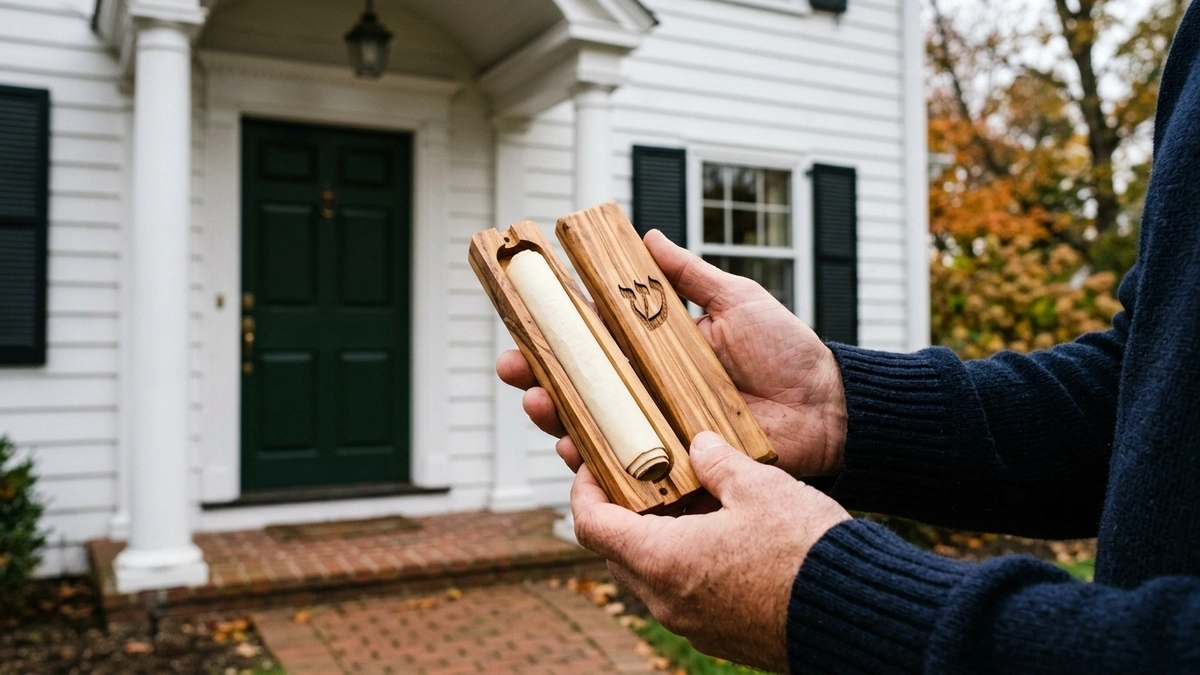
Another common mistake is relying on a case or product image rather than the scroll itself. A beautiful wooden or sterling silver case tells you nothing about whether the scroll inside is kosher. The mitzvah lives in the parchment, not the housing. A third mistake is assuming that any Hebrew writing on parchment constitutes a valid mezuzah. There are specific requirements for every element of the writing, and only a trained expert can verify that they've been met.
The Deeper Meaning of Getting This Right
The mitzvah of mezuzah is one of the few mitzvot that accompanies us constantly, every time we enter or leave our home, we pass by the name of Hashem fixed to our doorpost. The Zohar (Parashat Vaetchanan) describes the mezuzah as a source of divine protection: "It is a commandment for a person to fix a Mezuzah to his gate, so that every person is guarded by the Holy One when he goes out and when he enters." This protection, as all the poskim stress, is tied to the mitzvah being performed correctly, with a kosher scroll, properly written, properly checked, and properly affixed.
The Lubavitcher Rebbe, in his worldwide mezuzah campaign, emphasized repeatedly that the protective dimension of the mezuzah is dependent on strict adherence to halacha, kosher scrolls, properly checked and properly placed. Emunah (faith) in the power of this mitzvah is itself expressed through the care we take to perform it correctly.
What You Should Know Before You Buy
Buying a mezuzah on Amazon may work out if the seller is genuinely reliable, fully transparent, and backed by credible halachic oversight. But the burden of verifying that falls entirely on you, because Amazon's platform does not perform that verification for you. The risks, receiving a printed scroll, an unchecked scroll, or a scroll written without proper qualifications, are real and common enough to warrant caution.
When the mitzvah is this important, the wiser path is to purchase from a seller whose halachic standards are verified, documented, and accountable. You can browse our full selection of kosher mezuzah scrolls and see the documentation behind each one before you purchase.
Key Takeaways
Buying a mezuzah on Amazon is not automatically safe, and the risks to proper mitzvah fulfillment are significant. A mezuzah scroll must be handwritten on parchment by a qualified, G-d-fearing sofer and checked by a trained magiah, printed scrolls are entirely pasul and fulfill nothing. Price should never be the primary factor in choosing a mezuzah scroll, as genuine kashrus requires real labor and expertise. Always ask for documentation of the sofer, the magiah, and the certifying authority before purchasing any mezuzah scroll online. If you are unsure whether a scroll you already own is kosher, a qualified rav or sofer should examine it.
A Note on Kosher Mezuzah
At Kosher Mezuzah, every scroll we sell is handwritten on kosher klaf by a qualified, Shomer Shabbos sofer and examined by a trained magiah. We are endorsed by the Orthodox Union (OU), which endorses Kosher Mezuzah as an organization committed to halachic standards, and we provide full documentation with every purchase so that you know exactly who wrote and checked your scroll. This level of traceability is not incidental. It reflects a genuine commitment to ensuring that every customer fulfills the mitzvah correctly.
If you have a scroll that was purchased without full verification, we encourage you to have it checked by a qualified magiah. A scroll that cannot be verified should be examined before you assume it is valid. Proper checking (b'dikah) of mezuzah scrolls is itself a halachic obligation, and it begins with purchasing from a source you can trust.
How to buy a kosher mezuzah with confidence - wherever you buy
The problem isn't Amazon itself - it's anonymity. Use this checklist with any seller, on any platform:
- Named sofer. Who wrote this scroll? A trustworthy seller can tell you the sofer behind it and his training. "Handwritten in Israel" with no name is not an answer - why knowing your scroll source matters.
- Independent checking. Was the scroll examined after writing - by a trained human examiner, ideally alongside a computer scan? Ask for the inspection record.
- Real oversight. Is anyone independent standing behind the seller? The Orthodox Union publishes, on its own mezuzah page, the short list of vendors selling OU Endorsed mezuzahs - a seller claiming OU backing should appear there.
- Honest pricing. Handwritten scrolls start around $140 because a sofer's skilled time is what you're paying for. Dramatically cheaper means something was skipped.
Want the full picture first - what the scroll says, sizes, scripts, and real prices? Start with our complete mezuzah scroll guide. Every scroll we sell passes all four: a named, vetted sofer, computer-checked and examiner-verified, under the OU STaM program, with a QR-verified record - see our scrolls.
If you have questions about whether a mezuzah you already own is kosher, or if you need guidance on purchasing a verified scroll, please reach out to us. We are here to help you fulfill this precious mitzvah with clarity and with confidence. May your home be one in which Hashem's words are present at every entrance, and may the mezuzah on your doorpost be a zechus (merit) for your entire household.


.svg)
Bring a true Kosher Mezuzah into your home
Fulfill the mitzvah with confidence, beauty, and meaning.
Buy a Mezuzah