

Which Side of the Door Do You Put a Mezuzah On? (Right Side Explained)
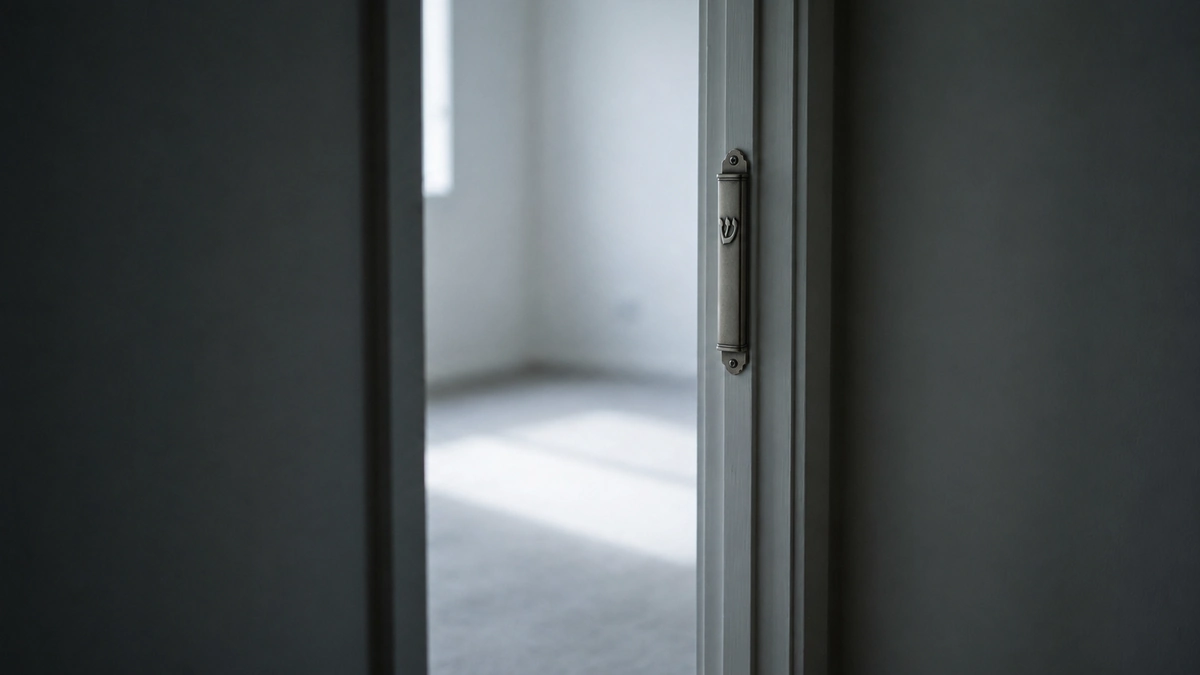
When someone asks which side to put a mezuzah on, the answer is clear and firm: the right side of the doorpost, as you enter the room. This is not a preference or a custom that varies by community. It is a binding halachic requirement that applies to every doorway in every Jewish home.
The right side is determined by the direction you are walking as you enter, not as you exit. Stand in the doorway facing inward, and the right side of that passage is where the mezuzah belongs. This applies to every doorway that requires a mezuzah, from the front door to interior room entrances. Where the direction of entry is obvious, the placement is obvious as well. Where the doorway serves two spaces and the direction is less clear, the practical ruling may require further halachic analysis.
How to Apply This in Practice
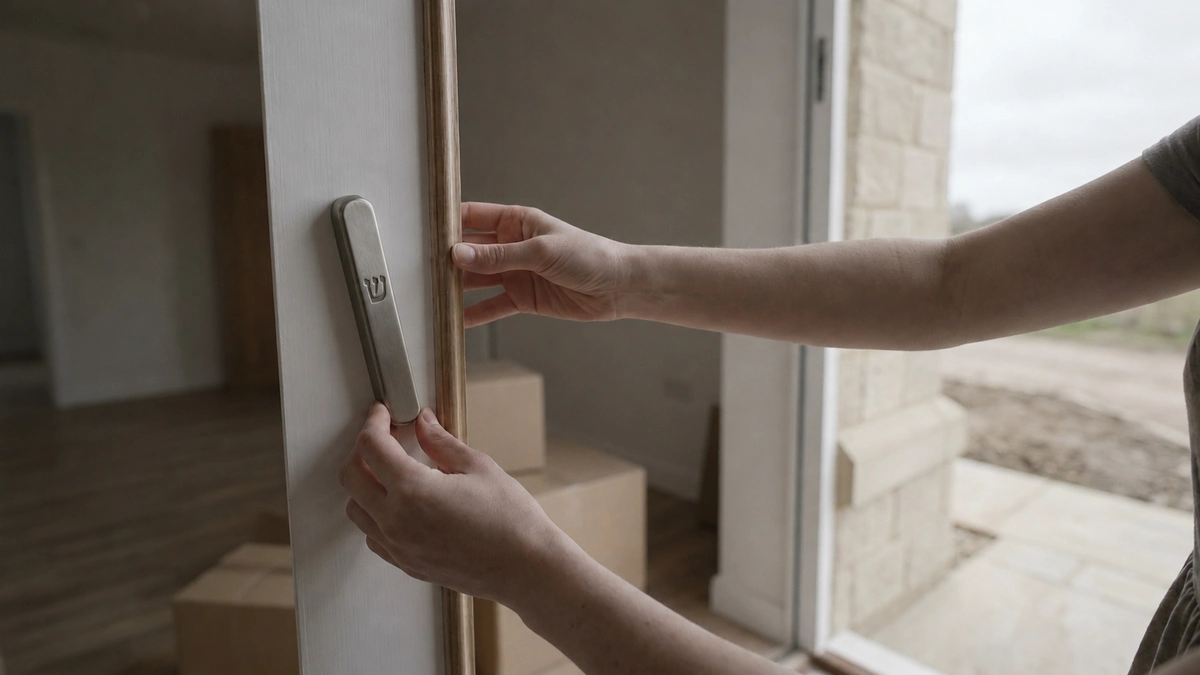
For most doorways, determining the correct side is straightforward. The mezuzah is affixed on the right side of the one entering (kove’a b’yemin hanichnas). Stand where a person normally approaches the room, and the mezuzah belongs on the doorpost to the right as one enters. It should be affixed to the doorpost itself, within the vertical space of the doorway.
For apartment interiors with many doorways, that basic rule still applies, but the direction of entry is not always settled by a quick glance. In ordinary room-to-room cases, you place the mezuzah on the right side of entering the room. Where usage is unclear, or where traffic moves naturally in both directions, the direction of entry needs more careful analysis. Our guide to doorways used in both directions works through those cases.
When a house is divided into two rooms with a doorway between them, the halachic discussion of heker tzir can become relevant. In the classic case cited in Shulchan Arukh, the hinge-side indicator helps determine which side is treated as the direction of entry. This is not a blanket rule for every interior doorway and should not be applied too broadly. Where room function and doorway swing point in different directions, a rav should be consulted.
If you have an extended doorpost or a very deep door frame, additional considerations apply regarding exactly where within the doorpost space the mezuzah should be fixed. These situations are not rare and are worth addressing carefully.
What If the Mezuzah Was Placed on the Wrong Side?
This is a real concern. The Shulchan Arukh rules that the mezuzah must be placed on the right side of the one entering, and that placing it on the left does not fulfill the mitzvah. If a mezuzah was affixed on the wrong side, it should be removed and reaffixed correctly on the proper side.
Practically, this means that someone who discovers the mezuzah has been on the wrong side has not been fulfilling the mitzvah properly during that period. That is reason to correct the placement promptly rather than waiting. On how quickly a misplaced mezuzah should be moved, see our guide to how urgent it is to fix an incorrectly placed mezuzah.
Slant and Height Are Separate Questions
Two other details are often confused with the side, and neither one changes it. The slant is a matter of custom: Ashkenazim place the mezuzah at a diagonal, following the Rema, who writes that a diagonal satisfies both the opinion requiring upright placement and the opinion requiring horizontal placement. Sefardim follow the Shulchan Arukh and place it upright. Both are valid practice within their own mesorah.
The height is a separate requirement again. The mezuzah belongs in the upper third of the doorway, and placing it below that point invalidates it. Our guides to where to place a mezuzah and mezuzah height cover the slant and the measurement in full.
The Deeper Meaning Behind Entering on the Right
The mezuzah contains the parshiyot of Shema and Vehaya im Shamoa, so it stands at the doorway as a constant reminder of Hashem’s unity and of our obligation to live by His mitzvot. The placement on the right side of entry is a significant part of the halachic form of the mitzvah, not an incidental detail of how it is hung.
Key Takeaway
The mezuzah must be placed on the right side of the doorpost as one enters. This is a halachic requirement, not a mere custom, and placing it on the left does not fulfill the mitzvah. The right side is determined by the direction of entry, though in more complex cases the analysis may involve room function and, at times, heker tzir. When the case is unclear, especially with interior doorways, unusual frames, or competing indicators, a rav should be consulted.
A Word About Kosher Mezuzah
At Kosher Mezuzah, every mezuzah scroll we sell is written by a qualified sofer and checked by a trained magiah. Our scrolls are produced through a process endorsed by the Orthodox Union, one of the most trusted kosher certification bodies in the world. Each scroll comes with verifiable information about who wrote it, who checked it, and the materials used, so you can fulfill the mitzvah with genuine confidence.
Proper placement on the right side matters only if the scroll inside is kosher. A mezuzah affixed on the correct side but containing an invalid scroll is no fulfillment of the mitzvah. We take the kashrut of every scroll seriously because the mitzvah deserves nothing less.
If you have questions about which side to place a mezuzah in a particular doorway in your home, or if you want to verify that your current mezuzot are properly positioned and halachically valid, we are here to help.
May your home be filled with the protection and blessing that comes from fulfilling this mitzvah properly, and may the zechus of the mezuzah bring shalom and beracha to all who pass through your doors.


.svg)
Bring a true Kosher Mezuzah into your home
Fulfill the mitzvah with confidence, beauty, and meaning.
Buy a Mezuzah