
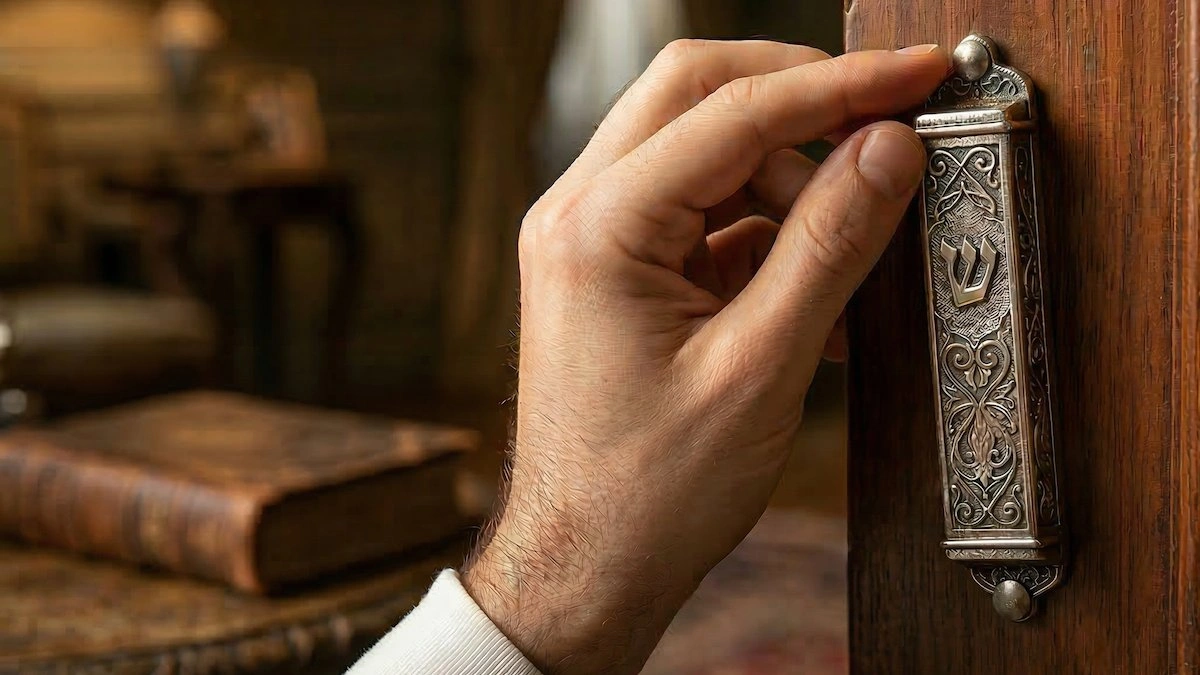
Mezuzah at the Threshold: How a Small Scroll Shapes a Jewish Home
Affixing a mezuzah is more than hanging a religious object on the wall. It is a concrete fulfillment of a Torah command that turns every doorway into a point of encounter with Hashem. We cover this in more depth in How Mezuzah Shapes Jewish Space.
The Torah (Devarim 6:9; cf. 11:20) says:
"וּכְתַבְתָּם עַל־מְזוּזוֹת בֵּיתֶךָ וּבִשְׁעָרֶיךָ"
– “And you shall write them on the doorposts of your house and on your gates.”
Chazal and the poskim explain that this mitzvah is fulfilled by writing specific passages of the Torah on a kosher parchment scroll and fixing that scroll to the doorway of a house or gate that meets halachic criteria. When it’s done properly, the mezuzah quietly reshapes how we think about our home and about every time we walk through its doors.
Defining the Mitzvah
Halacha defines mezuzah as a mitzvah‑act on the doorway, not a mere decoration for a Jewish home. The Shulchan Aruch (Yoreh De’ah 285:1) opens:
"מצות עשה לכתוב פרשת שמע ו'היה אם שמוע' ולקבעם על מזוזת הפתח…"
– “It is a positive commandment to write the section of Shema and ‘Vehaya im shamoa’ and to affix them to the doorpost of the entrance...”
So the mitzvah is two parts together: Writing the required parshiyot (Shema and Vehaya im shamoa) on kosher parchment by a qualified sofer in accordance with halacha. Affixing that scroll to a doorway that halacha considers obligated.
A beautiful case without a kosher scroll does not fulfill the mitzvah at all.
Meeting Hashem at the Doorway
The Rambam describes what a mezuzah can do for a person who takes it seriously. In Hilchot Mezuzah 6:13 he writes:
"חייב אדם להיזהר במזוזה, מפני שהיא חובת הכל תמיד. וכל זמן שייכנס וייצא, יפגע בייחוד שמו של הקדוש ברוך הוא, ויזכור אהבתו, וייעור משנתו ושגיותיו בהבלי הזמן, ויידע שאין דבר עומד לעולם ולעולמי עולמים אלא ידיעת צור העולם; ומיד הוא חוזר לדעתו והולך בדרכי מישרים."
In other words (paraphrase), every time a person enters and leaves his home he is confronted with Hashem’s unity and love, wakes from the “sleep” of worldly vanities, remembers that only the knowledge of the Creator truly endures, and is moved to return to himself and walk in a straight, upright path.
This is a very different picture from treating a mezuzah like a charm for protection or a cultural symbol. Any blessing or protection is understood as flowing from doing the mitzvah properly, not from a decorative object with no halachic content.
Which Doorways Actually Need a Mezuzah?
Not every doorway in a building is automatically obligated. Classic halachic sources discuss factors such as:
- Size of the opening
- Use of the room (living space vs. storage, temporary vs. permanent)
- Presence of proper doorposts and a defined opening
The result is that some archways, utility rooms, closets, or open passages may not require mezuzot at all, while interior rooms that people often overlook may in fact be obligated.
Because the details are technical, many homeowners benefit from walking through their space with someone who knows the halachic criteria and can map out which doors truly need mezuzot. For a clear, practical overview of which doorways require a mezuzah, see our article, “How Many Doorways Need a Mezuzah? A Practical Halachic Guide.”
Getting the Basics Right: Scroll, Placement, and Checking
To fulfill the mitzvah with care and kavvanah, three practical areas matter most:
- The Scroll — Written by a qualified sofer on kosher parchment, the text must be complete and correctly formed according to halacha. A cheap or unknown scroll can easily be invalid even if the case looks beautiful.
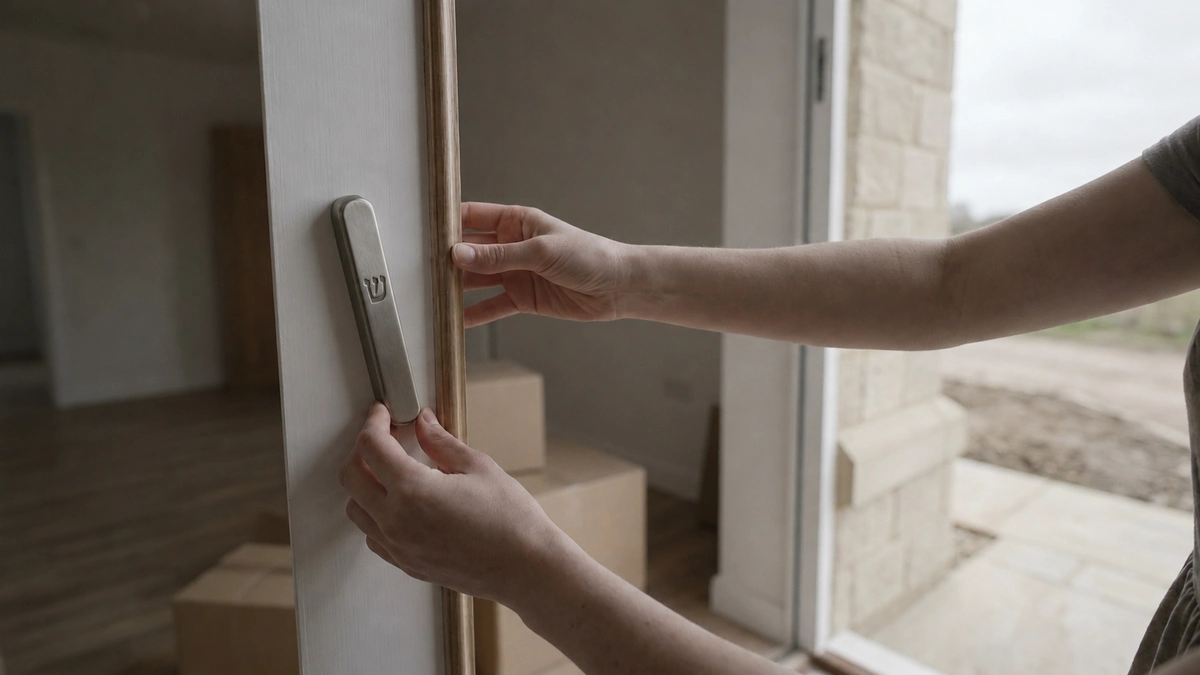
- Placement on the Doorway — Affixed on the right doorpost as you enter the room, within the correct vertical zone of the doorway, and secured so it will remain in place.
- Regular Checking — Chazal and the poskim speak of examining mezuzot periodically. For a private home, standard practice is at least twice in seven years, and sooner if there is moisture, weather exposure, or any suspicion of damage. A cracked or faded letter can render the entire scroll invalid, and then the mitzvah is simply not being fulfilled.
Avoiding Common Mistakes
Some common misunderstandings can quietly undermine the mitzvah. People may rely on a decorative case while assuming the scroll is fine, without ever having verified that it is kosher. Others place mezuzot on doors that look “important” while skipping interior rooms that are actually halachically obligated. Many also let years go by without checking the scrolls, especially in humid or harsh climates. Correcting these is not about chumras for experts; it is about doing a clear mitzvah de’oraita in the way the Torah and the poskim describe.
Taking the Next Step
If you want to treat mezuzah as the boundary ritual it truly is—marking that your home and your life inside it belong to Hashem—the place to start is with reliable, halachically vetted scrolls and accurate placement.
Kosher Mezuzah is dedicated to helping homeowners fulfill this mitzvah properly: identifying which doorways are obligated, providing kosher scrolls written to halachic standards, and guiding you on how and where to place them.
You can begin by exploring verified kosher mezuzah scrolls and, if needed, asking for help in mapping out the mezuzah obligations of your home.



.svg)
Bring a true Kosher Mezuzah into your home
Fulfill the mitzvah with confidence, beauty, and meaning.
Buy a Mezuzah