
Can a Non-Jew Put Up a Mezuzah? What the Halacha Actually Says
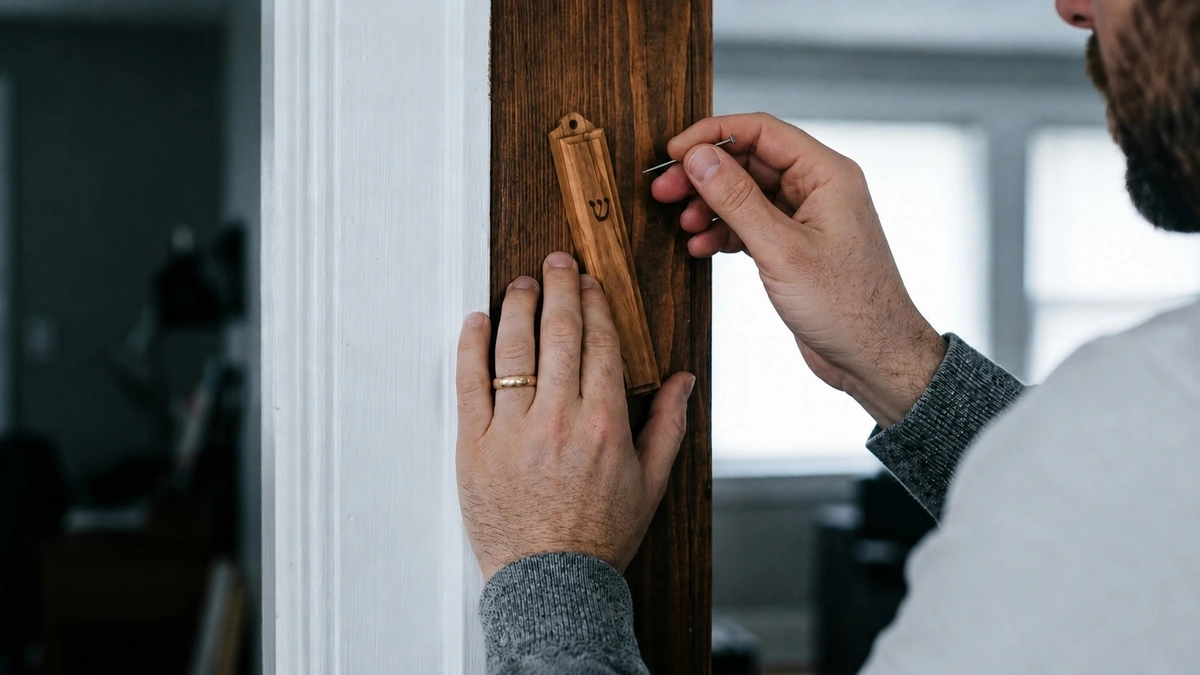
Can a non-Jew put up a mezuzah and fulfill the Jewish obligation to do so? The short answer is: this question is the subject of real halachic discussion, and in practice, you should not rely on it. The classic sources clearly establish the obligation of mezuzah and the rules of proper placement, while later halachic authorities debate whether the act of affixing must itself be done by someone who is obligated in the mitzvah. Because of that debate, the practical approach is simple: do not plan for a non-Jew to put up the mezuzah. If it already happened, many rabbis instruct that it should be taken down and re-affixed by a Jew, and a competent rav should be asked whether a new blessing should be recited. For a related question, see Joy and Tears at Woodburn.
If you are unsure whether your mezuzos were put up correctly, please reach out to us at Kosher Mezuzah and we will help you clarify what needs to be done.
The Halachic Basis: Why the One Who Affixes It Matters
The obligation of mezuzah is a positive commandment that rests on the person living in the home. The Mishnah states that women, slaves, and minors are obligated in mezuzah, and the Talmud treats mezuzah as a commandment that is not limited to a specific time. That tells us something important: mezuzah is part of the ongoing religious life of the home, not a one-time ceremonial detail.
The Talmud in Menachot discusses where the mezuzah must be placed. It belongs on the right side of the entrance, near the outer part of the doorway, in a precise halachic position. Rambam likewise rules that one recites the blessing and affixes the mezuzah in its proper place. These sources make one thing very clear: mezuzah is not fulfilled by simply owning a kosher scroll. The scroll must be properly affixed in the correct location.
The more difficult question is whether the identity of the person doing the affixing is itself legally significant. The primary sources most often quoted on mezuzah focus on obligation and placement. The discussion can a non-Jew jew put up a mezuzah in a way that counts for the Jewish resident is developed more fully in later halachic literature. Some later authorities are more lenient after the fact, while others are stricter and treat the act of affixing as something that should be done by a Jew who is personally obligated in the mitzvah.
That is why the practical ruling is generally cautious. Even if there is discussion in the later sources, no one should choose this arrangement from the outset. If the mezuzah has not yet been put up, a Jew should affix it. If a non-Jew already did so, the case should be reviewed, and in many communities the mezuzah is removed and re-affixed by a Jew.
How This Applies in Real Situations
Let us walk through several common scenarios. In each case, understanding the mezuzah obligation and whether it falls on the person or the home helps clarify what action is required.
A handyman or contractor affixes the mezuzah. This is one of the most common situations pertaining to non-Jew mezuzah laws. A Jewish homeowner asks a non-Jewish contractor to hang the mezuzos during renovations. Even if the mezuzah was placed on the correct side and at the proper height, this is not the preferred way to perform the mitzvah. Because later authorities debate whether such an affixing is valid, the cautious approach is to take it down and have it re-affixed by a Jew, and to ask a rav whether the blessing should then be recited.
A Jewish landlord puts up mezuzos before a Jewish tenant arrives. This situation is more nuanced. In general, the mezuzah obligation follows the resident, which is why the landlord-tenant mezuzah relationship has its own halachic framework. A landlord may be helping prepare the property, but the person actually living there is usually the one on whom the practical obligation rests. If a Jewish landlord already installed mezuzos before the tenant moved in, the tenant should ask a rav whether any re-affixing is needed and whether a blessing should be made at that point.
A non-Jewish caregiver or family member puts up the mezuzah. If a non-Jew affixed the mezuzah, even with respect and good intentions, the same concern remains. Since the question is whether the act of affixing counts as fulfillment of the mitzvah for the Jewish resident, the practical response is usually to remove it and have it re-affixed by a Jew. If you have questions about your specific situation, we are here to help you navigate the mezuzah responsibility that applies to you.
There is also an important difference between what may be tolerated after the fact and what should be done from the outset. Even where there is room to discuss whether an already-affixed mezuzah has some validity, that does not make it the right plan in the first place. The preferred practice is to have the mezuzah affixed by a Jew from the beginning.
A Common Mistake to Avoid
One error we see regularly with mezuzah installation requirements is the assumption that as long as the mezuzah scroll is kosher and the case is properly placed on the doorpost, the mitzvah is automatically fulfilled regardless of who did the hanging. That is too simplistic. The classic sources absolutely require a kosher mezuzah and correct placement, but later halachic authorities also examine whether the act of affixing itself plays a role in the fulfillment of the mitzvah. That is exactly why the question of who put it up cannot simply be ignored.
A better way to think about who can install the mezuzah is this: mezuzah is not just a Jewish object that sits on a doorway. It is a mitzvah that has to be fulfilled in the right way. So if there is a meaningful halachic dispute about whether affixing by a non-Jew counts, the practical response is not to brush that concern aside, but to correct the situation in the safest way possible.
Another related mistake concerns doorways that may not require a mezuzah at all. Not every opening in a home is obligated, and understanding when a mezuzah is not required helps avoid confusion about what has to be fixed and where.
The Deeper Meaning: Why the Act Matters So Much
The mezuzah is not merely a decorative religious object, and it is not a charm. Classical halachic literature treats it as a commandment that marks the home as a place of Jewish life, faith, and obedience to God. Each time a person enters and leaves, the mezuzah stands as a reminder that this home is meant to be lived according to Torah.
That is part of why people care so much about getting the details right. Placement matters. The condition of the scroll matters. The obligation of the resident matters. And when halachic authorities debate whether the act of affixing itself must be done by a Jew, that too becomes part of doing the mitzvah with seriousness rather than casually.
When a Jew personally affixes the mezuzah, makes the blessing when appropriate, and places it on the doorway with intention to fulfill the commandment, the act reflects something personal and direct. The home is not only protected or marked; it is being dedicated, in a practical way, to a life shaped by mitzvos. That is why questions about who may affix the mezuzah are not technicalities. They go to the heart of how the mitzvah is performed.
Key Takeaway
A non-Jew should not be the one you rely on to fulfill the mitzvah of mezuzah. The core sources clearly establish the obligation of mezuzah and the laws of placement, and later halachic authorities debate whether affixing by a non-Jew is effective after the fact. Because of that, the cautious practical ruling is to have a Jew affix the mezuzah from the outset. If a mezuzah was already hung by a non-Jew, it is often removed and re-affixed by a Jew, but a rav should be consulted about the correct next step and whether a blessing should be recited.
This applies whether the affixing was done by a contractor, a caregiver, a landlord, or anyone else who is not the proper person to perform the mitzvah in your situation. Questions about shared apartment mezuzah responsibility or renter mezuzah obligations may involve additional details, and a rav should be consulted for guidance specific to your case.
About Kosher Mezuzah
At Kosher Mezuzah, we take the fulfillment of this mitzvah seriously from beginning to end. A mezuzah scroll must be kosher, but it also has to be placed correctly and handled with care. That is why we encourage every customer to understand the full scope of their mezuzah halacha obligations, not only what to buy, but how to perform the mitzvah properly.
If you have questions about whether a mezuzah was properly affixed in your home, or if you need guidance on re-hanging mezuzos that were put up under uncertain circumstances, we are here to help. There is real peace of mind in knowing that the mitzvah was done correctly, and that peace of mind is worth pursuing
If you are not sure whether the mezuzos in your home were affixed in the proper way, please reach out to us, and we will be glad to help you fulfill this mitzvah properly.



.svg)
Bring a true Kosher Mezuzah into your home
Fulfill the mitzvah with confidence, beauty, and meaning.
Buy a Mezuzah