

Is Mezuzah an Obligation on the Person or the Home? A Clear Halachic Guide
When people ask if the mezuzah obligation is on the person or home, the most accurate halachic answer is more nuanced than either extreme. Mezuzah does not attach to a building in the abstract, and it is also not a mitzvah that applies without regard to the type of space involved. Rather, mezuzah applies to qualifying entrances of a dwelling, and the practical obligation to affix it falls on the person living there.
That is why both parts matter. The home matters, because only a true dwelling with qualifying doorways is obligated. The person matters, because the one residing there is the one who must act. In practical halacha, mezuzah is the mitzvah of the dwelling as inhabited. If you move into a home that requires a mezuzah, the obligation becomes yours through your residence in that space.
Maakeh vs Mezuzah: Different Kinds of Home-Related Mitzvos
The comparison between maakeh vs mezuzah is helpful precisely because the two mitzvos are not the same in nature. Both relate to the home, but they arise from the home in very different ways.
The mitzvah of maakeh is a duty created by a dangerous structure. The Torah says, “When you build a new house, you shall make a parapet for your roof,” because a person may fall from it. In other words, maakeh is about removing danger from property. The obligation is tied to the hazardous physical condition of the house.
. Related reading: New Home Mezuzah Guide.
Mezuzah is different. Mezuzah does not arise because the structure is dangerous or because the building itself automatically carries the mitzvah. Rather, mezuzah applies to a qualifying dwelling, and the practical obligation falls on the person living there. That is why a renter can become obligated in mezuzah even without owning the house. The doorway and dwelling must qualify, but the resident is the one who must act.
So the clearest distinction is this: maakeh is a mitzvah generated by the condition of the property, while mezuzah is a mitzvah generated by living in a qualifying dwelling. Both involve the home, but they are not the same kind of obligation.
Chovat HaBayit Mezuzah or Chovat HaDar? The Halachic Category of Mezuzah
The Torah source for mezuzah appears in the Shema: “And you shall write them upon the doorposts of your house and upon your gates.” From there, Chazal and the poskim define the halachic category mezuzah belongs to.
The clearest practical source is the Gemara’s ruling about renters. A person renting outside Eretz Yisrael is exempt for thirty days and then becomes obligated. In Eretz Yisrael, the obligation begins immediately. That halacha would make little sense if mezuzah were simply an automatic obligation on the structure as such. Occupancy matters directly.
. For the full discussion, read Mezuzah in Exile.
The Gemara in Bava Metzia states the principle even more sharply: mezuzah is the obligation of the resident. Rambam makes the point explicit when he writes that mezuzah is “the obligation of the dweller, not the obligation of the house.” That is why the most careful answer is not simply chovat habayit mezuzah, but rather: mezuzah applies to a qualifying dwelling, while the duty to affix it falls on the one who lives there.
At the same time, the house is not irrelevant. Rambam explains that if there are multiple houses or rooms one inside another, each qualifying entrance requires a mezuzah. The obligation is not attached only to one front wall or one symbolic entrance. Halacha looks at each doorway in relation to the dwelling space it serves.
This is what mezuzah obligation explained properly looks like: the doorway and dwelling determine whether the mitzvah applies, but the resident is the one obligated to act.
Mezuzah Obligation Explained in Practice
Understanding mezuzah this way changes how we think about common situations.
- Renters and tenants: A renter is obligated in mezuzah even though he does not own the property. Outside Eretz Yisrael, the obligation begins after thirty days. In Eretz Yisrael, it begins immediately. So the duty to affix mezuzos does not depend on title ownership alone. It depends on dwelling there in the halachically relevant way.
- Landlord and tenant disputes: Because the mitzvah rests on the resident, a tenant cannot assume that the landlord is the one who must take care of it. The landlord may own the walls and the doorposts, but the occupant is the one who becomes obligated in the mitzvah. There are separate halachic discussions about what happens when moving out and whether mezuzos may be removed, but the initial obligation belongs to the one residing there.
- Shared apartments: In a shared apartment or house, the entrance serves multiple residents. In practice, one mezuzah is affixed to the doorway, and one resident may put it up on behalf of everyone. Even so, the obligation is shared in the sense that all the residents are living in and using the same qualifying dwelling.
This framework answers the common question of who must put up a mezuzah. The strongest answer is not simply “the owner,” and not merely “whoever passes through the doorway.” It is the person or people living there in a qualifying dwelling.
If you are setting up mezuzos and have questions about your specific home, please reach out to us at Kosher Mezuzah. We are glad to help you fulfill the mitzvah properly.
Where the Mezuzah Obligation Does Not Apply
Just as the obligation depends on the nature of the space, so do the exemptions. A mezuzah is not required on every doorway without distinction. Halacha exempts places that are not treated as dignified dwelling spaces, including bathrooms, bathhouses, mikvaot, and similar areas. That is an important part of the definition.
Likewise, mezuzah may not apply where the room is not considered a true dwelling area or where the entrance does not meet the halachic requirements for an obligated doorway. The key point is that mezuzah is tied to the kind of place halacha recognizes as fit for ordinary human residence. When that condition is missing, the obligation may not apply at all.
This is why the question of mezuzah obligation is not merely person or home in the abstract. The home must first qualify. Only then does the practical obligation fall on the resident.
The Deeper Meaning: Sanctifying the Home
Mezuzah is not only a technical rule about doorposts. It brings words of Torah to the entrance of the home and marks the dwelling as a place lived in under the awareness of Hashem.
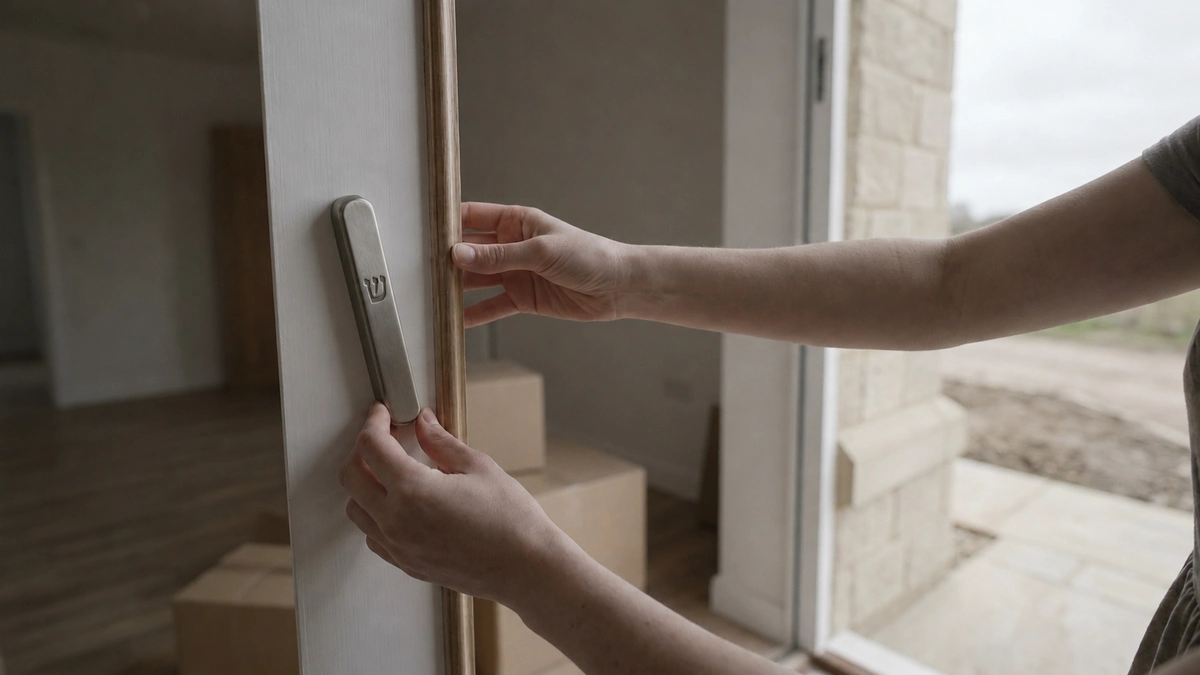
The home is where ordinary life unfolds: eating, sleeping, speaking, raising children, building a family, and carrying out daily responsibilities. By placing a kosher mezuzah on the doorway, a Jewish household declares that even ordinary space belongs under Torah and mitzvah. That is part of why mezuzah stands at the threshold. It turns the entrance itself into a place of reminder and identification.
A renter’s home is no less a Jewish home than an owner’s. The resident may not hold the deed, but the resident still holds the obligation.
Key Takeaway: Mezuzah Obligation Person or Home Clarified
So is mezuzah an obligation on the person or the home?
The most accurate answer is this: mezuzah applies to qualifying entrances of a dwelling, and the practical obligation to affix it falls on the one living there. That is why the nature of the room matters, the structure matters, and yet renters as well as owners can become obligated.
In other words, mezuzah is not best described as a pure obligation on the house alone. It is the mitzvah of the dwelling as inhabited.
A Jewish home with a kosher mezuzah on its doorposts is not just a structure with a ritual object attached. It is a lived space publicly marked by Torah, mitzvah, and the presence of Jewish life within.
Fulfilling the Mitzvah with Confidence
Mezuzah is a constant mitzvah, and it should be fulfilled with care. A mezuzah that is not kosher does not fulfill the obligation, no matter how attractive the case or how carefully it was hung. Every mezuzah scroll should be written by a qualified sofer and checked properly so that the mitzvah is fulfilled as halacha requires.
At Kosher Mezuzah, every mezuzah scroll we offer is written by a qualified sofer (Torah scribe) and reviewed by a magiah (halachic mezuzah examiner), with full traceability from the scribe's quill to your doorpost. Our mezuzos are produced through a process endorsed by the Orthodox Union, one of the most trusted halachic certifications in the world. We provide the name of the sofer, the name of the magiah, the date of writing, and the materials used, so you know exactly what you are placing on your doorpost.
It is also important to have mezuzos checked periodically. In a private home, the classic halachic standard is to check them twice in seven years, with additional checking when conditions warrant it. Questions about rental situations, shared apartments, unusual room layouts, or how many doorways require a mezuzah are all matters worth clarifying carefully.
If you have questions about which mezuzah is right for your home, or how to determine which entrances require one, please contact us at Kosher Mezuzah. We are here to help you fulfill this mitzvah with clarity and confidence. May the mezuzos on your doorposts be a source of merit and protection for all who dwell in your home.



.svg)
Bring a true Kosher Mezuzah into your home
Fulfill the mitzvah with confidence, beauty, and meaning.
Buy a Mezuzah