
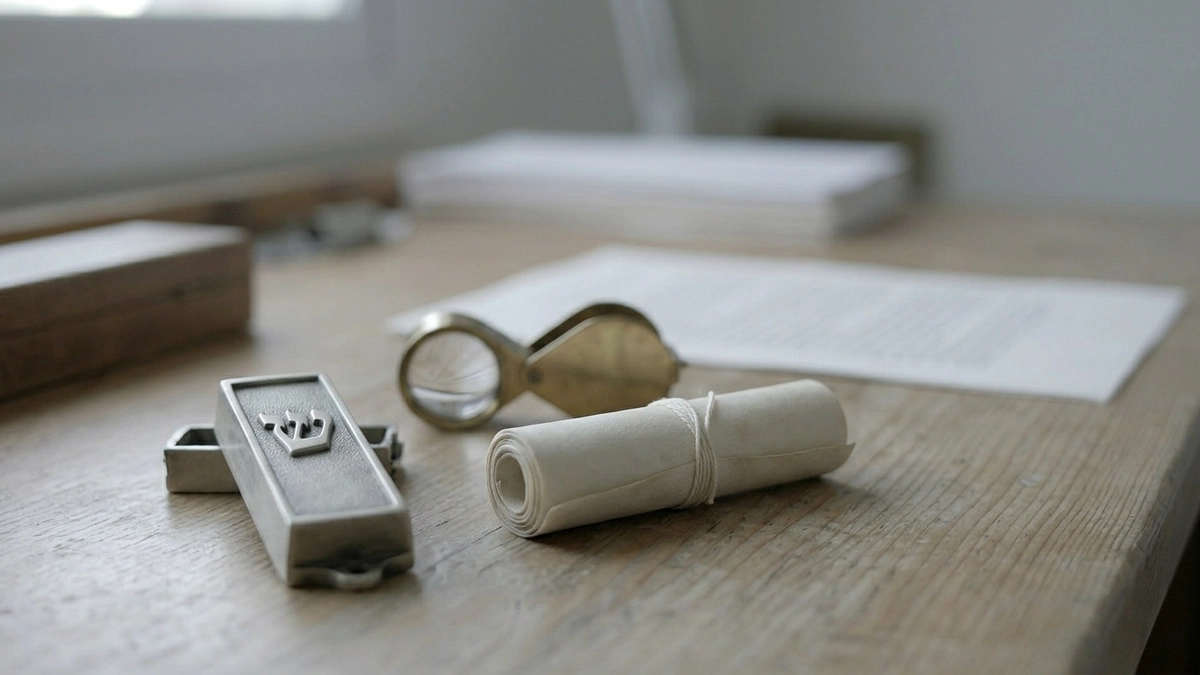
Mezuzah Certification: How to Know If Your Mezuzah Scroll Is Actually Kosher
Mezuzah certification is not a formality. It is the difference between fulfilling a Torah obligation and placing a beautiful case on your doorpost that contains a scroll you cannot rely upon. For Torah-observant Jews, that distinction matters deeply. This article explains what mezuzah certification means, what the halachic basis is for verifying a scroll, how to apply that knowledge when you purchase or check a mezuzah, and what common mistakes lead people to unknowingly fulfill the mitzvah with a pasul (invalid) scroll. By the time you finish reading, you will know exactly what to look for and exactly what questions to ask
Certified vs Non-Certified Mezuzahs: What's the Difference?
Mezuzah certification is the documented verification that a mezuzah scroll was written by a qualified sofer (ritual scribe) on kosher klaf (parchment), checked by a trained magiah (halachic mezuzah examiner), and confirmed to meet the standards of Shulchan Aruch. A certified mezuzah comes with a clear chain of accountability: you know who wrote it, who checked it, and what standard was applied. A non-certified scroll gives you none of that. You are relying entirely on the word of a seller who may or may not have the training or integrity to verify what they are selling. That gap is not small. The market for mezuzah scrolls includes printed scrolls sold as handwritten, machine-produced scrolls, and scrolls written by individuals whose kashrut is unknown or questionable. Without certification, you often cannot tell the difference from the outside. If fulfilling this mitzvah properly matters to you, start by browsing only verified, certified mezuzah scrolls before making any purchase.
The Halachic Basis for Verification
The obligation to verify that a mezuzah is kosher is not a modern consumer concern, it flows directly from the halacha itself. The Shulchan Aruch (Yoreh De'ah 285–291) sets out detailed requirements for every aspect of the mezuzah: the klaf must come from a kosher animal, the dio (ink) must meet specific standards, every letter must be written with the proper tzurat ha'ot (correct letter form), and the sofer must write with the proper kavanah (intention) for the sake of the mitzvah. The Rambam in Hilchot Mezuzah rules that a scroll written incorrectly, even if only a single letter is malformed or missing, renders the entire scroll pasul. A pasul mezuzah affixed to your doorpost does not fulfill the mitzvah at all. You have placed something on the doorpost, but you have not performed the mitzvah of mezuzah.
The Chatam Sofer and other Acharonim further emphasize that checking a mezuzah is an ongoing obligation, not a one-time act. The Shulchan Aruch (291:1) rules that a private mezuzah must be checked twice in every seven-year shemittah cycle. The Gemara in Yoma (11a) is the source for this ruling, and the Pithchei Teshuva adds that even if one checked several scrolls and found them valid, one must still check the remainder. This is not because we distrust the sofer's original work. It is because klaf is organic material. Over time, especially in humid or dry climates, letters can crack, fade, or peel. A scroll that was perfectly kosher when you affixed it may become pasul years later. Certification tells you the scroll was kosher at the time of sale. Periodic checking tells you it is kosher right now.
What Proper Certification Actually Looks Like
Not all certification is equal. In the mezuzah market, the word "certified" is sometimes used loosely to mean that a seller has labeled a scroll as kosher, without any independent verification. That is not certification in any meaningful sense. Genuine mezuzah certification involves several specific elements that you should be able to confirm before purchasing.
First, the name of the sofer should be traceable. You should be able to find out who wrote the scroll, where they were trained, and under whose rabbinic supervision they operate. A sofer who cannot be identified offers you no accountability. Second, the name of the magiah, the halachic examiner who reviewed the scroll after it was written, should also be available. Examination after writing is a separate and essential step. The magiah checks every letter against the laws of ksav (script form), reviews the spacing, checks that no letters touch improperly, and confirms the overall kashrus of the scroll. Third, the certification should reflect a recognized standard. The Orthodox Union's mezuzah program endorses Kosher Mezuzah as a vendor, providing an additional layer of communal accountability. That endorsement applies to the vendor and its process, meaning the standards, sourcing, and verification procedures have been reviewed and approved. This matters because OU oversight is not granted casually.
Fourth, the standard of ksav (script) should be disclosed. Ashkenazic communities typically use Ksav Beit Yosef or Ksav Arizal, while Sephardic communities follow Ksav Vellish, and Chabad communities use Ksav Alter Rebbe. None of these is more kosher than another: they reflect different mesorah (tradition). But your mezuzah should match the minhag (custom) of your community or your family. A reputable seller will tell you which script was used and why.
Common Errors That Affect Kashrus
Several mistakes are widespread enough that they deserve direct attention. The most serious is purchasing a printed scroll. Some sellers, particularly on unregulated online marketplaces, sell scrolls that appear handwritten but were produced by a printer or a machine. These scrolls are completely pasul and do not fulfill the mitzvah under any circumstance. There is no leniency for a printed mezuzah scroll. The Torah requirement is that the parshiyot be written by hand by a qualified sofer, and no printing process satisfies that requirement.
A second common error is purchasing a scroll without knowing whether the sofer is observant and Hashem-fearing. The Shulchan Aruch rules that a mezuzah written by someone who is not shomer mitzvot is invalid, even if the letters themselves look correct. A sofer must write every word lishma, for the sake of the mitzvah, and that kavanah is inseparable from his personal observance. This is one reason why traceability of the sofer is not just a nice detail. It is a halachic requirement.
A third error is affixing the scroll without the proper covering or without attention to the scroll's condition. The Shulchan Aruch (Yoreh De'ah 289:1) addresses the requirement that a mezuzah be placed in a protective tube or case. A scroll that is exposed to the elements without adequate protection is at risk of damage. A cracked or faded letter can render a scroll pasul, and you may not realize it without checking. This is why proper placement and a quality case both matter.
The Deeper Meaning Behind Verification
The mitzvah of mezuzah is compared by some poskim to Kriyat Shema, the recitation of Shema. Just as Kriyat Shema is a verbal declaration of the Oneness of Hashem, the mezuzah is a written declaration of that same truth affixed to the home itself. The portions of Shema and V'haya are not merely placed at the entrance as a symbol. They are, in a real sense, the spiritual identity of the Jewish home, a constant proclamation that this household belongs to Hashem and operates under His sovereignty. The Rambam, at the end of the Laws of Mezuzah, writes that the mezuzah serves as a constant reminder of the Oneness of Hashem, awakening a person from the trivialities of life to remember His love. That spiritual weight makes the question of kashrus all the more serious. A pasul scroll on the doorpost is not a neutral act. It is an unfulfilled mitzvah dressed in the appearance of one.
This is precisely why the Lubavitcher Rebbe, in his worldwide mezuzah campaign beginning in 1974, stressed on countless occasions that kosher mezuzos must be checked and affixed properly. The Rebbe's teaching was that even a single Jewish home with a properly affixed, genuinely kosher mezuzah contributes to the protection and merit of the entire Jewish people. That teaching carries an implicit demand: the scroll must actually be kosher.
Key Takeaway
Mezuzah certification means documented, traceable verification that a scroll was written by a known, qualified sofer on kosher klaf, examined by a magiah, and confirmed to meet the full standards of Shulchan Aruch. A non-certified scroll leaves you without the information you need to know whether your mezuzah is kosher at all. The halacha requires not only proper writing at the time of purchase but ongoing checking throughout the years. Printed scrolls, unverified sofrim, and scrolls sold without any chain of accountability are common problems in today's market. Proper certification, backed by recognized rabbinic oversight, is the most reliable way to ensure you are genuinely fulfilling the mitzvah of mezuzah.
About Kosher Mezuzah
At Kosher Mezuzah, every scroll sold comes with full traceability: the name of the sofer who wrote it, the name of the magiah who examined it, and documentation of the materials used. This level of accountability is not standard in the mezuzah market, and it exists because the mitzvah deserves no less. Every scroll is written on kosher klaf with proper dio by a sofer who is fully observant and operates under rabbinic supervision. Scrolls are available in the major ksav traditions, Beit Yosef, Arizal, and Alter Rebbe, so that you can fulfill the mitzvah following your own minhag and mesorah.
Kosher Mezuzah is endorsed by the Orthodox Union's mezuzah program, in our process, standards, and accountability. That endorsement means an independent and respected rabbinic authority has reviewed how Kosher Mezuzah sources, verifies, and sells its scrolls. For those who want the confidence that comes from knowing exactly who stands behind their mezuzah, that distinction is meaningful. We also strongly encourage every customer to consult with their own rav for any questions about placement, checking schedules, or which ksav is appropriate for their home.
If you have any questions about mezuzah certification or would like guidance on which scroll is right for your home, please reach out to us directly. We are here to help you fulfill this mitzvah with clarity and confidence. May the mezuzah on your doorpost be a zechus (merit) for you and your entire household, and may your home be filled with beracha and shalom.



.svg)
Bring a true Kosher Mezuzah into your home
Fulfill the mitzvah with confidence, beauty, and meaning.
Buy a Mezuzah