
What Do You Do with a Pasul Mezuzah? A Clear Guide to Geniza and Proper Disposal
\When a mezuzah scroll is found to be pasul, most people know it cannot stay on the doorpost. What many people do not know is what happens next. Can it be repaired? Does it need geniza if it is no longer usable?
A pasul mezuzah scroll is not ordinary paper or parchment. It contains Torah passages and Divine Names written with sanctity. Even after it can no longer be used for the mitzvah, it must still be treated with respect. That is why the question of disposal is really a question of kavod for sacred writing.
This article explains the practical halachah: what to do with a pasul mezuzah, when geniza is required, what common mistakes to avoid, and how to handle the scroll properly until it can be dealt with in the right way.
What Do You Do with a Pasul Mezuzah?
If a mezuzah has been found pasul, the first step is to determine whether it can be repaired. Not every pasul mezuzah must immediately be buried. Some scrolls can be corrected by a qualified sofer. Others cannot.
If the scroll cannot be repaired, it should not be discarded like ordinary waste. Since it contains Torah passages and the name of Hashem, it must be treated respectfully and placed in geniza, or otherwise handled according to the guidance of a competent rav. In most communities, that means bringing it to a designated geniza collection so it can later be buried properly.
If you are unsure whether the mezuzah is truly pasul, or whether it can be fixed, have it checked before making any decision about disposal.
The Halachic Basis for Giving a Pasul Mezuzah Respectful Treatment
The basic principle is clear: sacred writings do not lose all significance simply because they are no longer fit for use.
The Rambam writes in Hilchot Yesodei HaTorah that it is forbidden to destroy sacred writings. That establishes the broader rule that texts containing sanctity must be treated with care even when they are no longer usable.
The Gemara in Megillah 26b discusses sacred-use items that require geniza, and the discussion includes Torah scrolls, tefillin, and mezuzot. That sugya is one of the main foundations for the respectful treatment of mezuzah scrolls after use.
There is also a well-known halachic model for burial of worn sacred texts. Rambam writes in Hilchot Tefillin, Mezuzah, v'Sefer Torah that a Torah scroll that became worn or disqualified should be placed in an earthenware container and buried next to a Torah scholar. While that ruling is stated regarding a Torah scroll, it reflects the broader principle that sacred writings are not treated casually once they can no longer be used.
For a mezuzah scroll, the practical result is straightforward: if it is no longer usable and cannot be repaired, it should be handled through geniza, not ordinary disposal.
How Geniza Works in Practice
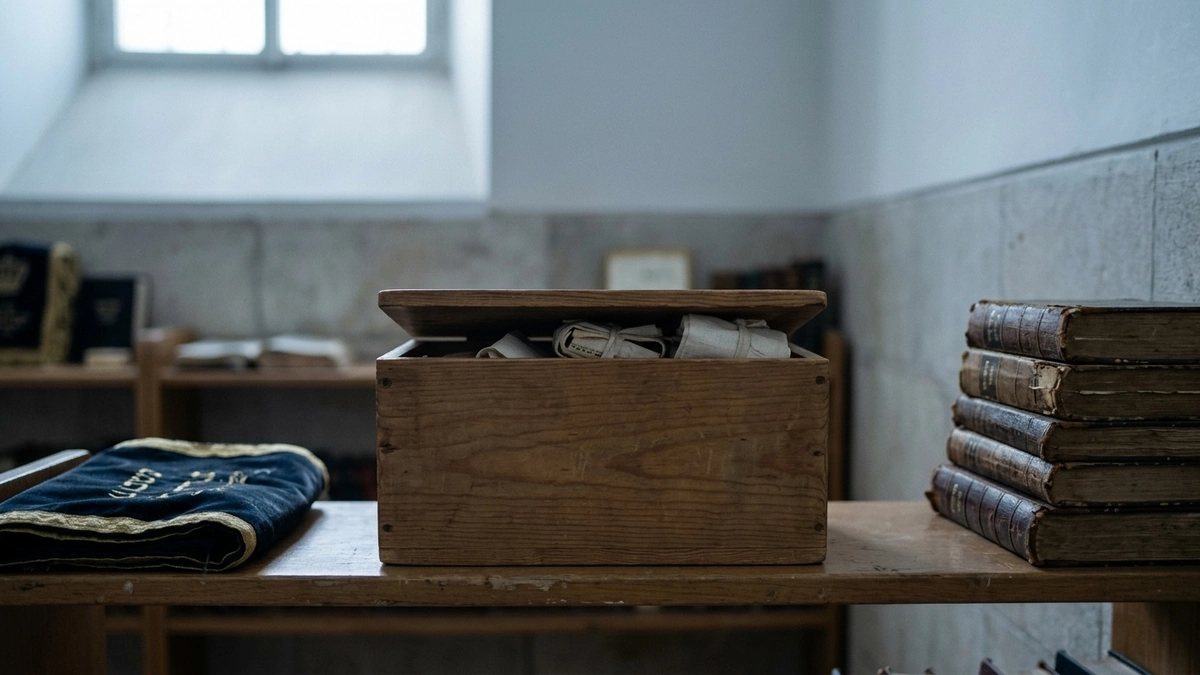
The word geniza refers to setting aside sacred writings respectfully when they are no longer fit for use. In practical terms, most people do not bury a pasul mezuzah themselves. Instead, they bring it to a synagogue, Jewish school, or other communal location that collects geniza items.
From there, the material is usually stored until it can be buried in a respectful way. Exact local practice may vary, which is why it is wise to ask your rav, your synagogue office, or the person overseeing community geniza arrangements.
If you cannot bring the mezuzah immediately, you may wrap it or place it in a protective covering and keep it temporarily in a clean, respectful place at home. What should be avoided is leaving it around carelessly, mixing it with garbage, or treating it like an ordinary discarded object.
A closet, cabinet, or shelf reserved for respectful temporary storage is reasonable. A kitchen junk drawer or anything near trash is not.
Repair First, Disposal Second
One important point is often missed: pasul does not always mean finished forever.
A mezuzah can become pasul for different reasons. Sometimes letters crack, fade, or rub away. Sometimes there is another problem that can be corrected by a qualified sofer. In those cases, the right next step may be repair, not geniza.
That is why a removed mezuzah should not be assumed to be beyond use unless someone qualified has examined it. If you are dealing with an older scroll and do not know its condition, the proper approach is to have it checked.
Only after it is confirmed that the mezuzah is not repairable should it be treated as a retired sacred text requiring geniza.
Mezuzah Disposal Mistakes to Avoid
- One serious mistake is throwing out a pasul mezuzah because it is no longer usable. That is not the right approach. A mezuzah scroll containing Torah passages and Divine Names still requires respectful treatment.
- Another common mistake is leaving the scroll forgotten in a drawer for years. Temporary respectful storage is acceptable when necessary, but it should remain temporary. Once a mezuzah has been removed from use and determined to require geniza, it should be brought for proper handling without unnecessary delay.
- A third mistake is assuming that any old mezuzah is worthless. A pasul mezuzah may still be repairable. That is why inspection matters.
- It is also a mistake to pass along a pasul scroll to someone else as though it were kosher. If there is any doubt about a mezuzah's status, it should be checked before it is sold, given away, or put back into use.
What About the Mezuzah Case?
The case should not automatically be treated the same way as the scroll itself.
The scroll is the actual sacred writing. That is the primary object of concern. The status of the case can depend on how it serves the klaf and what exactly it is. Because of that, it is best not to make blanket statements that every case may simply be thrown away, or that every case certainly requires geniza in the same way as the scroll.
If the case is reusable, it can often be used again with a kosher mezuzah. If it is damaged or no longer needed, and you are unsure how it should be treated, ask your rav. If there is doubt, including it with geniza is often the safer course.
Why This Matters Spiritually
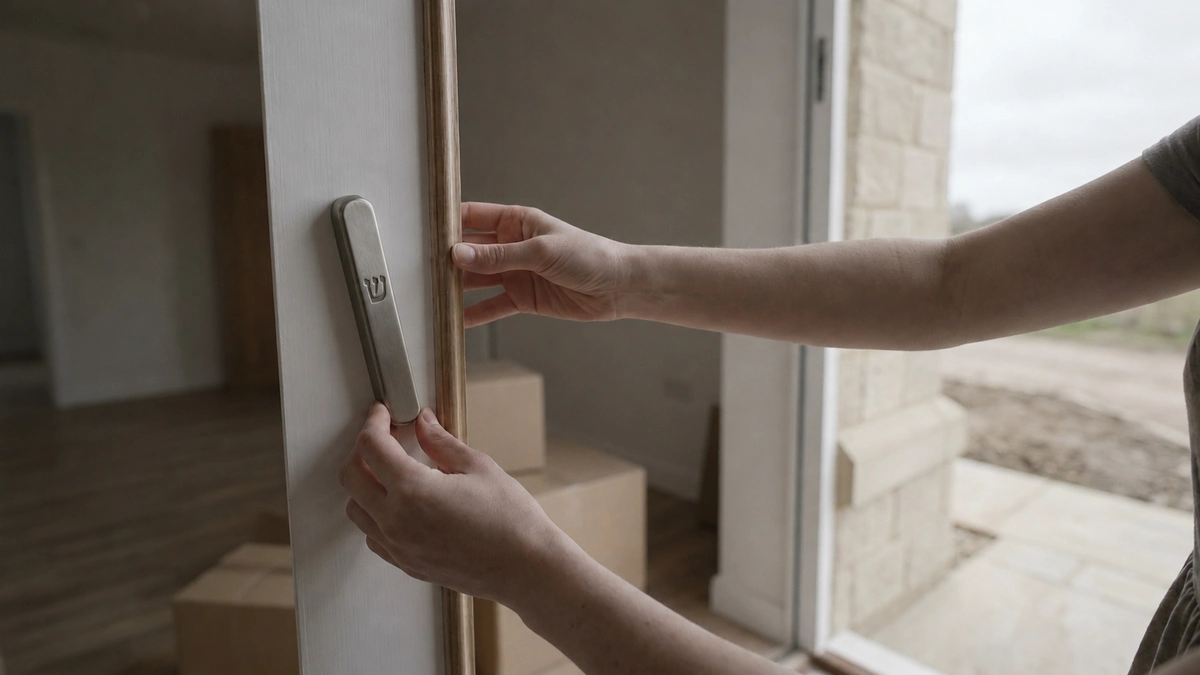
A mezuzah is not just a marker on the door. It is a mitzvah that brings Torah to the entrance of the home.
The Gemara in Menachot 33b connects the placement of the mezuzah with protection for the house. That idea should not be turned into a slogan or superstition, but it does remind us that the mezuzah is a sacred object tied to the presence of Torah in Jewish life.
Because of that, the relationship to the mezuzah does not end when the scroll comes off the doorpost. Respect for the mitzvah includes respect for the sacred writing itself, even when the scroll is worn, damaged, or no longer fit for use.
Treating a pasul mezuzah properly is part of honoring the mitzvah as a whole.
How Often Mezuzot Should Be Checked
Regular inspection is an important part of responsible mezuzah ownership.
Shulchan Aruch states that a private mezuzah should be checked twice every seven years, while a public mezuzah is checked twice every fifty years. That schedule exists because mezuzot can deteriorate over time. Ink can crack, letters can fade, and exposure to heat, moisture, or age can affect the scroll.
Regular checking helps ensure that the mezuzah on the door is actually kosher and still fulfilling the mitzvah.
It also prevents a second problem: people often discover an invalid mezuzah only after many years because it was never examined. Proper checking helps avoid both neglect and uncertainty.
Key Takeaway
A pasul mezuzah scroll should not be thrown away like ordinary trash. If it can be repaired, it should be repaired by a qualified sofer. If it cannot be repaired, it should be placed in geniza or otherwise handled according to the guidance of a competent rav.
Until that can be arranged, it may be stored temporarily in a clean and respectful place. What matters most is recognizing that a mezuzah scroll remains a sacred writing even after it can no longer be used on the doorpost.
How Kosher Mezuzah Supports Proper Fulfillment
At Kosher Mezuzah, we believe the mitzvah does not end at the moment of purchase. A mezuzah must be written properly, checked responsibly, and handled correctly if it becomes pasul.
That is why we encourage regular inspection by qualified sofrim and magihim, and why we help customers understand what to do when a mezuzah can no longer remain in use.
If a scroll is found to be pasul, the first question is whether it can be repaired. If it cannot, it should be treated with the respect due to sacred writing and brought for proper geniza.
If you are unsure about the status of a removed mezuzah, or you do not know whether it should be repaired or retired, reach out to us. We can help guide you to the right next step and connect you with qualified professionals.
And as always, specific halachic questions should be brought to your rav. Every case has details, and proper guidance matters.



.svg)
Bring a true Kosher Mezuzah into your home
Fulfill the mitzvah with confidence, beauty, and meaning.
Buy a Mezuzah