

Who Can Inspect or Repair a Mezuzah? What Every Jewish Homeowner Should Know
Mezuzah inspection services are an important part of fulfilling the mitzvah properly. Many families affix their mezuzahs with care and say the brachah with kavanah (intention), but the klaf (parchment scroll) inside the case still needs periodic attention over time. It can age, fade, or crack, and if that happens, the mezuzah may no longer be valid. That is why knowing who can inspect or repair a mezuzah, and when that inspection is needed, is part of what every Jewish homeowner should know. This article answers that question clearly and carefully, so you can act with confidence. . Related reading: Does a Missed Mezuzah Require Teshuvah? How to Repair the Mitzvah. For the full discussion, read Can a Mezuzah Be Insured? What Every Jewish Homeowner Should Know.
Who Can Fix or Inspect a Mezuzah?
Mezuzah inspection should be performed by someone with real expertise in the laws of STaM: Sifrei Torah, Tefillin, and Mezuzos. A homeowner may notice obvious physical damage, such as moisture, bending, or visible wear, but determining whether a mezuzah is still kosher requires a qualified sofer or a trained magiah who understands the detailed laws of letter formation, spacing, ink integrity, and parchment condition. If you are uncertain whether your mezuzahs have been inspected recently, we encourage you to reach out to us at Kosher Mezuzah, and we can help connect you with proper, qualified checking.
. See also Mezuzah Letter Spacing.
The Halachic Basis for Qualified Inspection
The obligation to check mezuzahs is well established. The Gemara in Yoma 11a states that a private mezuzah must be checked twice in seven years, while a public mezuzah is checked twice in fifty years. The Shulchan Aruch, Yoreh Deah 291:1, rules accordingly, and this remains the accepted halachic standard.
Although the Gemara establishes the obligation to check a mezuzah, the actual process of checking requires expertise. The laws governing the kosher status of a mezuzah's letters are detailed and technical. A letter that appears whole to an untrained eye may in fact be invalid because of a hairline crack, faded edge, broken stroke, or a problem in its form. For that reason, the practical standard is to have mezuzahs examined by a qualified sofer or trained magiah rather than relying on an untrained visual impression.
This is not an exaggeration. The laws of STaM are exacting. Even when the scroll looks fine at first glance, subtle flaws can affect its halachic validity. That is why homeowners should not treat mezuzah checking as a casual visual review, but as a specialized process that belongs in qualified hands.
How the Inspection Process Actually Works
A proper mezuzah inspection involves several layers. The magiah first unrolls the klaf carefully and examines it under strong lighting, often with magnification. He checks each of the 713 letters for integrity, looking for cracks in the ink, letters that have merged or separated improperly, letters whose form no longer meets the halachic standard, and parchment that has deteriorated. He may also review the sirtut, the scored guide lines in the klaf, and the overall condition of the writing.
When you bring a mezuzah for inspection, understanding mezuzah damage signs before you arrive can help you describe what you have noticed and give the examiner useful context. Mezuzahs that have been exposed to heat, humidity, or direct sunlight are especially likely to show deterioration. Outdoor mezuzah care is a topic on its own, because outdoor scrolls are exposed to weather year-round and may need more frequent attention than indoor ones. Mezuzah weather damage in particular can compromise the klaf and ink even when the case appears intact from the outside.
After examination, the magiah will generally rule one of three ways: the mezuzah is kosher and may be returned, it is pasul and may not be used, or it presents a question that should be referred to a competent halachic authority. Some mezuzahs can be repaired, but only a qualified sofer should perform repairs, and only when those repairs are halachically permitted. A pasul mezuzah should not be returned to the doorpost without correction, because it does not fulfill the mitzvah.
For anyone wondering about the process of opening a mezuzah case before bringing it for inspection, it is important to be gentle and deliberate so as not to bend or crack the klaf. Many cases are designed with clips or slides, and a klaf that is rolled too tightly or too loosely can suffer damage during removal. If you are uncertain how to remove the scroll without risking damage, a sofer can do it for you.
If your home or community has experienced a fire, flood, or other disaster, the mezuzahs require immediate attention. Knowing what to do about a damaged mezuzah after disaster is crucial. Do not assume that a mezuzah which survived a flood or fire is still kosher. Heat, water, and smoke can each affect the klaf and ink in ways that are not immediately visible, but that may still render the scroll pasul. Bring all affected mezuzahs to a qualified magiah promptly.
We also encourage you to review the question of mezuzah repair vs replacement, because a well-intentioned repair attempt by someone unqualified can create new halachic problems. A trained sofer knows which flaws can be repaired and which ones require a fresh scroll entirely. Please reach out to us at Kosher Mezuzah if you need guidance on finding a qualified magiah or sofer in your area.
Common Errors to Avoid
One of the most common errors we see is families checking their own mezuzahs without training, unrolling the klaf, glancing at it, deciding it looks fine, and rolling it back up. This approach cannot substitute for professional mezuzah inspection. The human eye, without training, simply cannot distinguish reliably between a letter that is intact and one that has a flaw affecting its halachic validity. Another frequent error is assuming that a new-looking case means the klaf inside is still valid. The klaf ages on its own timeline, regardless of how the case looks on the outside.
Some people delay inspection because they assume their mezuzahs are probably fine since nothing obvious has gone wrong in the home. But halachah requires periodic checking, precisely because mezuzahs can become pasul over time. Families also should not assume that the condition of one mezuzah tells them the condition of the rest. In practice, each mezuzah that needs checking should be examined on its own merits.
Finally, some people do not realize that mezuzah checking frequency is itself a halachic matter, not merely a practical suggestion. The obligation applies to the mezuzahs in the home, not just the main entrance. Every doorway that requires a mezuzah deserves the same care.
Why Inspection and Placement Matter
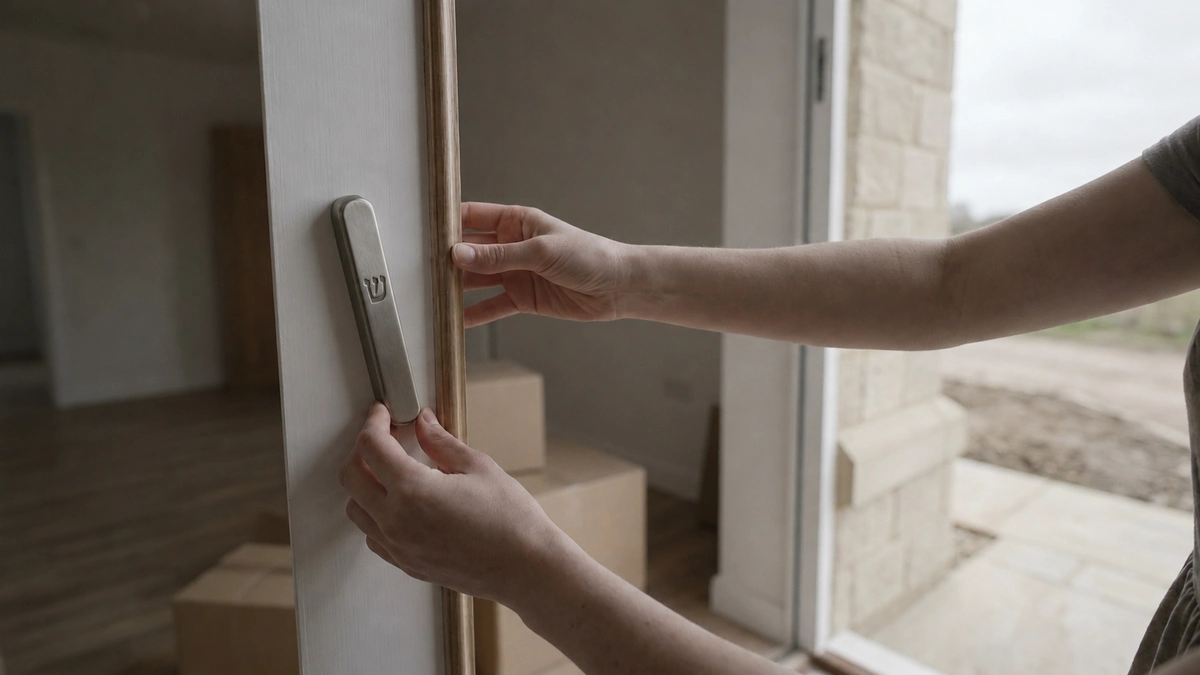
A mezuzah mitzvah is fulfilled only when the scroll is kosher and the mezuzah is properly placed. If the klaf is pasul, or if the mezuzah is not affixed as halachah requires, then the doorpost may display a mezuzah, but the mitzvah is not actually being performed.
That is why inspection matters. It is not just upkeep. It is how a family makes sure the mitzvah is still in place.
The Rambam, in Hilchot Tefillin, Mezuzah v'Sefer Torah 6:13, explains that mezuzah reminds a person of the Oneness of Hashem and awakens him from worldly distraction. But that reminder comes through a real kosher mezuzah, not just the appearance of one.
Proper placement matters for the same reason. The Shulchan Aruch, Yoreh Deah 289:2, teaches that the mezuzah should be placed where one encounters it upon entering. Mezuzah is not only about having a scroll on the doorway. It is about establishing the words of Shema on the home in the way halachah requires.
When a family checks its mezuzahs and confirms that they are kosher and properly placed, they are making sure the mitzvah is being fulfilled. This is really the baseline for ensuring proper continuity of the mitzvah.
Key Takeaways
Mezuzah inspection should be performed by a qualified sofer or trained magiah who is trained in the laws of STaM. A homeowner may notice visible deterioration, but any real ruling on halachic validity requires expertise. The obligation to check mezuzahs follows the schedule established in the Gemara and codified in the Shulchan Aruch. Mezuzahs exposed to outdoor conditions, moisture, heat, or disaster require especially prompt professional attention. A mezuzah found to be pasul must be replaced or properly repaired by a qualified sofer, because an invalid mezuzah does not fulfill the mitzvah.
A Word About Kosher Mezuzah
At Kosher Mezuzah, we take the integrity of this mitzvah seriously from the very beginning. Every mezuzah scroll we provide is written by a qualified sofer and reviewed by a trained magiah, and because we work with OU-endorsed processes, you can verify the provenance of your scroll through our QR-based traceability system. We believe that transparency is not a luxury. It is part of fulfilling the mitzvah with confidence.
We also understand that mezuzahs already hanging in your home may need attention. Whether you purchased your scrolls from us or elsewhere, we are glad to help you navigate the inspection process, including connecting you with a qualified magiah, explaining what to expect, and helping you understand whether a scroll that has been flagged needs repair or replacement. The mitzvah of mezuzah is precious, and we want every Jewish home to fulfill it truly.
If you have questions about the status of your mezuzahs or need guidance on inspection, contact us at Kosher Mezuzah. We are here to help you fulfill this mitzvah with the care and clarity it deserves. May your home be a place of Torah, shalom, and the enduring brachah of Hashem's presence on your doorposts.

.svg)
Bring a true Kosher Mezuzah into your home
Fulfill the mitzvah with confidence, beauty, and meaning.
Buy a Mezuzah