

Signs Your Mezuzah Needs Checking (Before It Becomes Invalid)
The mezuzah on your doorpost is a living mitzvah, one that requires a kosher scroll inside to fulfill the obligation at all. Many people are unaware that a mezuzah can become pasul over time, even one that was completely kosher when first affixed. Knowing the mezuzah damage signs that call for inspection is not just a matter of practical concern; it is part of caring properly for this precious mitzvah. In this text, we will walk through the signs that a mezuzah may need to be checked, the halachic framework for that checking, and the practical steps every Jewish homeowner should take.
Mezuzah Damage Signs to Look Out For
Mezuzah damage is not always dramatic or obvious. A mezuzah scroll can become pasul without a cracked mezuzah case of fading mezuzah ink signs that are visible from the outside. That is why recognizing the conditions and circumstances that put a mezuzah at risk is essential. If you notice any of the warning signs described below, have your mezuzah checked by a qualified magiah or sofer without delay. Waiting too long for when to inspect a mezuzah can mean that a mezuzah has gone unfit for use without anyone realizing it.
When to Inspect a Mezuzah: What the Halacha Requires
The Shulchan Aruch brings down a ruling from the Gemara, which states that a private mezuzah is checked twice every seven years and a public one twice in fifty years (Shulchan Arukh, Yoreh De'ah 291). Rambam likewise explains that a mezuzah must be checked from time to time lest the parchment tear or letters become erased, because mezuzot are fixed in places where deterioration can occur (Mishneh Torah, Hilchot Tefillin uMezuzah, chapter 5).
Aruch HaShulchan emphasizes that one should be careful about this checking, noting that when mezuzot are examined, many are found to be invalid (Arukh HaShulchan, Yoreh De'ah 291:1). In other words, checking is not merely technical maintenance. It is part of making sure the mitzvah is actually being fulfilled with a kosher mezuzah. Mezuzah inspection services that involve a trained and qualified magiah are the appropriate vehicle for fulfilling this obligation properly.
Mezuzah Inspection Signs: Physical Signs That Demand Immediate Attention
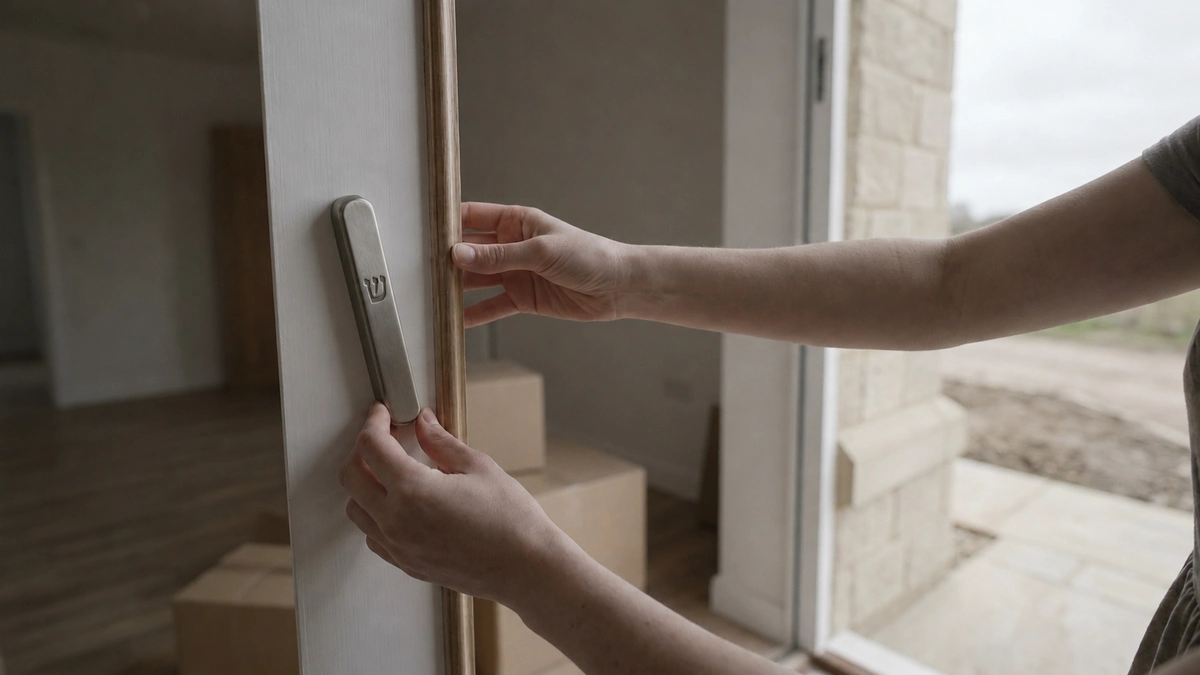
A cracked mezuzah case is one of the most common and overlooked warning signs. The case itself is not the mitzvah, but it protects the klaf inside. If the case is cracked, loose, or no longer sealed well, the mezuzah should be checked promptly. Exposure to humidity, heat, insects, and sunlight can damage the parchment or letters over time.
Fading ink is another serious concern. If letters crack, fade, or lose their proper form, the mezuzah may become pasul. Sacred texts such as mezuzot must be written carefully and remain intact for use, so visible deterioration is never something to ignore.
Exposure to weather is a significant risk factor, particularly for mezuzos affixed on outdoor doorposts. Mezuzah weather damage, caused by rain, snow, direct sun, and temperature changes, is one of the leading causes of ink degradation and klaf deterioration. Even a well-sealed case is not always sufficient protection over years of exposure. Proper outdoor mezuzah care includes periodic visual inspection of the case and scheduled checking of the scroll. For that reason, mezuzot in exposed areas should be watched more carefully for mezuzah damage warning signs and checked when there is reason for concern.
Circumstantial Signs That Also Require Action
Some warning signs are not physical at all; they are situational. A mezuzah that has been in place for years without inspection should be checked even if it looks fine from the outside. The halachic obligation to check exists precisely because exterior appearance does not guarantee that the scroll inside remains kosher.
A mezuzah in a moisture-prone area, such as a basement entry or place exposed to dampness, deserves added attention. Likewise, a mezuzah that has been through a flood, leak, fire, renovation, or other household disruption should be checked promptly rather than left in place on assumption.
Damaged mezuzah after disaster scenarios are unfortunately common, and in such cases, checking should not wait for the scheduled interval. The obligation to check is accelerated whenever conditions suggest increased risk of damage.
These are practical warning signs, not merely cosmetic ones. When conditions suggest increased risk, it is wise to have the mezuzah checked sooner rather than later.
A Common Mistake: Trusting the Outside
One of the most frequent errors is assuming that if the mezuzah case looks fine, the scroll inside must also be fine. That is not so. A mezuzah can become invalid without any fading mezuzah ink signs or visible exterior damage. The case may remain attached and intact while the writing inside has already deteriorated.
That is why halacha requires periodic checking rather than relying on appearances alone. The outside of the mezuzah can look perfectly normal while the actual mitzvah object inside is no longer fit for use. This is discussed in depth in the halachic concept of a mezuzah becoming invalid without visible damage, and it is one of the most important things for every homeowner to understand.
The halacha does not permit us to assume. It requires us to check. A case that is firmly attached and visually intact gives no guarantee of what is happening on the klaf inside, particularly if years have passed or the mezuzah has been exposed to challenging conditions.
What Happens When a Scroll Is Found to Be Pasul
When a qualified magiah examines a mezuzah and finds a problem, the next question is whether the scroll can be repaired or must be replaced. In some cases, a sofer may be able to correct specific issues. In other cases, the damage is too extensive and replacement is necessary. Understanding the difference between mezuzah repair vs. replacement helps families respond correctly when a problem is identified. The key practical point is that once a problem is discovered, it should be addressed promptly so that the doorway is once again protected by a kosher mezuzah in the halachic sense.
The Importance of Routine Mezuzah Inspection
Rambam writes that a person must be careful with the mitzvah of mezuzah because it is a constant obligation. Each time a person enters or leaves, the mezuzah reminds him of the unity of Hashem, awakens him from spiritual distraction, and returns him to a more upright frame of mind (Mishneh Torah, Hilchot Tefillin uMezuzah, chapter 6).
That perspective helps explain why checking matters. A mezuzah is not meant to be treated as a decorative object or taken for granted. Caring for it, checking it, and making sure it remains kosher are part of honoring the mitzvah itself.
About Kosher Mezuzah
At Kosher Mezuzah, every scroll we offer is written by a G-d-fearing sofer and examined by a trained magiah. We are proud to work under the supervision of the Orthodox Union, one of the most trusted halachic authorities in the world, to ensure that our scrolls meet rigorous standards of kashrus. Every mezuzah comes with documentation identifying the sofer who wrote it and the magiah who checked it, so you know exactly what is on your doorpost.
We understand that checking a mezuzah requires more than pulling it off the doorpost. It requires access to someone qualified, and confidence that the replacement, if needed, will meet the same high standard as the original. That is what we are here to provide. We are here to help you take the right next step in fulfilling this mitzvah properly.


.svg)
Bring a true Kosher Mezuzah into your home
Fulfill the mitzvah with confidence, beauty, and meaning.
Buy a Mezuzah