

Mezuzah Invalid Without Damage: Can a Scroll Become Pasul on Its Own?
A mezuzah scroll can become invalid without any visible damage — and many Jewish families do not realize this until a sofer (trained checker) examines the parchment and finds a hidden invalidation.
This is one of the most important and least understood aspects of the mitzvah. A scroll that looks intact on the outside, sealed in its case and hanging properly on the doorpost, may be entirely and silently pasul (halachically invalid) on the inside.
Understanding why a mezuzah can fail without any outward sign is a matter of properly fulfilling one of the most constant mitzvos in the Torah, the mitzvah that guards the sanctity of our homes and renews our connection to Hashem at every moment we pass through the door. Kosher Mezuzah is dedicated to ensuring the proper fulfillment of this mitzvah. If you have questions about a scroll's kashrut, we welcome you to reach out to Kosher Mezuzah for guidance from a qualified sofer.
Key Takeaways
- A mezuzah can become halachically invalid even with no visible external damage; subtle deterioration of the ink or parchment can render the scroll pasul entirely out of sight.
- Shulchan Aruch (Yoreh De’ah 291:1) rules that a private mezuzah should be checked twice in seven years. In practice this inspection is done by a qualified sofer or magiah, making regular checking a halachic responsibility rather than just an extra precaution.
- Environmental factors like humidity, heat, condensation, and direct sunlight all accelerate deterioration of the scroll and its ink.
- Only a trained sofer or magiah using proper lighting and magnification can reliably detect hidden invalidations such as hairline ink cracks, faded letters, or unintended connections between letters.
- A mezuzah that has quietly become invalid is a silent failure of the mitzvah: certification at the time of purchase does not guarantee permanent validity, and ongoing checking is essential throughout the scroll’s life.
- Properly caring for the mitzvah of mezuzah means treating it as an ongoing responsibility — regular professional inspection, high‑quality materials, and purchasing only from verified sofrim are all part of fulfilling it correctly.
Can a Mezuzah Become Invalid Without Damage?
Yes, a mezuzah can become invalid, pasul, without any visible physical damage to the case or even to the parchment surface. This is the nature of the reality that every homeowner must understand clearly. The internal mezuzah invalidation happens quietly, slowly, over months or years, and the scroll gives no outward sign. The ink cracks. Letters fade or merge. The klaf (parchment) contracts slightly, and with changes in humidity and temperature, causing letters to split or connect in ways that alter their tzurat ha'ot (proper letter form). A mezuzah that was fully kosher the day it was hung may no longer be valid today, not because anyone neglected it, but because time and environment do their work invisibly. For the full discussion, read Does Mezuzah Ink Fade Over Time? (Even Without Water Damage).
This is why Shulchan Aruch (Yoreh De’ah 291:1) rules that a private mezuzah should be checked twice in seven years in normal circumstances. When there is particular concern (for example, unusual moisture, heat, or damage), many poskim advise checking more frequently. The obligation to check is treated as a halachic responsibility, not merely an extra precaution. A homeowner who never checks his mezuzah may be living for years in a home without a valid mitzvah, unaware that the obligation has not been fulfilled due to this interior deterioration. If you have questions about what checking involves or how to arrange it, you are welcome to reach out to Kosher Mezuzah for guidance from a qualified sofer.
The Halachic Basis: What the Sources Say
The Gemara in Maseches Menachos and related discussions throughout the Rishonim establish that the mezuzah must be written and maintained with precision. Halachic sources governing STaM – especially the simanim in Shulchan Aruch Yoreh De’ah that deal with mezuzah (such as 288) together with Rambam’s discussion in Hilchos Mezuzah – lay out detailed requirements for the klaf, the ink, and the tzurat ha’ot of each letter. Any letter that loses its proper form, whether through fading, cracking, merging with a neighboring letter, or becoming thick in a place that should be narrow, renders the entire scroll pasul from the moment that letter's invalidation first occurred. Whether a letter cracked due to age or was never properly formed by the sofer in the first place, the result is halacha the same: the scroll is pasul.
The halachic requirements for the writing and form of the letters in a mezuzah and Sefer Torah are laid out in the simanim of Shulchan Aruch Yoreh De’ah that govern STaM, especially 288 for mezuzah, together with parallel discussions in the Rishonim and Acharonim. These sources – together with Mishnah Berurah and later poskim regarding Sefer Torah and tefillin – make clear that even a single letter rendered invalid by deterioration can disqualify the entire scroll, and that the scroll must be halachically valid at the time it is being used; a damaged or invalid mezuzah does not fulfill the mitzvah. This is not simply a rabbinic precaution. It flows directly from the obligation to actively maintain the mitzvah of mezuzah, not merely to hang a scroll and forget it. You can deepen your understanding of these standards through our essential mezuzah knowledge resources.
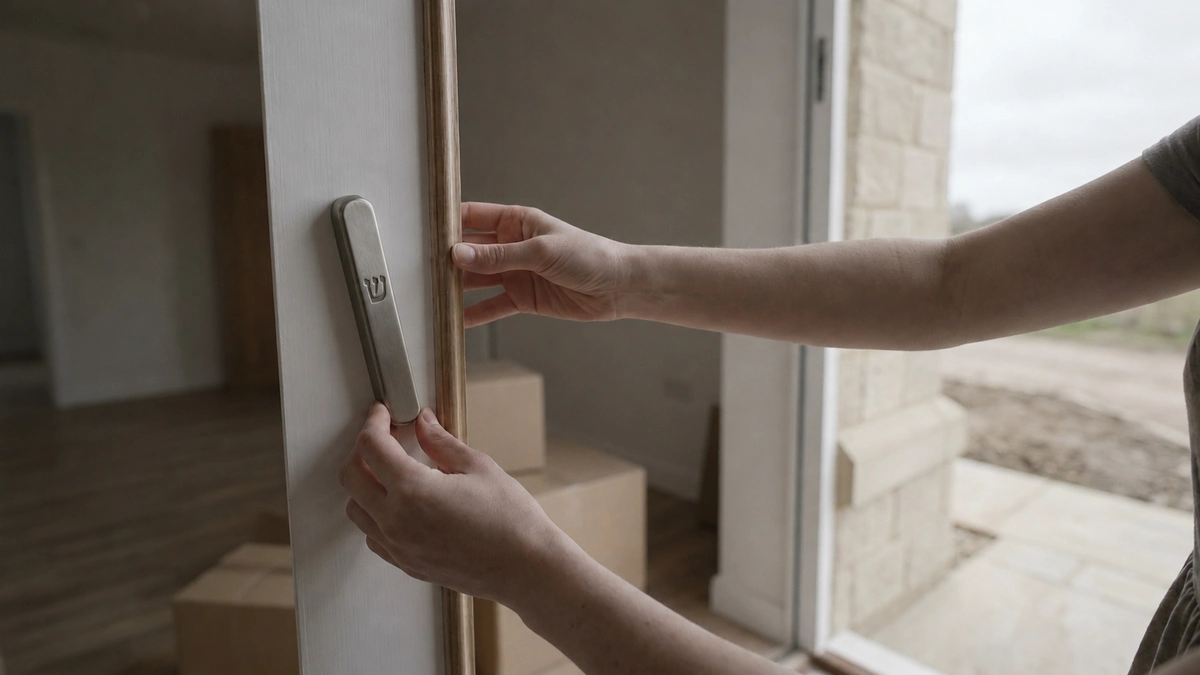
The sources also address why proper affixing is itself part of the mitzvah. Chazal rule that a mezuzah that is treated like a hanging object and not fixed to the doorpost does not fulfill the commandment. Rambam (Hilchos Mezuzah, chapter 6) codifies that the mezuzah must be affixed to the doorpost itself, and the blessing we recite is “likboa mezuzah” — to affix a mezuzah — underscoring that proper, permanent attachment is part of the mitzvah. Rishonim emphasize that the mezuzah must be genuinely fixed to the doorpost, and the wording of the berachah highlights that this act of proper affixing is itself part of the commandment. A scroll that has loosened from the doorpost or was never affixed correctly may be invalid, apart from any question about the writing on the klaf.
Practical Application: What Checking Requires and When
Because a mezuzah is constantly exposed to air, temperature, and humidity, it can quietly become invalid over time even if nothing dramatic ever happens to the case or doorway. The ink can dry and crack, letters can fade, or two letters can begin to touch. Halachah therefore does not treat a mezuzah as a one‑time installation, but as something that needs ongoing care so that the scroll inside remains fully kosher.
The Shulchan Aruch’s ruling that mezuzahs in a home should be checked twice in seven years sets a minimum standard. Many poskim advise checking more frequently in homes located in difficult climates: homes with high humidity, significant seasonal temperature variation, homes exposed to moisture, heat, or direct sunlight. These environmental factors accelerate the deterioration of both the klaf and the ink, meaning in any household where a scroll’s check has been overdue for years, there is real halachic cause for concern.
Practically, checking a mezuzah is not something a homeowner can do on their own by unrolling the scroll and examining it with the naked eye. Instead, the scroll should be carefully removed from the case without scratching or bending it, wrapped or placed in a protective sleeve, and brought (or shipped) to a qualified sofer or trained magiah. Under good lighting and magnification, he inspects each line and letter against the halachic standards for tzurat ha’ot, making sure no letters have cracked, broken, faded, or begun to touch in a way that invalidates the scroll. He also examines the spacing and connections between letters and words to ensure the mezuzah remains a single, continuous, properly formed unit of kedushah (holiness), and that the names of Hashem are intact and written correctly.
Since mezuzah is a constant mitzvah on the home, not a one‑time detail of the doorway, the scroll inside has to remain kosher at all times, and its quality and clarity matter. In the spirit of “zeh Keli ve’anveihu” — beautifying mitzvot through high‑quality, carefully written mitzvah objects — our sages stress choosing a mezuzah written on proper klaf by a trained sofer and checked by a trained magiah at the recommended intervals. Kosher Mezuzah is built around that standard: every scroll we sell is written and reviewed to these halachic requirements, so you can choose from our OU‑endorsed, fully verified mezuzah scrolls in our mezuzah shop.
For more resources and perspectives that connect the practical and spiritual dimensions of this mitzvah, visit our mezuzah inspiration and insights section. We discuss the risks of purchasing unverified or unchecked scrolls in our article on why buying a mezuzah from unverified sources carries real risk. You can learn more about why clear mezuzah script matters and the difference between Ashkenaz, Sefardi, and Arizal mezuzahs.
If you have questions about scroll deterioration, checking schedules, or the kashrut of your current mezuzahs, the Kosher Mezuzah team is available through the contact form at kmezuzah.com/contact.
May the mitzvah of mezuzah bring blessings and protection to your home, and may every scroll on your doorpost remain genuinely kosher, regularly checked, and worthy of the declaration it carries.


.svg)
Bring a true Kosher Mezuzah into your home
Fulfill the mitzvah with confidence, beauty, and meaning.
Buy a Mezuzah