

Mezuzah Provenance: Why Knowing the Source of Your Scroll Matters
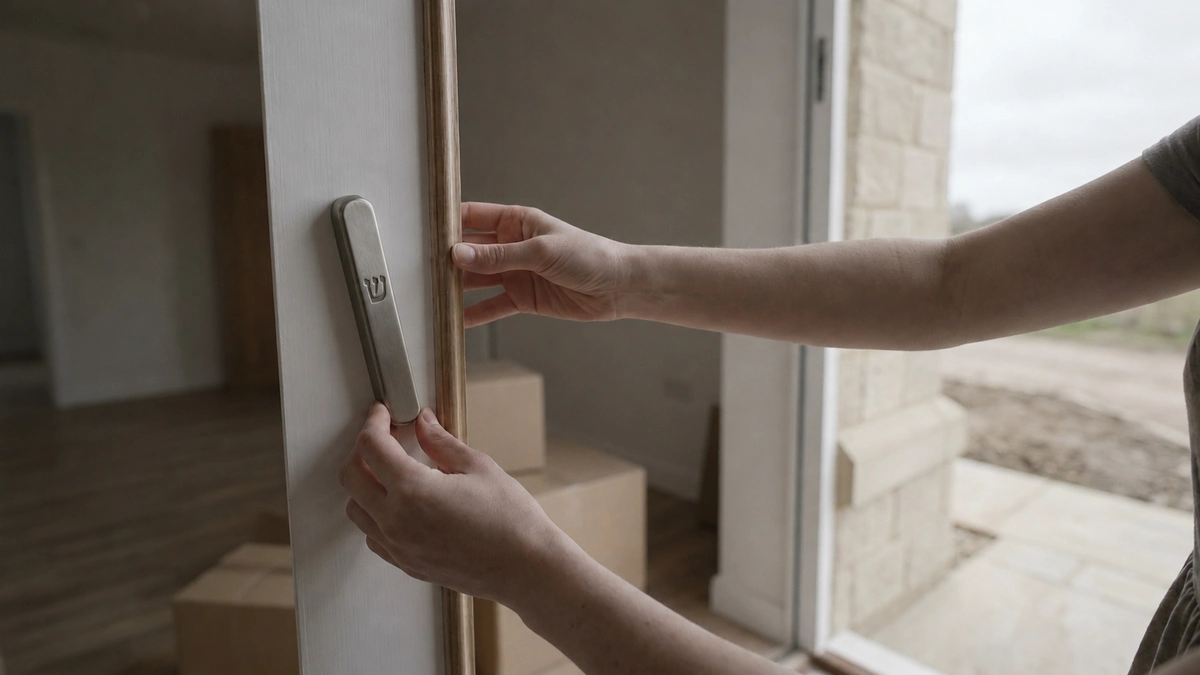
When you affix a mezuzah to your doorpost, the traceable origin of that scroll — who wrote it, what materials were used, and how it was verified — determines whether you can responsibly rely on that scroll as genuinely kosher and thus fulfill the mitzvah properly.
. We cover this in more depth in Can You Fulfill the Mitzvah of Mezuzah Without Knowing It?.
The Rambam writes in Hilchos Mezuzah (6:13) that every time a person enters and exits, he encounters the unity of the Name of HaKadosh Baruch Hu and remembers His love. But that encounter depends entirely on one thing: the mezuzah must be genuinely kosher. And that question, ‘Is this scroll truly kosher?’, cannot responsibly be answered today without serious attention to its provenance — meaning where it came from, who wrote it, and how it was verified.
Mezuzah provenance is not a technical nicety; it’s the foundation of proper fulfillment of the mitzvah. For over 40 years, Kosher Mezuzah has provided handwritten mezuzah scrolls written in Eretz Yisrael to the highest standards. With our OU endorsement, you can fulfill the mitzvah of mezuzah with confidence. If you have questions about a scroll you own or are considering purchasing, we welcome you to reach out to us directly for guidance.
Key Takeaways
- Mezuzah provenance — knowing who wrote the scroll, what materials were used, and how it was verified — is the foundation of fulfilling the mitzvah of mezuzah validity
- A mezuzah scroll is only kosher if written by a qualified, lishmah (intent for the sake of the mitzvah) Hashem-fearing sofer with proper intention; without a traceable source, none of these requirements can be confirmed
- Before purchasing any scroll, buyers should verify the sofer's credentials, the halachic quality of the klaf and ink, post-writing inspection by a trained magiah, and, wherever possible, recognized third-party certification that documents these halachic requirements have been met
- Price and script style do not determine kashrut; a moderately priced scroll with verified mezuzah provenance is far more reliable than an expensive one from an untraceable source
- Third-party certification from a trusted body like the Orthodox Union provides documented assurance that the sofer, materials, and inspection process all meet the required halachic standard
Why Provenance Matters in Mezuzah Buying
Mezuzah provenance, the traceable origin of a scroll from sofer (scribe) to your doorpost, determines whether you can responsibly rely on that scroll as genuinely kosher and thus fulfill the mitzvah properly.
The Halachic Ruling on Source and Integrity
Halachic authorities rule that a mezuzah scroll must be written by a qualified, God‑fearing sofer, properly trained in the laws of STaM (Sefer Torah, Tefillin, and Mezuzos). The Shulchan Aruch (Yoreh De’ah 281:3), in the context of a Sefer Torah, disqualifies sacred texts written by a heretic, non‑Jew, or other invalid scribes, and these standards are applied by poskim to mezuzah as well. A scroll written without proper intent, without the correct materials, or by someone who is not qualified is pasul (invalid), no matter how it appears from the outside.
When you cannot trace a scroll back to a known and trustworthy sofer, you cannot responsibly verify that all the halachic requirements have been met. From a halachic and yiras Shamayim (fear of G-d) perspective, provenance becomes critical before you rely on that scroll for the mitzvah.
Halachic literature raises the question of whether one may rely on an unknown craftsman when the holiness of a sacred object depends on his integrity and intent. When the integrity of a sacred object depends on the identity and intent of its maker, that identity must be verifiable. Without provenance, it becomes difficult to rule out disqualifications such as improper intent, an unqualified scribe, or other issues that could invalidate the scroll.
Why Source Verification Is a Practical Necessity
The mezuzah market presents a genuine challenge for the observant buyer. Scrolls are sold through many channels: local Judaica stores, online marketplaces, well-intentioned gift givers, and in many cases, the buyer has no reliable information about who wrote the scroll, where it was written, or whether it was checked by a qualified magiah (inspector). Buying a mezuzah from an unverified marketplace can introduce serious kashrut risks, but the core issue is always the same: without a verified chain of custody, the buyer cannot confirm the scroll is kosher.
Mezuzah source verification means being able to answer several specific questions about any scroll: Who is the sofer, and is he qualified and certified? What klaf (parchment) and die (ink) were used, and do they meet halachic standards? Was the scroll checked by a qualified magiah after writing? And who certified the final product? These questions are the minimum a buyer should expect to answer before relying on a scroll to fulfill the mitzvah.
At Kosher Mezuzah, every scroll comes with this information. Our mezuzah scrolls from our OU Endorsed process handwritten in Israel come with a unique QR code that provides verifiable details about the sofer, the materials, and the checking process, because we believe the buyer deserves to know exactly what they are affixing to their doorpost.
You can explore our full FAQ on kosher mezuzah standards for more detail on what certification entails.
What a Traceable Mezuzah Scroll Actually Provides
A traceable mezuzah scroll gives the buyer genuine confidence, not just a sense of it. When a scroll carries a QR code or certification number that links to the sofer's name, the date of writing, the materials used, and the magiah who checked it, the buyer can verify each element independently. This is what a QR code on your mezuzah actually communicates: not just a marketing feature, but a halachic assurance backed by documentation.
The Orthodox Union, whose certification is among the most trusted in the world of kashrut, extends its endorsement to specific vendors who meet rigorous standards of verification and accountability. When a mezuzah carries OU endorsement, a recognized certification body has reviewed the production process, the sofer's qualifications, the materials, the checking protocols, and found them to meet the required standard. Understanding why the OU endorses Kosher Mezuzah helps illustrate why third-party certification is so meaningful in this area.
The Deeper Meaning of Knowing Your Scroll's Source
The Rambam's words in Hilchos Mezuzah (6:13) are worth reading carefully. He writes that every time a person enters and exits, he will encounter the unity of the Name of HaKadosh Baruch Hu and remember His love. This encounter is not merely symbolic. It is a real, ongoing fulfillment of the mitzvah, but only if the mezuzah is genuinely kosher. Chazal and the Rishonim describe mezuzah as a mitzvah of extraordinary continuity: as long as the mezuzah is properly affixed, the mitzvah continues. Rambam (Hilchos Mezuzah 6:13) emphasizes that it is a constant obligation, every time a person enters and exits his home. Every moment of that continuous fulfillment depends on the scroll's integrity.
Halachic authorities note that properly fulfilling mezuzah combines multiple positive commandments and explicitly mentions the love of Hashem, as reflected in the Rambam’s description of the mitzvah (Hilchos Mezuzah 6:13). That zechus (merit) is real and precious. Preserving it requires that we take the scroll's ongoing provenance seriously. Knowing the sofer's yiras Shamayim (fear of Heaven), his sources of qualification, the quality of the klaf and die, all of these are part of what makes the scroll a vessel for that zechus. When we know the source of our scroll, we know that the mitzvah we are fulfilling is whole. You can learn more about our mission and standards on the Kosher Mezuzah about page.
The mitzvah of mezuzah is precious. Fulfilling it properly, with a scroll whose provenance is known, verified, and certified, is the hishtadlus (responsible effort) that the mitzvah demands of us.
Fulfill the Mitzvah With Confidence
Mezuzah provenance is the foundation of valid fulfillment. A kosher mezuzah scroll requires a qualified, Hashem-fearing sofer, proper materials, and post-writing inspection by a qualified magiah; third-party certification is a powerful way to document that these halachic requirements have been met but does not replace them. Without knowing the source of a scroll, none of these requirements can be confirmed. Buyers should always ask for the sofer's name and credentials, the materials used, documentation of checking, and the certifying body before relying on any scroll.
Kosher Mezuzah is dedicated to ensuring the proper fulfillment of the mitzvah of mezuzah, and every scroll we provide comes with full documentation of its provenance. If you are ready to fulfill the mitzvah with confidence, you are welcome to browse our verified scrolls and order online.
May the mitzvah of mezuzah bring blessings and protection to your home.


.svg)
Bring a true Kosher Mezuzah into your home
Fulfill the mitzvah with confidence, beauty, and meaning.
Buy a Mezuzah