

Mezuzah Size Guide: What Size Scroll and Case Do You Actually Need?
Choosing the right mezuzah size is one of the most practical questions a Jew faces when setting up a home. Whether you are moving into a new apartment, buying mezuzahs as a gift, or replacing ones that have been on your doorposts for years, the question of size matters, both halachically and practically.
This guide will walk you through the standard mezuzah sizes, how to match the mezuzah case size to your scroll, and what size works for each type of doorway in your home.
Mezuzah Scroll Sizes Explained: What Size Do You Need?
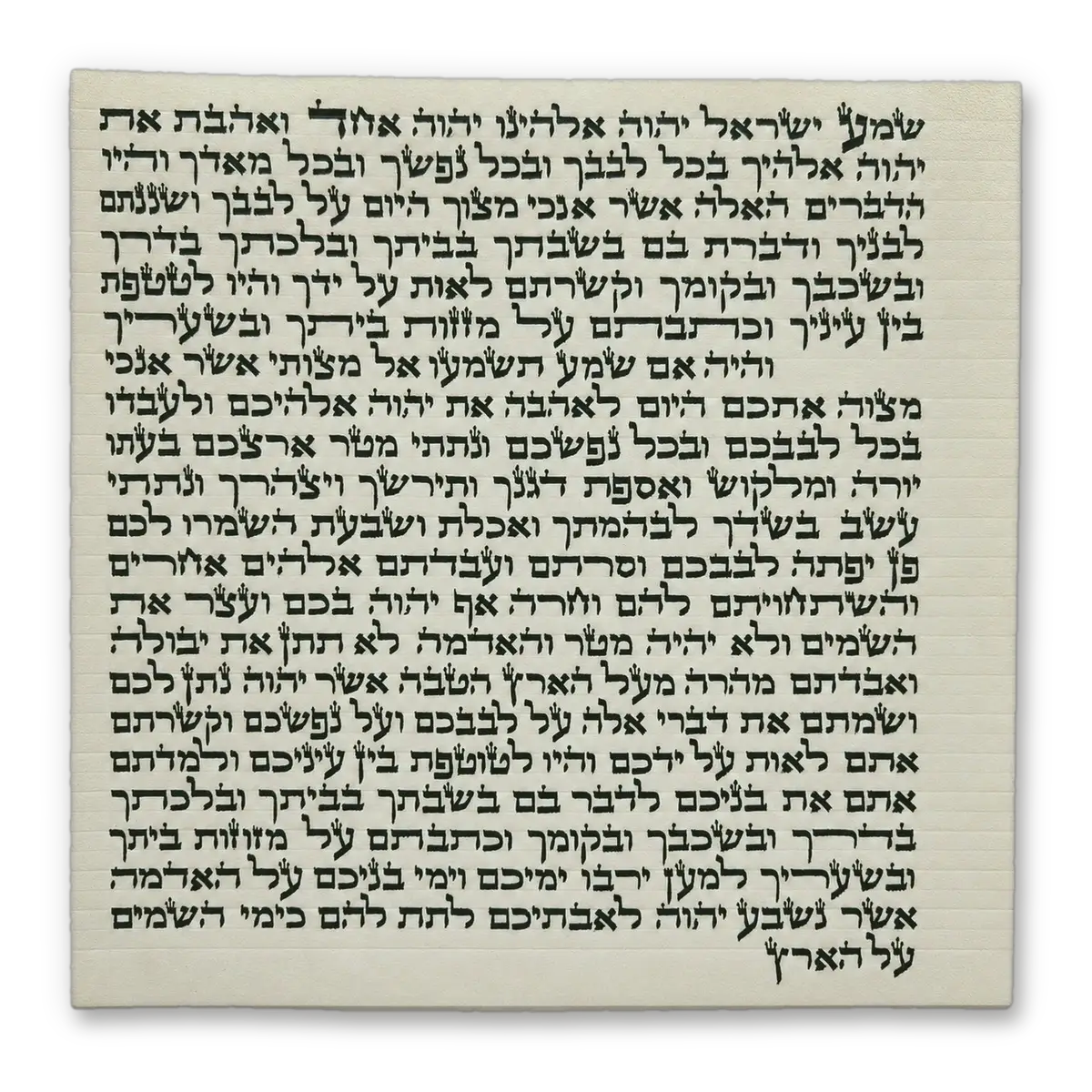
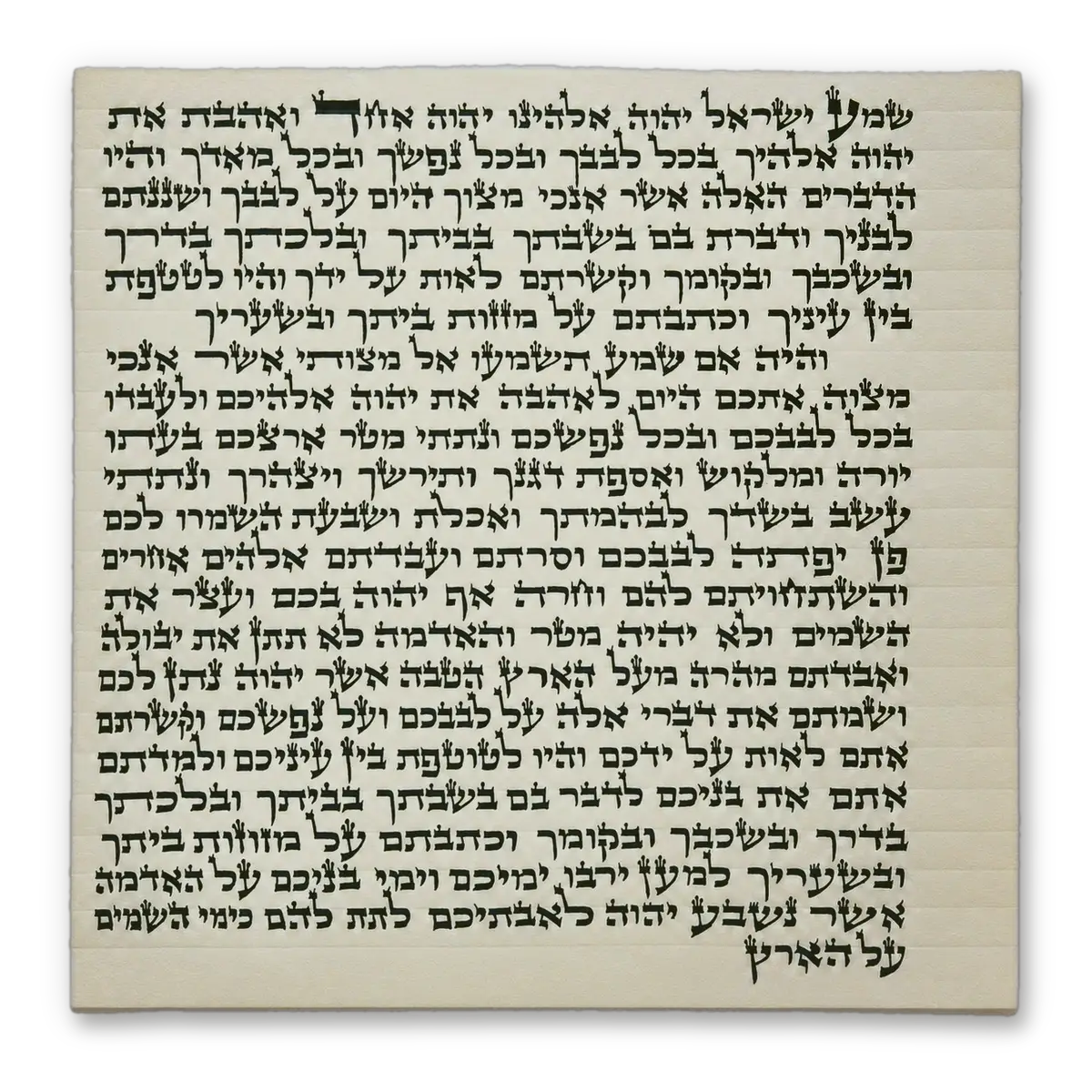
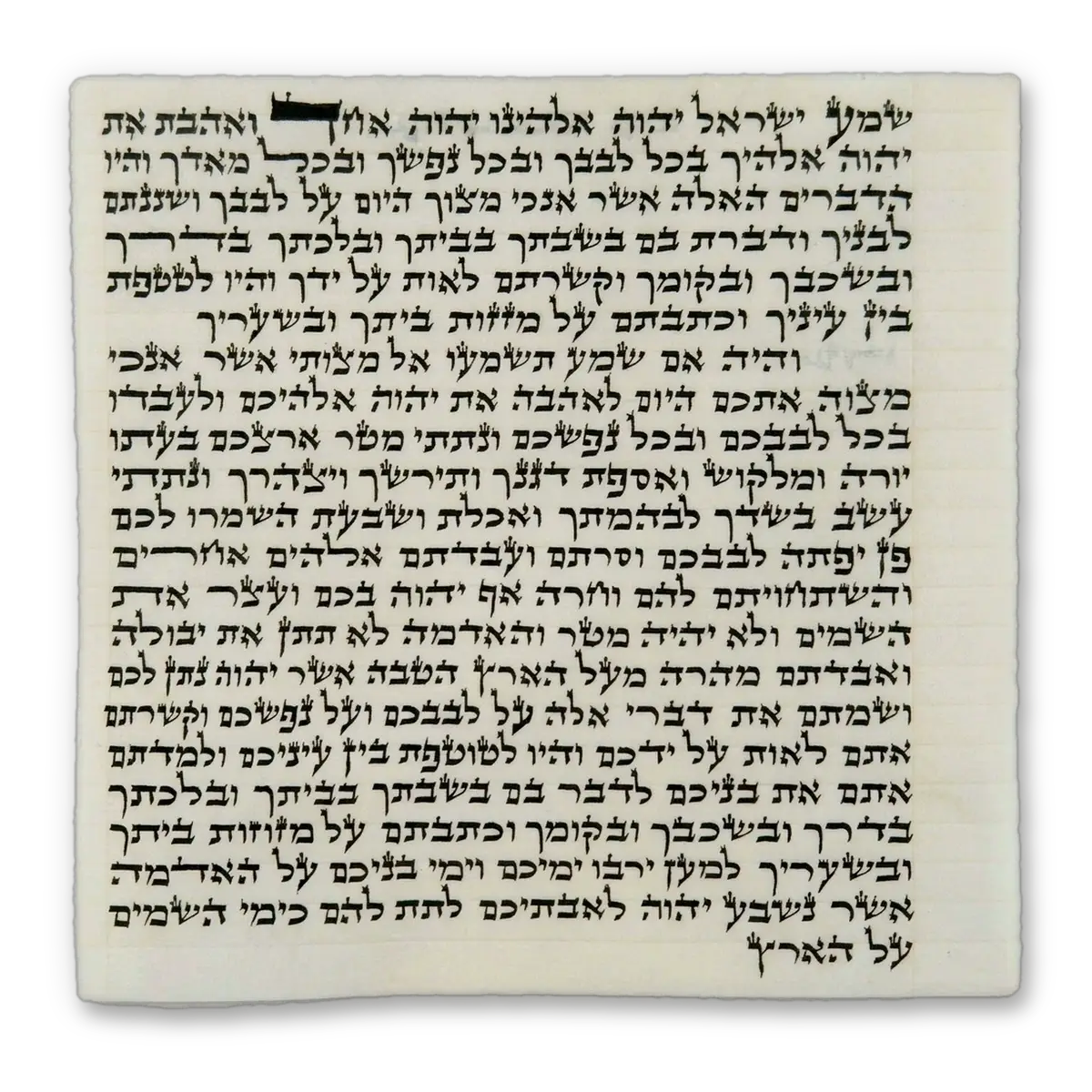
The mezuzah size guide begins with one foundational rule: the scroll must be kosher according to halacha - which governs how it is written, not how large it is (see what actually makes a mezuzah scroll kosher), and the case must fit the scroll, not the other way around. The most common standard mezuzah scroll size is 12 cm (approximately 4.7 inches), and this fits the majority of doorways in a typical home. If you are not sure where to start, a 12 cm scroll in a properly fitted case is a reliable choice for interior doorways. For larger or more prominent doors, such as a front entrance, a 15 cm scroll is often preferred as an expression of hiddur mitzvah (beautifying the mitzvah). You can browse kosher mezuzah scrolls by size to find the right fit before purchasing.
Choose Your Mezuzah Scroll
Each scroll is handwritten by a sofer on kosher parchment, following your minhag.
What the Halacha Actually Requires
The Shulchan Aruch does not specify a required length for the mezuzah scroll in centimeters. Rather, the requirement is that the scroll be written properly on kosher klaf (parchment), with all letters intact, and that it be affixed in a doorway that meets the halachic definition of a doorway, two doorposts and a lintel.
Halacha does not set a standard mezuzah size in centimeters. The core requirements are that the mezuzah be written properly on kosher klaf and placed in the correct area of the doorway. In practice, most doorposts can accommodate a mezuzah by matching the klaf and case to the available width. Common retail klaf sizes include 10 cm, 12 cm, and 15 cm, with smaller options available for tighter spaces. The practical question is usually not whether a mezuzah can fit at all, but which kosher size and case profile will fit cleanly and securely.
Scroll Sizes and What They Mean
Mezuzah scrolls are typically sold in sizes measured in centimeters, referring to the height of the klaf (parchment). Common sizes include 10 cm, 12 cm, 15 cm, and occasionally larger. The 10 cm scroll is generally used for smaller interior doorways, closets, or in environments where the intention is for the mezuzah to be less obvious. The 12 cm scroll is considered the standard size for most rooms in a home. The 15 cm scroll is used for main entrances, synagogue doors, or anywhere the owner wishes to honor the mitzvah with a larger, more mehudar (beautiful) scroll.
It is important to understand that a larger scroll is not automatically more kosher than a smaller one. A perfectly written 10 cm scroll is just as kosher as a beautifully written 15 cm scroll, provided both meet the requirements of the sofer's craft. At the same time, writing beautifully in a smaller size is generally more demanding, so a small mezuzah with fine, clear ksav can reflect greater precision and skill on the part of the sofer. The difference, then, is not one of basic kashrus, but of hiddur — beautifying the mitzvah — and of practical fit within a given doorway.
How to Match the Scroll to the Case
One of the most common errors people make when purchasing a mezuzah is buying the case first and then trying to find a scroll to fit it. The correct approach is the reverse: determine the scroll size you need, and then find a case designed to hold that scroll. Cases are typically labeled by the scroll size they accommodate. A case labeled "12 cm" should hold a 12 cm scroll with room for the scroll to sit properly, not jammed or folded.
When in doubt about which size scroll fits a given case, contact the seller directly and ask. At Kosher Mezuzah, we are happy to help you match scroll to case before you purchase, reach out to us through our contact page and we will guide you. A mismatch between scroll and case is more common than people realize, and it is worth a quick question to avoid the problem entirely.
Sizing for Different Doorways in Your Home
Not every doorway in your home needs the same mezuzah size, but halacha does not assign one mandatory klaf size to each type of doorway. The main requirement is that the mezuzah be kosher and that it be placed correctly on the doorpost.
In practice, many homeowners use a standard-size klaf for most interior doors and choose a larger one for the main entrance as an act of hiddur mitzvah. That is a preference, not a separate halachic rule. Common sizes sold on the market include 10 cm, 12 cm, and 15 cm. For most standard interior doorways, 10 cm or 12 cm often fits comfortably. For a larger front entrance, some people prefer 12 cm or 15 cm, provided the mezuzah can still be positioned correctly. Smaller or narrower openings may require a smaller size simply for fit.
The more important halachic question is whether the doorway is obligated in a mezuzah at all. A room that does not contain the area of four amot by four amot is generally exempt - though a room with that area is obligated even if it is long and narrow, round, or irregular (Shulchan Aruch YD 286:13). Because modern measurements depend on which halachic shiur one follows, borderline spaces such as closets, pantries, small offices, and narrow rooms should be reviewed with a rabbi before deciding whether to affix a mezuzah with a blessing.
The Placement Rule and Why Size Affects It
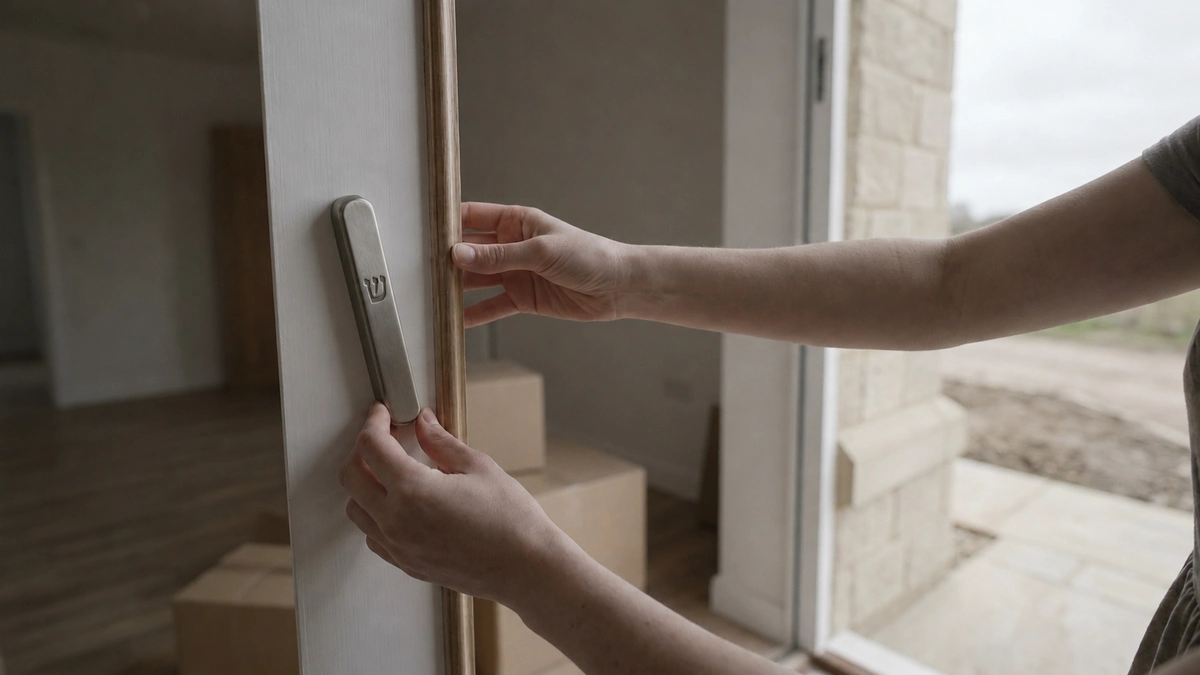
Halacha requires that the mezuzah be placed on the right side of the entrance, within the outer tefach of the doorway, and ideally at the beginning of the upper third of the doorpost. On a standard door frame of about 200 cm in height, that upper third begins at approximately 133 cm from the floor. If the mezuzah is placed higher than that point, it may still be valid, provided it remains at least one tefach below the lintel.
A longer mezuzah or case needs a little more planning before installation. When marking placement, make sure the mezuzah itself is positioned correctly within the upper third. On unusually tall doorways, practical placement can become more complex, and specific cases should be discussed with a competent rabbi.
The mezuzah should also be fixed within the outer tefach of the doorpost, meaning close to the outer edge of the entrance. If the doorpost is especially deep or wide, the exact application can become more complicated. In that case, it is better to ask a rabbi how to position it correctly than to rely on a generic measurement rule.
A Word on Hiddur Mitzvah, Beautifying the Mitzvah
The Gemara in Shabbat 133b teaches the principle of hiddur mitzvah from the verse "This is my God and I will glorify Him" in Shemot 15:2. The Gemara gives examples such as a beautiful sukkah, lulav, shofar, tzitzit, and Torah scroll. Although mezuzah is not listed there explicitly, the general principle supports choosing a mezuzah that is both kosher and well made.
That does not mean a person must buy the most expensive option on the market - though if sticker prices surprise you, see why mezuzah prices have gone up in recent years. The first obligation is to buy a kosher mezuzah: handwritten on klaf by a qualified sofer and properly checked. After that, beauty and presentation are enhancements. If budget forces a choice between a decorative case and a reliably kosher scroll, the scroll comes first.
Common Sizing Mistakes to Avoid
The most common mistake is choosing the decorative case first and the scroll second. The case is not the mitzvah. The klaf is. Start with a kosher scroll from a trusted source, and then choose a case that fits it properly and allows correct placement on the doorway.
A second common error is assuming that all 12 cm mezuzahs are the same. The length of the klaf tells you the size, not the quality of the writing, the kashrus of the materials, or whether the mezuzah has been checked by a competent magiah - here is how to verify your mezuzah is properly certified. Always buy from a source that can tell you who wrote the scroll, who checked it, and what materials were used.
A third mistake is choosing a case that does not really match the klaf inside it, so the scroll sits loosely or is poorly protected. Even when the mezuzah itself is kosher, a poor fit can lead to avoidable wear and handling problems over time.
About Kosher Mezuzah
At Kosher Mezuzah, every scroll we carry is written by a qualified sofer and checked by a trained magiah (halachic examiner) before it reaches your doorpost. We provide full traceability, you can see who wrote your scroll, who examined it, and what materials were used. Our process has been endorsed by the Orthodox Union, giving you the confidence of institutional oversight behind every purchase.
Proper fulfillment of the mitzvah of mezuzah depends on the kashrus of the scroll itself, and that requires more than a label. It requires knowing the chain of accountability from the sofer's hand to your doorpost. We also encourage every customer to have their mezuzahs checked regularly, halacha requires periodic inspection, and a scroll that was kosher when purchased may develop cracks or fading over time that affect its validity. If you have questions about sizing, scroll quality, or anything else related to fulfilling this mitzvah, we are here to help.
If you are ready to find the right mezuzah for your home, or if you have questions about sizing before you buy, please contact us. We will help you choose the scroll and case that fit your doorpost, your minhag (custom), and your desire to fulfill this precious mitzvah properly. Yehi ratzon milifnei Avinu shebashamayim, may it be the will of our Father in Heaven, that the mezuzot on your doorposts be a source of beracha for your home, and that everyone who passes them encounter the yichud Hashem and remember His love (Rambam, Hilchot Tefillin uMezuzah 6:13).



.svg)
Bring a true Kosher Mezuzah into your home
Fulfill the mitzvah with confidence, beauty, and meaning.
Buy a Mezuzah