

Moving a Mezuzah Blessing: Do You Need to Say One Again?
Whether a new blessing should be recited when moving a mezuzah depends on the circumstances: why it was removed, how long it was off the doorway, and whether it is being returned to the same place.
. For a related question, see Do Renters Need a Mezuzah Right Away When Moving In?. We cover this in more depth in Jersey City's Jewish Community Presents Mayor James Solomon With a Mezuzah Bless. For a related question, see A Blessing for Healing.
In many cases, when a mezuzah is taken down for inspection and returned the same day to the same doorpost, no new blessing is recited. But if the mezuzah was off the doorway until the next day, or if it fell on its own and must be re-affixed, many poskim require a new bracha. In situations that are less clear, such as moving into a home that already has mezuzot or shifting a mezuzah to a different doorway, a rav should be asked.
The Halachic Framework Behind the Ruling
The foundation of this discussion is the bracha itself. The blessing recited on a mezuzah is likboa mezuzah — to affix a mezuzah. In Shulchan Aruch, the bracha is tied to the act of fixing the mezuzah to the doorway, and the Rema adds that when several mezuzot are being affixed at once, one blessing can cover all of them.
That leads to the practical question: when a mezuzah is removed and then re-affixed, is that second act considered a continuation of the original kevi’ah, or is it treated as a new affixing that calls for a new bracha?
Later poskim discuss this directly. Pitchei Teshuva raises the question of a mezuzah that was removed for checking and then returned. Aruch HaShulchan writes that if the mezuzah was removed for inspection, found kosher, and returned the same day, no new bracha is recited. If it is re-affixed only on another day, he writes that a new bracha is recited.
If a mezuzah fell on its own, the discussion is stricter. Pitchei Teshuva writes that when a mezuzah falls by itself and is re-affixed, a bracha is required. Aruch HaShulchan writes similarly.
How This Applies in Real Life
Let us walk through the most common situations a frum household may encounter:
When you send your mezuzah for inspection. Mezuzot should be checked twice in seven years in a private home, and twice in fifty years for public mezuzot. If a mezuzah is removed for bedikah and returned promptly to the same doorway the same day, many poskim do not require a new bracha. If it is returned only the next day or later, many poskim require a new bracha when it is re-affixed. If the inspection will leave a doorway without a mezuzah for an extended period, ask a rav how to handle the interim arrangement and the bracha upon return.
When a mezuzah falls off the doorpost. This happens more often than people realize: a case loosens, a nail gives way, or the mezuzah is knocked down. In the sources reviewed here, when a mezuzah falls on its own and is then re-affixed, a new bracha is recited. Reviewing common mezuzah placement mistakes beforehand can help prevent these issues.
When you move to a new home that already has mezuzot. This is a genuine halachic dispute. Pitchei Teshuva cites Rabbi Akiva Eiger, who discusses whether the new resident should recite a bracha because for that person it is now a new mezuzah obligation in that home. Other poskim disagree and understand the bracha as having been instituted on the act of affixing itself. Because of that dispute, the practical guidance is to ask your rav. The question of who is responsible for mezuzah in a rental or purchased home with existing mezuzot is closely related to this issue.
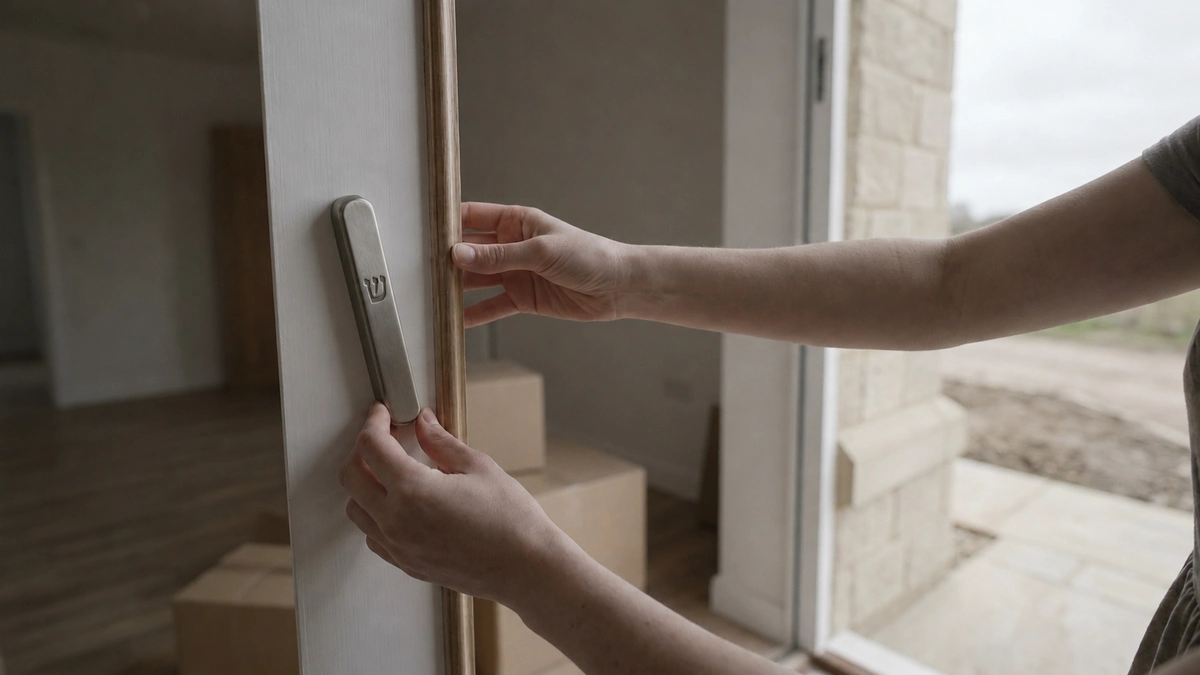
When painting or renovating. Many families remove mezuzot while repainting or repairing doorposts. The same framework applies here: if the mezuzah is returned to the same doorway the same day, many poskim do not require a new bracha; if it is re-affixed only the next day or later, many poskim require one. To review the full process of proper affixing, including the correct position and angle, our guide on how to install mezuzah provides step-by-step guidance.
When replacing a mezuzah with another mezuzah. If a mezuzah is being replaced with a different scroll or case, the practical details can affect the bracha, especially if the old mezuzah was removed for checking, found pasul, or is being changed for another reason. Because the exact ruling can vary by case, this is another situation where it is best to ask a competent rav.
For any situation that does not clearly fit one of these categories, a competent rav should be consulted. The halacha here is nuanced, and the goal is always the same: to recite the blessing when required and to avoid a bracha l’vatala when not.
A Deeper Look: Why the Blessing Matters
The mitzvah of mezuzah is rooted in the Torah paragraphs written inside the mezuzah itself: Shema and V’haya im Shamoa from Devarim 6 and 11. The mezuzah therefore stands at the entrance of the home as a constant reminder of Hashem’s Oneness and of our obligation to live by His mitzvot.
The bracha is not incidental. It marks the act of fulfilling that mitzvah through proper kevi’ah. Knowing when to recite the blessing, and when not to, is part of fulfilling the mitzvah correctly. Missing a required bracha is a real loss; saying one unnecessarily is also a serious concern.
For deeper reflection on the meaning of the mezuzah in our homes and lives, our mezuzah inspiration and stories section offers meaningful perspectives grounded in Torah sources.
Key Takeaway
A new blessing is not required in every case where a mezuzah is moved. When a mezuzah is removed for inspection and returned promptly to the same doorway that same day, many poskim do not require a new bracha. When it is re-affixed only on another day, or when it fell on its own, many poskim require one. In cases of doubt, such as moving into a home with existing mezuzot or replacing one mezuzah with another, the practical ruling should be confirmed with a rav.
The careful approach to this question reflects our respect for the mitzvah itself: a bracha said at the right moment, with the right kavanah, is a complete act of avodas Hashem. For a broader foundation in mezuzah halacha, our essential mezuzah knowledge center is a reliable starting point.
About Kosher Mezuzah
At Kosher Mezuzah, every mezuzah scroll we offer is written by a vetted sofer and reviewed by a qualified magiah (mezuzah examiner). Our process has received OU endorsement credit to the high standards we follow. We provide traceability from the sofer’s quill to your doorpost, including the name of the sofer, the name of the magiah, the date of writing, and an image of your actual scroll.
A mezuzah scroll that has never been checked, or that was written without proper halachic standards, cannot fulfill the mitzvah no matter how many times a blessing is recited. Before asking whether a new bracha is needed after repositioning or removal, it is worth ensuring that the scroll itself is kosher and has been examined within the proper time frame. Knowing that your mezuzah is halachically reliable after years of use gives the blessing its full meaning.
If you have questions about your mezuzot — whether about blessings, placement, checking, or kashrus — we are here to help. Contact us at Kosher Mezuzah, and may the mezuzot on your doorposts be a source of zechus and beracha for your household.

.svg)
Bring a true Kosher Mezuzah into your home
Fulfill the mitzvah with confidence, beauty, and meaning.
Buy a Mezuzah