

Why Is There a Letter Shin on a Mezuzah Case? Meaning and Symbolism
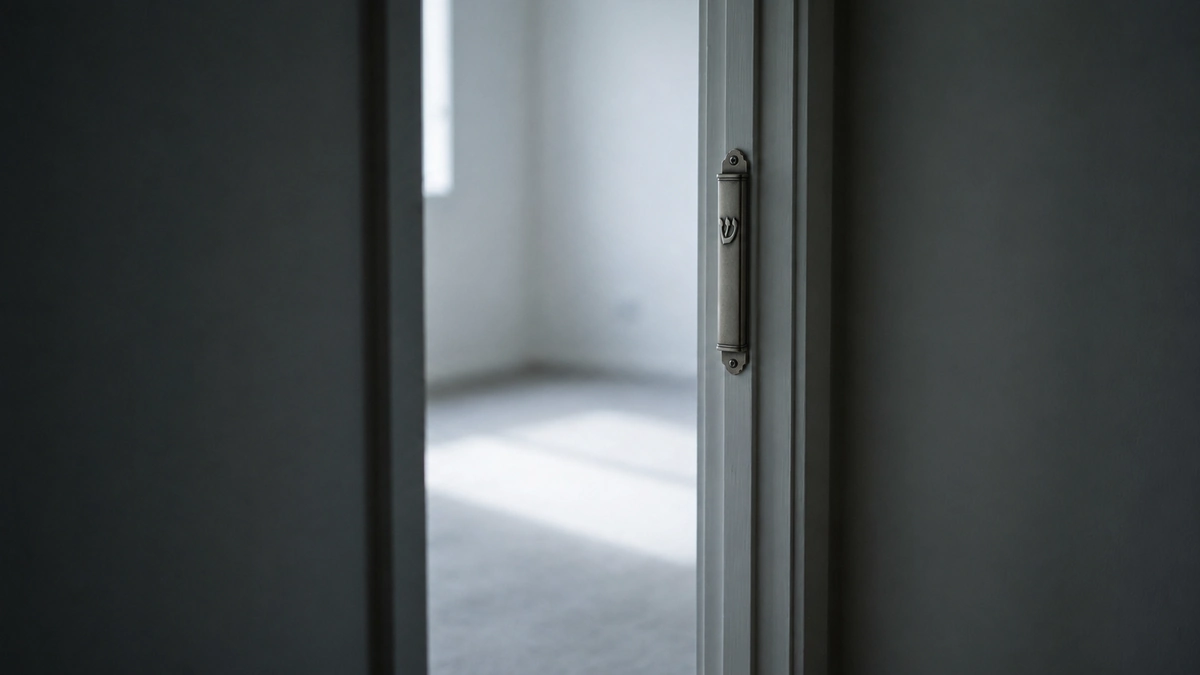
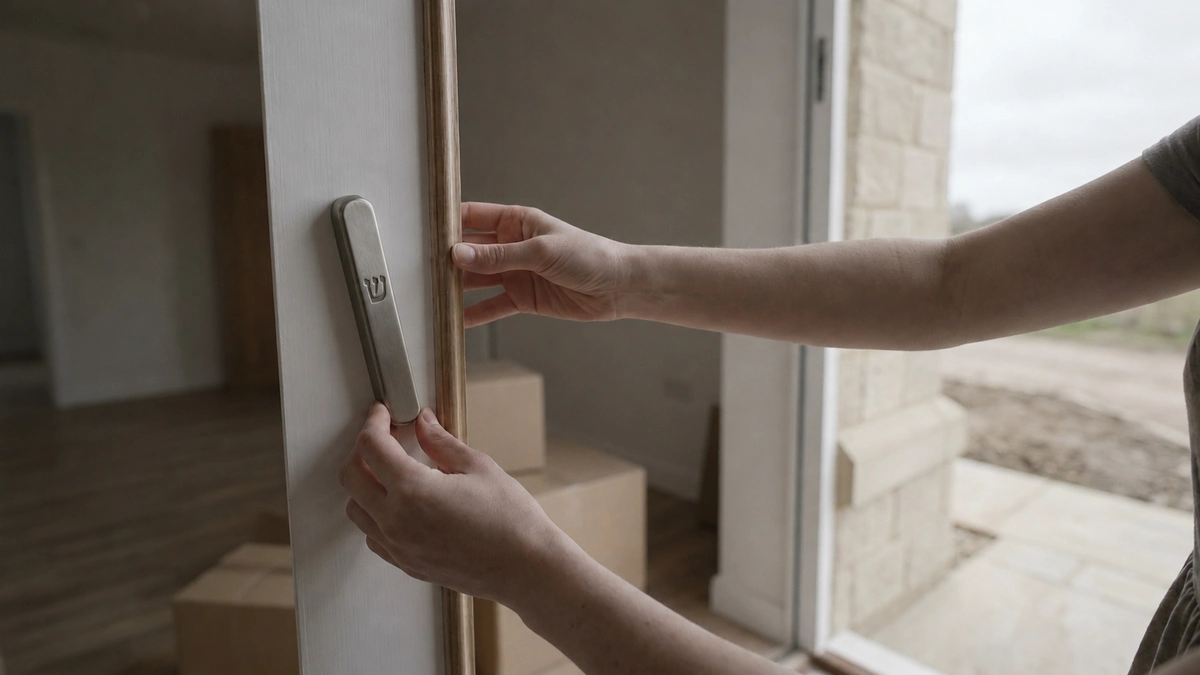
Look at almost any mezuzah on a Jewish doorpost and you will notice it immediately: the letter Shin on the mezuzah case, standing alone, often raised or engraved, positioned right at the front.
The shin (ש) commonly placed on a mezuzah case is generally understood as alluding to the Divine Name Sha-dai (ש-ד-י), which is customarily written on the outside of the mezuzah scroll itself. Rambam records that custom explicitly, and the Rema notes the practice of leaving an opening so the name can be seen from outside. Strictly speaking, the classic halachic sources speak directly about featuring this name of Hashem on the outside of the klaf instelf, rather than about an engraved shin on the case in those exact terms. Over time, featuring a on the outside of the mezuzah case itself appears to have become a widely adopted way of visually expressing that same association. We cover this in more depth in Why Doesn't the Mezuzah Use Hashem's Name Explicitly?.
The Halachic Basis for Writing Sha-dai on the Mezuzah
The Name Sha-dai is not written on the mezuzah as a decorative flourish or as an artistic embellishment added later to beautify the case. The classic halachic sources treat it as part of the established form of the mezuzah itself: the name Sha-dai is written on the outside of the klaf, opposite the text within. The halachic sources focus first on the fact that this is the Name written there, not on an extended explanation of why this particular Name was chosen.
Later Jewish tradition fills in that meaning by reading the letters ש-ד-י as an acronym to שׁוֹמֵר דַּלְתוֹת יִשְׂרָאֵל, Shomer Dalsos Yisrael — the Guardian of the doorways of Israel. That explanation expresses, in a brief and memorable form, the protective symbolism long associated with the mezuzah. For a related question, see The Spiritual Meaning of the Mezuzah.
This later explanation fits naturally with the language of the Gemara. In Menachos 33b, Chazal describe the mezuzah not merely as a marker on the doorway, but as part of a larger image of Divine guardianship: unlike a human king, who sits inside while his servants guard him from outside, HaKadosh Baruch Hu guards His servants while they remain within. The mezuzah, fixed at the threshold of the Jewish home, thus stands as the visible expression of that protective presence.
The same theme is sharpened in the language attributed to the Zohar on Parshas Va'eschanan, where the mezuzah is portrayed as repelling forces of harm from the entrance of the home. There, the Divine Name upon the mezuzah is treated as a sign of sanctity and protection at the doorway itself. This does not mean one should reduce the mezuzah to a charm or superstition; rather, it shows that the tradition saw the mezuzah as both a mitzvah of remembrance and a sign of Hashem's guarding presence.
What the Shin on the Case Actually Represents
When a mezuzah case bears the letter shin, it is commonly understood as an allusion to the Name Sha-dai customarily written on the outside of the klaf inside. Rambam writes, "מנהג פשוט שכותבים על המזוזה מבחוץ... שדי" — "It is a universal custom to write Shaddai on the outside of the mezuzah" (Rambam 5:4). The shin on the case is therefore best described as a symbolic reminder of that Name, not as the Name itself.
Rambam adds at the end of Hilchos Mezuzah that when a person enters and leaves, he "encounters the unity of Hashem... remembers His love... awakens from his sleep... and returns to upright paths" (Rambam 6:13). The most source-accurate way to say this is that while the mezuzah itself begins that moment of awareness; the shin on the case may serve as a visual allusion to it.
But there is an important practical distinction. A decorative shin on the outside of a case is meaningful symbolism, yet it is not the same thing as the actual Name Sha-dai written on the klaf. The Rema records the custom: "נהגו לעשות נקב במזוזה כנגד שם שדי שיהא נראה מבחוץ" — "It is customary to make an opening opposite the Name Shaddai so it can be seen from outside" (Shulchan Aruch YD 288). Where possible, many therefore prefer a case that preserves that visibility.
The Deeper Meaning: Mezuzah as a Declaration of Hashem's Oneness
The mezuzah is not just for protection. Inside it are the words of Shema and Ve-haya Im Shamoa: "Shema Yisrael, Hashem Elokeinu, Hashem Echad" and "U’khtavtam al mezuzot beitecha u’visharecha." This means the mezuzah on a doorway shows that a Jewish home is built on belief in Hashem, love of Hashem, and serving Him.
That is why the Rambam strongly says a mezuzah is not a magic charm. He explains that mezuzah is a great mitzvah about Hashem’s oneness, love of Him, and serving Him. So the name Sha-dai on the outside is not just a symbol or decoration. It points to the holy words written inside and to the bond between the home and Hashem.
A Practical Note on Choosing a Mezuzah Case
When selecting a mezuzah case, one sourced preference is this: if conditions allow, a case that lets the written Name Sha-dai be seen from the outside in accordance with the custom cited by the Rema (Shulchan Aruch YD 288). In places where exposure could lead to disrespect or dirt, covering the mezuzah is justified; in a clean place, the Shulchan Aruch says it is good for it to be visible (YD 286:5).
Kosher Mezuzah
Kosher Mezuzah ensures every scroll we offer is written by a qualified sofer trained in the tradition and technique of STAM and checked by a trained magiah (proofreader). Our mezuzah-writing process is endorsed by the Orthodox Union (OU), one of the most largely-recognized certification bodies in the world, to ensure that every scroll meets the standards required by halacha. The Name Sha-dai on each klaf is written with the same precision and yiras Shamayim as every other letter in the parshiyos.
We also believe that every family deserves to know exactly what is affixed to their doorpost. That means transparency about who wrote the scroll, when it was written, what materials were used, and whether it has been properly checked. A mezuzah that has not been examined periodically may become pasul due to cracks, fading, or missing letters, even if the case looks beautiful from the outside. The scroll inside is what fulfills the mitzvah.
If you would like guidance on ensuring the mezuzos in your home are kosher and properly affixed, we are here to help. Reach out to us at kmezuzah.com/contact and let us help you fulfill this precious mitzvah with confidence and clarity. May your home be a place of kedushah, shalom, and the blessings of Sha-dai — the Guardian of the Doorways of Israel.

.svg)
Bring a true Kosher Mezuzah into your home
Fulfill the mitzvah with confidence, beauty, and meaning.
Buy a Mezuzah