
Can You Reuse an Old Mezuzah Case? What to Check First
You have just had your mezuzah scroll checked, or perhaps you are moving into a new home and wondering whether the case hanging on the doorpost can stay.
Reusing a mezuzah case seems practical, and in many situations it is entirely appropriate. But there are specific things to check before you place a new scroll inside an old case, because the condition of the case can affect both the scroll's integrity and the proper fulfillment of the mitzvah.
Kosher Mezuzah is dedicated to ensuring the proper fulfillment of this mitzvah, and if you have questions about whether a specific case is suitable, reach out to us and we are glad to help.
Key Takeaways
- Reusing a mezuzah case is generally fine if the case still protects the scroll properly. In practice, that means checking that it is dry, intact, clean, and appropriately sized for the klaf.
- The mezuzah case has no independent halachic status, but it plays a critical role in protecting the scroll — a damaged or moisture-compromised case can cause a kosher scroll to become pasul over time.
- Always open and inspect the inside of a used case before reinserting a scroll, since exterior appearance can hide internal moisture damage, mold, or insect debris.
- A scroll must fit inside the case without being tightly compressed or loosely shifting, as both conditions can crack the letters on the klaf and silently invalidate the mezuzah.
- If the old case fails even one of the four inspection criteria — dry, intact, properly sized, and clean — replace it with a new one, as this is a small cost compared to protecting a significant investment in a kosher scroll.
- Hidur mitzvah encourages using a case that is clean and presentable; even where this is not strictly required, many people prefer to house the mezuzah in a cleaner and more dignified case as part of beautifying the mitzvah.
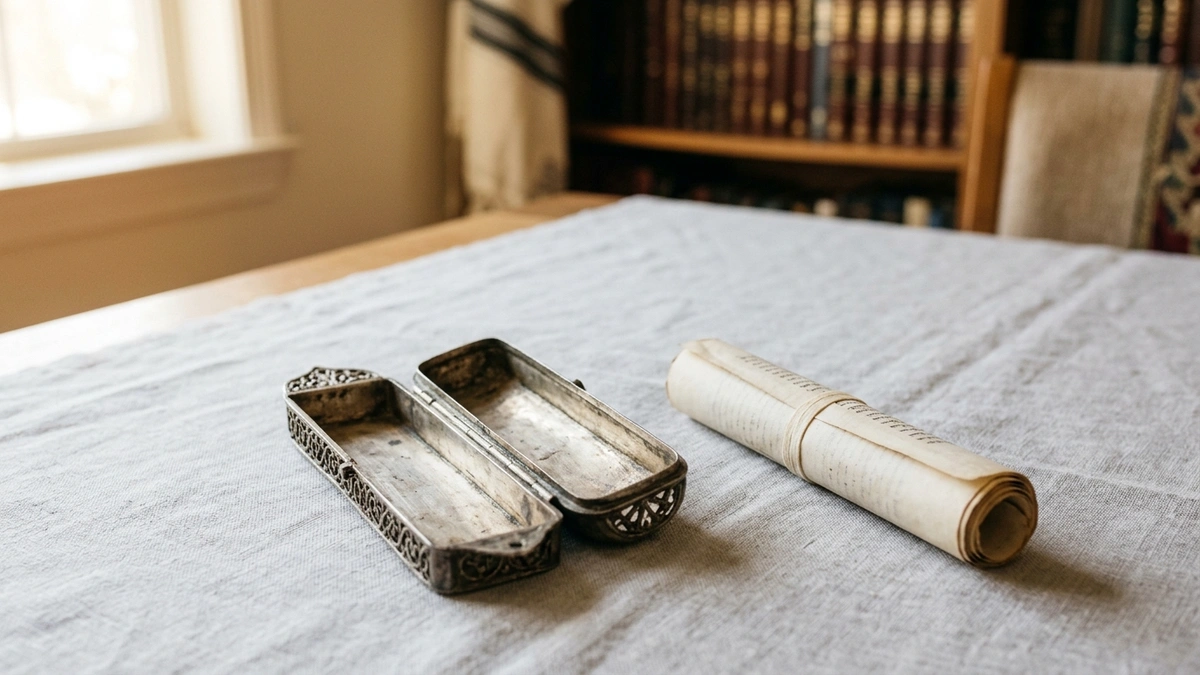
Reusing a mezuzah case is generally permitted, but only after a careful inspection to make sure it will not damage the scroll or compromise the mitzvah. The case itself does not affect the halachic validity of the mezuzah scroll, but a damaged or dirty case can harm the klaf over time, potentially rendering the scroll pasul. Before placing a new or newly checked scroll into an old case, examine it thoroughly. See also What to Do with an Old or Damaged Mezuzah.
The Halachic Basis: What Does the Case Actually Do?
The mezuzah case has no intrinsic halachic status of its own. What matters before Hashem is the scroll — the klaf written by a G-d-fearing sofer, with the proper letters, in the proper order, following halacha. The Shulchan Aruch discusses two relevant points here: first, that when affixing a mezuzah one places it in a casing or tube — ‘בשפופרת של קנה או של כל דבר’ — and second, that in a place of filth it is good to cover the mezuzah, while in a clean place it is good for it to remain visible. The purpose of the case is twofold: to protect the scroll from the elements and to give the mezuzah a dignified presentation.
The poskim also note that in places where the mezuzah is exposed to moisture, insects, or physical damage, a proper enclosure is especially important. From a practical halachic standpoint, the case should protect the klaf from unnecessary handling, friction, moisture, and wear. Even when the scroll is kosher when checked, poor storage conditions can damage it over time. In a clean place, there is halachic basis for the mezuzah to remain visible — ‘ובמקום טהרה טוב להיות נראית’. For that reason, many people prefer a case design that still lets the mezuzah be seen while protecting it.
When placing the scroll into any case, it should be handled carefully and as little as possible, so that the klaf and ink are not stressed or damaged. When placing the scroll into any case — new or old — ensure it is fully enclosed so the parchment is not exposed. This is not merely a stringency. It is standard halachic practice that protects the long-term integrity of the scroll.
How to Inspect a Case Before Reusing It
Before you place any scroll inside a used case, examine it on four key points.
First, check for moisture or mold. If the inside of the case feels damp, shows discoloration, or smells musty, do not use it. Moisture is the most common cause of a mezuzah scroll becoming pasul, and placing a kosher scroll into a compromised case is a practical error with real halachic consequences. You can read more about how a mezuzah scroll becomes pasul and why this happens more often than people realize.
Second, check for cracks or gaps. A case that is cracked along the seam or has a missing back panel will not protect the scroll from humidity, insects, or direct sunlight. Even a hairline crack along the side can allow enough moisture entry to damage the klaf over time.
Third, check that the case is the right size for the scroll you intend to place inside. The scroll must fit properly without being tightly compressed — which can crack the klaf — and without having so much empty space that it shifts and rolls around. A scroll that is rolled too tightly or crushed inside a narrow case can develop cracks in the letters, a common cause of a mezuzah becoming pasul without the homeowner ever knowing.
Fourth, clean the case thoroughly before reinserting a scroll. Use a dry cloth or a slightly damp cloth to remove dust, residue, or old adhesive from the inside. Allow it to dry completely before placing the scroll inside. Never spray liquid directly into the case or use cleaning agents that leave a residue, as these can transfer to the klaf. For a full overview of what proper mezuzah fulfillment requires, our halachic placement guide covers these and related details clearly.
If after inspection the case meets all four criteria — dry, intact, properly sized, and clean — it is fine to reuse. If it fails on any one of these points, the appropriate step is to use a new case. The scroll deserves to be properly housed, and a new case is an inexpensive way to protect what may be a significant investment in a kosher scroll. At Kosher Mezuzah, we carry a range of cases in various sizes to match standard scroll dimensions. Browse our selection of mezuzot from our OU Endorsed process to find what fits your needs.
A Common Mistake: Assuming the Case Is Fine Because It Looks Fine
One of the most frequent errors is a homeowner reusing a case that looks acceptable on the outside but has moisture damage or mold on the inside. The outside of a plastic or metal case can appear completely normal while the interior has accumulated condensation over years of being mounted outdoors or in a bathroom. Always open the case and examine the inside before making a decision.
It is also worth noting that spaces such as a bathroom or bathhouse are exempt from mezuzah. In contrast, in areas that are obligated in mezuzah but may be exposed to dirt or moisture, the casing becomes more important, since it helps protect the klaf from damage. When in doubt, a new case is the right choice. This is a small expense compared to the zechus of the mitzvah.
Does It Matter Whether the Case Is Beautiful?
The poskim (rabbis) encourage hidur mitzvah, beautifying the mitzvah. The poskim clearly value hidur mitzvah here as well: a mezuzah should be placed with dignity and beauty, especially in a home meant to reflect kavod for mitzvot.
A cracked, faded, or visibly worn case diminishes the appearance of the mitzvah even if it is technically functional. While there is no strict halachic requirement to use an aesthetically pristine case, reusing a case that is noticeably degraded goes against the spirit of hidur mitzvah.
There is a related concept worth noting here. Even where this is not strictly required, many people prefer to house the mezuzah in a cleaner and more dignified case as part of hidur mitzvah. This tells us something about how seriously the poskim regarded the presentation of the mezuzah. Just as one would not place a kosher Torah scroll in a degraded cover without good reason, the case for the mezuzah should be clean, intact, and fitting for a holy object.
Kosher Mezuzah
Kosher Mezuzah ensures every scroll we sell is written by a G-d-fearing sofer and checked by a qualified magiah (examiner). Our process is endorsed by the Orthodox Union, one of the most trusted halachic certification bodies in the world, and we provide full traceability — the name of the sofer, the name of the magiah, the date of writing, and an image of your actual scroll. This level of transparency is not common in the mezuzah market, and we believe it is what the mitzvah deserves.
We also believe that fulfilling the mitzvah correctly goes beyond the scroll alone. The case matters. The placement matters. The checking schedule matters. When you purchase from Kosher Mezuzah, you are not simply buying a product — you are receiving guidance on how to fulfill the mitzvah with confidence from the moment of purchase through every check and replacement going forward. We welcome your questions and are here to help you fulfill this mitzvah with clarity and care.
If you have questions about whether your existing case is suitable for reuse, or if you need guidance on the right case size for a specific scroll, please contact us directly through our website at kmezuzah.com/contact. We are here to help you fulfill the mitzvah of mezuzah properly, with the care it deserves. May the mezuzah on your doorpost be a source of protection, blessing, and awareness of Hashem's presence in your home.



.svg)
Bring a true Kosher Mezuzah into your home
Fulfill the mitzvah with confidence, beauty, and meaning.
Buy a Mezuzah