
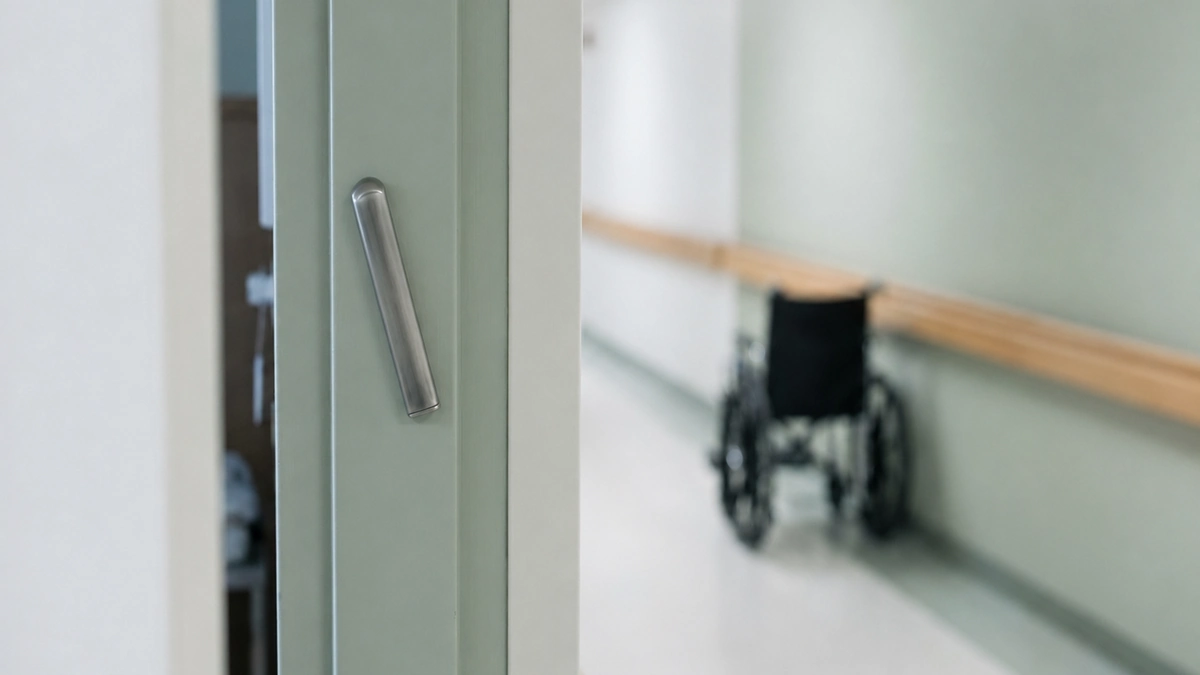
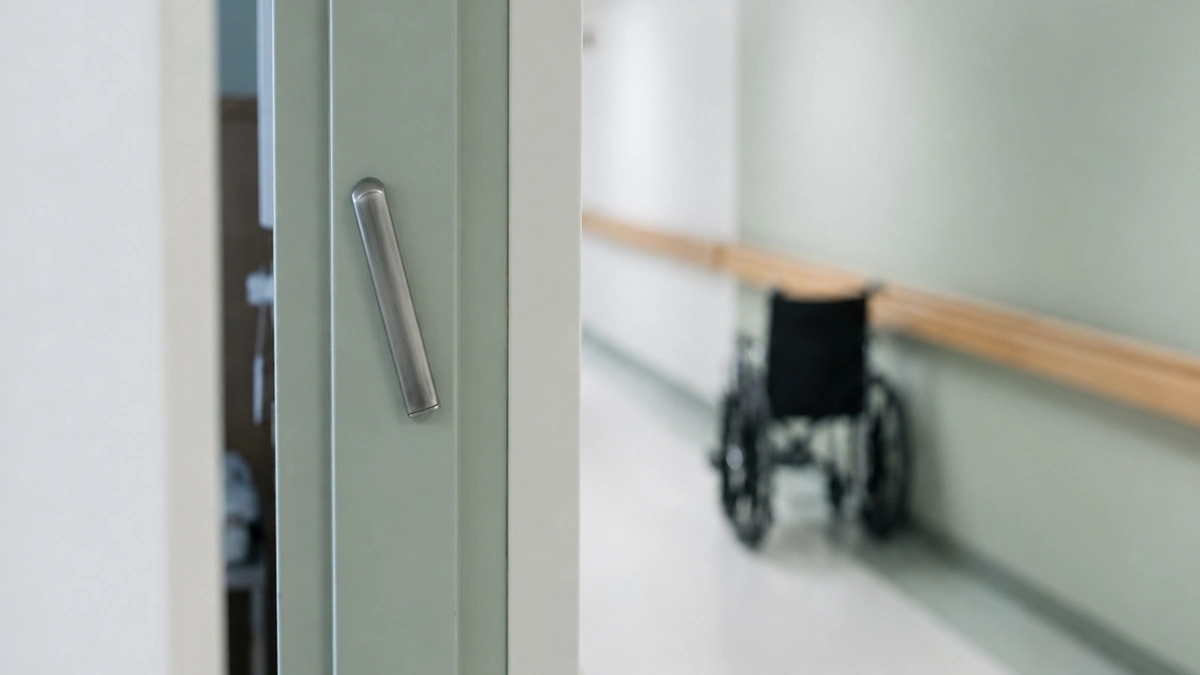
Do Hospitals and Care Facilities Need Mezuzahs? What You Need to Know
Hospital mezuzah requirements are among the more nuanced questions in practical halacha, and they come up more often than you might think. A family member is recovering in a long-term rehabilitation center. An elderly parent moves into a nursing home. A relative spends weeks in a hospital room. The question arises quietly but urgently: does this doorway need a mezuzah? The answer depends on several halachic factors that have been discussed by poskim (halachic decisors) for generations, and the principles apply equally to patient rooms, nursing home corridors, and hospital doorways of all kinds. This article will walk you through what the halacha says, how it applies in real situations, and what you should do to fulfill the mitzvah properly.
Key Takeaways
- Hospital mezuzah requirements apply primarily to long-term care settings where a room functions as a person's primary dwelling, such as nursing homes or rehabilitation facilities used for weeks or months.
- Short-term hospital stays of a few days typically do not create a mezuzah obligation. Whether an extended hospitalization creates one is a genuine dispute among the poskim, since some hold a hospital room remains a temporary dwelling regardless of duration; this should always be discussed with a local rabbi.
- Medical procedure rooms, bathrooms, and utility areas in hospitals and care facilities are generally exempt from mezuzah requirements. Hallways and corridors are different: their status depends on what they lead to, since a passageway to a room that requires a mezuzah may itself require one.
- A proper protective case is essential when placing a hospital mezuzah to maintain the scroll's dignity and address halachic concerns in medical settings where bodily care occurs.
- Consulting with a qualified rabbi is crucial to determine whether a specific hospital room or doorway requires a mezuzah, as circumstances vary significantly by situation.
- A kosher, professionally examined mezuzah written by a trained scribe fulfills the mitzvah properly and ensures that the obligation is met according to Jewish law.
Do Hospitals and Care Facilities Need Mezuzahs?
Hospital mezuzah requirements hinge on one central question: is the space used as a genuine dwelling? When a room functions as a person's primary place of residence, such as a long-term nursing home room or a rehabilitation ward where someone lives for weeks or months, it generally carries the same mezuzah obligation as any Jewish home. The room is lived in, slept in, and used for daily life, and that pattern of use is what creates the halachic obligation. If you are uncertain whether a specific room or doorway in a medical facility requires a mezuzah, we encourage you to reach out to us at Kosher Mezuzah and we will do our best to guide you.
At the same time, not every doorway in a hospital or care facility carries an obligation. Rooms used primarily for medical procedures, staff work areas, bathrooms, and utility spaces may be exempt, either because they are not dwellings or because they are places where placing a mezuzah would not be dignified. Understanding which spaces are obligated requires knowing the basic halachic framework, which we will now explain. For a broader look at how these principles apply across different types of Jewish-occupied buildings, see our guide on public building mezuzah requirements.
The Halachic Framework: Dwelling, Dignity, and Disgrace
The obligation to affix a mezuzah applies to a "house", and the Gemara in Yoma (11b) teaches that this means a house of honor, a place that is used respectfully and is fit for dignified habitation; the Rambam (Hilchot Mezuzah 6:9) codifies this same principle, ruling that only a dignified dwelling requires a mezuzah. This is not just a technical standard. It reflects the deeper truth that a mezuzah is a sign of our relationship with HaKadosh Baruch Hu, and it must be placed where that relationship can be expressed with proper kavod (honor).
The Gemara establishes that certain spaces are exempt from mezuzah because they are not places of honor. A bathhouse, a tannery, and a mikvah are the classic examples. The Shulchan Aruch (Yoreh De'ah 286) rules that these places are exempt because they are not "dwellings of honor." This exemption is rooted in the fundamental character of the space, not merely in whether something unclean is happening there at a given moment.
Separate from spaces that are structurally undignified, the poskim also discuss rooms that are used, even occasionally, as places of filth or disgrace. The Gemara and the Rema (gloss on Shulchan Aruch) discuss sheds and storage rooms where women groom themselves or where children's diapers are changed. The Mordechai adds that a place where diapers are changed regularly is treated like a place of filth and may be exempt. The key distinction the later authorities draw is between a place that is regularly and fixedly used for undignified purposes versus one that is only occasionally untidy. A space that is only sometimes dirty does not lose its mezuzah obligation, though the matter requires investigation in specific cases.
Covering a mezuzah is a recognized tool for managing these situations. The Rema rules that if a mezuzah is placed such that when the door is closed, the mezuzah sits outside the disgraced space, there is no concern of disgrace at all, and the mezuzah is valid and obligatory. The Shach (Siftei Kohen) and the Taz (Turei Zahav) discuss the conditions under which covering a mezuzah, placing it inside a case, is sufficient to permit its use near undignified areas. In brief: a proper case is required wherever there is any concern, and in certain places, a double covering (a vessel within a vessel) may be necessary.
How These Rules Apply in Real Hospital and Care Facility Situations
With this framework in mind, we can now look at the kinds of spaces that come up most often in hospitals, nursing homes, and other medical facilities.
Long-term nursing home and rehabilitation rooms are the clearest case. When a Jewish person lives in such a room as their primary dwelling, sleeping there, keeping their belongings there, receiving visitors there, it is their home for all practical and halachic purposes. The Maharam of Rothenburg famously ruled that even a Jew living in a prison cell for an extended period is obligated in a mezuzah, establishing that a forced dwelling is still a dwelling. The same principle applies here. A nursing home room that functions as a person's home is obligated in mezuzah. The Shulchan Aruch (Yoreh De'ah 286:22) rules that a renter outside Eretz Yisrael has thirty days from moving in before the mezuzah obligation begins, and the same law applies to one who borrows a room; in Eretz Yisrael the obligation begins immediately. Once that window has passed, the mitzvah should not be postponed, though whether a nursing home resident is halachically a renter, a borrower, or something else is itself a question for a rav to determine.
Hospital patient rooms present a more complex question, and one where the poskim genuinely disagree. A short-term stay of a few days or a week typically does not create an obligation, because the stay is too temporary to be considered a dwelling. For longer stays, some poskim hold that a hospital room remains a temporary dwelling (dirat arai) regardless of duration, since the patient does not choose to be there and is not treating it as a home, while others hold that once a stay extends to weeks or months without another home to return to, it takes on the character of a genuine dwelling. There is also a separate question of who the obligation falls on if the facility is not Jewish-owned. Because of this dispute, a hospital room should not be assumed obligated simply because a stay has grown long; this is a case where consulting your local rav is essential, as the specific circumstances matter greatly. The same question of temporariness versus genuine dwelling arises in other communal settings as well — for a related discussion, see our article on dorm room mezuzah requirements.
Procedure rooms, utility closets, nursing stations, and bathrooms are generally not obligated, either because they are not personal dwellings or because placing a mezuzah there would not be dignified. Hallways and corridors are not automatically exempt in the same way: the Shulchan Aruch (Yoreh De'ah 286:1) obligates the gates of houses, courtyards, and even cities, so a hallway that leads to rooms requiring a mezuzah may itself require one. Whether a specific hospital hallway is obligated depends on its halachic classification and what it connects to, not simply on the fact that no one lives in it, and this determination should be made together with a rav.
The status of an entrance depends on what it leads to. The Rambam (Hilchot Mezuzah 6:7) and the Shulchan Aruch (Yoreh De'ah 286:1) rule that an entrance or gatehouse leading to a room that requires a mezuzah is itself obligated, even though the entrance itself is not a dwelling. A gatehouse or entrance that leads only to a space that is exempt, and to nothing else, is exempt. Because this depends on the specific layout of the facility, a rav should evaluate the actual configuration before a mezuzah is removed or omitted from any entrance.
If you are navigating this question for a family member in a care facility, please contact Kosher Mezuzah and we will help you think through the specifics together.
Mistakes That Affect Proper Fulfillment of the Mitzvah
One of the most common errors is simply not placing a mezuzah at all, out of uncertainty or out of an assumption that a medical facility is automatically exempt. As we have seen, this is not always the case. A long-term nursing home room, a rehabilitation room used for months, or any room that functions as a genuine dwelling may well be obligated. Leaving such a doorway without a mezuzah means neglecting a Torah mitzvah.
A second error is placing a mezuzah without a proper case in a room where one is required. The poskim write that one must ensure the area near a mezuzah is kept clean and dignified. In a medical setting, where bodily care, medical procedures, and the ordinary realities of illness are part of daily life, a proper protective case is not just a convenience. It is strongly advised as a way of guarding the scroll from disgrace (bizayon), even though the case itself is not a formal condition of the mitzvah. The mezuzah must be treated with respect even in difficult circumstances.
A third error is placing a mezuzah on a doorway that is clearly exempt, such as a shared bathroom, a procedure room, or a utility corridor, out of a desire to "be safe." The halacha does not encourage placing mezuzahs in spaces that are structurally undignified. Doing so can result in disgrace to the mezuzah itself, which is the opposite of the intended outcome.
The Mitzvah of Mezuzah and the Sanctity of Every Jewish Dwelling
There is something deeply meaningful about ensuring that a hospital mezuzah or a nursing home mezuzah is placed with the same care and intention as the mezuzah on the front door of a family home. The mitzvah of mezuzah is not only about the physical structure of a doorway. It is about declaring that wherever a Jew dwells, even in illness, even in difficulty, even far from home, that space is a Jewish space, under the watchful care of Hashem.
The Rambam teaches that a mezuzah reminds us, each time we pass through a doorway, of the Oneness of Hashem and our obligation to love Him. This reminder is no less precious in a nursing home corridor than it is at the entrance to a family's home. Fulfilling the mitzvah carefully in these circumstances is an act of emunah (faith) and bitachon (trust in Hashem), a statement that His protection and presence are with us wherever we are.
For families placing a mezuzah in a loved one's care facility room, there is a special zechus (merit) in doing so thoughtfully and with proper kavanah (intention). It is a way of saying: this room, too, belongs to Hashem.
Key Takeaway: What You Need to Remember
A long-term nursing home or rehabilitation room used as a primary dwelling is generally obligated in mezuzah, just as any Jewish home would be. Short-term hospital stays typically do not create an obligation, and even longer stays are a genuine machloket among the poskim, so extended stays require rabbinic guidance based on the specific situation. Rooms used for medical procedures, bathrooms, and utility areas are generally exempt because they are not dignified dwellings or not used as dwellings at all; hallways and entrances depend on what they lead to and should not be assumed exempt. Where a mezuzah is placed in a medical setting, a proper case is essential to protect the scroll's honor. When in doubt, whether about the obligation itself, the correct placement, or the type of mezuzah required, consult your local rav. If the room is part of a larger care facility with shared spaces, it is also worth reviewing the halacha around shared building mezuzah maintenance, as responsibility for communal doorways may involve additional considerations.
Fulfilling the Mitzvah with Confidence: How Kosher Mezuzah Can Help
At Kosher Mezuzah, every scroll we provide is handwritten by a qualified sofer (Torah scribe) and reviewed by a trained magiah (halachic mezuzah examiner) before it reaches your doorpost. Our process is endorsed by the Orthodox Union (OU), and we maintain full traceability for every mezuzah we sell, so you know exactly who wrote it, who checked it, and that it meets the standards required for a kosher l'mehadrin (beautiful fulfillment of the mitzvah) scroll.
When placing a mezuzah in a hospital room, nursing home, or any medical facility, it matters not only that a mezuzah is present but that it is genuinely kosher. A scroll that has not been properly checked, or that was not written with the required yiras Shamayim (fear of Heaven) and kavanah, does not fulfill the mitzvah. You can browse our full selection of kosher mezuzah scrolls and cases, each vetted to these exacting standards, in our mezuzah shop. We take these standards seriously, not because of commercial interest, but because the mitzvah of mezuzah is precious and deserves to be fulfilled in the best possible way.
We are also happy to help you think through whether a specific room or doorway in a care facility requires a mezuzah, and what type of covering may be needed given the circumstances. Our goal is to help every Jewish family fulfill this mitzvah properly, with clarity and confidence.
Reach Out and Fulfill the Mitzvah Properly
If you have a family member in a hospital, nursing home, or care facility and you are unsure whether a mezuzah is required, or whether the one in place is halachically valid, please contact Kosher Mezuzah and we will guide you through the question with care and halachic precision.
May Hashem grant a refuah sheleimah (complete recovery) to all who are unwell, and may the zechus of this mitzvah bring protection and blessing to every Jewish home and dwelling, wherever that dwelling may be.


.svg)
Bring a true Kosher Mezuzah into your home
Fulfill the mitzvah with confidence, beauty, and meaning.
Buy a Mezuzah