


The Spiritual Meaning of the Mezuzah: Symbolism and the Sanctity of the Jewish Home
The spiritual meaning of the mezuzah is one of the most profound and layered topics in all of Jewish practice. Every time we cross a threshold in a Jewish home, we pass by a small scroll, handwritten, rolled, and set into the doorpost, that quietly declares the Oneness of Hashem and the sanctity of everything within. But what does the mezuzah actually mean? What is it telling us, and what is it doing for us spiritually? This article answers that single question fully, drawing on the words of Chazal, the Rambam, and the Shulchan Aruch, so that when you look at the mezuzah on your doorpost, you understand exactly what you are looking at, and why it matters so deeply. We cover this in more depth in Mezuzah at the Threshold.
Key Takeaways
- The spiritual meaning of the mezuzah is a declaration of emunah (faith) and Hashem's unity, functioning as a written version of the Shema that awakens spiritual awareness at every threshold of the home.
- A kosher mezuzah provides genuine protection not through mystical energy in the object itself, but through proper fulfillment of the mitzvah with the correct intention to obey Hashem's command.
- Visibility of the mezuzah is a preferred halachic practice, and spiritually meaningful, because seeing it prompts remembrance of Hashem's love and divine guardianship—though a properly covered or cased mezuzah remains fully valid.
- A spiritually meaningful mezuzah must be halachically valid—a pasul (invalid) scroll fails to fulfill the mitzvah and does not carry its intended protection. Every mezuzah, valid or not, requires professional checking twice every seven years to confirm it remains kosher.
- Each time you cross a threshold and encounter the mezuzah, you participate in a mitzvah that never stops, renewing your awareness of Hashem's presence and sovereignty in your home.
The Spiritual Meaning of the Mezuzah: Symbolism and Protection
The spiritual meaning of the mezuzah begins with a simple but powerful truth: the mezuzah is not a good-luck charm, and it is not merely a sign that a Jewish family lives inside. It is a declaration of emunah (faith), a fixed, visible statement of the Oneness of Hashem, written on parchment and bound to the very structure of the Jewish home. If you want to understand the mezuzah spiritually, the place to begin is with what it contains: the Shema and V'haya Im Shamoa, the same portions we recite twice daily in Kriyat Shema. To learn more about how daily practice connects to these portions, our guide on mezuzah spiritual practices offers a fuller picture. If you have questions about fulfilling this mitzvah properly, we warmly invite you to contact Kosher Mezuzah for guidance.
The Mezuzah as the Shema of the House
The Rambam teaches us, at the end of Hilchos Mezuzah (6:13), that the mezuzah is meant to awaken us. His words are striking: "Every time a person enters and exits, he encounters the unity of the Name of the Holy One, blessed be He, and remembers His love, and awakens from his slumber and his distraction about the vanities of this world." The mezuzah, in other words, does for the home what Kriyat Shema does in speech. Just as we recite the Shema to declare Hashem's unity aloud, the mezuzah declares that same unity in writing, fixed permanently to the entrance of the house. The mitzvah is called "mezuzah," the Hebrew word for doorpost, because the verse commands us to write these words "al mezuzot beitecha," on the doorposts of your home (Devarim 6:9). Unlike Tefillin, which are bound onto the arm and head, the mezuzah scroll is affixed permanently to the entrance itself, standing guard, so to speak, over every crossing of the threshold. For the full discussion, read Mezuzah in Times of Crisis.
Symbolism: What the Mezuzah Represents
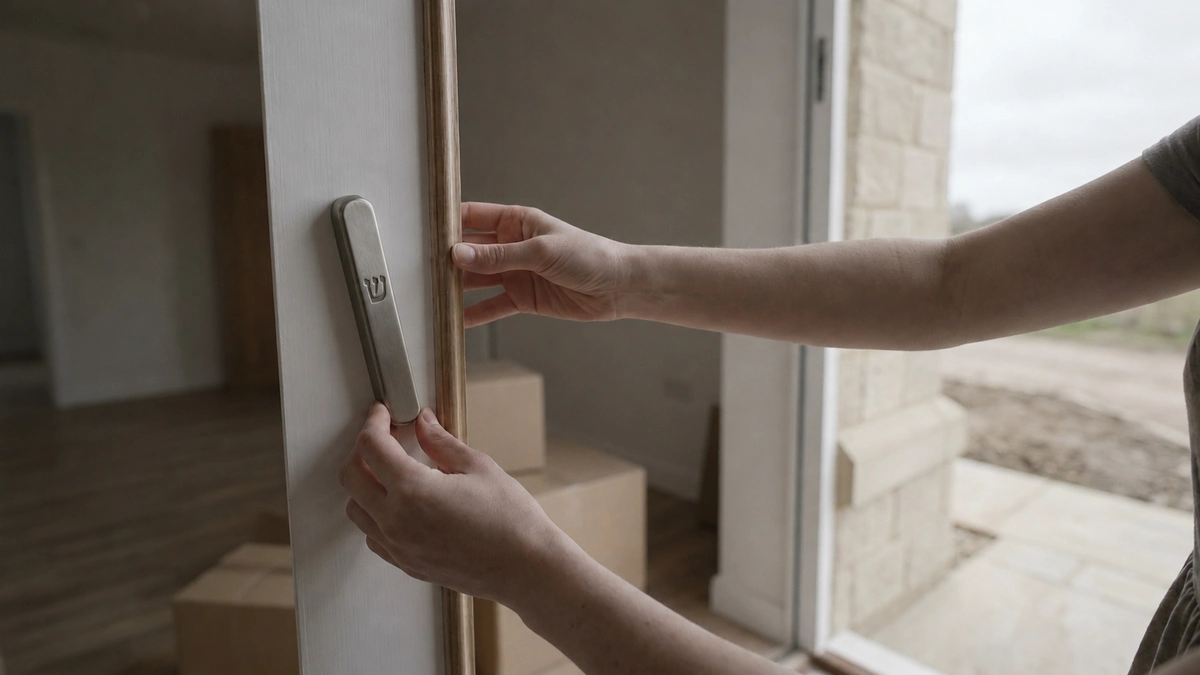
The mezuzah carries several layers of symbolism that are rooted in halacha and in the words of Chazal. The Name Shaddai (שדי), written on the outside of the scroll, is understood by the Rishonim (early authorities) as an acronym for Shomer Delatot Yisrael, "Guardian of the doors of Israel." This is not a folk tradition: the Rambam himself (5:4), the Semag, and the Mordechai all record this practice of writing Shaddai on the outside of the mezuzah. The Zohar (Parashat Vaetchanan) elaborates that the mezuzah places a person under the protection of the Holy One at every entry and exit, in fulfillment of the verse (Tehillim 121:8): "Hashem shall guard your going out and your coming in." The mezuzah on the doorpost is so a symbol of divine guardianship, not because of any mystical energy in the object itself, but because fulfilling the mitzvah connects the Jewish home to Hashem's direct protection. Understanding the mezuzah protection meaning in full requires seeing it within this halachic and theological framework.
The Talmud in Menachot (43b) teaches us that Hashem "surrounded" Bnei Yisrael with mitzvos: Tefillin on the head and arm, Tzitzit on the garment, and a mezuzah on the doorpost. The mezuzah is our garment of the home, the way a Jewish household wraps itself in the commandment of Hashem and signals that the people inside belong to Him. The symbolism is architectural and intimate at once: the same declarations we carry on our bodies in prayer are the declarations we affix to the walls of our most private spaces.
The Deeper Meaning of Protection
One of the most common questions we encounter is whether the mezuzah is truly a segulah (a spiritually efficacious act) for protection, or whether that understanding is an exaggeration. The answer from our sources is clear: the protection is real, but the intention must be correct. The Tur (Yoreh De'ah 285) quotes a beautiful passage: "A human king sits inside and his servants guard him from without, but you sleep in your beds while the Holy One, Blessed be He, guards you from without." The mezuzah is placed in the outer handbreadth of the doorpost precisely so that the entire house is inside its protection. And yet, the Tur immediately adds: "Nevertheless, one's intention should be only to fulfill the command of the Creator, and the protection comes on its own." This framing, mitzvah first, protection as a result, is the authentic Torah approach to mezuzah segulah.
The Responsa of the Maharam of Rothenburg (end of Siman 108) captures this spirit memorably: "If they only knew how good the Mezuzah is for them, they would perhaps not transgress it. We are assured that any house fixed with a Mezuzah according to the law, no damaging spirit can rule over it." The emphasis on "according to the law" is essential. A mezuzah that is pasul (halachically invalid) does not carry this protection. The Talmud in Avodah Zarah (11a) records the story of Onkelos the Convert, who was pursued by Roman soldiers and defused the situation by placing his hand on the mezuzah and explaining its meaning to them. The soldiers, moved by the profundity of a King who guards His servants from outside the walls, converted rather than arrest him. This aggadic passage illustrates what the mezuzah communicates to anyone who pauses to consider it.
For those who want to explore the documented accounts of mezuzah miracles throughout Jewish history, there is a rich and sobering body of material. From Artaban's pearl, which Rabbi Yehuda HaNasi returned with a mezuzah, explaining "you sent me something I must guard: I sent you something that guards you while you sleep" (Yerushalmi, Peah 1:1), to contemporary accounts, the pattern is consistent: the mezuzah protects when it is kosher, properly placed, and treated with the kavod (honor) it deserves.
Why Visibility Matters
The Beit Yosef (Siman 285), drawing from the Zohar, rules that where possible, the mezuzah should be visible and uncovered. Seeing the mezuzah is understood by the poskim to be bound up with the purpose of the mitzvah, though a mezuzah placed in a case or otherwise covered remains fully valid and obligatory. The Rambam connects this to the act of looking: when a person sees the mezuzah, he remembers the love of Hashem. This is why the Biur HaGra compares seeing the mezuzah to seeing Tzitzit, both are mitzvos designed to prompt remembrance and spiritual awareness. The verse in Tehillim (121:5), "Hashem is your guardian, Hashem is your shade at your right hand," is the underlying principle: the mezuzah that is visibly present is one that actively guards. The connection between the Mezuzah and kabbalah mezuzah traditions, particularly the kabbalistic significance of the Name Shaddai and its placement, further deepens this idea for those who wish to explore it.
A practical implication follows directly from this: a mezuzah should not be hidden behind a door frame, tucked inside a wall cavity, or otherwise concealed in a way that makes it invisible. Covering is halachically warranted in specific circumstances—for example, a room where cleanliness cannot be maintained, a room used for bathing or other private activities, or a home rented to a non-Jew—and a mezuzah placed inside a case, even an opaque one, remains fully valid. To understand the full halachic framework of what can render a scroll spiritually or technically invalid, our article on why a mezuzah becomes pasul provides essential reading.
A Word on Kavanah: What We Should Have in Mind
The Rambam's closing words in Hilchos Mezuzah deserve to be read slowly. He writes that when a person properly fulfills the mitzvah of mezuzah, "immediately he returns to his senses and walks in upright paths." The mezuzah is not passive. Every crossing of the threshold is meant to be a small renewal of awareness, a moment in which we cast behind the door the distractions and vanities of the world, and re-enter a space defined by Torah and the presence of Hashem. The poskim note that the mitzvah of mezuzah is, in a sense, continuously being fulfilled every moment it hangs in the doorpost, unlike time-bound mitzvos that are performed and then complete. This is a remarkable idea: the mezuzah is a mitzvah that never stops. Our stories and insights on mezuzah inspiration explore how this ongoing fulfillment has shaped Jewish life across generations.
We encourage every family to approach the mezuzah not as a formality but as a living expression of kabbalas ol Malchus Shamayim, the acceptance of Hashem's sovereignty. When you touch the mezuzah and kiss your fingers upon entering your home, you are doing what Jews have done in every generation: pausing to acknowledge who guards the house and why we are grateful.
Key Takeaways
The spiritual meaning of the mezuzah is rooted in halacha, sourced from Chazal, and practical in its application. The mezuzah declares Hashem's unity in the same way the Shema does, but in writing, fixed permanently to the home. Protection flows from proper fulfillment of the mitzvah, not from the object itself. Visibility matters because seeing the mezuzah prompts the spiritual awareness the Torah intends. A mezuzah that is pasul provides neither the fulfillment of the mitzvah nor the protection associated with it. Kavanah, having the right intention, is to fulfill Hashem's command, and the protection follows as a zechus (merit) from that fulfillment.
About Kosher Mezuzah
At Kosher Mezuzah, our commitment is straightforward: every scroll we provide is written by a trained, G-d-fearing sofer (Torah scribe) and reviewed by a qualified magiah (halachic mezuzah examiner). Our mezuzos are produced through a rigorous process endorsed by the Orthodox Union, and we maintain full traceability, meaning you can know who wrote your mezuzah, who checked it, and when. This level of accountability is not a feature: it is what the mitzvah demands. A spiritually meaningful mezuzah begins with a halachically valid one.
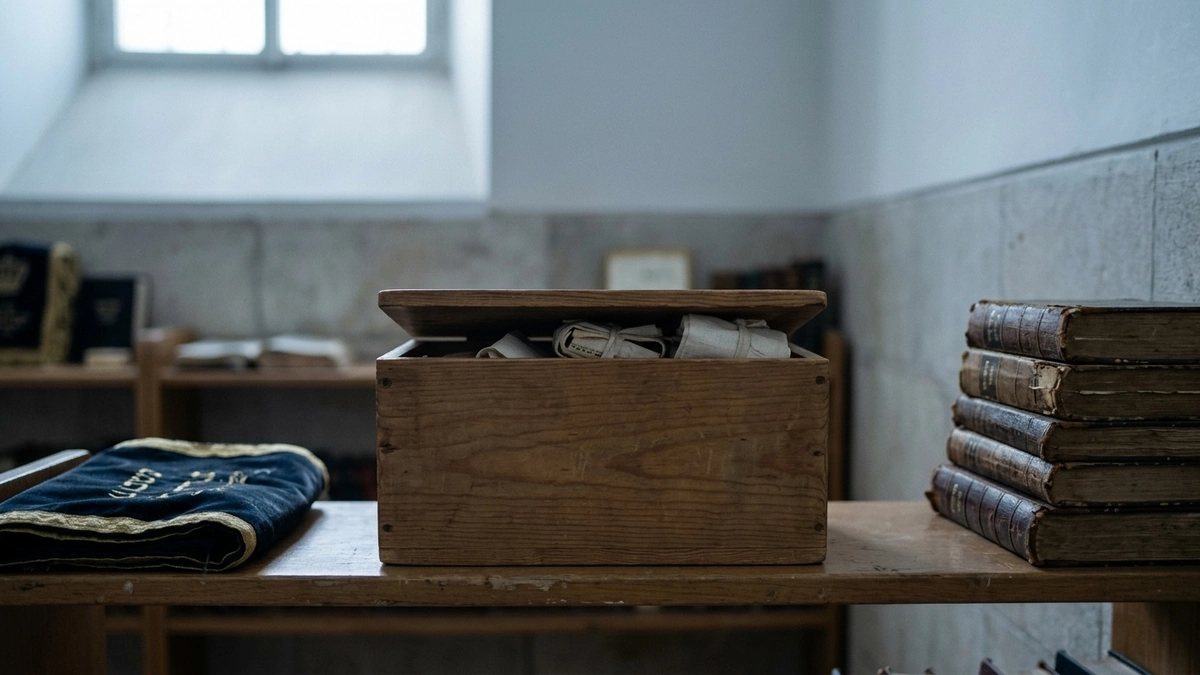
Proper checking of the mezuzah is itself a halachic obligation. The Shulchan Aruch (Yoreh De'ah 291:1) requires that a private home's mezuzos be checked twice every seven years (a communal or institutional mezuzah follows a different schedule, twice every fifty years). Scrolls that appear beautiful on the outside can be pasul (invalid) due to cracked letters, faded ink, or other halachic defects invisible to the untrained eye. The spiritual significance of the mezuzah, every word we have explored in this text, depends entirely on the physical integrity of the scroll. A pasul mezuzah, as the sources make clear, is not fulfilling the mitzvah and does not carry its protection. The question of whether a spiritually meaningful mezuzah can still be halachically deficient is explored directly in our article on whether a spiritually flawed mezuzah can still be kosher.
If you are unsure whether your mezuzos have been checked recently, or if you are setting up a new home and want to fulfill this mitzvah with confidence, we are here to help. Reach out to us at Kosher Mezuzah, and we will guide you through the process with care and without pressure. May the mezuzah on your doorpost be a source of blessing, protection, and the constant awareness of Hashem's presence in your home, and may your family merit the zechus of fulfilling this precious mitzvah in its fullness, every day.


.svg)
Bring a true Kosher Mezuzah into your home
Fulfill the mitzvah with confidence, beauty, and meaning.
Buy a Mezuzah