
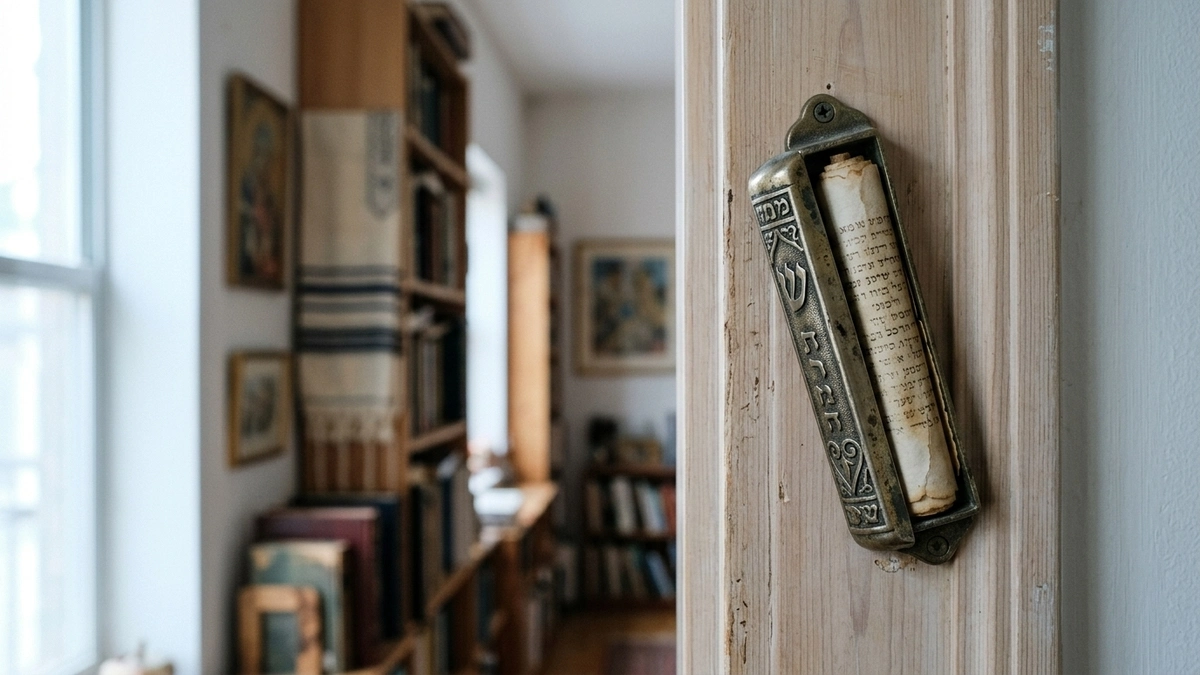
Can a Spiritually Flawed Mezuzah Still Be Halachically Kosher?
Halacha teaches that the mitzvah of mezuzah is only fulfilled when a kosher scroll is properly written, correctly placed, and responsibly maintained. If any one of these pillars is missing, the mitzvah may not be fulfilled at all, even if there is a mezuzah case on the door.
Most people assume that once there is a mezuzah case on the doorpost, the mitzvah is “taken care of.” But what about a scroll that looks fine, may even be technically kosher, yet something about how it was written, bought, or put up raises real questions?
This article explores that gap. We will use the phrase “spiritually flawed mezuzah” as an editorial way to describe situations where a mezuzah might look acceptable from the outside, but the mitzvah of mezuzah is not clearly being fulfilled, because there is a serious question about the scroll’s kashrus, its placement, or its ongoing maintenance. It is not a formal halachic category, and real questions in this area always need a competent rav.
Along the way, we will show what it means to actually fulfill the mitzvah of mezuzah with confidence, starting with the quality of the scroll itself, continuing with where and how it is placed, and including the responsibility to maintain it over time. The goal is not to create worry or suspicion. Rather, it is to help families know with conviction that they are truly observing this mitzvah, and not just decorating a doorway.
Key Takeaways
- The mitzvah of mezuzah depends on three conditions working together: a kosher scroll, correct placement on obligated doorways, and ongoing maintenance.
- A “spiritually flawed mezuzah” or kosher but problematic mezuzah may look fine from the outside but raises serious halachic doubts about whether the mitzvah is actually being fulfilled.
- Common issues include weak or unknown supervision of the sofer, mezuzah intention issues (problems with lishmah), incorrect placement, putting mezuzot on exempt doorways, or neglecting periodic checks.
- Responsible mezuzah ownership means addressing these mezuzah spiritual concerns practically: buying from a traceable, supervised source, placing mezuzot only where obligated, and checking them regularly.
- With guidance from a competent rav and a reliable source such as Kosher Mezuzah, families can fulfill this mitzvah with confidence and integrity.
- There are situations where a mezuzah might appear kosher yet the mitzvah is incomplete in practice due to improper placement or neglect.
- A mezuzah must first meet clear halachic requirements to be kosher. It must be written on proper klaf, with valid ink, by hand, lishmah, with correct text and properly formed letters (tzurat ha’ot). If these fundamentals are missing, the mezuzah is simply pasul, not “spiritually flawed.”
- The reliability of the source is a serious halachic consideration. When the qualifications of the sofer, the checking process, or the materials used are unknown, the kashrus of the mezuzah itself becomes uncertain. Traceability and accountability are essential parts of responsible mezuzah observance.
- Placement matters as much as the scroll itself. The mezuzah must be affixed in the correct location on the doorway; if it is placed far too high or too low on the doorpost, it may not fulfill the mitzvah properly. In addition, affixing a mezuzah in a degrading location (such as a bathroom or other fixed place of filth) places it in a space where it does not belong; the Shulchan Aruch (Yoreh De’ah 286) treats such places as exempt from mezuzah, and many poskim write that doing so is a bizayon (degradation) of the mitzvah, even if the scroll itself is technically kosher.
- Mezuzahs require ongoing maintenance. Halacha requires periodic checking because parchment and ink can deteriorate over time. A scroll that was once kosher can become pasul, so responsible mezuzah ownership includes tracking when mezuzot were last checked and scheduling regular inspections.
- Fulfill the mitzvah of mezuzah with full integrity. A verified kosher scroll, proper placement, reliable sourcing, and responsible maintenance — allows the mitzvah to serve as it was intended: a living reminder of Hashem’s presence and a genuine source of blessing and protection for the home.
Three Conditions for a Kosher Mezuzah
The mitzvah of mezuzah rests on three interlocking conditions. First, the scroll itself must be halachically kosher: written on proper klaf, with valid ink, by hand, with the right intention, according to all the laws of STaM. Second, the mezuzah must be installed in the halachically correct place on a doorway that is actually obligated. Third, the scroll must be maintained over time, so that it remains kosher and does not quietly become pasul through age or damage. When these three pieces come together, the doorway is truly fulfilling the mitzvah of mezuzah. When one of them is missing, the family may be looking at a beautiful case on the wall while the mitzvah itself is not being fulfilled behind it.
What Do We Mean by a “Spiritually Flawed Mezuzah”?
When people hear “flawed mezuzah,” they usually imagine a scroll that is clearly invalid: words missing, letters smudged, or printed instead of handwritten. That kind of mezuzah is simply pasul and does not fulfill the mitzvah. In this article, we will use the term “spiritually flawed mezuzah” to describe cases where the scroll may technically be kosher on paper, or at least look that way to the untrained eye, but something about the way it was written, bought, affixed, or maintained creates serious doubt about whether the mitzvah is truly being performed.
In practice, this can take many forms. A mezuzah may have been purchased from a seller who cannot clearly explain who wrote the scrolls, what training and supervision the sofer has, or how the checking is done. It may have been installed in the wrong place on the doorway, too high, too low, on the wrong side, or on a doorway that halacha treats as exempt. It may have been left on the doorpost for many years without any checking, so that cracks in the ink or damage in the parchment can no longer be seen without professional inspection. In all of these scenarios, the problem is not just a “vibe” or vague discomfort. There is a real question whether the mitzvah is being fulfilled, or whether there is simply a case on the wall without a functioning mitzvah behind it.
Basic Halachic Requirements for the Scroll
Before we can talk about placement or maintenance, a mezuzah must first meet the basic technical halachic requirements. The scroll must be written on properly prepared klaf from a kosher animal. It must be written by hand with kosher black ink by a qualified sofer. The sofer must write it lishmah, with conscious intention that he is writing a mezuzah for the sake of the mitzvah; where that intention is missing or doubtful, it creates serious mezuzah intention issues. The text must include the two parshiyot of Shema and V’haya im shamoa with no words or letters missing or added. Each letter must be fully and properly formed according to halacha; even a small break, crack, or malformed stroke can render the mezuzah invalid. In addition to these fundamentals, there are many other detailed and intricate halachic requirements that go into producing a kosher mezuzah.
If any of these basics are missing, the mezuzah is not “slightly off” or “spiritually weak” – it is simply pasul. In that case, there is no mitzvah of mezuzah being fulfilled on that doorway until the scroll is repaired where halachically possible or replaced, under the guidance of a competent rav and a trained sofer.
Buying Mezuzot: Source, Supervision, and Accountability
Today, mezuzot can be purchased in many places, from Judaica stores to online marketplaces. But not every scroll on the market is equal. Halacha takes seriously who wrote the mezuzah and how it was supervised. When you buy a mezuzah, it is worth asking a few simple questions. Who is the sofer, and is he trained and certified in STaM? Is there reliable rabbinic oversight of his work? What standards are followed for checking: is there both a careful human proofreader and, where appropriate, a computer check? Is there documentation and accountability if a question comes up later, or is the origin of the scroll unclear once it leaves the store?
With an understanding of how intricate and exacting the halachic laws are that govern writing a kosher mezuzah, it becomes clear why reliable oversight and certification of mezuzah scrolls is so critical. When the source is unknown or poorly supervised, we cannot be confident that the mezuzah is truly kosher, even if it looks fine to the untrained eye. In that case, there is a real halachic doubt whether the mitzvah is actually being fulfilled.
Using a reliable source, such as Kosher Mezuzah, means that the scribes are vetted and follow strict halachic standards, there is a clear checking process before scrolls are sold, and there is accountability if any question comes up later. That traceability is part of doing the mitzvah with integrity, not just owning “a mezuzah,” but knowing that you are truly fulfilling the mitzvah.
Placement: Properly Installing Mezuzos
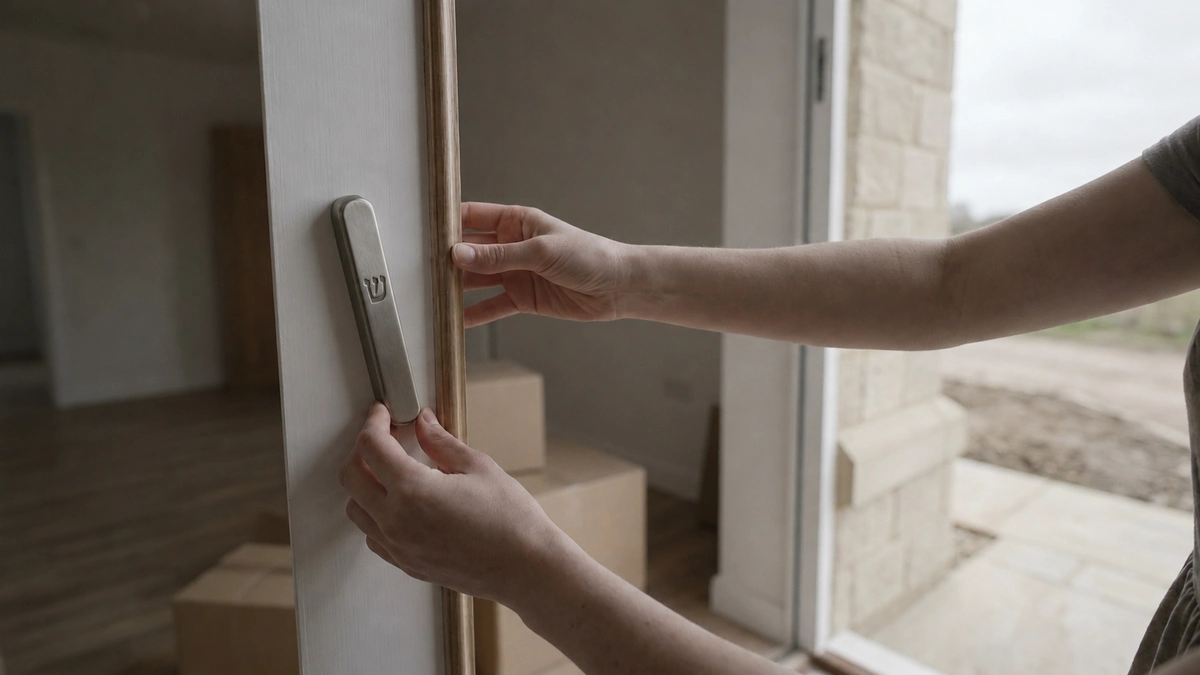
Placement is also part of the mitzvah, not just the packaging. Even the best mezuzah scroll in the world will not fulfill the mitzvah properly if it is put in the wrong place. Halacha gives detailed rules for where a mezuzah should be affixed: on the right side as you enter the room, within the doorway’s space, in the upper part of the doorpost, not all the way at the top and not down near the floor, and fixed securely rather than dangling or loose. If a mezuzah is placed far too high, too low, on the wrong side, or on a structure that is not truly an obligated doorway, the mitzvah may not be fulfilled properly, even if the scroll itself is perfectly kosher. In some cases of serious misplacement, halacha may treat the doorway as if it effectively has no mezuzah in the right place, and the mitzvah remains unfulfilled until the placement is corrected.
Understanding the full range of placement requirements is part of fulfilling the mitzvah responsibly, as well as calculating how many doorways need a mezuzah.
Exempt Doorways and Misplaced Piety
There are also places that halacha treats as exempt, and this matters for how and where we choose to add mezuzot. Bathrooms and similar spaces that are considered degrading, known as dirat bizayon, are exempt from mezuzah, as are certain storage or utility areas depending on how they are used. Putting a mezuzah in such a place can be considered a bizayon, a degradation, of a holy object. A family might sincerely want mezuzot everywhere in the house for protection, but in these scenarios it is better halachically to leave those doors without a mezuzah and focus on doing the mitzvah properly where it truly applies..
Maintenance and Regular Checking
A mezuzah is also not a one-time purchase that can be forgotten forever. Parchment and ink are physical materials; they age, dry, and can deteriorate. Halacha requires that mezuzot be checked periodically. Outdoor mezuzot, which are exposed to weather, moisture, and temperature changes, may need more frequent checks. Indoor mezuzot can also fade, crack, or be damaged over the years. A scroll that was fully kosher when first purchased can become pasul later without anyone noticing, unless it is inspected by a qualified sofer or magiah. When that happens, the mitzvah that was once being fulfilled on that doorway is no longer being fulfilled until the problem is corrected.
Responsible mezuzah ownership therefore includes keeping a simple record of when each mezuzah was last checked and scheduling regular inspections according to halachic guidelines. It also means being especially careful after construction, painting, renovations, or moving homes, when mezuzot may be removed, damaged, or accidentally switched. Neglecting maintenance does not just risk a lower quality level of observance. Over time it can quietly turn a once-kosher mitzvah into a non-functioning one, where the case is still on the wall but the scroll inside is no longer fulfilling the mitzvah.
Putting It All Together: Addressing Mezuzah Spiritual Concerns
When we talk about a “spiritually flawed mezuzah,” we are really asking whether the mitzvah of mezuzah is actually being fulfilled here, or whether something essential needs attention. Mezuzah spiritual concerns are not just emotional unease; they point to practical questions that need to be clarified.
Fulfilling the mitzvah of mezuzah with integrity rests on three pillars:
- Kosher scrolls written lishmah by a qualified sofer on proper klaf, with fully correct letters and text
- Reliable sourcing and halachic oversight, buying from places that can clearly explain their standards, supervision, and checking
- Correct placement and ongoing care, including putting mezuzot on all obligated doorways at the right height, checking them at proper intervals, and bringing questions to a competent rav instead of relying on guesswork.
When these pieces are in place, a mezuzah is not just something Jewish on the door. It becomes what it is meant to be: a clear fulfillment of a Torah commandment and a daily reminder of Hashem’s presence in the home.
Fulfill the Mitzvah With Confidence — Kosher Mezuzah
Kosher Mezuzah has been dedicated to ensuring the proper fulfillment of the mitzvah of mezuzah for over forty years. Every scroll is written by a vetted sofer who has passed a rigorous halachic examination, double-checked by two expert examiners, and reviewed in line with current standards of mezuzah certification — so that every mezuzah on your doorpost is halachically sound and spiritually grounded. Each mezuzah comes with a unique QR code providing complete transparency: the sofer who wrote it, the examiners who reviewed it, the materials used, and when the scroll is next due for inspection. Every mezuzah that leaves the warehouse is new, certified, and ready to fulfill the mitzvah properly.
Our FAQ page at Kosher Mezuzah and its responses to common questions provide a good starting point for families who want to review their mezuzah observance comprehensively.
For those who are ready to ensure their mezuzahs are held to the highest standard, we invite you to browse our full selection of verified scrolls, each written by a vetted sofer and reviewed by a qualified magiah. Your mezuzah should be a reminder of kedushah and protection for your home, fulfilled in a manner worthy of that sacred purpose.
May the mitzvah of mezuzah bring blessings and protection to your home, and may every scroll on your doorpost be properly placed, fully verified, and genuinely worthy of the declaration it carries.



.svg)
Bring a true Kosher Mezuzah into your home
Fulfill the mitzvah with confidence, beauty, and meaning.
Buy a Mezuzah