
Does Mezuzah Ink Fade Over Time? (Even Without Water Damage)
You check your mezuzah case, it looks fine from the outside — no cracks, no water stains, no obvious damage. So you assume everything inside is still kosher.
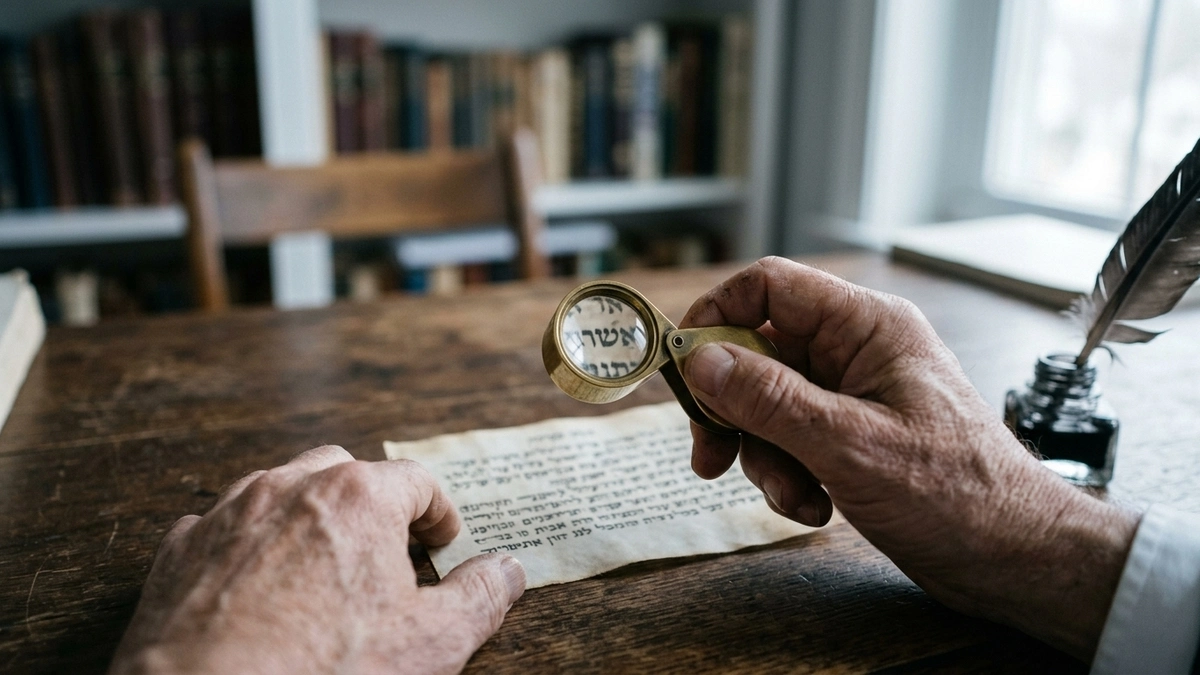
But what if the writing itself has quietly deteriorated over the years, with no visible sign on the outside at all? Halachically, that concern is real. Chazal require mezuzos to be checked periodically, because a mezuzah that was kosher when first affixed can later become pasul if a letter is torn, erased, or no longer fully intact.
The ink used in a kosher mezuzah is d’yo, written by a qualified sofer on klaf. But once the mezuzah is fixed in place, it remains a physical object exposed to age and environmental wear. So even without obvious water damage or visible cracks on the case, the writing inside may no longer be fully intact today.
The Halachic Basis: Why Ink Condition Determines Kashrut
The kashrut of a mezuzah scroll depends on the integrity of its letters. The mezuzah consists of the two parshiyos — Shema and V’haya Im Shamoa — and they must be written completely and properly. Rambam writes that if even one letter is not written as it should be, the mezuzah is invalid until it is complete and correct. A mezuzah whose letters have deteriorated to the point that their proper form is lost may therefore become pasul. This is not a chumra (stringency). It is the baseline requirement for the mitzvah.
The problem is not limited to obvious smearing or water damage. Over time, letters on a mezuzah can deteriorate. Rambam explicitly warns that a mezuzah must be checked lest a letter tear or be erased, because it is fixed in walls and can decay. When part of a letter breaks down or disappears, the tzurat ha’ot — the required form of the letter — may be lost. A letter that no longer retains its proper form does not fulfill the halachic requirement, and a mezuzah with even one such defect is invalid.
For additional background on how mezuzah scrolls are written and what materials are used, see our overview how a mezuzah scroll is written and what materials are used. The quality of both the klaf and the ink plays a direct role in how long a mezuzah remains kosher.
What Causes Mezuzah Ink to Fade or Crack Without Water Damage
Many people associate mezuzah problems with obvious causes — a leaky doorframe, a case left open to rain, or a child who tampered wth the parchment. But mezuzah aging signs can appear without any of these. Over time, mezuzah parchment and ink can deteriorate in ways that are not visible from the outside, which is why periodic checking is required.
Chazal teach that a private mezuzah is checked twice in seven years, and this is codified by both the Rambam and the Shulchan Aruch. Rambam explains that the concern is that a letter may have torn or been erased, because the mezuzah is fixed in the wall and can deteriorate over time.
For additional background on proper klaf and ink quality, including how materials affect the long-term reliability of a scroll, it is worth reading before you purchase or replace a mezuzah.
What Halacha Requires When It Comes to Checking
The Gemara states that a private mezuzah is checked twice in seven years, and this is codified by both the Rambam and the Shulchan Aruch. For a private mezuzah, the halachic standard is twice in seven years. A practical way to stay on that schedule is to check mezuzahs roughly every three and a half years. Questions about particular situations should be discussed with a rav.
A check is not a visual glance at the outside of the case. It requires opening the case, carefully unrolling the klaf, and inspecting the writing itself. In practice, this is ordinarily done by a qualified sofer or magiah who can determine whether the letters still retain their proper form and whether the mezuzah remains kosher.
One of the most common errors is assuming that a mezuzah is fine because it has been in a sealed case. A mezuzah case may protect the scroll from some outside exposure, but it does not prove that the klaf inside remains kosher over time.
Kosher Mezuzah
Kosher Mezuzah ensures every scroll we carry is written by a vetted sofer and checked by a qualified magiah before it reaches you. Our process is overseen with the standards of the Orthodox Union, one of the most trusted kosher certification bodies in the world, and we maintain clear documentation of who wrote each scroll and when it was checked. We believe that knowing the provenance of your mezuzah — who wrote it, who inspected it, and what materials were used — is part of fulfilling the mitzvah with integrity.
We also recognize that even the best scroll needs attention over time. If you have mezuzahs that are overdue for inspection, or if you purchased scrolls without documentation of a proper check, that is a situation worth addressing promptly. You can learn more about what makes a mezuzah scroll pasul before you buy and what questions to ask about any scroll you currently have on your doorpost.
If you have questions about the condition of your mezuzahs or need guidance on checking and replacing them, contact us at kmezuzah.com/contact. We are here to help you fulfill this precious mitzvah with clarity and peace of mind. May the mezuzahs in your home be a source of shmirah and bracha, and may your home be blessed with the protection that comes from observing this mitzvah properly.


.svg)
Bring a true Kosher Mezuzah into your home
Fulfill the mitzvah with confidence, beauty, and meaning.
Buy a Mezuzah