
How to Mount a Mezuzah on Brick, Concrete, Tile, Metal, or Drywall
The Torah says, “And you shall write them upon the doorposts of your house and upon your gates” (Deuteronomy 6:9). In other words, the mezuzah belongs on the doorpost. The doorpost material affects how you mount a mezuzah case, but it does not change the core halachic obligation.
The practical question is how to secure it properly when the mezuzah installation surface is wood, drywall trim, concrete, brick, tile, stone, or metal.
The material does not redefine the mitzvah. It determines which mounting method will hold the mezuzah case firmly and appropriately over time. This guide is about fastening. For where on the doorway the mezuzah goes, which side, how high, and at what angle, see Common Mezuzah Placement Mistakes and How to Fix Them. See also Can a Mezuzah Case Affect Kosher Status? What Actually Matters.
The Core Rule: The Mezuzah Must Be Securely Fixed to the Doorpost
The key halachic principle is not complicated: the mezuzah must be kavu’a, properly affixed. The Gemara says: if someone hangs a mezuzah on a stick, it is dangerous and does not count as the mitzvah (Menachot 32b). The practical takeaway is clear: a mezuzah cannot be left loose, swinging, or casually hung.
The Shulchan Aruch likewise defines the place of the mezuzah as within the doorway space, in the outer handbreadth closest to the outside (Yoreh De’ah 289). So when people ask whether wall material matters, the real answer is this: the mezuzah must still be fixed to the actual doorpost, in the proper location, and in a way that will stay secure. The location rules themselves are covered in our placement mistakes guide; this article stays with the fastening.
That is why the doorpost material matters in practice. Some surfaces take nails or screws easily. Others require anchors, specialty bits, or a carefully chosen adhesive system. But the goal is always the same: a firm, lasting attachment on the correct part of the doorway.
Mounting a Mezuzah on Each Surface
Different materials call for different mounting methods. If you are deciding how to attach a mezuzah case, begin by identifying the actual doorpost surface. In many homes, the wall may be drywall, but the mezuzah is really being attached to painted wood trim. In other homes, the post itself may be concrete, brick, tile, stone, or metal.
Drywall Mezuzah Installation
Drywall mezuzah installation is usually a question about the trim, not the drywall sheet itself. In many homes, the doorway is finished with wood casing or molding, and that is where the mezuzah should be attached. If the trim is solid and stable, a small nail or screw will usually create the most reliable attachment.
If there is no solid trim and the only available mezuzah installation surface is drywall, proceed carefully. Drywall alone is not an ideal mounting base for something meant to remain fixed long term. If you cannot mount into wood, choose a method designed to hold securely on that surface and check that the case does not shift or loosen over time.
Wood Doorposts
Wood is usually the simplest surface for mezuzah installation. A nail or small screw can hold the case securely with minimal complication. If the wood is painted or finished, make sure the attachment still bites into stable material rather than only into loose decorative trim.
For many homes, this is the cleanest answer to the question of how to attach a mezuzah case: if the doorpost is wood, attach it directly and securely to the wood itself.
Concrete Mezuzah Mounting
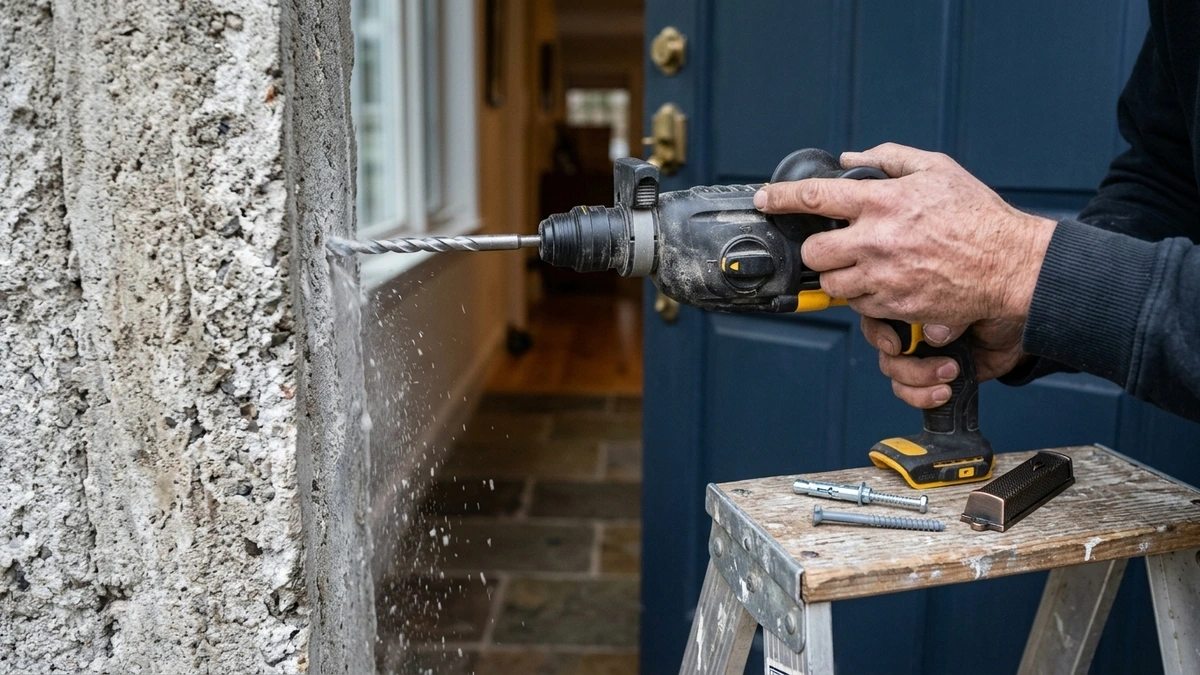
Concrete mezuzah mounting requires the right tools, but the principle is straightforward. Concrete, brick, block, and similar masonry surfaces usually need a masonry bit, pilot hole, and suitable screw or anchor. If installed correctly, this can create a very strong and durable attachment.
This is one of the clearest cases where wall material matters. The halachic requirement has not changed, but the method absolutely has. A standard nail that works well in wood may fail entirely in concrete.
If the doorway is recessed or unusually deep, be careful not to confuse a construction detail with halachic placement. The mezuzah still belongs on the doorpost area of the entrance, not deep inside in a way that moves it out of its proper location. For recessed or irregular frames, it is wise to confirm placement with a rav before drilling.
Brick, Tile, and Stone Surfaces
Brick, tile, and stone can all serve as a mezuzah installation surface, but each has practical challenges. Brick and stone often require specialty drilling. Tile may crack if drilled incorrectly. In these settings, some people use durable adhesive systems made for the specific surface, while others prefer anchors and screws.
The important point is not whether the method feels modern or traditional. The important point is whether the mezuzah will remain firmly attached to the actual doorpost. If the tile is loose, cracked, or decorative rather than structurally stable, it may not be a dependable base. Always mount to the strongest stable part of the post.
Metal Doorposts
Metal frames are common in offices, apartment buildings, and some newer homes. In these cases, screws designed for metal, industrial adhesive systems, or a professionally installed case may be appropriate from a practical standpoint. Because smooth metal surfaces can be less forgiving than wood, it is worth checking after installation that the mezuzah case truly holds and does not peel away.
Glass Doorways
For glass doorways, the mezuzah should usually be attached to the side frame or doorpost, not to the glass itself. If the doorway has a solid metal, wood, or similar frame, use that surface and choose a mounting method that fits the material. If the doorway is mostly glass and the side posts are minimal or unclear, the question may be not only how to mount the mezuzah, but whether the doorway has the halachic structure required for mezuzah placement. In that case, ask a rav before installing.
Choosing the Fastener for Your Doorpost
If your question is simply how to attach a mezuzah case, the answer is: use the method that gives you a stable, durable attachment on that specific doorpost material.
In practice, that may mean:
- a small nail or screw for wood trim,
- a masonry anchor and screw for concrete or brick,
- a surface-specific mounting solution for tile, stone, or metal.
What should not happen is a mezuzah that is lightly stuck on, hanging loosely, or mounted beside the real doorpost because the correct spot wasn’t a convenient mounting material.
Where drilling is not practical, people often look for adhesive-based solutions. That can be a practical option in some cases, but it should not be treated casually. The standard is not whether the tape or adhesive feels convenient on day one. The standard is whether the mezuzah will remain genuinely fixed in place. If you are relying on adhesive alone, choose a product suited to that material, prepare the surface properly, and verify that the attachment is stable. If you are unsure, ask a rav together with an installer who understands the surface.
Mounting Mistakes to Avoid on Difficult Surfaces
The most common mistake is confusing the wall with the doorpost. A mezuzah does not belong on the wall next to the doorway just because that area is easier to drill. It belongs on the doorpost itself.
Another common mistake is using a weak mounting method on a difficult surface. This is especially common with smooth tile, painted metal, or thin trim. If the mezuzah case can shift, peel, or fall, the installation needs to be redone.
A third mistake is ignoring the structure of the opening. If the doorway is recessed, unusually narrow, trimmed in a decorative way, or architecturally irregular, the placement question may be more important than the fastening question. In those situations, do not guess. Confirm the proper location before mounting anything permanently. The placement errors themselves, wrong side, wrong height, wrong angle, are covered in Common Mezuzah Placement Mistakes.
When the Doorpost Itself Is Problematic
A separate but related question arises when the doorpost is not a real structural post, for example, in an open doorway mezuzah situation, or an open-concept mezuzah configuration where there may not be clearly defined doorposts at all. In these cases, the question is not just how to attach the mezuzah but whether the opening requires a mezuzah at all and where exactly to place it. These are situations that genuinely require a rav's guidance, because the halachic status of the opening determines everything. We encourage you always to consult a competent halachic authority for any doorway that does not have standard, clearly identifiable doorposts.
Key Takeaway
Doorpost material matters because it affects the mounting method, not because it changes the mitzvah. Whether the mezuzah installation surface is wood, drywall trim, concrete, brick, tile, stone, or metal, the same rule applies: the mezuzah must be attached securely to the actual doorpost in its proper place.
If the surface is easy to drill, a nail or screw may be the most straightforward solution. If the surface is hard, delicate, or smooth, use a mounting method suited to that material and verify that it will truly hold. And if the doorway itself is unusual, ask a rav before installing.
A mezuzah should not be loose, decorative, or merely convenient. It should be properly placed, properly fixed, and treated with the permanence the mitzvah deserves.
Need Help Choosing the Right Mounting Method?
If you are unsure which mounting method fits your doorway, the safest next step is to identify the exact doorpost material first. Once you know whether you are dealing with wood, drywall trim, concrete, tile, stone, or metal, it becomes much easier to choose the right way to mount the mezuzah case securely and correctly.
About Kosher Mezuzah
At Kosher Mezuzah, every mezuzah scroll we offer is written by a qualified sofer (Torah scribe) and checked by a trained magiah (halachic mezuzah examiner). We provide full traceability for each scroll, the name of the sofer, the name of the magiah, the date of writing, and the materials used. Our process is endorsed by the Orthodox Union, one of the most trusted halachic oversight bodies in the world. We believe that a family deserves to know exactly what is on their doorpost.
We also understand that proper fulfillment of the mitzvah does not end with purchasing a kosher scroll. The Shulchan Aruch (Yoreh De'ah 291) requires that mezuzot be checked twice in seven years to ensure the klaf (parchment) and dio (ink) remain in valid condition. Environmental factors, humidity, extreme heat, sunlight, can damage a scroll over time, even when it is housed in a well-made case. A scroll that was once kosher may become pasul (invalid) without any visible sign from the outside.
If you have questions about the halachic status of your current mezuzots, the correct placement for a specific doorway, or which scroll is appropriate for your home, we are here to help. Our goal is simple: to help every Jewish family fulfill the mitzvah of mezuzah with clarity, confidence, and joy.


.svg)
Bring a true Kosher Mezuzah into your home
Fulfill the mitzvah with confidence, beauty, and meaning.
Buy a Mezuzah