
Do Pivot Doors Require a Mezuzah? What You Need to Know
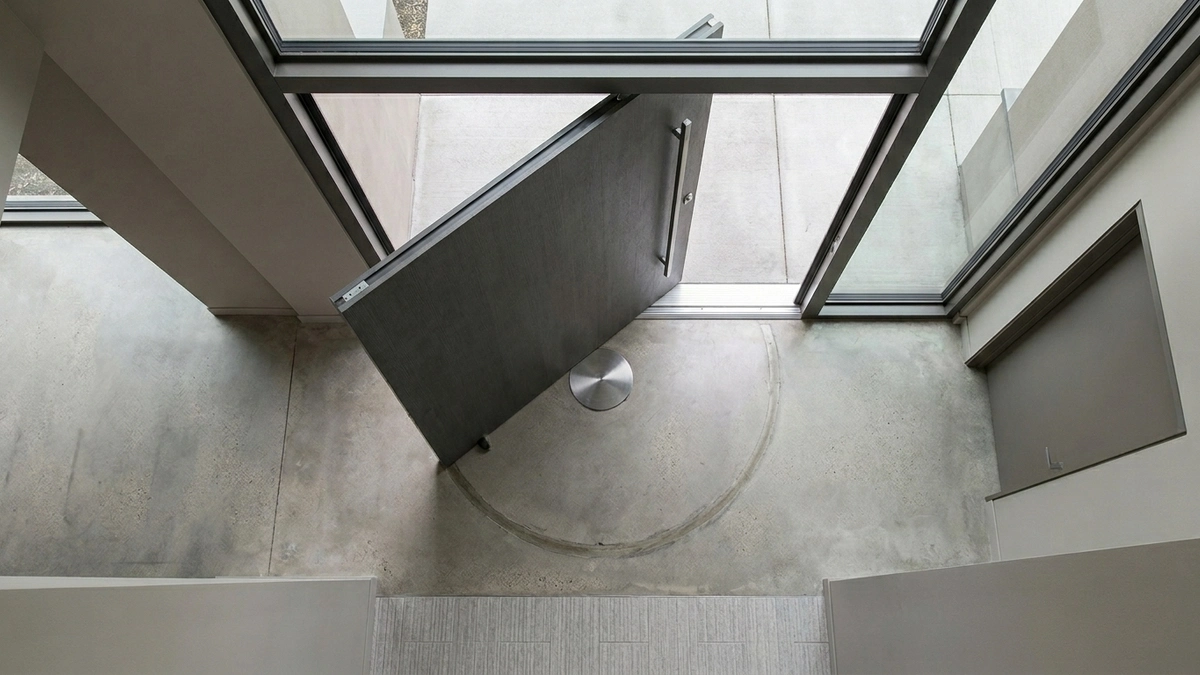
A pivot door is a door that rotates on a pivot point at the top and bottom rather than on standard side hinges attached to the jamb. These doors are common in modern homes because they can support larger, heavier door panels and create a clean architectural look.
. Related reading: Sliding Door Mezuzah.
From a design standpoint, the difference is obvious. A pivot door can make the entrance look less standard, and that leads people to wonder whether the mezuzah obligation changes too. However, from a mezuzah standpoint, the hinge is usually not the first question. The more important issue is whether the opening still has the halachic status of a doorway. Related reading: Do Decorative Doorways Need a Mezuzah? When Design Changes the Rule.
Why Modern Hinge Types Don’t Change the Mezuzah Obligation
A pivot door may look very different from a standard front door, but in many cases it still requires a mezuzah. The key halachic question is usually not the hinge style. It is the doorway itself.
If the opening functions as a real entrance to a lived-in space and has the basic features of a halachic doorway, a mezuzah is often still required. That means modern design does not automatically create an exemption. At the same time, pivot doors can raise real placement questions, especially when the frame is recessed, oversized, or built in an unusual way.
. We cover this in more depth in Do Automatic or Smart Doors Affect Mezuzah Placement? What You Need to Know. Related reading: Can Vibration Damage a Mezuzah? Doors, Movement, and Real Risk.
If you have a pivot door that’s creating a modern hinge mezuzah concern, the right approach is simple: do not assume the modern hardware changes the mitzvah, but do take the structure of the doorway seriously. So if your pivot door opens into a residential entrance, room, or area that otherwise qualifies, the fact that it swings on a pivot does not by itself remove the obligation.
Why Pivot Doors Create Confusion
Pivot doors often create confusion because they change how the entrance looks, even when they do not change the basic doorway itself.
For example, the swing point may be inset from the edge of the door. The frame may be extra wide. The sideposts may look minimal. In some homes, large glass panels or hidden structural details make it less obvious where the halachic doorway begins and ends.
That is where people can go wrong. They see a modern entrance and assume it must follow a different set of mezuzah rules. Usually, the rules themselves have not changed. What changes is the need to identify the doorway correctly.
Does a Pivot Hinge Change the Mezuzah Requirement?
Usually, no. A pivot hinge does not by itself cancel the mezuzah obligation.
If the opening has the structure of a real doorway and leads into a space that is obligated in mezuzah, the entrance may still require one even though the door uses a modern pivot system. The hinge mechanism is not what creates the mitzvah and is not what normally removes it.
That is the main point many homeowners need to hear. A pivot door is still a door. Modern hardware does not automatically create a loophole. Still, the details matter. If the doorway is highly unconventional, if the side framing is not clear, or if the opening does not meet the usual conditions of a doorway, the exact ruling may need to be checked more closely.
Where Should a Mezuzah Go on a Pivot Door?
This is often the real question.
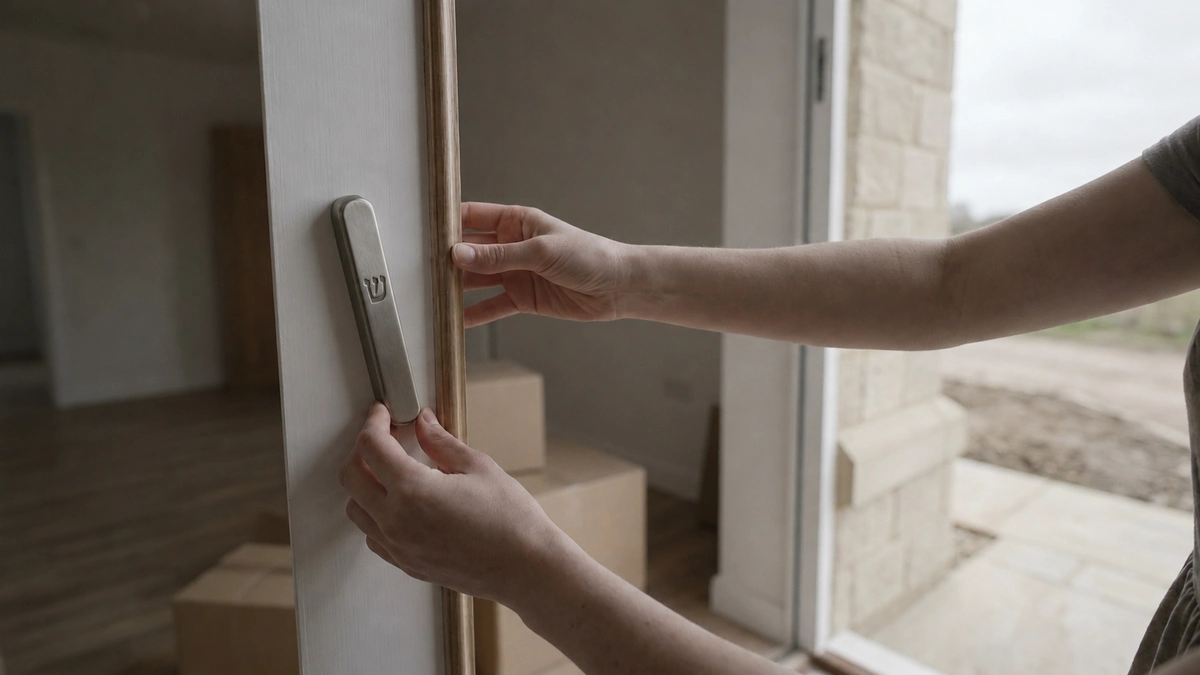
A mezuzah is placed on the doorway, not on the moving door panel itself. The halachic sources place it on the right side of entry and in the upper third of the doorway. On a standard door, that is straightforward. On a pivot door, it can take more care to identify the correct sidepost and the correct placement line.
If the pivot is recessed from the edge, the visual movement of the door may distract from the real frame. If the entrance is oversized, you may need to determine which structural element is serving as the actual doorway. If the design is very minimal, the placement question can become more technical even when the doorway is likely obligated.
That is why pivot door mezuzah questions are usually more of a placement concern than an exemption issue.
Unusual Doors Mezuzah Rules: Special Cases That Need Closer Review
Some pivot doors deserve extra review before placement. That includes extra-wide entrances, glass-heavy frames, hidden or minimal sideposts, unusual overhead structures, and highly custom architectural openings. Interior pivot doors can also raise different questions depending on what room they serve.
In those cases, the right next step is not guessing. It is reviewing the specific doorway carefully, ideally with measurements and clear photos.
What To Do If You Are Unsure
If your pivot door has a normal-looking frame and serves as a regular entrance to a lived-in area, there is a good chance the doorway is still obligated in mezuzah. But if the architecture is unusual, the exact placement should be checked carefully.
The best approach is to ask someone who can look at the actual structure of the opening, not just the style of the door. A photo of the full frame, the sideposts, and the top of the opening can make a big difference.
If your pivot door is made of glass, the glass door mezuzah discussion is also worth reviewing, as glass frames introduce additional considerations about the doorposts themselves. Similarly, automatic door mezuzah placement follows similar reasoning when the door type is unconventional, the doorway's structure, not its mechanism, controls the halacha. If you have an open concept mezuzah question alongside your pivot door question, those two discussions often overlap in homes with modern architectural layouts.
If you are counting how many doorways in your home require mezuzahs, a practical room-by-room approach is the most reliable method. Our guide on how many mezuzahs you need can help you walk through your home systematically. And if any wall material raises questions about how to affix the mezuzah case, our article on mezuzah wall material addresses the most common scenarios.
Conclusion
A pivot door does not automatically exempt a home from mezuzah. In many cases, the obligation remains because the doorway, not the hinge style, is what matters most.
The important thing is to evaluate the entrance correctly. If the doorway has the features of a halachic opening and leads into a qualifying residential space, a mezuzah may still be required. The modern design may affect how you analyze placement, but it does not usually erase the mitzvah.
If you are not sure how your specific pivot door should be treated, we can help you think through the structure and the correct placement.
About Kosher Mezuzah
At Kosher Mezuzah, every mezuzah scroll we sell is written by a vetted sofer (Torah scribe) and reviewed by a trained magiah (halachic mezuzah examiner). Our process is endorsed by the Orthodox Union, and every scroll comes with full traceability, including the name of the sofer who wrote it, the name of the magiah who checked it, the date it was written, and an image of your actual scroll. This level of transparency exists because the mitzvah of mezuzah deserves it.
We understand that questions about unusual door types, pivot doors, removable wall mezuzah situations, or non-standard frames, can leave a homeowner uncertain about what to do. Our goal is to help you fulfill the mitzvah with clarity and confidence, not to rush you toward a purchase. If you have a question about your specific doorway, we encourage you to ask your rav first, and we are happy to assist with the practical side once the halachic question is resolved.
If you are ready to ensure that every doorpost in your home carries a kosher, verified mezuzah scroll, we are here to help. Reach out to us at Kosher Mezuzah and we will guide you through the process with care and halachic precision. May the mezuzot on your doorposts be a zechus (merit) for your family, and may your home be filled with Torah, shalom, and the blessing of Hashem.



.svg)
Bring a true Kosher Mezuzah into your home
Fulfill the mitzvah with confidence, beauty, and meaning.
Buy a Mezuzah