


How to Choose a Reliable Kosher Mezuzah Vendor
Choosing the right kosher mezuzah vendor is one of the most important steps in fulfilling this mitzvah properly. The scroll itself, the klaf (parchment) and what is written on it, is the heart of the mitzvah. If the scroll is not kosher, the mitzvah is not fulfilled, no matter how beautiful the case or how sincere the intention. Many families discover only after years that the mezuzah hanging on their doorpost was never valid to begin with. That is a painful reality, and an avoidable one. This article will help you understand what makes a vendor trustworthy, what questions to ask, and how to make sure your home is truly guarded by a mezuzah written and sold with integrity.
Key Takeaways
- A trustworthy kosher mezuzah vendor must provide complete transparency about who wrote the scroll, who examined it, and what halachic standards were followed before purchase.
- An invalid or unchecked scroll does not fulfill the mitzvah of mezuzah, regardless of the case's beauty or your intentions, making vendor reliability essential.
- Many authorities teach that the mitzvah is fulfilled continuously, every moment a kosher scroll remains affixed to your doorpost, making the quality of the initial purchase and ongoing maintenance critical.
- When selecting a kosher mezuzah vendor, verify the sofer's name, magiah reviewer credentials, script style (Beit Yosef, Arizal, or Sefaradi), and that the parchment is from a kosher animal.
- Purchasing based on price alone almost always reflects compromises in parchment quality, checking standards, or scribe qualifications—avoid unusually low prices as a serious halachic risk.
- Regular inspection by a qualified magiah about every three and a half years (twice every seven years, as the halacha requires) ensures your mezuzah remains valid, as even previously kosher scrolls can become invalid due to fading, cracking, or letter damage over time.
How to Choose a Reliable Kosher Mezuzah Vendor
What Makes a Kosher Mezuzah Vendor Trustworthy?
A reliable kosher mezuzah vendor is one who can tell you exactly who wrote your scroll, who checked it, and what standards were used, before you buy. This is not a luxury. It is a basic requirement for fulfilling the mitzvah with confidence. The classic halachic work Keset HaSofer (1:1) writes clearly that one must not rely on guesswork when it comes to purchasing tefillin and mezuzos: one must acquire them only from an expert, G-d-fearing sofer. Today, a trustworthy vendor serves that same function: a knowledgeable, accountable source you can rely on. If you are not sure where to begin, you are welcome to reach out to Kosher Mezuzah for guidance on choosing the right scroll for your home.
The Halachic Basis: Why the Vendor Matters So Much
The mitzvah of mezuzah is unlike buying any other Judaica item. The Rambam (Hilchot Tefillin u'Mezuzah 1:15) rules that a mezuzah written by someone who is not qualified is pasul (invalid), and affixing it fulfills no mitzvah at all. The Shulchan Aruch (Yoreh De'ah 288) establishes that every letter of the mezuzah must be written with proper kavanah (intention), on kosher klaf (parchment), with kosher dio (ink), and with complete halachic precision in every stroke.
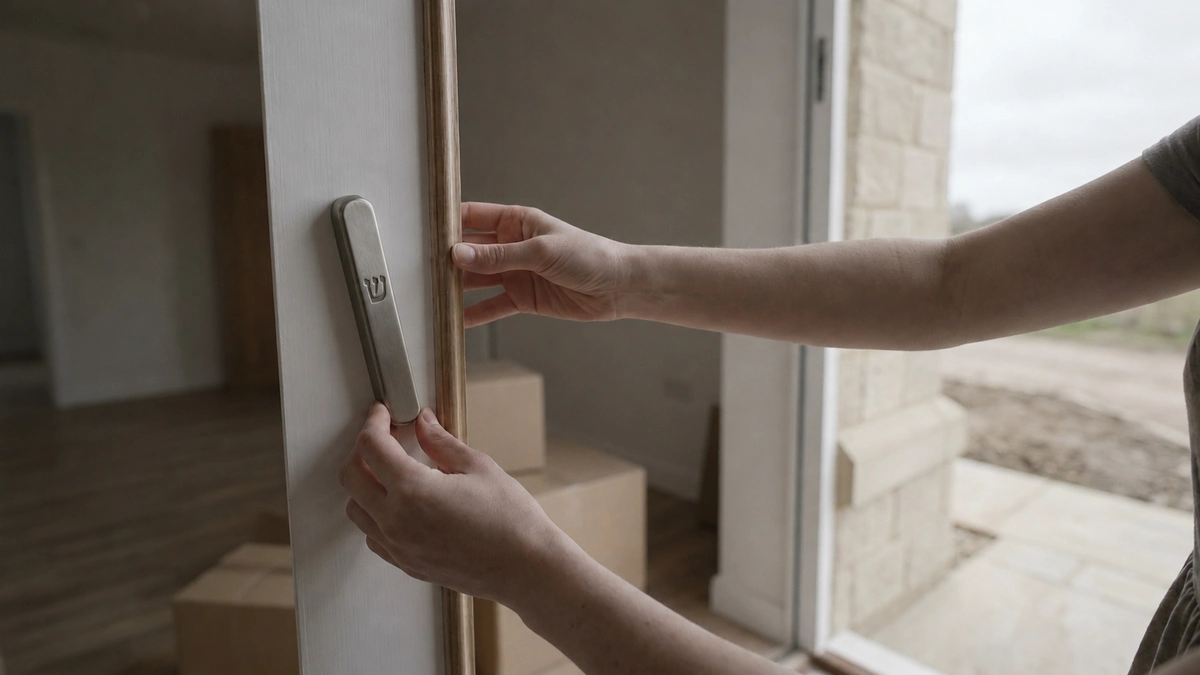
The Tur (Yoreh De'ah 289) rules that the mezuzah is affixed within the outer handbreadth (tefach) of the doorpost, closest to the outside, so that one encounters it immediately upon entering, a placement the Gemara itself links to the idea that the house rests under its protection. The Tur (Yoreh De'ah 285) also quotes the Maharam of Rothenburg, who wrote that any home fixed with a mezuzah according to halacha, no damaging spirit can rule over it. These words are not poetry. They reflect a deeply held emunah (faith) that the mitzvah, when performed correctly, carries genuine spiritual power. But the word "correctly" carries enormous weight.
The Gemara in Menachot (33b) teaches that Hashem's servants dwell inside, and He guards them from without, a beautiful image of how the mezuzah connects our daily life to Divine protection. Later authorities, such as the Sefer Charedim (Mitzvot Aseh 4:18), go further, explaining that a person fulfills the mitzvah of mezuzah every single moment that a kosher scroll is affixed in his doorway. Every moment. That means every day your family walks through that door, you are either fulfilling the mitzvah, or you are not. The difference lies entirely in the quality and kashrus of the scroll.
This is why the vendor is not just a merchant. A reliable kosher mezuzah vendor is a link in a chain of accountability that begins with the sofer's quill and ends at your doorpost. If that chain has gaps, if you cannot identify who wrote the scroll, who checked it, or what standards were followed, the chain is broken. The mezuzah certification process exists precisely to close those gaps and give buyers a clear, verifiable record.
Practical Application: What to Look For Before You Buy
When evaluating a kosher mezuzah vendor, there are several concrete things you should be able to confirm. First, you should know the name of the sofer (scribe) who wrote the scroll. Second, it is worth knowing whether a magiah (halachic mezuzah examiner) reviewed the scroll after it was written, and who that magiah is; while a magiah's review is a widespread and praiseworthy safeguard, the core halachic requirement is that the scroll be written correctly by a qualified sofer. Third, you should be able to see, or at minimum know, what ksav (script style) was used: Beit Yosef (common among Ashkenazim), Arizal (common among Chassidim), or Sefaradi. Fourth, the vendor should be able to confirm that the klaf (parchment) is from a kosher species and prepared lishmah (for the sake of the mitzvah), and that the writing itself was done lishmah as well, which is the more fundamental requirement.
A trustworthy vendor will answer these questions clearly, without hesitation. If a seller cannot tell you who wrote the scroll or who checked it, that is a serious warning sign. Opacity in this area has allowed invalid mezuzos to reach Jewish homes for generations. It is also worth knowing that buying from a cheaper, unaccountable source carries real halachic risk, a subject explored in depth in our article on the risks of buying a cheap mezuzah.
Beyond the scroll itself, a reliable vendor should also be able to guide you on sizing. Different doorways have different requirements, and a vendor who understands halacha will help you choose the right scroll, not just the least expensive one. When you are ready to find a scroll that meets these standards, you can browse our verified selection at Kosher Mezuzah's shop.
Common Mistakes That Affect the Mitzvah
One of the most widespread mistakes is purchasing a mezuzah based on price alone. A very low price almost always reflects a compromise somewhere, in the quality of the klaf, in the level of checking, or in the credentials of the sofer. Another common error is assuming that any Judaica store or online seller carries scrolls that have been properly verified. Unfortunately, this is not always true. Even well-intentioned sellers sometimes carry scrolls they have not adequately vetted.
A second mistake is relying solely on a generic hashgacha (certification) stamp without understanding what it covers. Some certifications confirm only that the materials are kosher: others verify the actual writing as well. Ask specifically: does this certification confirm that the scroll was written and checked by qualified individuals whose names are known? If the answer is vague, ask again, or look elsewhere. Our article on what to ask before buying a mezuzah provides a full list of the right questions to bring to any vendor.
The Deeper Meaning: Why This Mitzvah Calls for Such Care
The Beit Yosef cites the Zohar (Parashat Vaetchanan): the mezuzah is affixed so that every person is guarded by Hakadosh Baruch Hu when he goes out and when he enters. This is the secret of the verse, "Hashem shall guard your going out and your coming in." Our Sages taught that one who is careful with the mezuzah merits a beautiful dwelling (Shabbat 23b), and the Gemara in Avodah Zarah (11a) records that when the convert Onkelos bar Kelonimos was being led away by Roman soldiers, he paused at a doorway and placed his hand on the mezuzah, explaining to them: an earthly king sits within while his servants guard him from without, but Hashem's servants sit within while He guards them from without, a teaching that so moved the soldiers that they converted as well.
The mezuzah is not merely a sign of Jewish identity. As our additional sources explain, it functions like a written Kriyat Shema fixed in the body of the home, a continuous declaration of Hashem's Oneness dwelling within your walls. The Lubavitcher Rebbe, in his worldwide mezuzah campaign of 1974, stressed on countless occasions that everything must be in strict adherence to halacha, kosher mezuzos, written and affixed properly. The spiritual power of the mitzvah is inseparable from its halachic integrity. This is precisely why the choice of vendor matters so deeply.
Key Takeaway
A reliable kosher mezuzah vendor is one who can provide you with full, verifiable information about who wrote your scroll, who checked it, and what standards were used. Many authorities teach that the mitzvah of mezuzah is fulfilled every moment a kosher scroll remains on your doorpost, and that this fulfillment lapses whenever it does not. A trustworthy vendor is the essential link between the sofer's work and your family's zechus (merit). Do not settle for vague assurances or unusually low prices. Ask the right questions, and choose a vendor who answers them clearly and completely.
About Kosher Mezuzah
At Kosher Mezuzah, every scroll we carry is written by a qualified sofer and reviewed by a trained magiah. We work within a verified system endorsed by the Orthodox Union (OU), an endorsement of Kosher Mezuzah. Our process is built on traceability: you can know who wrote your scroll, who checked it, and what materials were used. We believe that this level of accountability is not a feature, it is a basic obligation.
We also encourage every customer to have their mezuzos checked by a qualified magiah about every three and a half years, twice every seven years as the halacha requires, and more frequently in harsh climates. A mezuzah that was once kosher may become pasul (invalid) over time due to fading, cracking, or other damage to the letters. Proper fulfillment of the mitzvah includes ongoing care, not just a one-time purchase.
If you have questions about whether your current mezuzos are kosher, whether a particular doorway requires a mezuzah, or how to choose the right scroll for your home, we are here to help. Please contact us and we will be glad to assist you in fulfilling this precious mitzvah with clarity and confidence.
May every home that is guarded by a kosher mezuzah be blessed with shalom, health, and the continuous presence of the Shechina within its walls. יְהִי שָׁלוֹם בְּחֵילֵךְ.


.svg)
Bring a true Kosher Mezuzah into your home
Fulfill the mitzvah with confidence, beauty, and meaning.
Buy a Mezuzah