

Landlord vs. Tenant: Who Is Responsible for a Mezuzah in a Rental?
When a Jew rents an apartment or house, one of the first practical questions is simple: in a landlord tenant mezuzah case, who carries the mitzvah? Is the mezuzah the landlord's job because he owns the property, or is it the tenant's job because he lives there? Halacha answers that question clearly. The obligation normally follows the resident, not the owner. Once that principle is understood, the rest of the rental mezuzah rules become much easier to apply. Related reading: A Landlord Said No. She Said Yes.
Landlord vs. Tenant Mezuzah Obligation
The short answer is that the tenant, not the landlord, carries the main mezuzah obligation in a normal rental. The landlord owns the walls, but the mitzvah is tied to the person who lives in the space. In practical terms, that means the tenant is the one who must make sure the mezuzah is present, properly affixed, and kosher.
This is the heart of the landlord mezuzah responsibility question. A landlord may choose to help, may leave mezuzahs in place, or may even pay for them voluntarily. But the mitzvah itself is generally fulfilled by the person dwelling there. So if someone asks, who installs mezuzah apartment doorways in a rental? the halachic answer is: normally, the tenant does.
Landlord Mezuzah Responsibility and the Halachic Basis
The Talmud states the principle very clearly. In Pesachim 4a, mezuzah is described as the obligation of the resident. Bava Metzia 101b applies that rule directly to rentals and teaches that when one person rents a house to another, the tenant is responsible for the mezuzah. Shulchan Aruch and Rambam codify the same rule.
That is why the mezuzah responsibility rental property question is not mainly about ownership. It is about residence. The mitzvah follows the act of living in the home. The landlord therefore does not bear the primary halachic duty simply because the property belongs to him. The tenant, as the person turning the structure into an actual Jewish dwelling, becomes the one responsible for the mezuzah.
The broad question of mezuzah obligation is explored in greater depth in a dedicated article on our site.
Rental Mezuzah Rules: When the Obligation Begins
The timing for the tenant mezuzah obligation depends on where the rental is located. The Gemara in Menachot 44a states that outside Israel, a renter becomes obligated after 30 days. In Eretz Yisrael, the obligation begins immediately. That distinction is brought in the halachic codes as well.
In practice, this means the basic mezuzah responsibility for rental property is not identical everywhere. In the Diaspora, the formal obligation begins after thirty days. In Israel, it begins right away. Because long-term rentals can raise additional halachic questions, many contemporary authorities advise putting mezuzot up immediately even outside Israel and then asking a rav how to handle the blessing. That is a practical detail, however, and should be presented as later guidance, not as the plain wording of the Gemara.
Mezuzah Responsibility in Rentals: Tenants, Move-Ins, and Move-Outs
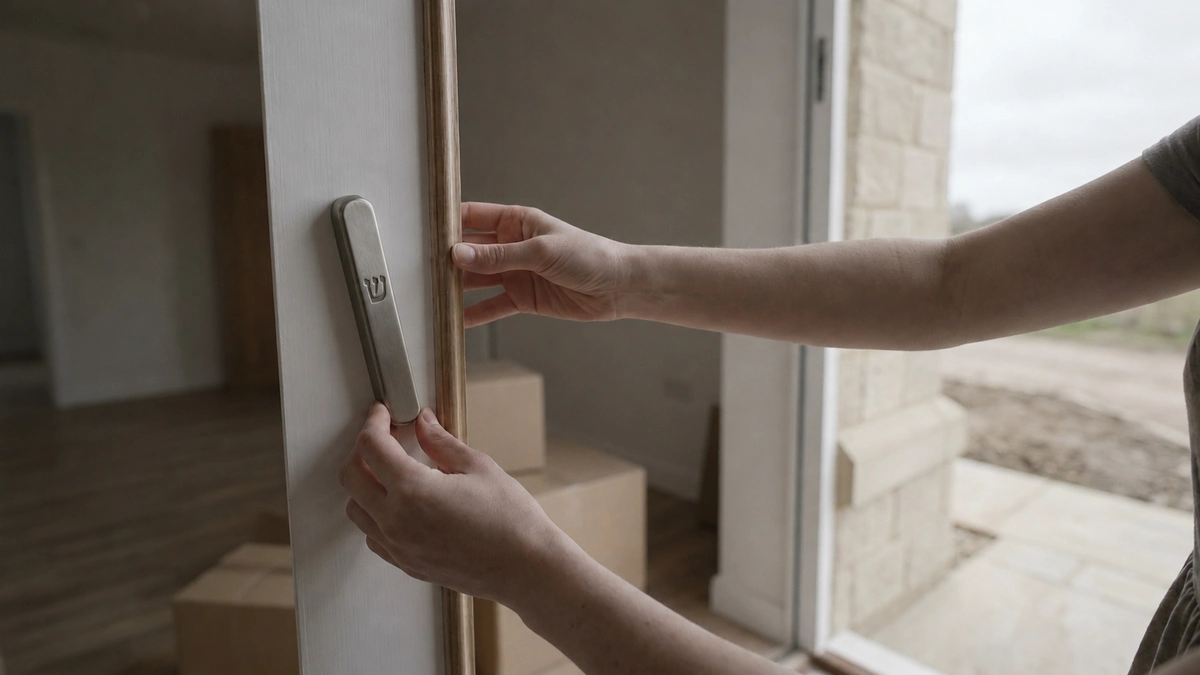
Once the basic rule is clear, several common cases become easier to understand. If you move into a rental and the doorposts require mezuzot, the tenant must make sure the mezuzot are there and kosher. If old mezuzahs were left behind, that does not end the inquiry. The new resident still has to verify that they are valid. For a complete guide to the renter mezuzah process, including when and how to recite the blessing, we have a dedicated resource available.
When you move out: When a Jewish tenant vacates, he may not take the mezuzahs with him if another Jewish tenant is moving in. If another Jewish tenant will live there, the outgoing tenant should not remove the mezuzahs and leave the home bare. The Gemara treats that seriously. If the next occupant is not Jewish, the rule is different, and the mezuzahs are generally removed rather than left in a place where they may be treated improperly.
When renting from or to a non-Jew: If a Jewish tenant is renting from a non-Jewish landlord, or renting to a non-Jewish tenant, the rules differ. When vacating such a rental, the Jew takes his mezuzahs with him, since there is no obligation to leave them for the non-Jewish occupant.
In shared apartments and stairwells: When multiple Jewish tenants share a building, all of them share in the obligation for common areas such as stairwells and lobbies. Each tenant must contribute to the cost of a mezuzah for shared spaces. For situations involving disagreements between roommates, see our article on mezuzah roommate disputes, which addresses how halacha handles those cases. A related discussion on who pays for a mezuzah in a shared apartment covers the cost-sharing halacha in detail.
When you move out: When a Jewish tenant vacates, he may not take the mezuzahs with him if another Jewish tenant is moving in. The halacha preserves the next resident's ability to benefit from the mitzvah immediately. If the incoming tenant is non-Jewish, the outgoing tenant must take the mezuzahs, removing them protects the sacred scrolls from possible disrespect. If the first tenant insists on compensation for the cost of the mezuzahs, the incoming tenant is required to pay him.
The Deeper Meaning of the Tenant Mezuzah Obligation
There is also an important idea behind this halacha. Mezuzah is not just a feature of the building. It is a sign that the people living there are making the home into a Jewish home. That is why the obligation follows the resident. The mitzvah is connected to lived Jewish presence, not only to legal title.
Seen that way, the landlord tenant mezuzah question is about more than who pays for a small object on the doorpost. It is about who is charged with sanctifying the doorway through daily Jewish life. The tenant who lives in the home, enters it, leaves it, and builds a household there is the one who carries that responsibility.
Understanding mezuzah responsibility in all its forms is one step toward fulfilling this mitzvah with greater awareness and intention.
Key Takeaway
The tenant, not the landlord, is responsible for affixing and paying for the mezuzah in a rental. This obligation begins after 30 days in the Diaspora and immediately in Eretz Yisrael, though many Poskim advise affixing right away. When a tenant moves out and a Jewish tenant moves in, the mezuzahs must remain. The mezuzahs in a rental must be kosher, regularly checked, and properly affixed, this is the tenant's ongoing responsibility throughout the rental period. If you share a dwelling with others, the shared apartment mezuzah responsibility for common areas falls on all residents equally.
Fulfilling the Mitzvah with Confidence
At Kosher Mezuzah, every scroll we offer is written by a vetted sofer (scribe) and reviewed by a magiah (halachic mezuzah examiner) trained in the laws of Stam (sacred handwritten texts). Our mezuzahs are produced through a process endorsed by the Orthodox Union, and each scroll comes with full traceability, you can know who wrote it, who checked it, and when. This level of accountability exists because the mitzvah deserves it.
Every mezuzah should be checked by a qualified sofer or magiah at least twice every seven years, and more frequently in humid or exposed conditions. A mezuzah that has not been checked may have become pasul without anyone knowing. We make it easy for renters and homeowners alike to keep their mezuzahs in proper halachic condition.
If you are moving into a new rental and need guidance on which doorways require a mezuzah, what level of kashrus to look for, or how to fulfill this mitzvah properly from day one, please contact us. We are here to help you fulfill the mitzvah of mezuzah with clarity and peace of mind. May the zechus of this mitzvah bring protection and blessing to your home and all who enter it, , fulfilling the verse: Hashem yishmor tzeitcha u'bo'echa me'ata v'ad olam (Hashem will guard your going out and your coming in from now and forever).



.svg)
Bring a true Kosher Mezuzah into your home
Fulfill the mitzvah with confidence, beauty, and meaning.
Buy a Mezuzah