

Outdoor Mezuzah Case: What to Take into Consideration with Choosing an Indoor vs. Outdoor Mezuzah Case
An outdoor mezuzah case needs to do something an indoor case never has to: stand up to rain, wind, sun, and temperature swings — all while keeping the scroll inside clean, dry, and kosher.
Choosing an outdoor mezuzah case is not just a style decision. It is about protecting the mezuzah scroll from rain, humidity, heat, cold, and direct sun so it can remain in proper condition over time. Many people assume any mezuzah case will do, but what works well indoors may not offer enough protection for an exposed doorway, porch, or gate. If you are deciding between an indoor and outdoor mezuzah case, this guide will help you understand what matters most and how to choose wisely.
Kosher Mezuzah is dedicated to ensuring the proper fulfillment of this mitzvah. For over 40 years, we've handwritten mezuzah scrolls in Eretz Yisrael to the highest standards. With OU endorsement, you can fulfill the mitzvah of mezuzah with confidence.
Key Takeaways
- An outdoor mezuzah should be protected with a durable, weather-resistant case that fits the klaf properly and helps keep out rain, moisture, and excessive sun exposure.
- A case made for indoor decorative use should not be used outdoors unless it truly protects the klaf from weather damage.
- Moisture, heat, and age can damage the parchment or ink and may render a mezuzah pasul.
- Damage is not always obvious, so a mezuzah should be checked by a qualified sofer when there is any concern.
- Openings such as exterior doors, balcony doors, porches, and some gates may require mezuzah depending on the halachic details of the doorway.
- If a mezuzah may have been exposed to moisture or shows signs of deterioration, it should be brought to a qualified sofer promptly.
- The standard halachic checking schedule for a private mezuzah is twice in seven years, with earlier inspection warranted when exposure or damage is suspected.
An outdoor mezuzah case is not simply a decorative choice. It is a halachic necessity for any doorpost exposed to weather. When a klaf is damaged by moisture, heat, or physical wear, the letters can crack, fade, or peel away, rendering the mezuzah pasul (invalid). A mezuzah that has become pasul no longer fulfills the mitzvah, and the obligation on that doorpost goes unfulfilled.
The Halachic Basis: Why the Case Matters So Much
The reason the case matters so much is simple: the mitzvah is fulfilled only when the klaf inside remains kosher. A mezuzah is not just a symbol on the doorpost. If the parchment becomes faded, cracked, or damaged by moisture, the mezuzah can become pasul. That means the case is not an accessory to the mitzvah — it is part of what protects the mitzvah in practice.
. We cover this in more depth in Best Waterproof Mezuzah Cases.
This matters even more because mezuzah is placed on the outer part of the doorway, where it is naturally more exposed. On an exterior entrance, the klaf may face rain, humidity, heat, and sun over time. A weak or decorative case may look beautiful and still fail at the one thing that matters most: preserving the scroll inside.
There is another layer as well. Chazal and the poskim present the mezuzah as something that should be present on the doorway in a visible and dignified way. So for an outdoor opening, the ideal case does two jobs at once: it protects the klaf from damage, and it makes the mezuzah clearly recognizable. In that sense, the right case does not add to the mitzvah from the outside — it helps preserve both the mezuzah’s validity and its proper presence on the home.
What Makes a Case Suitable for Outdoors
A mezuzah case for an exterior doorway should protect the klaf from the conditions it will actually face there — especially rain, moisture, heat, and sun. In practice, that means using a durable case that fits the scroll properly and closes securely. The essential point is not a specific material formula, but whether the case can realistically shield the klaf from damage over time.
The case should also be sized correctly so the scroll can rest inside without being forced, bent, or compressed. If a klaf is stressed physically or exposed to moisture, the writing can be affected and the mezuzah can become pasul. So the standard is not simply that the case look protective from the outside, but that it actually preserve the kosher condition of the scroll within.
For partially sheltered openings, the question remains the same: will this doorway still expose the mezuzah to damaging conditions? If the area can still get wet, humid, or subject to strong temperature changes, an outdoor-rated case is the better choice. When there is doubt, the right approach is to choose the case that gives the klaf stronger protection, because preserving the mezuzah’s validity is part of the halachic requirement itself.
Practical Steps: Choosing and Installing the Right Case
When you walk your property to identify where outdoor mezuzah protection may be needed, begin with the outermost entrance and work inward toward the house. Start with any gate, yard entrance, porch entry, or backyard access point, and then continue to exterior doors such as side doors, balcony doors, and the front entrance. Any doorway that may require a mezuzah and is exposed to weather should be fitted with a case suited for outdoor conditions. Our room-by-room guide to mezuzah obligations can help you determine which openings are obligated in the first place.
The practical next step is to identify any doorway that may require a mezuzah and is exposed to outdoor conditions, and make sure the case used there is suited to that exposure. Exterior doors, balcony doors, porch entries, yard entrances, and similar openings should first be evaluated for the mezuzah obligation itself, and then for whether the case is adequate for rain, humidity, heat, and sun.
Where an outdoor or semi-outdoor mezuzah is already installed, the practical question is whether the current case is truly protecting the klaf. If the case is loose, poorly sealed, undersized, or not designed for exterior exposure, the mezuzah should be brought to a qualified sofer for inspection. That is especially true where there is reason to suspect moisture, since damage is not always apparent from the outside and may affect the mezuzah’s kosher status even when the problem is not obvious.
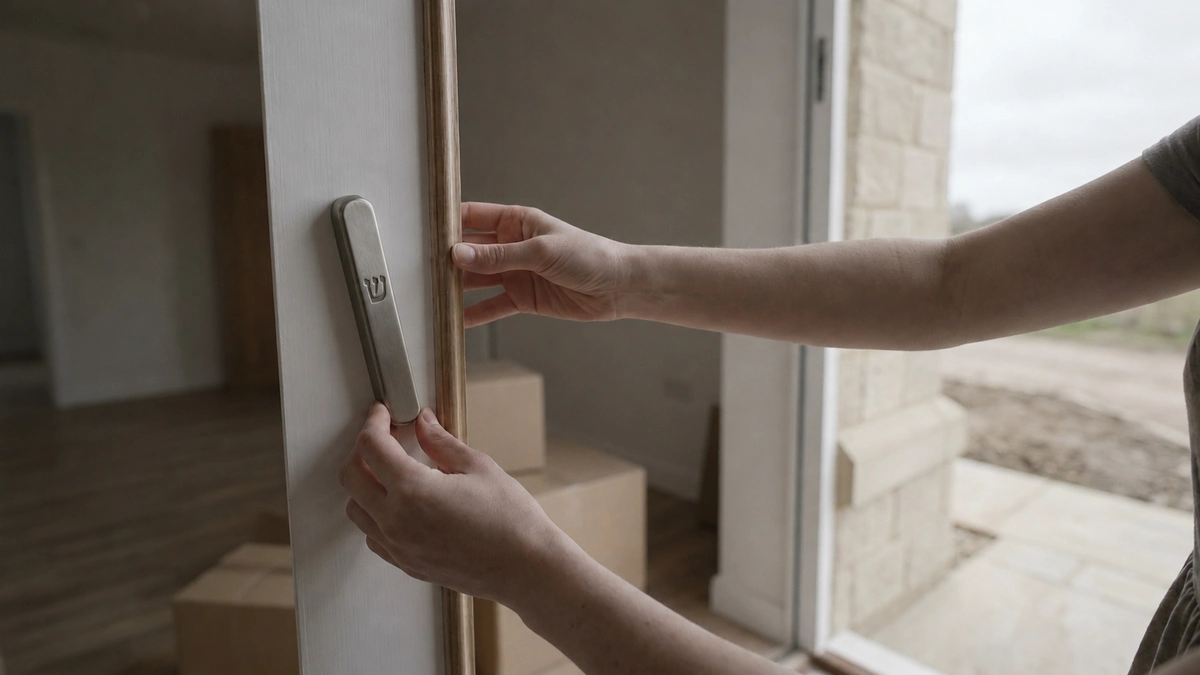
For a new installation, choose a case made for outdoor use and sized correctly for the specific klaf. The doorway itself should also be confirmed to meet the halachic requirements for mezuzah before installation. Our comprehensive halachic placement guides covers those doorway requirements in detail. If there is uncertainty about the doorway, the placement, or the right case to use, ask your rav before proceeding.
Kosher Mezuzah
Kosher Mezuzah carries cases specifically designed for outdoor use, with sealed backs and durable material suited for doorposts that face the elements. Every scroll we offer is written on genuine klaf by a vetted sofer and reviewed by a qualified magiah, and our process is endorsed by the Orthodox Union, one of the most trusted kosher certification bodies in the world. We provide full traceability — the name of the sofer, the date of writing, and the materials used — for every mezuzah we offer. We believe that transparency is not a feature. It is the baseline for fulfilling this mitzvah with confidence.
We also offer guidance on frequently asked questions about outdoor mezuzah cases, including whether a particular doorpost requires a mezuzah or what grade of case it needs. For complex placement questions, especially about semi-covered porches, gates, or unusual doorway structures, please consult your rav.
Regular checking is part of the mitzvah. Mezuzahs should be inspected by a competent sofer twice every seven years under normal conditions, and more frequently when exposed to harsh weather or extreme humidity. A scroll that is pasul is not fulfilling any mitzvah, no matter how beautiful the case around it may be. We are here to help you fulfill this mitzvah fully, correctly, and with the peace of mind that comes from knowing your mezuzahs are truly kosher.
If you would like guidance on selecting the right outdoor case for your doorposts, reach out to us through our shop or visit our mezuzah learning center for additional halachic resources. May the mezuzahs on your doorposts be a source of shmirah (protection) and bracha for your entire household, and may you and your family be blessed with long life, health, and the ongoing zechus of fulfilling this beautiful mitzvah properly.

.svg)
Bring a true Kosher Mezuzah into your home
Fulfill the mitzvah with confidence, beauty, and meaning.
Buy a Mezuzah