

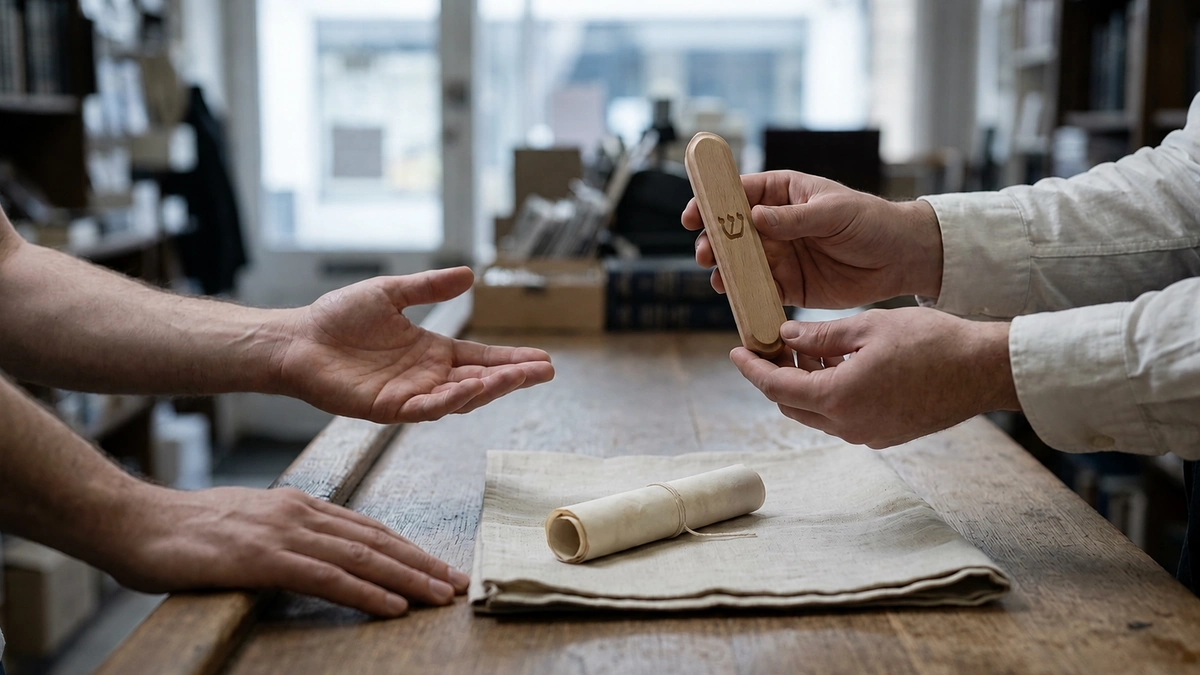
What Should You Ask Before Buying a Mezuzah? A Practical Halachic Guide
Buying a mezuzah is not like buying any other item. The scroll inside, the klaf (parchment) bearing Hashem's words, is either kosher or it is not. A beautiful case means nothing if the scroll is pasul (invalid). And yet many people walk into a store or visit an online shop, see a price tag, and assume that what they are getting is halachically acceptable. That assumption has caused countless Jewish homes to go without a valid mezuzah for years, sometimes decades, without anyone knowing. Knowing what to ask before buying a mezuzah is one of the most important steps a person can take to fulfill this mitzvah properly. Related reading: Buying Mezuzahs in Bulk. Related reading: Can You Fulfill the Mitzvah of Mezuzah Without Knowing It?.
Key Takeaways
- The kosher status of the scroll, not the beauty of the case, determines whether a mezuzah fulfills the mitzvah.
- Before buying a mezuzah, always ask for the specific name of the sofer (scribe) who wrote it and the magiah (examiner) who checked it, along with documentation of their credentials.
- A suspiciously low price is a warning sign that the scroll may not have been written by a qualified sofer or properly inspected.
- Verify halachic oversight from a recognized authority and the date the scroll was written and last checked, since improperly stored mezuzot can become invalid over time.
- Choose a mezuzah scroll in the ksav (script) that matches your community's tradition and confirm it is the appropriate size for your doorpost before purchasing.
- A reputable seller will provide transparent answers with specific details about the scroll's provenance; vague reassurances or claims that the scroll is 'from Israel' are not sufficient.
What Should You Ask Before Buying a Mezuzah?
Before you buy a mezuzah, the single most important question to ask is: who wrote this scroll, and who checked it? The mitzvah of mezuzah is fulfilled through a kosher klaf written by a qualified sofer (scribe) and inspected by a trained magiah (halachic mezuzah examiner). Without that foundation, the physical scroll has no halachic value, no matter how much it costs or how it looks. If a seller cannot answer these questions clearly and specifically, that is itself an important answer. You can browse verified mezuzah scrolls with full documentation at Kosher Mezuzah to see what halachic transparency looks like in practice.
The Halachic Basis for Asking
The Torah commands us in Parashat Va'etchanan and Parashat Eikev to write Hashem's words on the doorposts of our homes. The Rambam (Mishneh Torah, Hilchot Mezuzah) and the Shulchan Aruch (Yoreh De'ah 285–295) set out in detail what makes a mezuzah kosher. The sofer must be a halachically qualified Jewish male who is G-d-fearing and writes with proper kavanah (intention); a mezuzah written by a non-Jew, woman, or minor is invalid. The letters must be formed correctly, a requirement known as tzurat ha'ot. The klaf must be made from the skin of a kosher animal that has been processed (ibud) for the sake of the mitzvah (lishmah). The ink, known as dio, must be permanent and halachically valid. A single missing or malformed letter can render an entire scroll pasul. Because these requirements are technical and demanding, the Poskim teach us that we may not simply assume a scroll is kosher, we must verify it.
The Divrei Yatziv and the introduction to Mezuzot Beitecha both emphasize that the positive commandment of mezuzah is fulfilled, or violated, every single moment. If a scroll is not written or fixed properly, a person continuously fails to fulfill this positive commandment (mitzvas aseh) of mezuzah. This is not a theoretical concern. Many scrolls sold in gift shops, on general marketplace websites, and even in some Judaica stores have been found to be pasul upon examination. The stakes of this mitzvah demand that we ask the right questions before we buy.
What to Ask About the Sofer and Magiah
The first category of questions concerns the people who produced the scroll. You should ask: What is the name of the sofer who wrote this mezuzah? What is the name of the magiah who checked it? Are both individuals trained under recognized rabbinic oversight? A reputable seller will have this information readily available. If the answer is vague, "our scrolls come from Israel" or "we use trusted scribes", that is not a sufficient answer. You need names and credentials, not reassurances.
You should also ask when the scroll was written and when it was last checked. A mezuzah scroll that was written years ago and stored improperly may have developed cracks in the letters or fading of the dio, either of which can render it pasul. The Shulchan Aruch (Yoreh De'ah 291:1) rules that a private individual's mezuzah should be checked twice in seven years, while a mezuzah in a public or communal space need only be checked twice in fifty years (once each Yovel cycle). Knowing the history of a scroll before you purchase it tells you whether it has been properly maintained.
What to Ask About Certification
Every serious mezuzah seller should be able to provide documentation of halachic certification. This is not the same as a general hashgacha (kosher certification) on a product. For mezuzot, certification means that the process, from the sofer's writing to the magiah's inspection, has been reviewed and endorsed by a reliable halachic authority. You should ask: Is there a hechsher (certification) on this scroll? Who issued it? Does the certification cover this specific scroll, or only the vendor in general?
The Orthodox Union endorses Kosher Mezuzah's process, not each individual scroll, as a meaningful layer of accountability. That kind of institutional oversight is worth asking about when you purchase from any seller. It means that a recognized body has reviewed how the scrolls are sourced, checked, and sold. It does not replace asking about the specific sofer and magiah, but it adds an important layer of confidence.
What to Ask About the Scroll Itself
Beyond credentials, there are practical questions about the physical scroll. You should ask: What size is the klaf?Is it appropriate for the case I intend to use? While the poskim rule that there is no absolute halachic minimum or maximum size for the parchment, it must be large enough for the sofer to form the letters clearly and correctly without them touching. You can consult a detailed mezuzah size guide to understand the relevant dimensions before you buy.
You should also ask: Is this scroll written in the ksav (script) that matches my community's minhag (custom)? The two primary scripts are Ashkenaz (Beis Yosef) and Sefard, with Chabad communities using the Alter Rebbe's ksav. While the differences do not typically affect halachic validity, following your community's mesorah (tradition) is meaningful. If you are unsure which script is appropriate for your household, ask your rav before purchasing.
Common Mistakes That Affect Fulfillment of the Mitzvah
One of the most common errors people make is purchasing a scroll based on price alone. A very low price is almost always a warning sign. Writing a kosher mezuzah takes a trained sofer many hours of careful work. The klaf, the dio, and the time involved all carry real cost. Understanding the true cost of a kosher mezuzah can help you recognize when a price is suspiciously low. A scroll that is priced far below the market rate has likely not been written by a qualified sofer or has not been properly checked.
Another common mistake is trusting appearance over substance. A mezuzah in an ornate silver case does not guarantee a kosher scroll inside. The case is decorative: the klaf is the mitzvah. Similarly, many people assume that if a scroll came from Israel, it must be kosher. This is not a reliable assumption. Israel has many outstanding sofrim, but it also has a market for low-quality or even printed scrolls that are sold as handwritten. The origin of a scroll does not replace verification of who wrote it and who checked it.
The Deeper Meaning of Asking Carefully
The Rambam, at the end of the Laws of Mezuzah (6:13), writes that one who carefully observes the mitzvah of mezuzah will constantly be reminded of the unity of Hashem and will be aroused to the love of Hashem. The mezuzah on our doorpost is not merely a custom or a decoration. It is a constant declaration that this home belongs to Hashem and that the family within it lives under His protection and guidance. The Zohar teaches that a properly affixed mezuzah guards the home. That protection is connected to the scroll being genuinely kosher, written with yiras Shamayim (fear of Heaven) and halachic precision.
The Talmud (Shabbat 133b) teaches that it is proper for a person to perform mitzvot beautifully as part of hiddur mitzvah, beautifying the commandment in fulfillment of 'This is my G-d and I will glorify Him.' This principle applies deeply to seeking a beautiful mezuzah. But beauty begins with the klaf, not the case. The most beautiful expression of this mitzvah is a scroll written by a G-d-fearing sofer, checked by a qualified magiah, and affixed with care and kavanah. Asking the right questions before you buy is itself part of that hiddur.
Key Takeaways Before You Buy
The mitzvah of mezuzah is fulfilled, or violated, by the kosher status of the scroll, not the beauty of the case. Before purchasing, you must ask for the name of the sofer, the name of the magiah, and the certification covering the scroll's production. A reputable seller will always be able to answer these questions with specifics, not generalities. If a scroll is priced significantly below market rate, treat that as a warning sign that corners may have been cut. Following your community's minhag for ksav and size are also meaningful considerations worth confirming before you complete your purchase.
About Kosher Mezuzah
At Kosher Mezuzah, every scroll we offer comes with documentation of the sofer who wrote it and the magiah who inspected it. We provide this information not as a marketing feature but because halachic accountability is the foundation of properly fulfilling this mitzvah. The Orthodox Union endorses our verification process, which reflects our commitment to transparency from the sofer's quill to your doorpost.
We also believe that buying a mezuzah should never feel uncertain. If you have questions about a specific scroll, its ksav, its size, its checking history, or whether it is appropriate for a particular doorpost in your home, we are here to help. Our goal is always that you should be able to affix your mezuzah with confidence, knowing that the mitzvah is being fulfilled correctly.
If you are ready to purchase a kosher mezuzah with full documentation, you can view our complete selection here. For any specific halachic or product question, please contact us directly and we will do our best to guide you clearly.
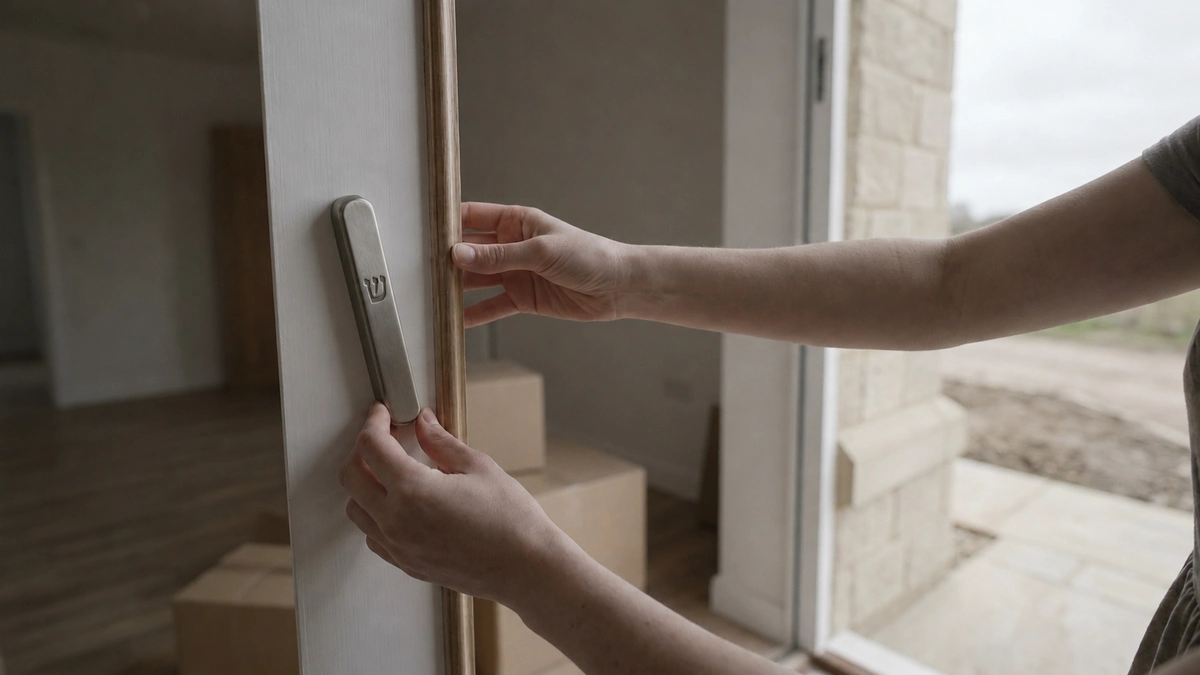
May the mezuzot of your home be a zechus (merit) for your family, a source of Hashem's protection, and a fulfillment of this precious mitzvah in the most beautiful and halachically complete way possible.


.svg)
Bring a true Kosher Mezuzah into your home
Fulfill the mitzvah with confidence, beauty, and meaning.
Buy a Mezuzah