

Why Cheap Mezuzahs May Not Be Kosher — And What's Actually at Stake
When someone buys a cheap mezuzah, they often believe they are fulfilling the mitzvah. In many cases, they are not. The risks of purchasing a low-cost mezuzah scroll go far beyond a poor investment, they touch the heart of whether the mitzvah has been performed at all. This article is for anyone who has wondered whether a less expensive mezuzah is truly acceptable, and what the halachic consequences of a non-kosher scroll really are. We will walk through the halacha clearly, explain the most common problems found in cheap scrolls, and help you understand what proper fulfillment of this mitzvah actually requires.
Key Takeaways
- A cheap mezuzah scroll is almost always pasul (invalid) because corners are cut in writing, materials, checking, or all three, fulfilling no mitzvah regardless of the blessing recited.
- Cheap mezuzah scrolls often suffer from common defects including improperly formed letters, untrained scribes, inadequate examination by a magiah, and frequently are printed rather than handwritten.
- A kosher mezuzah must be written by a vetted sofer with proper intention on halachically prepared parchment using approved ink, then examined by a qualified magiah—costs that cannot be met at bargain prices.
- Printed or photocopied mezuzahs are not kosher under any halachic opinion and are sometimes deceptively sold in beautiful cases to unsuspecting buyers.
- A properly kosher mezuzah scroll reflects the real cost of the sofer's labor (1–2 hours), premium materials, and magiah's verification, making suspiciously low prices a clear warning sign.
- Consulting a knowledgeable source or rav before purchasing a mezuzah, and having existing scrolls examined by a magiah at least twice every seven years, ensures your home's doorposts carry valid protection.
Why Cheap Mezuzahs May Not Be Kosher
Cheap mezuzah risks are real, and the most serious one is this: a scroll that is not halachically kosher fulfills no mitzvah at all. The Shulchan Aruch (Yoreh De'ah 285–288) is clear that a mezuzah scroll must meet precise requirements in every detail, the parchment, the ink, the script, and the writing process itself. When those requirements are not met, the scroll is pasul (invalid), regardless of how it looks on the outside or how little it cost. If you are unsure whether your current mezuzah scrolls are kosher, we encourage you to reach out to us at Kosher Mezuzah before assuming they are valid.
The Problem Begins Before the Scroll Is Written
A kosher mezuzah scroll must be written by a sofer (a trained Torah scribe) who is both technically skilled and Hashem-fearing. The sofer must write each of the 713 letters of the mezuzah with proper intention (kavanah), on klaf (parchment) made from the hide of a kosher animal and processed lishmah (specifically for the sake of the mitzvah), using dio (ink) that meets halachic standards. The Rambam (Hilchot Tefillin, Mezuzah v'Sefer Torah 1:13) rules that a mezuzah written by someone who is not obligated in the mitzvah, such as a non-Jew, an apostate, or a minor, among other disqualified categories, is invalid. This means that the identity and yiras Shamayim (fear of Heaven) of the sofer are not minor details. They are foundational to the validity of the scroll.
Very inexpensive scrolls are frequently not written by a qualified sofer at all. Some are printed by machine, which renders them completely pasul under all halachic opinions. Others are written hastily by individuals without proper training or supervision. The Gemara in Shabbat (103b) and the Shulchan Aruch (Yoreh De'ah 288) specify that each letter must have the correct tzurat ha'ot (proper letter form), with precise spacing and correct crowns (tagin) where required. A letter that is malformed, even slightly, can invalidate the entire scroll. For a related question, see Machine Written Mezuzah.
What a Magiah Looks For, and What Cheap Scrolls Often Miss
Every mezuzah scroll should be checked by a magiah (a halachically qualified mezuzah examiner) after it is written. The magiah reviews every letter, every word, and every spacing for errors that might invalidate the scroll. Common problems found in cheap scrolls include cracked letters, letters touching one another when they should not, missing letters, and ink that has faded or flaked. The Shulchan Aruch's laws of letter formation (Orach Chaim 32:16, applied to mezuzah writing via Yoreh De'ah 288:7) rule that a letter that has cracked in a way that breaks its visual continuity can render the scroll pasul.
In the market for inexpensive mezuzah scrolls, proper checking is often skipped entirely. A magiah with the training and time to examine a scroll carefully must be compensated fairly for that work. When a scroll is priced at a few dollars, there is simply no room in that price for a skilled examiner. As the Minchat Chinuch notes about the mitzvah of mezuzah, it is a constant obligation, which means a pasul scroll leaves the doorpost perpetually unfulfilled. This is not a small matter.
Printed Mezuzahs: A Widespread and Serious Problem
One of the most common cheap mezuzah problems found in the marketplace is the printed or photocopied scroll. These are sold in gift shops, online marketplaces, and even some Judaica stores, sometimes packaged in beautiful cases that give no indication of what is inside. A printed mezuzah is not kosher under any halachic opinion. The Shulchan Aruch (Yoreh De'ah 288) rules explicitly that a mezuzah must be written by hand. Printing does not fulfill this requirement, period.
Some sellers market these scrolls to unsuspecting buyers who do not know the difference. A family may hang what they believe is a kosher mezuzah on every doorpost in their home, recite the blessing, and go years without realizing that not a single one was valid. As the classical sources on mezuzah's protective power teach, if people only knew how much good a properly kept mezuzah brings, they would not be careless with it. That urgency applies here. A beautiful case on the outside means nothing if the scroll inside is invalid.
Why Kosher Mezuzah Scrolls Cost What They Do
Understanding why mezuzah scrolls are priced the way they are helps explain why cheap scrolls are almost always suspect. A sofer writing a single mezuzah scroll spends between one and two hours producing it with care and proper kavanah. The klaf must be prepared from kosher animal hide according to strict halachic specifications. The dio must be made to halachic standards. After writing, a qualified magiah examines the scroll, and ideally a second review is conducted before the scroll is certified.
When you add up the sofer's time, the cost of kosher materials, and the magiah's fee, a kosher mezuzah scroll cannot realistically be produced for a few dollars. The Gemara in Shabbat (133b) teaches the principle of hiddur mitzvah (beautifying the commandment), that a person should perform mitzvot in the most beautiful way possible, from a beautiful sukkah and lulav to beautiful tzitzit and a beautiful Torah scroll, a principle the poskim apply to mezuzah as well. This does not mean every mezuzah must be the most expensive option, but it does mean that a price point far below the cost of legitimate production is a warning sign that something has been cut, almost certainly something essential.
How to Identify a Trustworthy Mezuzah Scroll
When evaluating whether a mezuzah source is reliable, there are several things worth asking. Was the scroll written by a named, vetted sofer? Was it checked by a named magiah? Is the ksav (script style) identified, Beit Yosef, Arizal, or Chabad, and is it appropriate for your community's minhag (custom)? Is there documentation of when it was written and what materials were used? Is the seller willing to answer these questions in full?
These are not unusual demands. They are the basic standards that apply to any item of Torah law. A seller who cannot or will not answer these questions should be approached with caution. At Kosher Mezuzah, every scroll comes with full traceability, the name of the sofer, the name of the magiah, the date of writing, and documentation of the materials used. The Orthodox Union endorses Kosher Mezuzah as a vendor, reflecting confidence in the process of verification and sourcing, not simply the scrolls themselves.
The Deeper Dimension: What We Are Actually Placing on Our Doorposts
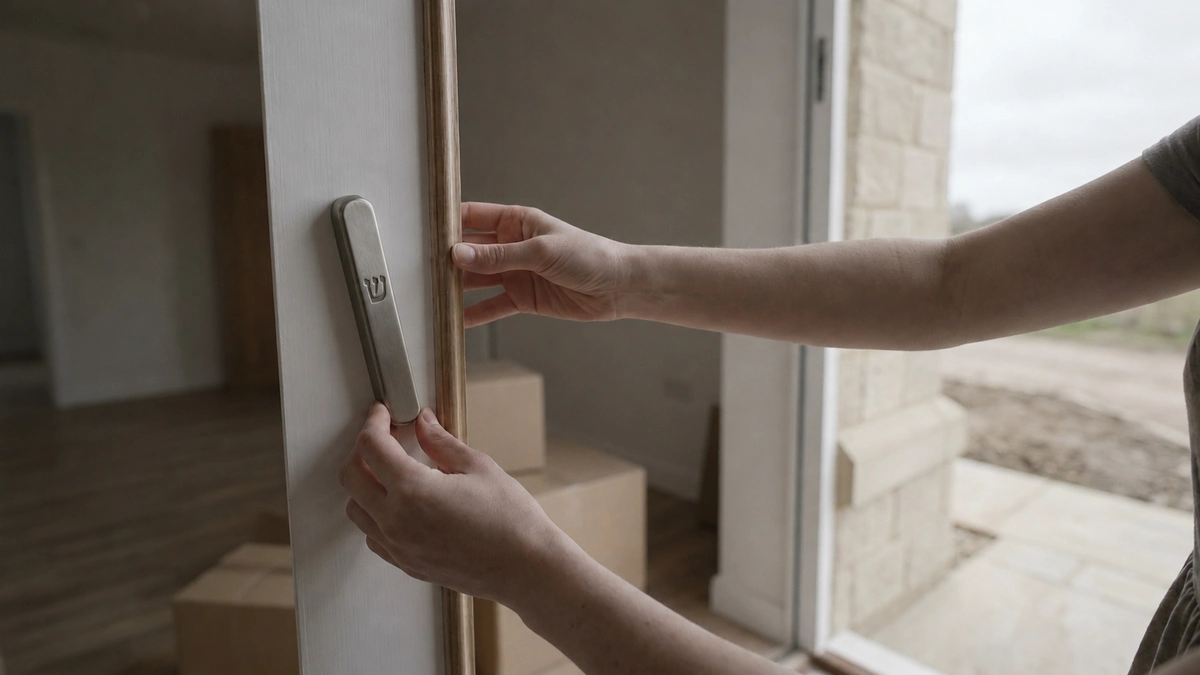
The Tur (Yoreh De'ah 285) writes that a human king sits inside and his servants guard him from the outside, but about HaKadosh Baruch Hu, His servants are inside and He guards them from without. The mezuzah, properly placed, is an expression of that divine protection over the home. The Gemara in Shabbat (23b) teaches that one who is careful with the mitzvah of mezuzah merits a beautiful dwelling. These teachings are not folklore. They are grounded in the same halachic framework that demands a kosher scroll.
A mezuzah that is pasul is not merely a missed mitzvah. It is a doorpost left without the presence that Hashem's Torah was meant to bring to it. The Lubavitcher Rebbe, in his famous 1974 mezuzah campaign, stressed repeatedly that the scrolls must be kosher and affixed properly, because the protective and spiritual dimension of the mitzvah is inseparable from its correct halachic fulfillment. Kavanah and kashrut are not two different considerations. They are one.
Key Takeaways
A cheap mezuzah scroll is almost always cheap because a corner has been cut, in the writing, the checking, the materials, or all three. A scroll that is pasul fulfills no mitzvah, regardless of the blessing recited at its placement. The most common problems in inexpensive scrolls include improper letter formation, untrained scribes, inadequate checking, and in many cases, outright printing rather than handwriting. The price of a kosher scroll reflects the real cost of the sofer's time, kosher materials, and the magiah's review. When a scroll's price falls far below what these require, the buyer should ask why. Consulting a rav before purchasing, especially for a large home or communal building, is always worthwhile.
Fulfilling the Mitzvah with Confidence
At Kosher Mezuzah, we understand that most people who place a non-kosher mezuzah do so without any awareness of the problem. Our purpose is to make it straightforward for every Jewish home to fulfill this mitzvah properly. Every scroll we carry is written by a named, vetted sofer and checked by a named magiah, with documentation available for each one. We do not sell printed scrolls or unchecked scrolls, and we do not offer pricing that would require cutting those standards.
If you already have mezuzah scrolls in your home and are unsure of their status, we encourage you to have them examined. A magiah can review a scroll in a matter of minutes and give you a clear answer. For a private home, scrolls should also be checked twice in seven years (a public or communal mezuzah need only be checked twice in fifty years), more frequently in humid climates, as the ink and parchment can deteriorate over time. This is not a chumra (stringency). It is the baseline halacha as ruled in the Shulchan Aruch (Yoreh De'ah 291:1).
If you have questions about the scrolls you own or are considering purchasing, you are welcome to browse our full selection of kosher mezuzah scrolls or contact us directly, we are here to help you fulfill this precious mitzvah with clarity and confidence. May every doorpost in your home carry a kosher mezuzah, and may Hashem guard your going and your coming, from now until eternity.


.svg)
Bring a true Kosher Mezuzah into your home
Fulfill the mitzvah with confidence, beauty, and meaning.
Buy a Mezuzah