

If You Add a Door, Do You Need a New Mezuzah?
Adding a new qualifying doorway can create a new mezuzah obligation, but the opening must meet the halachic requirements and some cases should be checked with a rav.
The mezuzah requirement for a new doorway is triggered when a new opening meets the halachic requirements for mezuzah. This can apply when a doorway connects interior rooms, opens into a new addition, or creates a new exterior entrance. If a new opening is halachically considered a doorway, it should be evaluated on its own and treated as its own obligation.
A doorway usually requires features such as two doorposts and a lintel, but those are not the only factors. The size of the opening, the nature of the room, whether it is made for normal and respectable dwelling use, and other halachic details can all affect whether a mezuzah is required and whether a berachah should be made.
Because mezuzah obligations depend on the exact structure and use of the space, it is best not to assume that every new doorway definitely requires a mezuzah in the same way. If you are unsure whether your new doorway qualifies, which side it belongs on, or exactly where it should be placed, we are here to help. Reach out to us at Kosher Mezuzah with your question.
The Halachic Foundation for This Obligation
The obligation of mezuzah is stated explicitly in the Torah: “And you shall write them on the doorposts of your house and on your gates” (Devarim 6:9). The Rambam explains that a doorway is not obligated in mezuzah simply because it exists architecturally; it must meet halachic conditions. In Hilchot Mezuzah 6:1, he lists ten conditions for a house or room to be obligated, including that it have at least four by four amot, two doorposts, a lintel, a roof, doors, a height of at least ten tefachim, and that it be a dignified, human, permanent dwelling. In other words, when a renovation creates a genuine new entrance to a qualifying space, that opening must be evaluated as its own mezuzah doorway. The essential mezuzah knowledge here is simple: a new doorway with the proper form triggers a new obligation
The Shulchan Aruch (Yoreh De’ah 289:2) codifies that the mezuzah must be affixed on the right side of the entrance as one enters. It also states that if it was placed on the left, pesulah — invalid. So when a new doorway is added to a home, the placement rules apply in full, just as they do for any other obligated entrance.
How the New Doorway Mezuzah Requirement Applies in Practice
When you add a new doorway through a renovation, addition, or structural change, there are three basic questions to ask before moving ahead with a new door mezuzah placement. See also A Mezuzah at the Door of a New Home for Yedei Chesed in Rockland County.
First, does the opening have the halachic form of a doorway? At minimum, a standard obligated opening should have two side posts and a lintel. If the opening is unusual — such as an archway, a partial frame, or an opening with no clear lintel — the case should be reviewed carefully before making a blessing.
Second, does it lead into a space that is halachically significant? The Shulchan Aruch (YD 286:13) gives the baseline rule that a room smaller than four by four amot (slightly larger than 6 x 6 ft) is exempt from mezuzah. Some later authorities discuss small spaces that may still be considered important for use, but that is already an area for a more specific halachic review, not a blanket rule.
Third, is this a real residential-type entrance? The Rambam’s formulation makes clear that mezuzah applies to a dignified human dwelling used in a normal, lasting way. If the opening serves a space that does not meet that standard, the new doorway mezuzah requirement may be different.
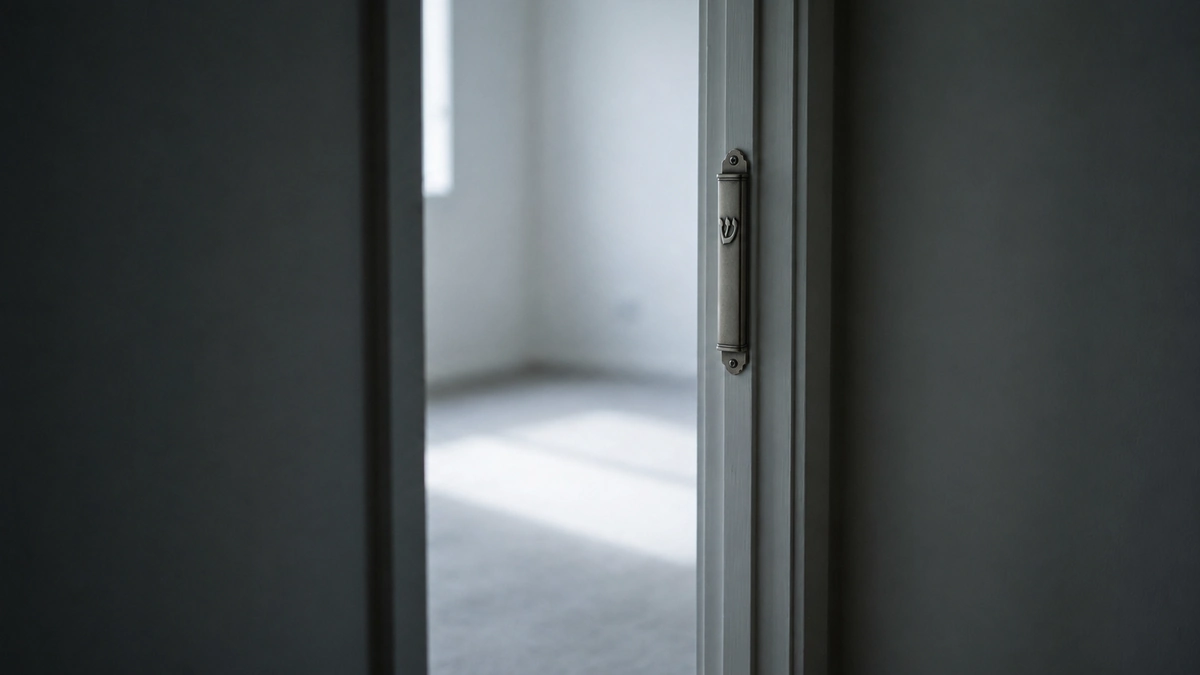
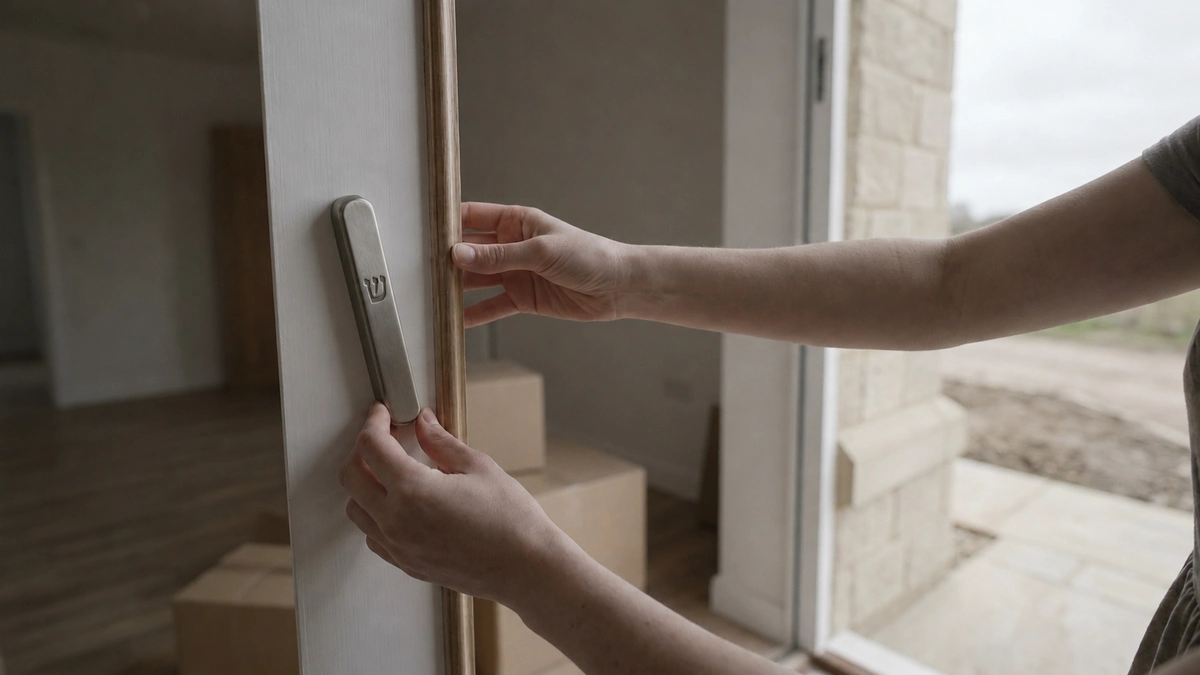
If the doorway is clearly obligated, the mezuzah should be affixed on the right side as one enters, within the upper third of the doorpost, and within the outermost tefach nearest the outside edge of the entrance. That is the placement discussed in Shulchan Aruch YD 289:2 and in the Gemara’s discussion of placing the mezuzah where one encounters it immediately upon entering.
If the obligation is clear, the blessing ‘likboa mezuzah’ is recited before the affixing. If there is genuine halachic doubt about the doorway itself, it is safer to affix without a blessing and ask a competent rav.
When a renovation creates several new openings — for example, a new hallway with multiple rooms — each doorway should be evaluated individually.
A Note on Doorless Openings and Added Doors
The Rambam includes doors among the conditions for obligation. But the Shulchan Aruch (YD 286:15) writes: a house is obligated even if it has no doors, though there is an opinion that exempts it.
Practically, that means a doorless opening is treated as a case of halachic doubt. Many follow the cautious practice of affixing a mezuzah without a blessing.
If a mezuzah was put up while the opening had no door, and a door is installed later, later authorities raise the concern that the mitzvah should be performed through a valid act of affixing, not merely found already in place afterward. For that reason, the common cautious practice is to remove the mezuzah and re-affix it after the door is installed, without a blessing unless a rav instructs otherwise.
A related issue comes up when a renovation changes the halachic direction of entry. Since the mezuzah must be on the right side of the entrance, a structural change that changes which side is considered the side of entry may require the mezuzah to be moved.
Common Errors When Adding a Mezuzah to a New Door
The most common mistake is putting the mezuzah on the wrong side. With interior doorways, people often rely on intuition instead of halachic criteria. But “the right side” means the right side of the halachic entrance, and that can depend on how the doorway functions. In some cases, room usage and the direction of the door swing matter. If the direction is unclear, ask a rav before installing it.
A second common mistake with new entrance mezuzah rules is assuming that every framed opening automatically counts as a fully obligated doorway. Some openings look like doorways but raise real halachic questions because the frame is incomplete or unusual. In those cases, the mezuzah may still be affixed, but the blessing should not be taken for granted.
A third mistake is assuming that once a mezuzah was on an opening, no later construction change affects it. If the doorway was significantly altered, if a door was added later, or if the direction of entry changed, the mezuzah placement should be reviewed again.
The Deeper Meaning of Affixing on a New Doorway
The halachic details matter, but so does the meaning of the mitzvah. The Rambam writes: A person must be careful with mezuzah because it is a constant obligation; whenever he enters or leaves, he encounters the unity of Hashem’s Name and remembers His love. So a new doorway is another threshold at which a Jewish home declares its loyalty to Hashem.
Chazal also associate mezuzah with shemirah (protection). In Menachot 33b, the Gemara links the mezuzah’s placement near the outside of the doorway with the idea that it “guards the entire house.” That does not replace the halachic requirements. It means that the shemirah spoken of by Chazal is tied to fulfilling the mitzvah properly.
The Key Ruling in Brief
When a new doorway is added to a Jewish home, it should be evaluated individually. If it is a bona fide doorway to a qualifying space, the mezuzah is affixed on the right side of entry, within the upper third of the post, and within the outer tefach nearest the outside edge. If the obligation is clear, a blessing is recited. If the doorway is halachically doubtful — for example, because the opening is unusual or because there is a real dispute about whether it is obligated — the mezuzah is generally affixed without a blessing. If a door is added later to an opening that previously had none, it is prudent to remove and re-affix the mezuzah afterward. And if a renovation changes the direction of entry, the mezuzah placement should be reviewed immediately.
On a practical note, when a renovation creates multiple new doorways, such as a home addition with a hallway and several rooms, how many mezuzahs you need must be determined for each opening individually. Walk through the new spaces carefully and evaluate every opening on its own terms.
If a room change affects how a mezuzah is oriented, meaning the door now opens from the opposite side, the mezuzah may need to be moved to the new right side of entry. Since the mezuzah placed on the left is entirely invalid, even b'di'avad, any structural change that reverses the direction of entry requires immediate attention.
Questions about removing a mezuzah from a wall during construction are common, and the halacha should be reviewed carefully before and after any renovation. A question about a door that opens both ways should be directed to a rav.
About Kosher Mezuzah
At Kosher Mezuzah, every scroll we carry is written by a vetted sofer and reviewed by a qualified magiah. Each mezuzah comes with full traceability, the name of the sofer, the name of the checker, the date of writing, and the materials used. Our scrolls are produced under a process endorsed by the Orthodox Union, one of the most trusted halachic certification bodies in the world. This is not a marketing claim. It is a halachic baseline. You should know exactly what you are affixing on your doorpost.
We also understand that fulfilling the mitzvah properly sometimes means asking questions first. Whether you are affixing a mezuzah on a newly built doorway, wondering whether to take a mezuzah when moving, or sorting through a renovation that created multiple new openings, we are here to help you work through it carefully. A mezuzah affixed incorrectly does not fulfill the mitzvah, and that matters.
If your renovation is complete and you are ready to fulfill the mitzvah on your new doorway, contact us at Kosher Mezuzah. We will help you choose the right mezuzah and confirm the halachic details so you can affix it with confidence.
May the mezuzah on your new doorpost bring protection and blessing to your home and all who enter it.


.svg)
Bring a true Kosher Mezuzah into your home
Fulfill the mitzvah with confidence, beauty, and meaning.
Buy a Mezuzah