
Do Open Archways Need a Mezuzah? (No Door Cases Explained)
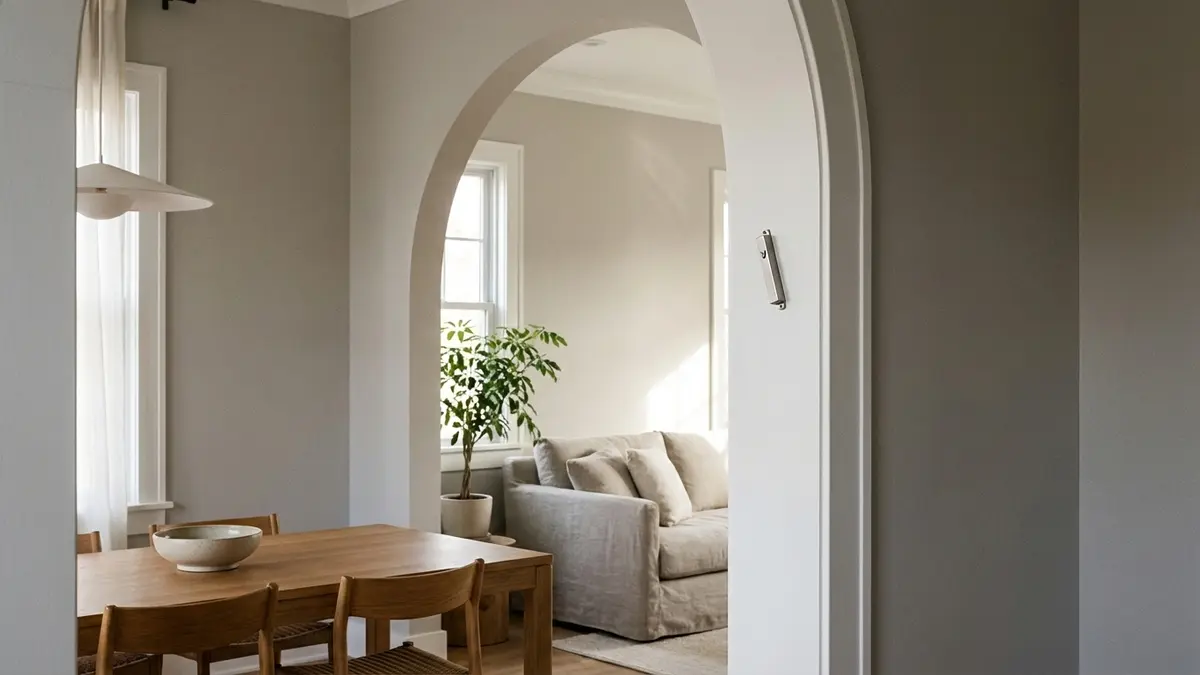
You’ve just moved in, or maybe you’re doing a room-by-room walk-through with a list in hand, and you stop at an open archway. There’s no door. No doorpost in the usual sense. Maybe the arch curves all the way up to the ceiling, or it’s a wide, open passage between your dining room and your living room. The question is immediate and practical: does an archway mezuzah obligation exist here, or are you exempt? The answer is not a simple yes or no. It depends on several halachic conditions that every Torah-observant homeowner deserves to understand clearly. This article will walk you through exactly what the halacha requires, when an open archway is obligated, when it is exempt, and what to do in cases of doubt.
Key Takeaways
- An archway mezuzah is required even without a door, as long as the opening has upright doorposts built for entry, leads to a habitable space of at least 4x4 square amos, and the space inside the doorway meets the minimum dimensions of four tefachim wide and ten tefachim tall.
- The absence of a door does not automatically exempt an archway from a mezuzah obligation — what matters is the structural framework that defines whether it’s a halachic entrance (petach).
- When an obligated archway has no door, the mezuzah must be affixed without a blessing, following the majority of Acharonim who account for the Rambam’s stricter view requiring an actual or installable door.
- Archways framed by structural or decorative support columns — rather than doorposts built to define entry — do not create a halachic petach and are therefore exempt from the mezuzah requirement.
- Correct placement of an archway mezuzah is on the upper portion of the straight, vertical doorpost, not on the curved arc itself, to ensure the mitzvah is fulfilled properly.
- When any doubt arises about whether a specific archway requires a mezuzah or how to place one, consult a qualified rav to avoid missed obligations or blessings recited in vain.
Do Open Archways Need a Mezuzah? (No Door Cases Explained)
An archway mezuzah is required in many cases, even when there is no door, but only if the opening meets specific halachic conditions. The Shulchan Aruch (Yoreh Deah 287) and its major commentators make clear that the absence of a door does not automatically exempt an opening. What determines the obligation is whether the opening functions as a true halachic entrance: one that has upright doorposts and some form of a lintel or arch overhead, and that leads to a space at least 4x4 square amos in size, used for dwelling or regular human activity. If those conditions are present, a mezuzah is required. If you are unsure whether a particular archway in your home meets these conditions, please reach out to us at Kosher Mezuzah and we will help you think through it with the clarity it deserves.
The Halachic Basis: What Makes an Opening Obligated
The Torah commands us to affix a mezuzah on our mezuzot, the doorposts of our homes (Devarim 6:9, 11:20). The Gemara in Menachot (33b) and the Rishonim discuss at length what qualifies as a petach (entrance) in the halachic sense. A key principle that emerges from Rashi, the Rambam, and the Shulchan Aruch is this: the obligation of mezuzah does not depend on the presence of a door. It depends on the presence of an entrance, a construction that establishes a defined point of entry and exit.
Rashi explains that what makes an opening a petach is not the door itself, but the structural framework: upright doorposts (mezuzot) and a horizontal element, whether a straight lintel (mashkof) or a curving arch (kippah), that together form the “mouth” of the opening. When that structure exists, the opening is defined as an entrance, and the mitzvah of mezuzah takes effect on the entrance itself. If the entrance lacks the required structure, there is no obligation, not because of the missing door, but because there is no halachic petach to begin with.
The Shulchan Aruch (Yoreh Deah 286:2) rules that an opening without doorposts is exempt. But, where upright posts exist, even without a door, the general ruling, as understood by the Rosh and Ra’avad, is that the opening is obligated. The Rambam holds a stricter view and requires that a door be present or at least installable.
Because of this dispute, the accepted practice, as cited by the Shach, Chayei Adam, and Ben Ish Chai, is to fix the mezuzah on a doorless opening without reciting a blessing. When installing several mezuzos in one session, recite the beracha once before affixing the first mezuzah; that blessing covers all the mezuzos you are putting up at that time. Where there are both standard rectangular doorways and questionable arched openings, recite the beracha on a standard doorway and have the arched openings in mind as well.
This is the halachically careful response to a genuine disagreement among the Rishonim. You can learn more about the fundamentals of this mitzvah in our essential mezuzah knowledge guide.
What the Halacha Says About Arched Openings Specifically
The Shulchan Aruch (Yoreh Deah 287:2) addresses arched doorways directly. An arch (kippah) that curves upward at the top of the doorway does not disqualify the opening from a mezuzah obligation. What matters is whether the space within the lower portion of the opening, the straight sides, are at least four tefachim (handbreadths) wide and ten tefachim tall. If those measurements are met, the arch at the top is treated halachically like a lintel, and the opening is obligated.
Where the mezuzah is actually placed in an arched doorway is its own question. The Taz rules that it should be placed within the top third of the doorway’s vertical space, even if that portion is already on the curve of the arch.
According to many authorities following the Taz’s understanding of arched doorways, the total height of the doorway — including the arch — is used to calculate the “top third.” In practice this can place the mezuzah even on a curved section of the arch, though some later poskim prefer, where possible, to affix it on a still-vertical part of the doorpost within that upper third.
The Magen Avraham and other Acharonim refine this further. As a practical matter, one should place the mezuzah as high as possible on the right side of the opening while still within the straight, vertical portion of the doorpost, before the arch begins to curve inward. If the arch begins very low, or if the top third of the opening falls entirely within the arc, consult your rav for guidance on exact placement. Our halachic placement guide includes resources that cover the relevant laws in practical detail.
When an Archway Is Exempt from a Mezuzah
Not every archway in a home carries an obligation. There are several situations in which an open archway is exempt, and understanding them helps avoid incorrect fulfillment of the mitzvah.
First, if the arch has no upright doorposts at all, meaning the opening is simply a gap or breach in a wall with no structural framework defining entry, it is exempt. As Rashi explains, the pillars at an entrance create its status as a petach. Without them, the opening is merely a hole in a wall, not a halachic entrance, and the obligation never takes effect.
Second, if the pillars or columns that frame an archway were built not to define an entrance but for structural support, to hold up the ceiling or the arch itself, they do not create a petach status. The Poskim are clear that pillars must stand for the purpose of entry and exit. Decorative columns or support columns that happen to flank a passage do not transform that passage into a halachic doorway. This is a common situation in modern homes with open floor plans, where wide passage openings are framed by structural columns that no door could ever be hung on.
Third, if the space on the other side of the archway is not a room used for dwelling or regular habitation, a decorative niche, a very small alcove, a storage space below the halachic minimum size, it may be exempt for separate reasons related to the chashivut (importance) of the space itself. Every room-by-room analysis should take this into account. For a thorough room-by-room breakdown, see our article on how many doorways in your home need a mezuzah.
Common Errors in Archway Mezuzah Fulfillment
One of the most frequent mistakes is simply skipping an open archway entirely, assuming that no door means no obligation. As we have seen, that assumption is incorrect when the opening has proper structural doorposts and leads to a habitable space. Skipping a valid petach means the mitzvah is not being fulfilled at that doorway.
The opposite error also occurs: affixing a mezuzah with a bracha (blessing) on a doorless opening where the Rambam’s position creates genuine doubt. The correct practice in that case is to affix without a blessing. Reciting a blessing unnecessarily risks a bracha l’vatala, a blessing said in vain, which is a serious concern. If a door is later installed, some Poskim recommend removing and re-affixing the mezuzah at that point to allow for the blessing. When in doubt about whether to recite a blessing, always consult your rav.
A third error involves placement. Even when a homeowner correctly identifies that an archway requires a mezuzah, the scroll is sometimes placed in the middle of the arch rather than on the upper portion of the straight doorpost. The mezuzah must be affixed to the doorpost itself, not on the curved portion of the arch where it would lack a flat, proper surface and may not be correctly positioned.
Understanding what makes a mezuzah halachically valid or pasul can help you avoid inadvertent errors that go beyond placement alone.
The Deeper Meaning: Why the Entrance Matters
The halacha’s focus on the entrance rather than the house as a whole is not merely technical. Every time we pass through a petach, a defined threshold, we move between spaces. The mezuzah is placed precisely at that threshold to remind us that Hashem’s presence accompanies us wherever we go, into every room and out of every door. The Rambam (Hilchot Mezuzah 6:13) teaches that one who is mindful of the mezuzah will be reminded of the unity of Hashem and of his obligation to love Him. That reminder is meant to happen at the moment of crossing the threshold, the point of transition.
This is why an archway with no door can still carry the full weight of the mitzvah. The moment of passage is real, even without a door to mark it. When halacha recognizes that archway as a petach, it is saying: this crossing matters. You are moving from one space to another, and the Name of Hashem should be present at that crossing. That is the heart of the mitzvah, and it is one of the reasons why the stories and insights surrounding the mezuzah carry such enduring meaning across generations.
A Word About Kosher Mezuzah
At Kosher Mezuzah, we understand that fulfilling the mitzvah properly requires more than purchasing a scroll. It requires confidence that the mezuzah you affix is genuinely kosher, written by a qualified sofer, checked by a trained magiah, and certified to a standard you can verify. Every scroll we carry is written and checked according to the highest halachic standards, and our process is endorsed by the Orthodox Union, so that each scroll’s halachic reliability can be responsibly relied upon under the guidance of competent rabbinic authorities.
We also believe that a mezuzah that is beautiful on the outside but invalid on the inside is not a mitzvah fulfilled. That is why we are committed to what mehudar really means in halacha, not just aesthetic quality, but halachic integrity from the sofer’s quill to your doorpost. A mezuzah should be checked by a qualified sofer every three and a half years, or sooner if it has been exposed to moisture, heat, or unusual conditions. We are here to help with that as well.
If you have questions about a specific archway or opening in your home, please contact us. We are happy to help you think through the halacha carefully and ensure that every mezuzah in your home is positioned and fulfilled correctly. May the zechus of the mitzvah of mezuzah bring bracha and shmirah to your home and all who dwell within it.


.svg)
Bring a true Kosher Mezuzah into your home
Fulfill the mitzvah with confidence, beauty, and meaning.
Buy a Mezuzah