
Can a Mezuzah Case Affect Kosher Status? What Actually Matters
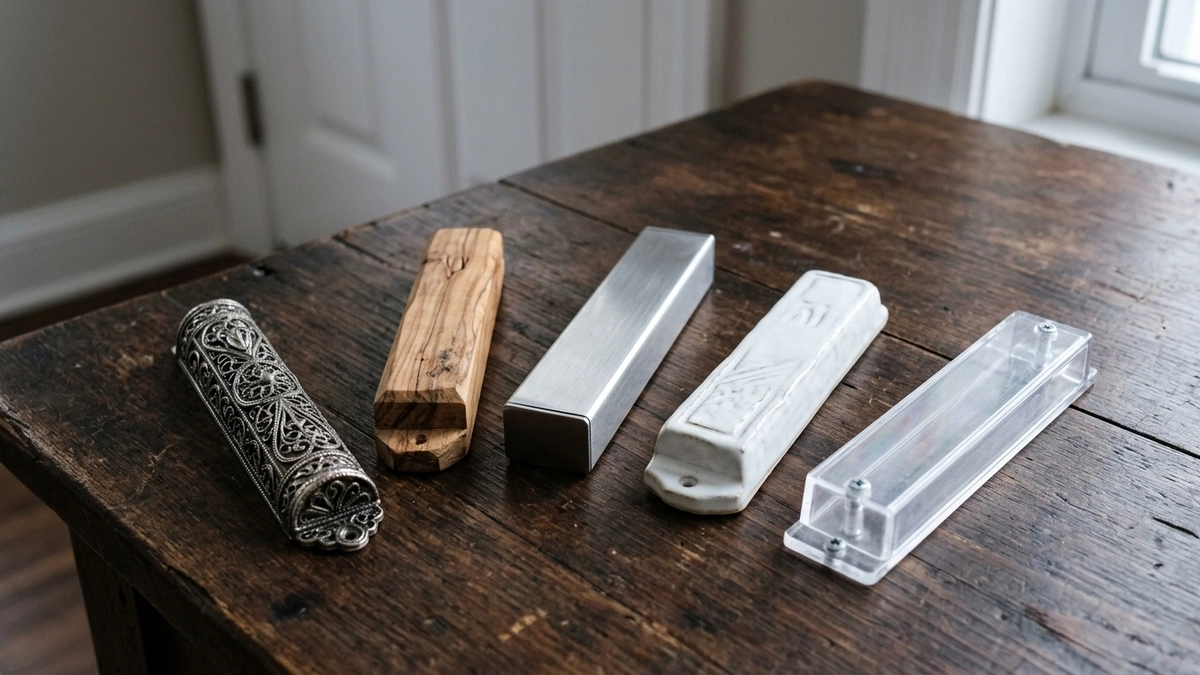
Many people spend considerable time choosing the right mezuzah case — silver, wooden, ceramic, ornate or plain — without realizing that while the case does not determine whether the scroll itself is kosher or pasul, it plays a role in the proper placement and protection of the mezuzah.
Can a mezuzah case affect the kosher status of the scroll inside? The short answer is that the case cannot make the scroll pasul or kosher, but it does carry its own halachic obligations that every homeowner should understand. Knowing where the case fits into the halacha, and where it does not, helps you fulfill this precious mitzvah with the clarity and intention it deserves. . We cover this in more depth in Do Magnets or Electronics Affect a Mezuzah? What You Need to Know.
Kosher Mezuzah is dedicated to ensuring the proper fulfillment of this mitzvah, and if you are unsure whether your mezuzah scrolls are written correctly and your cases are used appropriately, we are here to help you get this right.
Key Takeaways
- A mezuzah case cannot make a scroll kosher or pasul — kosher status depends entirely on the scroll’s parchment, text, script, and ink.
- Investing in an impressive mezuzah case does not guarantee a kosher mezuzah; always verify what is written inside the scroll by a vetted sofer.
- A kosher scroll still has to be installed correctly — on the proper doorway, on the right side of entry, and in the correct area of the doorpost.
- The case should allow the mezuzah to be mounted according to one’s minhag, since some place it upright and many Ashkenazim place it on a slight angle.
- In bathrooms or undignified rooms, halacha requires the scroll to be fully covered, and a case with a transparent window may not satisfy this requirement.
- For outdoor or exposed doorways, the case does matter practically: it should protect the scroll from rain, heat, sunlight, and moisture, which can damage the klaf over time.
- Mezuzah cases must remain removable, as the Shulchan Aruch mandates that scrolls be checked twice every seven years to ensure the klaf has not deteriorated.
- A case that is sealed shut, overly tight, or hard to open may make proper checking and replacement much more difficult.
- In clean, dignified rooms, keeping the mezuzah visible is praiseworthy and considered a hidur mitzvah, though a covered scroll remains fully valid.
- A beautiful case paired with a mehudar, kosher scroll represents the fullest fulfillment of the mitzvah — but halachic correctness always comes before aesthetics.
The mezuzah case cannot make a valid scroll pasul, and it cannot make a pasul scroll kosher. The kosher status of any mezuzah depends entirely on the klaf, the parchment, and what is written on it. If the scroll itself is written properly by a qualified sofer, on valid klaf, with kosher die (ink), following all the halachic writing laws every Jewish homeowner must know, the case has no power to change that. At the same time, the case is not halachically meaningless — there are specific requirements around covering the scroll, revealing it, and protecting it in different room types.
The Scroll Is the Mitzvah
It is worth stating plainly: when we speak of a "kosher mezuzah," we are speaking about the scroll, not the case. The Shulchan Aruch and its major commentaries focus on the text, the script, the parchment, and the ink. A sofer must write the twenty-two lines of Shema and V'haya Im Shamoa with proper intention, following precise rules of script such as tzurat ha'ot and correct parchment requirements. A beautiful, expensive case holding a pasul scroll does not fulfill the mitzvah. A simple, inexpensive case holding a mehudar kosher scroll fulfills it completely.
Once that point is clear, the next step follows naturally: if the mitzvah is the scroll, then the case itself cannot determine whether the mezuzah is kosher.
A Case Does Not Change the Scroll’s Kashrut
A mezuzah is kosher or pasul based on the laws of STaM: the klaf, the ink, the wording, the order of writing, and the form of the letters. If even one letter is written out of order, the mezuzah can be invalid. That is why the first question is never, “Is this a nice case?” The first question is, “Is there a kosher scroll inside?” A silver case can hold a pasul mezuzah. A plain plastic case can hold a beautiful, mehudar mezuzah. We have seen beautiful silver cases housing scrolls that were not written by hand at all, or scrolls with cracked letters and fading text.
For that reason, buying a mezuzah based only on exterior appearance is risky. Many people assume that a decorative case means it includes a kosher product inside, when in truth the case may tell you almost nothing about the quality of the klaf within. The only reliable path is to obtain the scroll from a trustworthy source and have it checked by a qualified sofer.
That said, this does not mean the case is meaningless. It simply means its role is secondary: it enhances the mitzvah, but it does not create it.
Beauty of the Mezuzah Case Is a Hidur, Not a Substitute
There is certainly value in honoring a mitzvah with beauty. A tasteful mezuzah case can be part of hiddur mitzvah, just as many people choose beautiful candlesticks, a fine kiddush cup, or a handsome aron kodesh. But hiddur never replaces the core obligation. The order is always the same: first kosher, then beautiful.
That means a homeowner should ideally seek both: a kosher, well-written scroll from a trustworthy source, and a respectable case that protects it and presents it properly. When those two come together, the mezuzah is both halachically sound and outwardly dignified.
But if one must choose between investing in the mezuzah scroll vs case, the choice is obvious: spend on the klaf first.
The Importance of Correct Placement
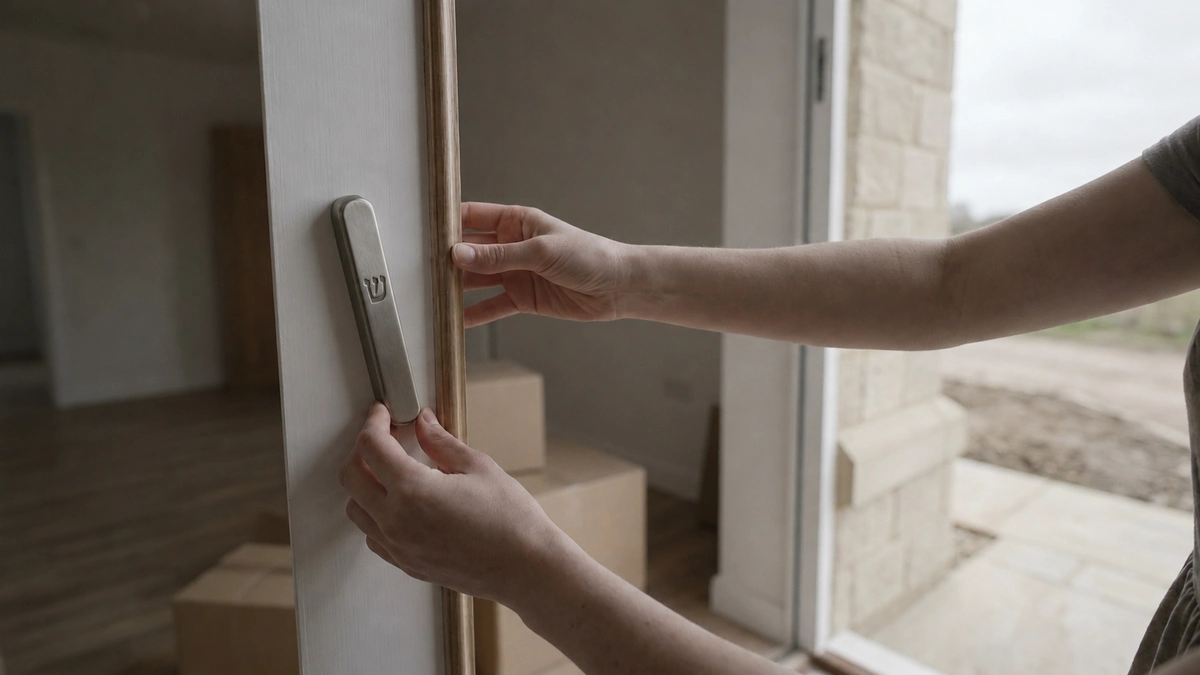
Even a perfectly-written mezuzah must be mounted correctly. Shulchan Aruch rules that it belongs on the right side of the doorway as one enters, within the outer tefach of the entrance, at the beginning of the upper third of the doorpost. If it is placed on the wrong side, that is not a cosmetic mistake; it undermines the fulfillment of the mitzvah.
This is where the case starts to matter. A bulky case, an awkward backing, or a design that does not sit well on the post can make correct placement harder. If the case forces the mezuzah too high, too low, too deep into the doorway, or in the wrong position on the frame, then the problem is not that the case made the scroll pasul, but that it interfered with proper kviut mezuzah.
For homeowners, choose a case that fits the doorway and allows accurate installation. Halachic correctness comes first; the decorative finish comes afterward.
Upright or Slanted: The Case Should Match Your Minhag
Another area where the case matters is orientation. Shulchan Aruch writes that the mezuzah should be placed upright. The Rema cites the opinion that it should be horizontal, then records the widespread Ashkenazi custom to place it on a diagonal in order to satisfy both views. That is why many Ashkenazi homes display the mezuzah at a slight angle, while many Sephardic communities place it upright.
A case cannot determine the halacha, but it should allow you to follow your community’s accepted practice. If a case is designed only for one orientation and does not mount securely the other way, that may create an unnecessary problem. Someone who follows the Ashkenazi custom should be able to place it at an angle. Someone who follows the upright custom should be able to install it straight with dignity and stability.
When Covering the Mezuzah Matters
There are also situations where the covering is halachically significant. Shulchan Aruch rules that a bathroom, bathhouse, and similar undignified spaces are exempt from mezuzah. At the same time, the Rema records the custom to leave a window in the case so that the Name שדי on the back of the klaf can be seen from outside.
Put together, those sources show that visibility is a value, but not an absolute one. In ordinary, clean, dignified areas of the home, it is common and appropriate for the mezuzah to be visible through the case or through a small opening. But in a doorway facing a bathroom, bedroom privacy concern, or another less dignified setting, the covering question becomes more sensitive. In those cases, an opaque case or additional covering may be preferable, and a clear-window case should not be assumed to be ideal without competent halachic guidance.
So yes, the case can matter — not because it changes the scroll’s intrinsic kosher status, but because it affects whether the mezuzah is being housed and displayed in a way that is fitting for its placement.
Outdoor Doorways Need Real Protection
For exposed entrances, the case matters in a very practical way. Rain, humidity, direct sun, heat, and temperature swings can damage the klaf and the ink over time. Even a kosher mezuzah can deteriorate if it is left unprotected on an exterior doorway. A case that is not weather-resistant may not invalidate the mezuzah immediately, but it can shorten the life of the scroll and eventually lead to cracking, fading, or other problems that require replacement.
That is why outdoor mezuzah cases should be chosen for protection, not only style. The right case should close securely, resist moisture, and help shield the scroll from the elements. A case for an interior doorway and a case for a front entrance are not necessarily interchangeable.
The Case Should Allow for Proper Checking
Shulchan Aruch requires mezuzot to be checked twice every seven years. That alone means the case should never be treated as a permanent seal that no one is meant to open again. If a case is glued shut, extremely tight, or likely to crack when opened, it becomes harder to fulfill the obligation to inspect the scroll when needed.
A well-designed case should protect the mezuzah while still allowing it to be removed for checking, replacement, or repair.
. See also Does a Mezuzah Protect You? What Halacha Actually Teaches.
Conclusion: What Makes a Mezuzah Truly Kosher
So, can a mezuzah case affect kosher status? Not in the sense people usually mean. The case cannot transform a pasul scroll into a kosher one, and it cannot ruin a properly written mezuzah merely by being plain or decorative. The kosher status of the mezuzah is determined by the klaf itself — its parchment, ink, text, and writing.
Yet the case still matters. It matters for proper placement. It matters for protecting the scroll from damage. It matters for preserving dignity in sensitive locations. And it matters for making sure the mezuzah can be checked and maintained as halacha requires.
In the end, a kosher mezuzah begins with a kosher scroll. The ideal mezuzah case is the one that helps that scroll stay protected, properly installed, and treated with kavod. If you want confidence that the mezuzah inside your case is truly kosher and fit for your doorway, Kosher Mezuzah can help you verify the scroll, choose appropriately, and fulfill this mitzvah with clarity.
Kosher Mezuzah
Kosher Mezuzah understands that the mitzvah of mezuzah begins and ends with the klaf. Every scroll we offer is handwritten by a vetted sofer, checked by a qualified magiah, and produced through a process endorsed by the Orthodox Union, one of the most trusted kosher certification bodies in the world. We provide full traceability: the name of the sofer, the date of writing, the materials used, and an image of your actual scroll. This is not a marketing promise — it is a matter of accountability to Hashem and to you.
We also encourage every customer to maintain the checking cycle required by halacha. A scroll that was kosher when purchased can become pasul over time due to cracking letters, faded ink, or moisture damage to the klaf. Understanding why a beautiful scroll can still become invalid is part of responsible mezuzah ownership. We are here to help you navigate the full life cycle of this mitzvah, from selection through affixing through periodic checking, with halachic confidence and peace of mind.
If you are ready to acquire a verified, halachically reliable scroll, you can explore our mezuzah scrolls, written and checked through our OU Endorsed process, here. If you have questions about your mezuzah scrolls, whether they have been checked recently, or how to choose the right case for a specific room in your home, contact us at kmezuzah.com/contact. May your home be a place of kedushah, shalom, and continuous blessing.


.svg)
Bring a true Kosher Mezuzah into your home
Fulfill the mitzvah with confidence, beauty, and meaning.
Buy a Mezuzah