
Wedding Mezuzah: Customs and Halacha for a New Jewish Home
A wedding mezuzah is one of the most meaningful mitzvot a new couple will fulfill together. From the moment a Jewish home is established, the doorposts become part of that home's identity, a declaration of Hashem's presence and the couple's commitment to building a home rooted in Torah and Emunah (faith). Understanding the halacha and customs around the mezuzah at this special time helps ensure that the mitzvah is fulfilled correctly, with intention, and with the joy it deserves. This article will guide newlyweds and their families through what halacha requires, what common customs look like, and how to set up a Jewish home with a mezuzah the right way.
Key Takeaways
- A wedding mezuzah must be affixed immediately upon moving in—on day one in Israel, and within 30 days of renting (or immediately if owning) in the Diaspora.
- The klaf (parchment) must be handwritten by a qualified sofer and verified by a magiah; decorative cases alone do not fulfill the mitzvah, and printed or machine-made scrolls are not kosher.
- Both husband and wife share the obligation equally in the wedding mezuzah mitzvah, making it a shared spiritual foundation for the new Jewish home.
- Doorways must meet specific criteria: two doorposts, a lintel, at least ten tefachim tall, and regular entry points—consult your rav about which rooms require a mezuzah.
- Inherited or heirloom mezuzot must be inspected by a qualified examiner before installation, as fading ink, cracks, and broken letters can invalidate the scroll over time.
- The mezuzah is a declaration of Hashem's presence and unity on the doorpost—a fulfillment of Torah that transforms the home's physical structure into a spiritually consecrated space.
Mezuzah for Newlyweds: Customs for a New Jewish Home
When a couple moves into their first home together, the wedding mezuzah is among the very first mitzvot they fulfill as a household. Halacha is clear: a mezuzah must be affixed as soon as the couple takes up residence. In Eretz Yisrael, the blessing is recited immediately upon moving in. In the Diaspora, there is a well-known ruling that a renter is exempt from the mezuzah obligation for the first thirty days, after which the mezuzah must be affixed with a beracha (blessing). For a home that is owned, the mezuzah must be affixed with a blessing from the very first day. If you are unsure which ruling applies to your situation, reach out to us and we can help guide you to your rav. Related reading: Joy and Tears at Woodburn.
The Halachic Basis: When and Where the Obligation Begins
The Torah source for mezuzah comes from two parshiyot: Shema (Devarim 6:4–9) and VeHaya Im Shamo'a (Devarim 11:13–21). Both passages include the command: "u'khtavtam al mezuzot beitecha u'vishaarecha", "and you shall write them on the doorposts of your house and your gates." The Rambam (Hilchot Mezuzah 5:6) rules that a mezuzah may be affixed either by attaching it to the doorpost or by carving a space into the doorpost and inserting it there. Both methods fulfill the biblical requirement of "on the doorposts."
The Gemara in Kiddushin 34a teaches that women are obligated in mezuzah just as men are, making this a shared mitzvah for both husband and wife from the very start of their life together. This shared obligation illuminates why this matters so much for a new couple. Affixing a mezuzah is not simply an act of placement. Affixing a mezuzah is not simply an act of placement. It is a declaration, a writing of Hashem's unity onto the very structure of the home, in a way that is parallel to the daily recitation of Kriyat Shema. Just as Shema is the verbal proclamation of Hashem's Oneness, the mezuzah is its written embodiment within the walls of the home.
This understanding helps explain why the parchment itself is called a mezuzah (doorpost) in halachic literature, even though the word literally refers to the doorpost. The klaf (parchment) and the doorpost become unified through the act of affixing, the words of the Torah become part of the house itself. For a new couple, this is a profound beginning. Their home, from its very entrance, becomes a place where Hashem's presence is declared and acknowledged.
Practical Application: Setting Up Mezuzot in a New Home
Setting up mezuzot in a new home requires some planning, especially when there are many doorways involved. Here is how to approach it practically.
Begin by walking through every room of the home and identifying each doorway that may require a mezuzah. Halacha obligates mezuzot on doorways that have two doorposts and a lintel, are at least ten tefachim (handbreadths) tall, and are used as a regular point of entry. Rooms that are not yet being used or do not yet have belongings placed in them may not yet be obligated; consult your rav about the specific situation before deciding how to proceed.
A key ruling from the poskim (halachic decisors) is quoted in many sources: "One should not wait for a Chanukat HaBayit (housewarming) to fix the mezuzah. Fix it immediately upon moving in." This is not just practical advice, it reflects the seriousness of the obligation. Delaying the mitzvah without reason is halachically problematic, and the protection and blessing that the mezuzah brings should not be postponed. As our Sages teach in Shabbat 23b, one who is careful in the mitzvah of mezuzah merits a beautiful dwelling.
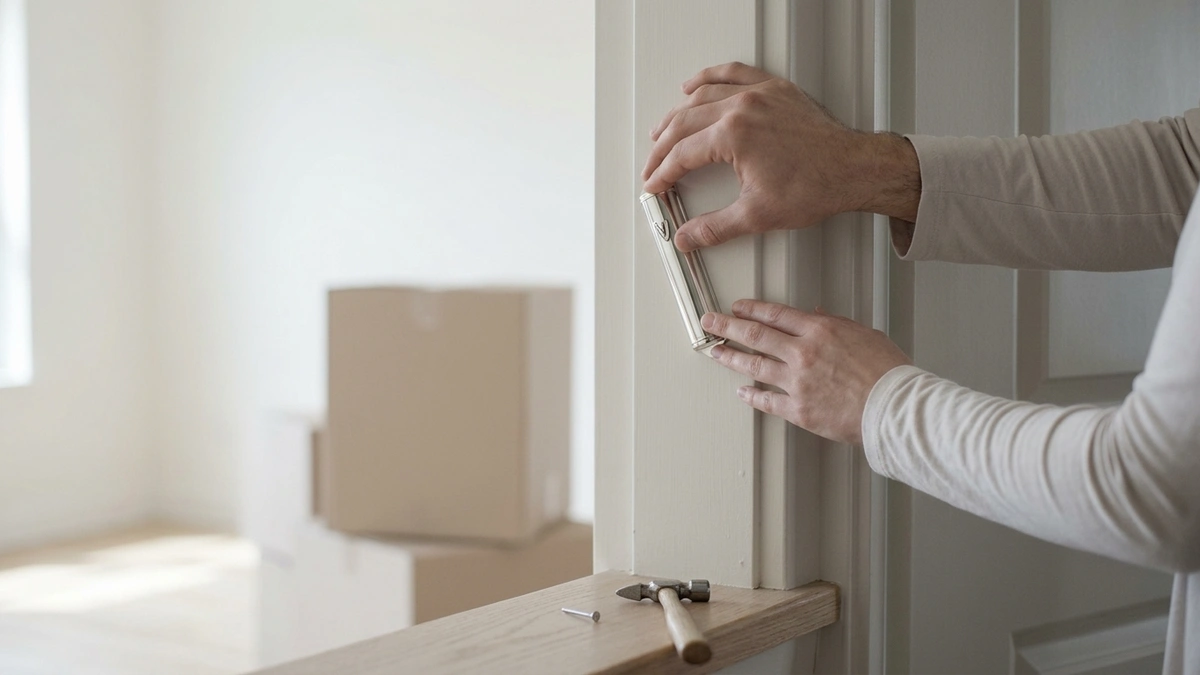
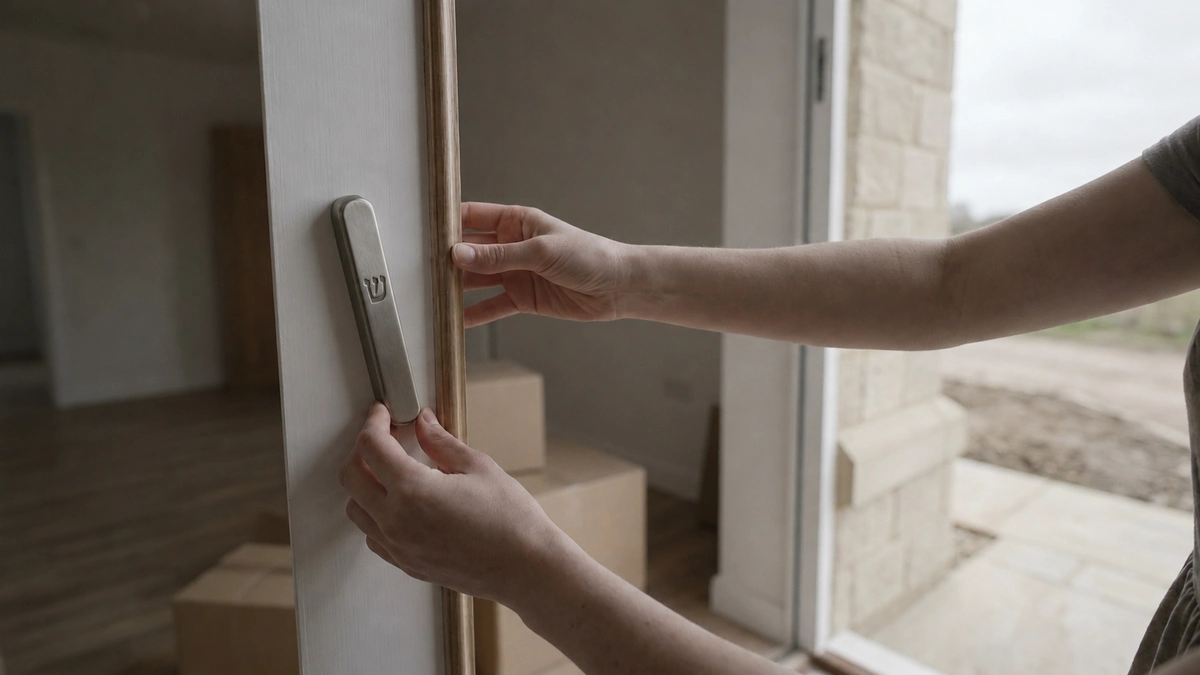
The mezuzah should be affixed on the right doorpost as one enters, at the start of the upper third of the doorway's height. It is placed at a slight diagonal, tilting inward at the top, following the ruling of the Rema (Yoreh Deah 289:6) as the accepted Ashkenazic practice. Sephardic Jews affix the mezuzah vertically. Both customs are valid expressions of mesorah (tradition), and neither is "more correct" than the other.
As a gift, a new home mezuzah from family or friends is a deeply meaningful tradition, one that carries the zechus (merit) of the givers into the home of the new couple. A mezuzah gift of this kind is not merely decorative. It is a halachic object that must meet specific standards of kashrut, and the giver and recipient should ensure it comes from a reliable source.
Common Mistakes That Affect the Mitzvah
Several errors are commonly made when setting up a first home, and they are worth knowing before the moving process begins.
The first and most significant mistake is purchasing a mezuzah without verifying the kashrut of the klaf (parchment). Many mezuzah cases sold in gift shops or general Judaica stores contain printed parchments or machine-produced scrolls that are not kosher according to halacha. A mezuzah scroll must be handwritten by a qualified sofer (scribe) using halachically approved dio (ink) on genuine klaf. If the scroll is not kosher, the mitzvah is not being fulfilled, no matter how beautiful the case.
A second common error is having a mezuzah fixed by a minor or a non-Jew. Halacha rules that this does not fulfill the mitzvah. A woman, however, is valid to affix a mezuzah, and in fact, it is a mitzvah she shares equally in the obligation. Ideally, a person should fix their own mezuzot (mitzvah bo yoter mi'bishlucho, the mitzvah is better performed personally than through an agent), though using an agent is permitted.
A third issue involves the mezuzah that a couple may have received as a mezuzah heirloom or as part of a family inheritance. An inherited mezuzah is a beautiful link in the chain of Jewish generations. But before it is affixed, it must be inspected by a qualified magiah (halachic mezuzah examiner) to confirm it is still kosher. Ink can fade, parchment can crack, and letters can become joined or broken over time, all of which can invalidate the scroll. Related reading: What to Do with Mezuzahs in an Inherited Home.
If you have questions about any of these situations, you are welcome to reach out to us and we will help connect you with the right guidance.
The Deeper Meaning of a Wedding Mezuzah
There is a well-known teaching fromAvodah Zarah 11a in which Onkelos explains to the Roman guards: with a human king, he sits inside and his servants guard him from the outside. But with HaKadosh Baruch Hu, it is the reverse, His servants sit inside, and He guards them from the outside, as the verse says: "The Lord is your guardian, the Lord is your shade at your right hand."
For a new couple, this image is more than inspiring, it is theologically grounding. The mezuzah on the doorpost is the mark of Hashem's presence at the threshold of the home. When the couple enters and exits each day, they pass by a declaration of the Oneness of Hashem. The mezuzah is not a charm or a symbol in the secular sense. It is a fulfillment of a Torah commandment that transforms the physical structure of the home into a space consecrated to Hashem's presence.
The mezuzah inspiration and insight of our Sages consistently points to the same truth: the mezuzah is an expression of the home's identity before Hashem. A housewarming mezuzah gift given at the start of a marriage is so not merely a congratulatory gesture, it is a participation in the spiritual foundation of a new Jewish household. Those who give it share in the zechus of the mitzvah.
Key Takeaways
A wedding mezuzah must be affixed immediately upon moving into a new home, not at the housewarming party and not after settling in. In Eretz Yisrael, the beracha is said from day one: in the Diaspora, a renter is exempt from the obligation for the first thirty days, after which the mezuzah is affixed with a blessing; an owned home requires a blessing immediately. The klaf must be handwritten by a qualified sofer and examined by a magiah to be kosher, a decorative case alone does not fulfill the mitzvah. Both husband and wife share the obligation equally, and both carry the zechus of fulfilling it together. When in doubt about any specific doorway, room, or halachic situation, consult your rav.
Fulfilling the Mitzvah with Confidence
At Kosher Mezuzah, every mezuzah scroll we offer is produced through a rigorous process endorsed by the Orthodox Union, which is among the most trusted kosher certification agencies in the United States. Each klaf is handwritten by a named, verified sofer and reviewed by a qualified magiah. We provide full traceability, so you know not just that your mezuzah is kosher, but who wrote it, who checked it, and what materials were used. For a new couple beginning their home, this level of accountability matters.
Mezuzot should also be checked twice in seven years under normal circumstances, and more frequently if there is reason to suspect damage. We offer essential guidance on mezuzah knowledge and have a full FAQ on kosher mezuzah standards to help you understand what to look for. Whether you are setting up your first home or reviewing scrolls that have been in place for years, we are here to support the proper fulfillment of this mitzvah.
If you have questions about your mezuzot or would like help ensuring your new home is properly set up, contact us and we will be glad to assist.
May your new home be blessed with Shalom, Simcha, and the constant presence of Hashem at every doorpost. Tizku l'mitzvot.



.svg)
Bring a true Kosher Mezuzah into your home
Fulfill the mitzvah with confidence, beauty, and meaning.
Buy a Mezuzah