
What to Do with Mezuzahs in an Inherited Home: A Clear Halachic Guide
When someone inherits a home, the mezuzahs on the doorposts often come with it, quietly, without ceremony, and without a certificate of kashrut. This situation raises a question that many people do not think to ask: are those scrolls actually kosher? Can we rely on them? Are we fulfilling the mitzvah properly, or are we unknowingly living with invalid scrolls on our doorposts? This guide addresses the questions pertaining to inherited home mezuzah scenarios clearly and completely, so you can fulfill the mitzvah of mezuzah with confidence and peace of mind.
What to Do with Mezuzahs in an Inherited Home
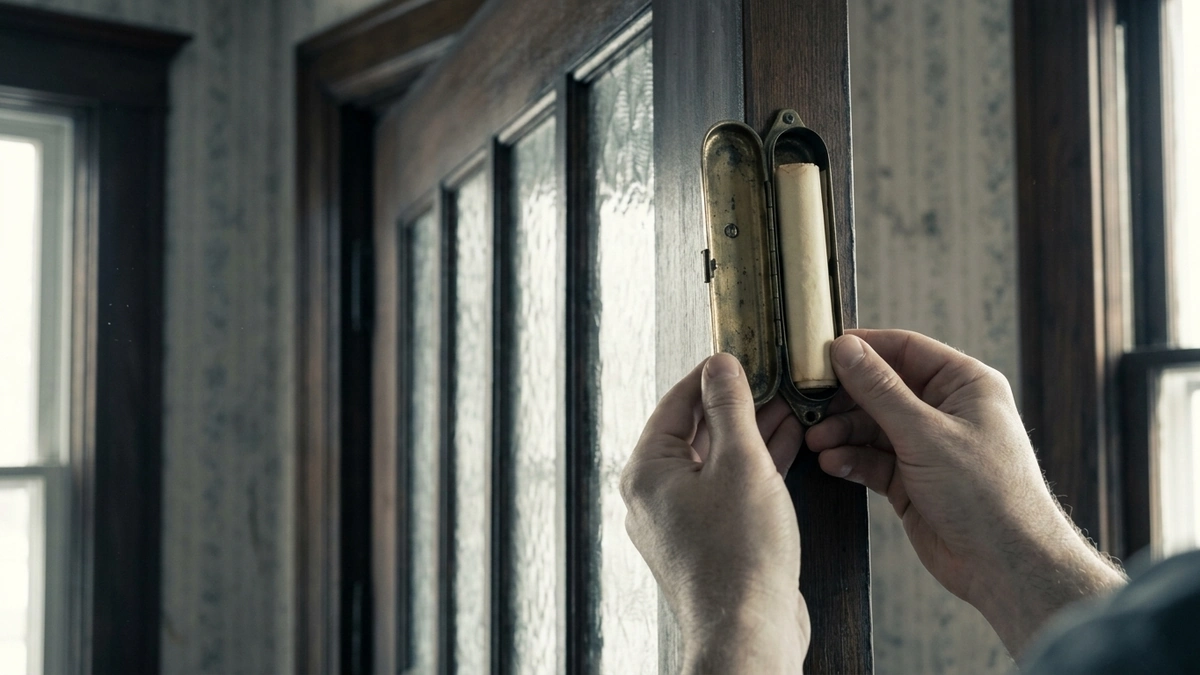
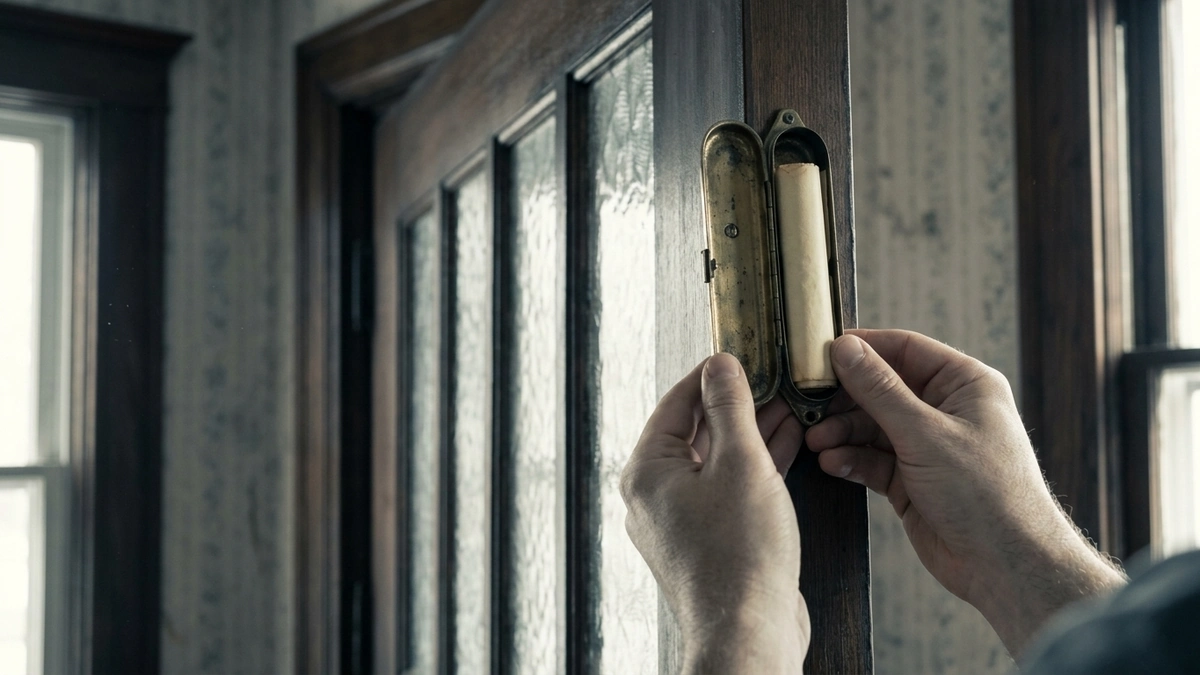
Mezuzahs in an inherited home must be checked by a qualified magiah (halachic mezuzah examiner) before you rely on them. This is not optional. We have no way of knowing the age, origin, or condition of scrolls left behind by a previous owner, and a scroll that looks perfectly fine from the outside may be pasul (invalid) for any number of reasons. Until the scrolls have been examined and confirmed kosher, you are not fulfilling the mitzvah of mezuzah through them. If you have recently inherited a home or moved into one with mezuzahs from the previous owner, we encourage you to contact Kosher Mezuzah so we can help you take the right next step.
The Halachic Foundation: Why Inherited Mezuzahs Cannot Be Assumed Kosher
Shulchan Aruch (Yoreh De'ah 291:1) states that a private mezuzah should be checked twice every seven years, while a communal mezuzah should be checked twice every fifty years. Mezuzot exposed to weather or likely deterioration may warrant more frequent inspection. This requirement reflects a foundational principle: a mezuzah scroll, known as a klaf (parchment), is written by hand with a quill and special ink called dio. The letters must be formed with great precision, and over time, due to humidity, heat, or age, the dio can crack, letters can fade, or the tzurat ha'ot (the required form of each letter) can become compromised. A scroll that was once perfectly kosher can become pasul without any visible sign on the outside of the case.
The Pithchei Teshuva (Yoreh De'ah 289:1) records a significant debate about what happens when a new resident moves into a home that already has mezuzahs in place. It cites the Birkei Yosef, who rules that no blessing is recited at all in that situation because the new resident did not perform the act of affixing them. However, it also cites Rav Akiva Eiger, who disagrees and holds that a blessing is still required, advising that one should remove the scrolls, have them checked, and re-affix them with the standard blessing of “likboa mezuzah”. This dispute itself underscores an important point: the poskim recognized that moving into a home with existing mezuzahs raises real halachic questions that are not simply resolved by assuming everything is in order.
When a home is inherited, meaning the previous owner is no longer present and cannot be asked about the scrolls, the uncertainty is even greater. We do not know when the scrolls were last checked, who wrote them, whether they were written by a qualified sofer (scribe), or what hechsher (kosher certification) they carry. Even a mezuzah heirloom passed down through generations of the same family requires examination before use, because age alone can invalidate a scroll. The halacha does not allow us to assume kashrut without inspection.
How to Handle the Mezuzahs Practically When You Move In
The core halachah is straightforward but requires prompt attention. Shulchan Aruch, Yoreh De'ah 291:2, based on the Gemara, rules that when a house is rented from or to a non-Jew, the departing Jew removes the mezuzah rather than leaving it behind. By contrast, if a home contains mezuzot of uncertain provenance, that concern should be handled seriously as well.
When you first move in, you may leave the existing mezuzahs in place temporarily while you arrange for checking, provided you do so without delay. Do not assume the existing scrolls are valid simply because they are hanging in cases or appear undamaged. Cases can be beautiful while the scroll inside is completely pasul. This is one of the most common errors people make when moving into a new home, trusting the outside of the case rather than the integrity of the scroll inside.
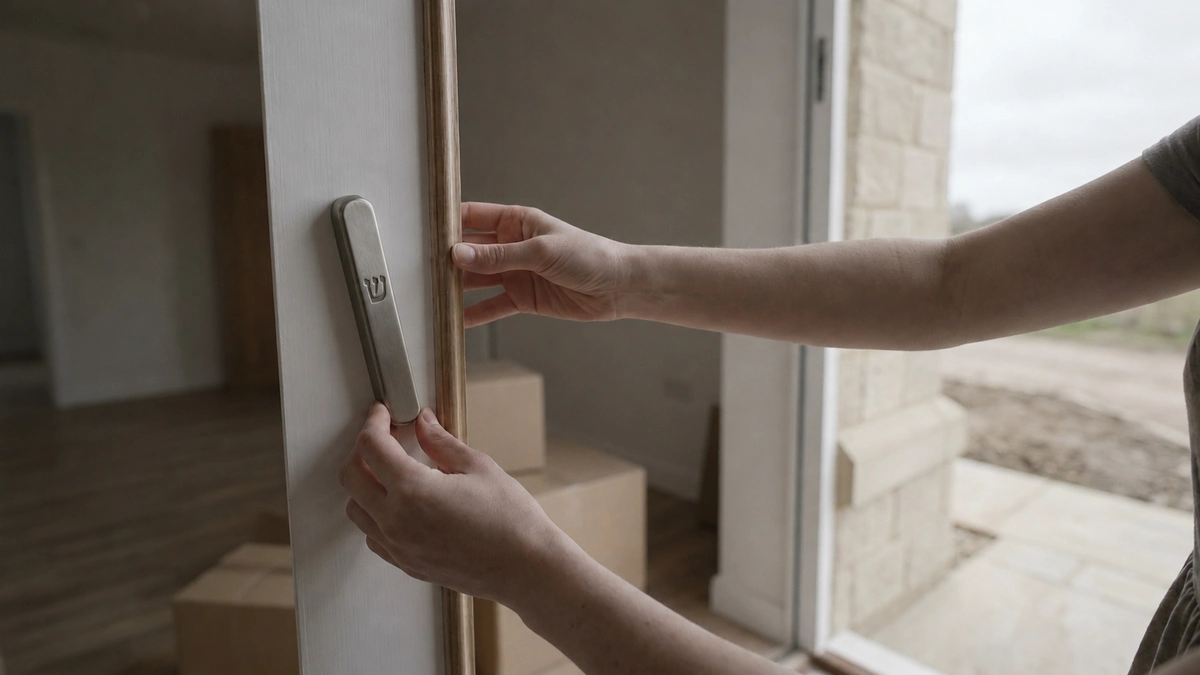
Once you have the scrolls checked, one of three outcomes is possible. The magiah may find them fully kosher, in which case they can remain with a new blessing recited if appropriate. He may find them pasul, in which case they must be replaced immediately. Or he may find some doorways kosher and others not, a common result in older homes where scrolls have been in place for many years without examination. In any of these cases, you will need to know the complete inventory of your home's doorways. A helpful starting point is to walk through your home systematically, as described in our guidance on affixing mezuzahs in a new home, to identify every doorway that requires a mezuzah before the examination begins.
If you find yourself needing to replace scrolls, whether because they are pasul or because their origin is simply unknown and unverifiable, do not delay. According to the Shulchan Aruch (Yoreh De'ah 286:22), a renter outside of Israel is exempt from the mitzvah for the first thirty days, since a short-term rental does not yet have the character of a permanent dwelling. One who purchases or inherits a home, by contrast, has a permanent dwelling from the outset and is therefore obligated in the mitzvah immediately. A family living in an owned home with invalid mezuzahs is not fulfilling this mitzvah at all. Contact Kosher Mezuzah for guidance on replacing or adding scrolls with verified, examined mezuzahs.
A Common Mistake That Affects the Mitzvah
The most significant error people make in this situation is assuming that because a mezuzah is hanging, it is kosher. This assumption is understandable, the mezuzah case is visible, the placement looks correct, and no one questions what has been sitting there for years. But the validity of a mezuzah depends entirely on the scroll inside, not the case it is housed in.
A related mistake is assuming that because the previous owner was an observant Jew, the scrolls must be fine. Even a deeply committed family may not have known to check their mezuzahs regularly, or may have purchased scrolls years ago whose kashrus standard is no longer verifiable. Since the halacha demands verification, questions about a damaged or questionable mezuzah should always go to a qualified magiah, not be resolved by visual inspection alone.
The Mitzvah of Mezuzah and the Sanctity of the Jewish Home
The mitzvah of mezuzah is not merely a legal requirement, it is a declaration. As the Rambam (Mishneh Torah, Hilchot Mezuzah 6:13) beautifully describes it, every time a person enters or leaves through the doorway, the mezuzah causes him to encounter the Oneness of Hashem's Name at the threshold of the home. This sacred obligation transforms every doorway into a declaration of faith, reminding all who pass through of Hashem's constant presence and protection over our dwelling places. Just as Kriyat Shema (the recitation of the Shema) is a verbal proclamation of Hashem's unity, the mezuzah is a written proclamation fixed into the very structure of the home. It is not simply a protective charm placed at the entrance, it is the reality of the house, making each doorway a threshold marked by the name of Hashem.
This is precisely why an inherited home needs more than inherited scrolls. The mitzvah must be fulfilled, actively, knowingly, and properly. Whether you received the home from a parent, inherited it from a relative, or purchased a home with existing mezuzahs from a prior Jewish owner, the mitzvah of mezuzah now belongs to you. Fulfilling it well is an act of kavanah (intentional devotion) and yiras Shamayim (reverence for Heaven). There is real zechus (merit) in doing this right. You might find additional chizuk (strengthening) in the mezuzah inspiration and stories that reflect just how deeply this mitzvah touches Jewish life across generations.
The Core Ruling in Brief
Mezuzahs found in an inherited home, including those left by a previous Jewish owner, cannot be assumed to be kosher and must be examined by a qualified magiah before you rely on them. Even scrolls that have been hanging for years without visible damage may be pasul due to fading, cracking, or other defects invisible to the untrained eye. The halacha requires that mezuzahs be checked regularly, and scrolls with no documented history of checking should be treated as unverified. If the scrolls are found to be pasul, they must be replaced promptly, as the poskim rule that one should not remain in a home without a kosher mezuzah any longer than necessary. Consult your rav if questions arise about specific doorways or unusual situations in your home.
How Kosher Mezuzah Helps You Fulfill This Mitzvah With Confidence
At Kosher Mezuzah, every scroll we provide is written by a vetted sofer (scribe) and examined by a qualified magiah, with full traceability from the writing to the doorpost. Our STaM process is OU Endorsed, one of the most trusted standards in kosher supervision, so you know exactly what you are receiving and can fulfill the mitzvah with genuine confidence. This level of accountability matters especially in a situation like an inherited home, where the history of the existing scrolls is unknown.
We also understand that questions about mezuzah provenance, who wrote the scroll, when, and under what standard of supervision, are not always easy to answer on your own. If you are unsure about the scrolls in your home, or if you need to replace invalid mezuzahs with verified ones, we are here to help you navigate the process clearly and without pressure. The mitzvah of mezuzah is precious, and we take seriously our responsibility to help you fulfill it properly.
We would also note that if you are purchasing a mezuzah as a gift for someone who has inherited a home, perhaps a family member starting fresh in a new space, ensuring that the gift is a fully verified, examined scroll is the most meaningful thing you can give. A wedding mezuzah or housewarming mezuzah given with verified kashrut behind it carries far more weight than one whose origin is uncertain.
A Closing Word
If you have inherited a home and are unsure about the mezuzahs currently in place, do not wait, reach out to Kosher Mezuzah and we will guide you through the checking and replacement process with care and clarity.
Yehi ratzon milifnei Avinu shebashamayim, may it be the will of our Father in Heaven, that the mezuzahs on your doorposts be a source of blessing, protection, and kedushah (holiness) for your home and all who dwell within it.


.svg)
Bring a true Kosher Mezuzah into your home
Fulfill the mitzvah with confidence, beauty, and meaning.
Buy a Mezuzah