
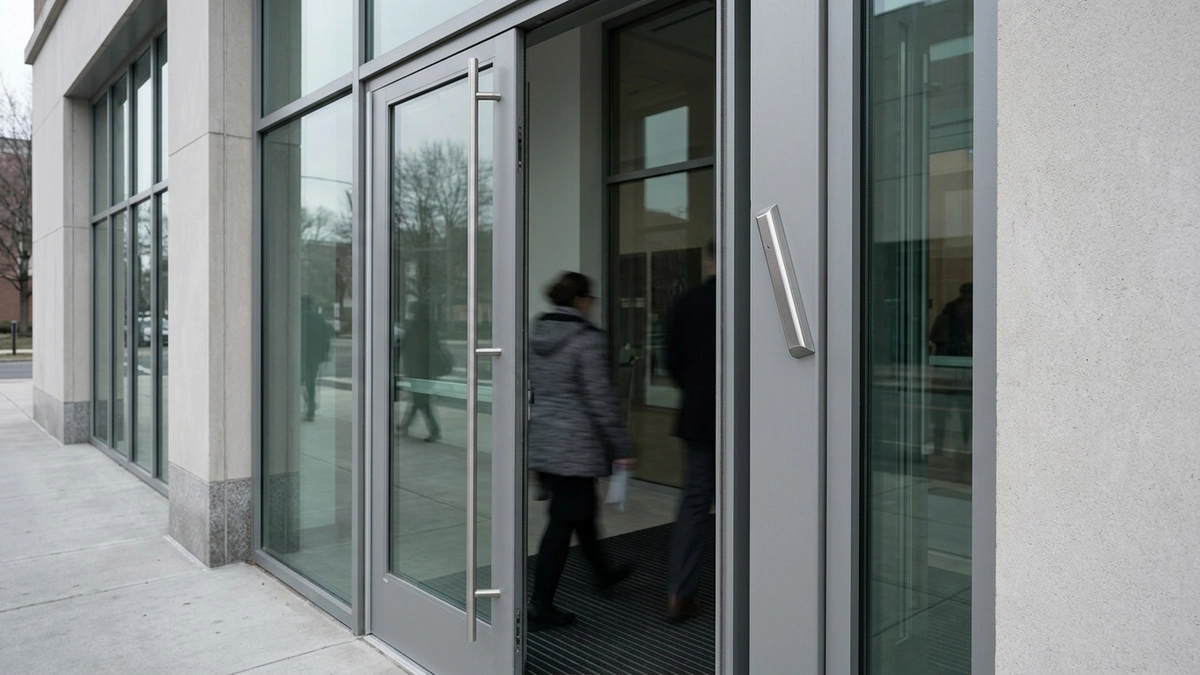
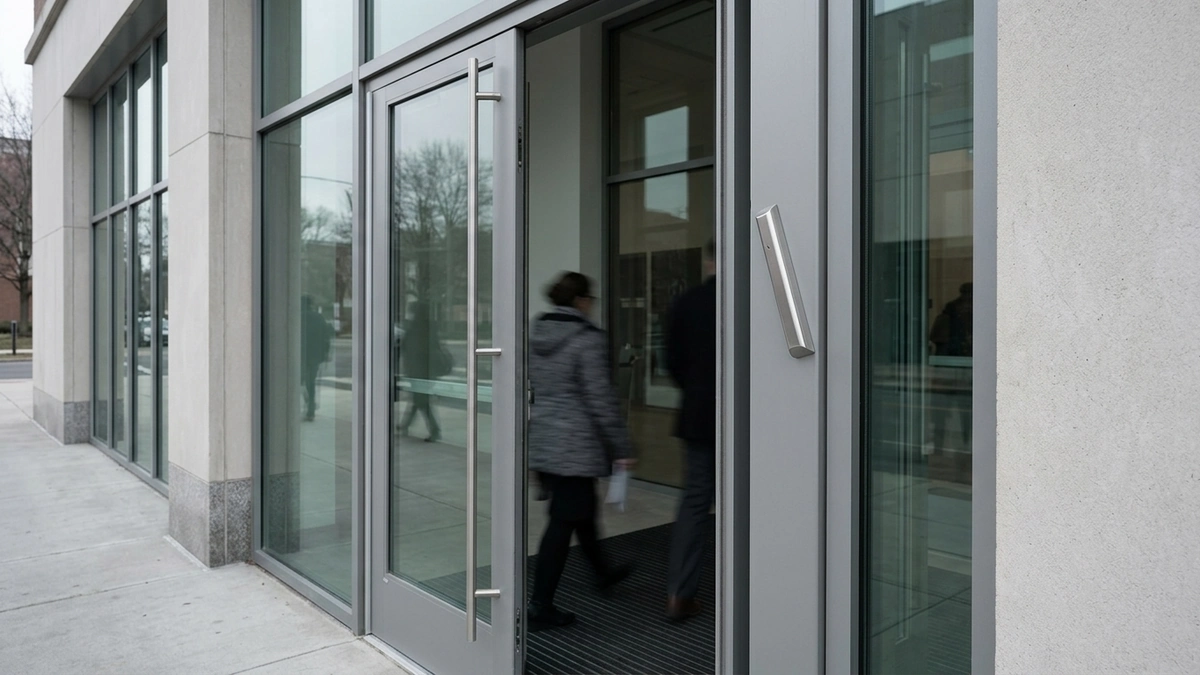
Do Public Buildings Need Mezuzahs? Offices, Hotels, and Schools Explained
The question of public building mezuzah requirements comes up more often than many people expect. A shul board member wonders about the classrooms in their day school. A Jewish business owner is not sure whether to put up a mezuzah in his office. A hotel manager who keeps Shabbos asks about his property's many rooms. These are real questions, and they deserve real answers grounded in halacha. Related reading: Business Mezuzah Requirements.
The short answer is that public buildings are not automatically exempt, and they are not automatically obligated in the same way a private home is. The obligation depends on how each specific space is used, who uses it, and whether the space meets the requirements that create a mezuzah obligation under halacha. This article will walk through the halachic framework and apply it clearly to offices, schools, hotels, and similar spaces. For a related question, see Do Schools and Public Institutions Need Mezuzahs? What the Halacha Actually Says. See also Do Hotels or Airbnbs Need a Mezuzah? What Every Traveler Should Know.
Key Takeaways
- Public building mezuzah requirements depend on how each specific space is used, its dimensions (a minimum of four amos by four amos, roughly six to eight feet depending on the shiur amah used), and whether it meets halachic criteria for obligation rather than a blanket rule.
- Offices, shops, and workplaces should have a mezuzah affixed without a beracha based on widespread custom, especially if the space serves as a permanent workplace or stores valuables overnight.
- Classrooms, libraries, staff rooms, and dining halls in schools and yeshivas are obligated without a beracha, while dormitory rooms where students actually reside require a mezuzah with a beracha.
- Bathrooms, storage rooms, boiler rooms, and janitorial closets are exempt from mezuzah requirements, and placing a mezuzah in a bathroom is actually prohibited because it lacks proper dignity.
- Institutional mezuzahs require regular checking (bedikah), but not on the same schedule as a private home: the Shulchan Aruch (Yoreh De'ah 291:1) requires an individual's mezuzah to be checked twice every seven years, while a mezuzah belonging to the public is checked only twice every fifty years—a distinction that is often overlooked in public buildings.
- Synagogues follow the custom of affixing a mezuzah without a beracha on the main entrance, and attached rooms serving practical functions like offices or kitchens carry their own separate mezuzah obligations.
Do Public Buildings Need Mezuzahs? Offices, Hotels, and Schools Explained
Public building mezuzah requirements are one of the most frequently misunderstood areas of hilchos mezuzah, and the halacha is nuanced enough that no single rule covers every case. If you are responsible for a public or institutional space and you are not sure what is required, the wisest first step is to reach out to Kosher Mezuzah or consult your rav, who can help you assess the specific doorways in question. The core principle is this: a space that functions as a genuine dwelling or workplace, one that has the right dimensions, defined users, and a proper entrance, generally carries a mezuzah obligation. A space that is purely transient or used in a way that is halachically undignified is generally exempt. Everything else depends on the details, and those details matter greatly.
The Foundation: What Creates a Mezuzah Obligation?
Before we can answer the question for any specific type of building, we need to understand what generates a mezuzah obligation in the first place. The Torah says "u'vish'arecha", "and in your gates" (Devarim 6:9). The Gemara in Yoma (11a) derives from this that the obligation applies to gates of houses, courtyards, cities, animal pens, and storehouses. The Shulchan Aruch (Yoreh Deah 286:1-2) codifies this list. What links all of these is that they are entrances to spaces that serve human beings in a meaningful, consistent way.
There are several conditions that a space must meet to be obligated. The entrance must have two proper doorposts and a lintel, or at least meet the halachic minimum structure. The room itself must be at least four amos by four amos — roughly six to eight feet by six to eight feet, depending on which shiur (measurement standard) for an amah is followed — as derived from the Gemara in Sukkah (3b). A space smaller than this is not halachically considered a "house" and is exempt. The space must also be used in a way that is dignified: a place designated for unclean purposes is exempt from mezuzah, and in some cases it is actually forbidden to place one there.
Beyond these physical requirements, there is the question of ownership and tenancy. The Rama (Gloss to Shulchan Aruch 286:1) rules that a space shared between a Jew and a non-Jew is exempt from mezuzah. Only a space belonging to, rented by, or regularly used by Jews carries the obligation. This ruling has significant implications for large commercial or institutional properties where ownership and tenancy may be mixed.
Offices, Shops, and Workplaces
The Taz rules that shops and offices that are used only during the day, and where the owner or employees do not sleep, are generally exempt from mezuzah. This is because the fundamental obligation is rooted in dirah, meaning dwelling or residence, and a space used only for daytime business does not fully qualify as a dwelling under the classical understanding.
But, the Yad HaKetana adds an important nuance: if merchandise or valuables are kept in the space overnight, the space begins to take on the character of a storehouse, and in that case it carries a mezuzah obligation. The modern custom, recorded in multiple halachic sources and widely accepted by contemporary poskim (halachic decisors), is that offices and shops should have a mezuzah placed, but without a blessing (beracha). The reasoning is that while the full obligation may be in doubt, these spaces are treated as permanent places of work, and the custom is to be stringent. For a deeper look at how these rulings apply in practice, see our dedicated guide on business mezuzah requirements.
This means that if you have a Jewish-owned or Jewish-run office, you should affix a mezuzah to the main entrance and to any interior doorways that lead to significant workspaces. The beracha is omitted because of the halachic doubt. A rabbi's private office within a shul or institutional building is obligated, the Shevet HaLevi rules explicitly that such a room requires a mezuzah. A coffee room or kitchen in an institutional building is similarly obligated because it serves a secular, human-use function, the Sefer HaMezuzah rules accordingly.
Schools, Yeshivas, and Educational Institutions
Educational institutions present their own set of rulings, and the distinctions matter. Classrooms in a Cheder (elementary school) or Yeshiva are obligated in a mezuzah, but the beracha is not recited. This is the ruling recorded in the halachic literature, and it applies to libraries and staff rooms as well, these spaces are treated like a workplace (similar to a shop), and the obligation exists but without a blessing.
Dining halls in schools and Yeshivas are likewise obligated without a beracha. The space is used regularly by defined people for a human purpose, and the mezuzah obligation follows from that use. Dormitory rooms, however, are in a different category. When students sleep and eat in a room, when it functions as an actual dwelling for them, the room is obligated in a mezuzah with a beracha. The presence of genuine residence changes the halachic status entirely. For a full breakdown of the rules that apply to student sleeping quarters, see our detailed article on dorm room mezuzah requirements.
Kindergarten classrooms are obligated without a beracha, since they function as the teacher's workplace. One additional detail: if children are changed in the room, an opaque cover (case) must be used for the mezuzah, since a room where bodily functions occur requires that the mezuzah be properly concealed to preserve its dignity.
If you are responsible for a school or Yeshiva and are working through which doorways need a mezuzah and whether a beracha applies, contact Kosher Mezuzah for guidance on ensuring that the institution's mezuzahs are placed correctly and are halachically valid.
Hotels, Shuls, and Other Public Spaces
Hotel rooms present a particularly interesting case. A hotel room where a Jewish guest sleeps for a night or more functions as a temporary dwelling. The Gemara teaches that even a forced or temporary dwelling carries an obligation under certain circumstances, the Sha'agat Aryeh rules that a Jew confined to a prison cell for several months is obligated in mezuzah, since the dwelling, but unwanted, is still a dwelling. But, halacha generally holds that a renter is not obligated until thirty days have passed in a dwelling, which means a short hotel stay does not generate an obligation on the guest. The obligation would fall on the hotel owner, and since most hotels have non-Jewish ownership or mixed ownership, the question becomes complex.
Synagogues occupy their own halachic category. By strict letter of the law, a shul is exempt from mezuzah because it is not a private dwelling. But, the widespread custom today is to affix a mezuzah to a shul, without a beracha, because shuls also function as a Beit Midrash (house of study) where people spend many hours. If a shul has attached rooms used for secular purposes, such as an office, a kitchen, or a classroom, those spaces carry their own obligations as described above. An entrance that leads to both a shul and a dwelling is obligated in a mezuzah.
Storage rooms within a shul, rooms used only to store siddurim, Chumashim, or pews, are generally exempt. The distinction, as the Chut Shani records, is that such rooms have no human dwelling or work function: they serve purely as storage for objects.
Common Mistakes in Public Buildings
One of the most frequent errors in institutional settings is placing mezuzahs on every doorway without distinguishing which ones are obligated and which are not. A doorway to a bathroom, a boiler room, or a janitorial closet is exempt, and in the case of bathrooms, it is actually prohibited to affix a mezuzah there because the space is not dignified. A mezuzah placed in an exempt or forbidden location is not merely unnecessary: it can constitute a disrespect to the mezuzah itself.
Another common mistake is affixing a mezuzah with a beracha in a place where the obligation is uncertain, such as a classroom or office. The correct practice is to affix without a beracha in doubtful cases, and to recite the beracha only when the obligation is clear, such as in a dormitory room used as a genuine dwelling.
Finally, institutional mezuzahs are frequently neglected when it comes to checking (bedikah), and the schedule differs from a private home's. The Shulchan Aruch (Yoreh De'ah 291:1) rules that a mezuzah belonging to an individual is checked twice every seven years, while a mezuzah belonging to the public is checked only twice every fifty years (a yovel). Most spaces in a school, office building, or shul fall under the public standard, though a rav should be consulted to confirm which schedule applies to a specific doorway. This distinction is often overlooked in institutional settings, and it is an area where many buildings are not in compliance. If you need to replace or upgrade the mezuzah scrolls in your institution, browse our kosher mezuzah scrolls to find the right option for every doorway. For a related question, see Who Is Responsible for Checking Mezuzahs in Shared Buildings?.
The Deeper Meaning Behind the Mitzvah
The Rambam (Hilchos Mezuzah 6:13) writes that whenever a person enters or leaves, he encounters the name of the Almighty and is reminded of his love for Hashem, and this keeps him from sin. This applies not only to the doorway of a bedroom. When a mezuzah is properly placed on the entrance to a school, it reminds every student and teacher passing through that doorway of their connection to HaKadosh Baruch Hu. When it is affixed to an office doorway, it signals that even commerce and professional life are conducted in the presence of Hashem. The public building is not outside the domain of kedushah (holiness), and the mitzvah of mezuzah is one way we affirm that.
Key Takeaways on Public Building Mezuzah Requirements
Public building mezuzah requirements follow the same foundational principles as residential ones, but the details of each space must be assessed individually. Offices and shops should have a mezuzah without a beracha, based on widespread custom. Classrooms, libraries, staff rooms, and dining halls in schools and Yeshivas are obligated without a beracha, while dormitory rooms are obligated with a beracha. Synagogues follow the custom of affixing a mezuzah without a beracha, and rooms attached to a shul that serve practical functions carry their own obligations. Spaces that are purely for storage, bathrooms, or rooms with undignified use are exempt, and in some cases, placing a mezuzah there is forbidden.
About Kosher Mezuzah
At Kosher Mezuzah, every mezuzah scroll (klaf) we offer is written by a vetted sofer (scribe) and reviewed by a qualified magiah (halachic mezuzah examiner). Our process is endorsed by the OU's mezuzah program, which provides a level of oversight and accountability that is rare in the marketplace. We provide traceability from the sofer's quill to your doorpost, including the name of the sofer, the name of the magiah, the date of writing, the materials used, and an image of your actual scroll.
Installing a mezuzah in a public or institutional space is not simply a matter of buying a scroll and hanging it up. The placement must be correct, the scroll must be kosher, and the question of whether a beracha is recited must be determined carefully. These distinctions matter, and we are here to help ensure that the mitzvah is fulfilled properly.
We also encourage regular bedikah (checking) of institutional mezuzahs, which is often overlooked. Mezuzahs in schools, offices, and shuls are just as subject to the checking requirement as those in private homes, and we can help you establish a checking schedule that keeps your institution in compliance.
If you have questions about which doorways in your building require a mezuzah, whether a beracha applies, or how to ensure your mezuzahs are halachically valid, reach out to Kosher Mezuzah, we are here to help you fulfill the mitzvah with care and confidence.
May the mezuzahs in your home, your workplace, and your community be a zechus (merit) for you and all those who pass through your doors, and may Hashem guard your going out and your coming in from now and forever.
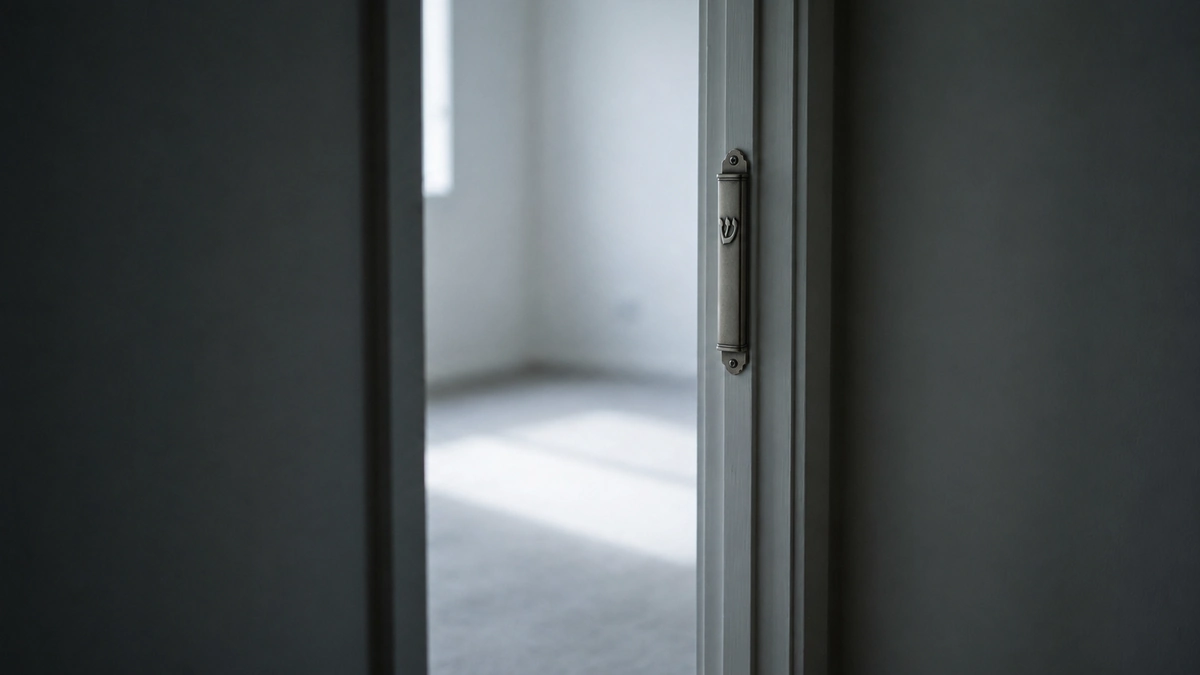
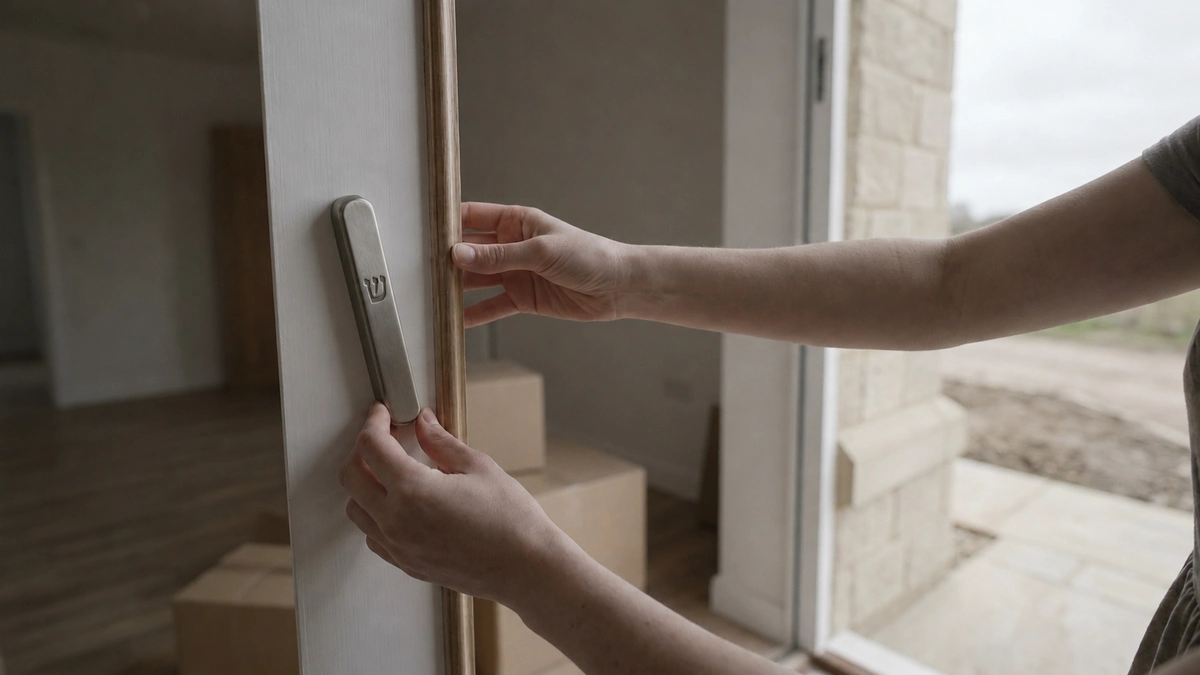


.svg)
Bring a true Kosher Mezuzah into your home
Fulfill the mitzvah with confidence, beauty, and meaning.
Buy a Mezuzah